
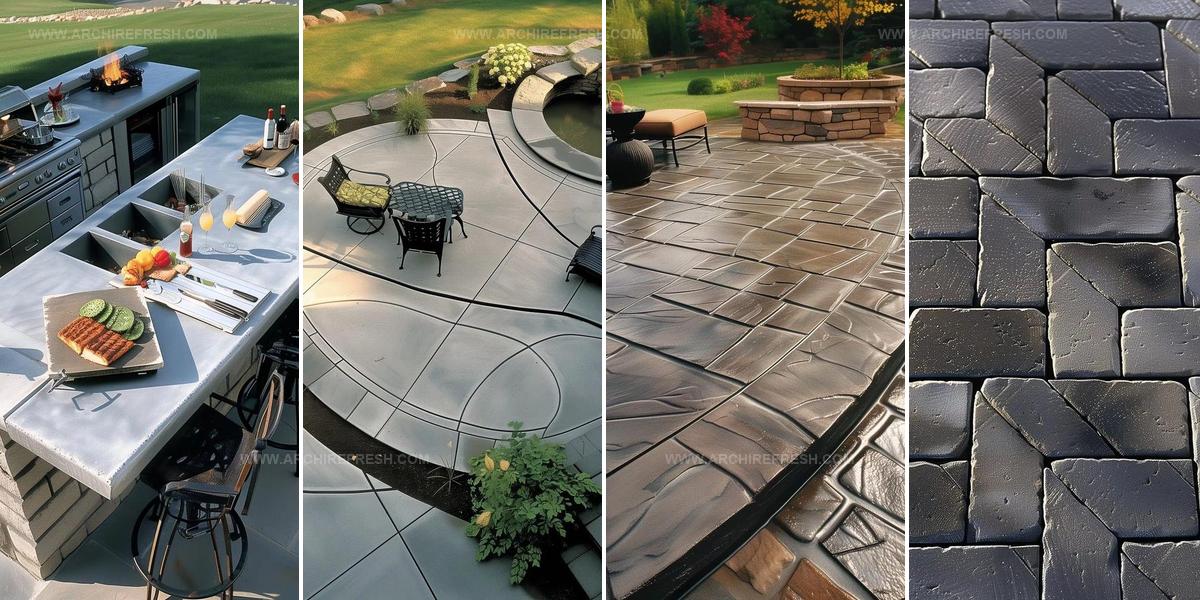
10 Concrete Patio Designs for Your Backyard Space
A concrete patio offers durability and versatility for outdoor living spaces right behind the house.
Unlike wood or stone alternatives, concrete provides homeowners with a blank canvas that adapts to different design preferences.
The material resists weather damage while requiring minimal upkeep over many years.
Texture, color, and pattern options allow you to customize the surface in ways that complement the existing architecture.
Budget-friendly installation makes concrete an accessible choice for families wanting to enhance their property.
Different finishes can mimic expensive materials without the high cost or intensive maintenance.
Whether you prefer modern minimalism or rustic charm, concrete patios deliver functional beauty that expands usable square footage for relaxation and entertainment.
Gray Concrete Geometric Patio
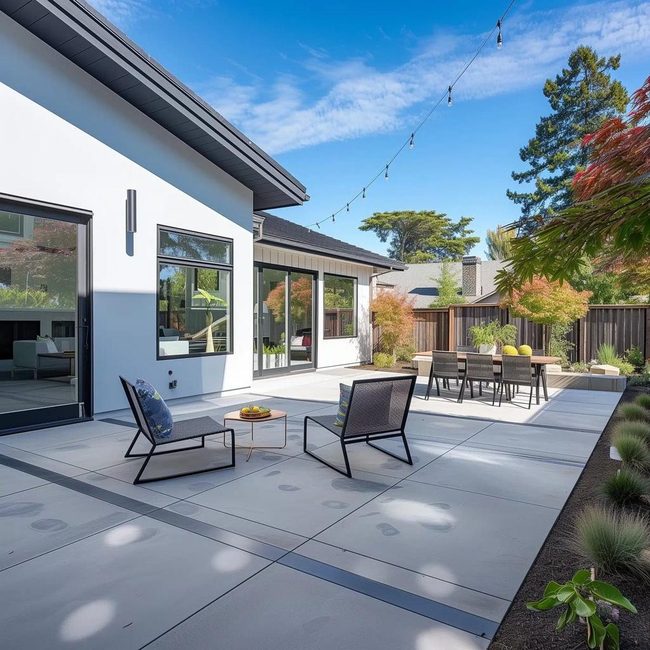
Smooth gray concrete slabs shaped into circles, triangles, or zigzags offer a striking foundation for modern yard spaces, and you can elevate this look by mixing textures across the surface, perhaps alternating between broom-brushed sections and exposed aggregate areas that reveal pebbles underneath, or adding a color-dyed border for visual interest.
Geometric shapes with sharp lines feel more contemporary than standard rectangles, and they catch attention immediately when you step outside.
To keep the space clean and uncluttered, we recommend holding back on furniture and accessories so the concrete itself becomes the star of your patio design.
If you want even more dimension, consider varying the finish across different sections rather than treating the entire surface the same way.
Less is more with arrangement, since minimalist styling lets those structural elements shine without competing elements.
Your yard room will feel polished and modern when you let the concrete's cool tones and textures do most of the talking.
Gray Concrete Curves Flow
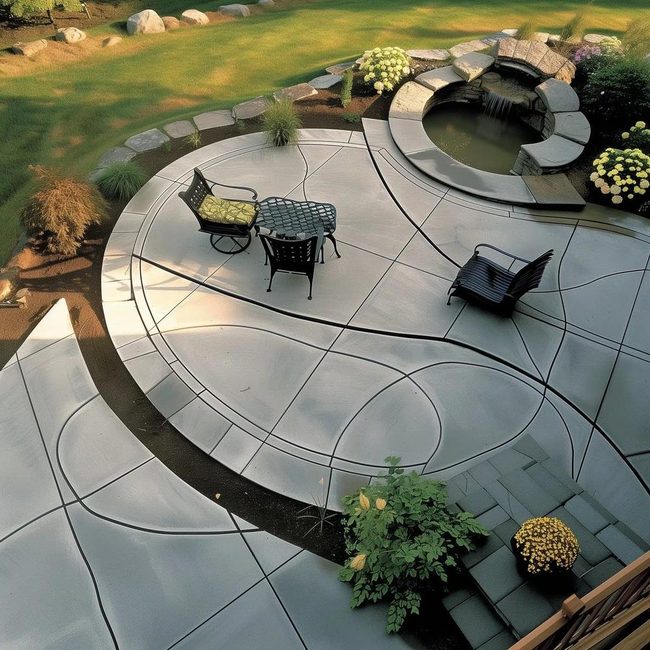
Curved concrete paths that snake fluidly through your backyard bring about an eye-catching departure from typical straight-edged designs and establish a bold aesthetic statement.
You can mix convex and concave curves throughout the patio space for added architectural interest, or opt for one continuous flowing shape that moves gracefully across your yard area.
Gray concrete as your base material enhances this fluid quality, while contrasting border stones along the edges add dynamic visual contrast.
Curved walls, planters, and benches throughout the space reinforce this flowing design approach.
Whether you view your patio from a deck above or walk through it at ground level, the rounded elements connect different zones together and allow movement to feel natural and unrestricted.
Best of all, the absence of sharp corners means you get unobstructed sightlines to enjoy sunrises, sunsets, and your landscape views without visual interruptions.
This type of layout works well if you want a space that feels open and connected rather than compartmentalized.
White Concrete Outdoor Kitchen Island
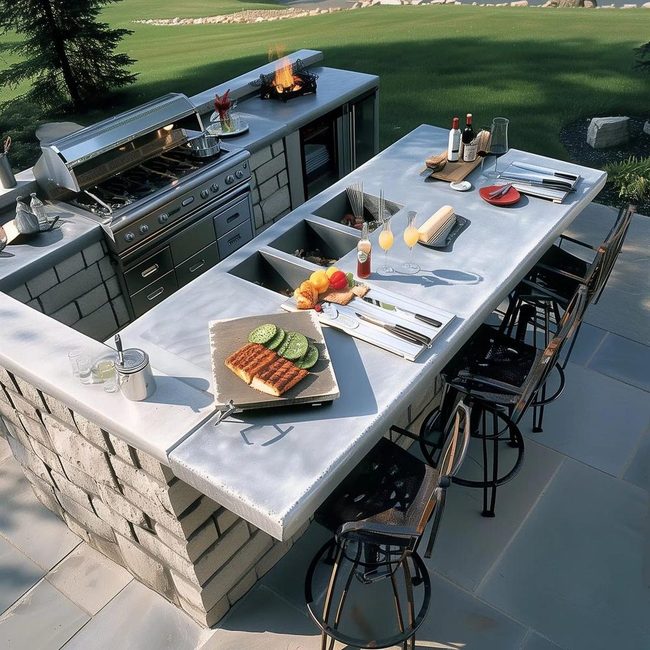
The concrete patio bistro zone refines your patio into a functional entertaining space with bold architectural presence.
Precast concrete countertops in white or gray offer clean lines and lasting durability that handles weather and heavy use without complaint.
For more visual interest, acid-stained concrete creates a mottled surface resembling natural stone and adds depth to your cooking area.
You can build a concrete block island on wheels that serves double duty as both food prep space and a portable station you move around as needed.
Stone-faced concrete blocks form a bar section that anchors one side of your bistro zone while facing comfortable seating and a fire feature nearby.
Unlike other materials, concrete resists stains and cleans up easily after entertaining, so maintenance stays simple and straightforward.
This kind of setup gives you a solid base for patio cooking that lasts through seasons and weather changes while looking substantial and grounded in your yard.
Interlocking Concrete Pavers Pop Patterns
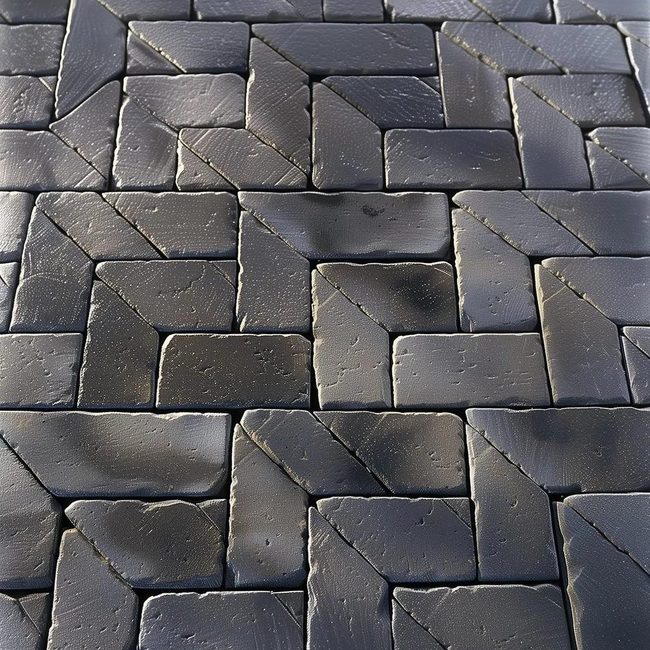
Interlocking concrete pavers let you design show-stopping patterns that stop people in their tracks, and mixing different sizes, colors, and shapes reworks a plain patio into something remarkable.
Herringbone and basketweave layouts using rectangles in contrasting tones make spaces pop brilliantly, while modular designs with squares, circles, and triangles in earth tones mixed with airy color pops offer another impressive route.
You can embrace geometric motifs or abstract patterns defined with borders to express your own style.
Beyond their good looks, these pavers offer real benefits since they're permeable and durable enough to handle years of foot traffic.
Concrete doesn't have to mean boring vast slabs anymore, and that flexibility means you are able to be as creative as you want with your yard space.
Whether you choose bold contrasting layouts or softer earth-tone combinations, concrete pavers elevate a basic patio into something that actually feels and polished.
Concrete Steps Through Sloped Yards
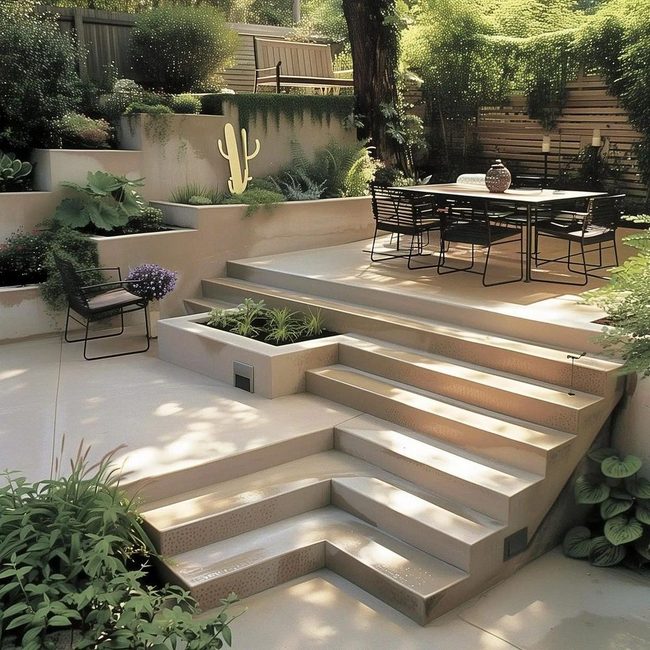
Sloped yards don't have to limit your yard plans, and you can turn them into multi-level patios that make smart use of the terrain.
Wide concrete steps in attractive finishes guide people smoothly between different elevations and add visual interest as they move through the space.
Another option is building long bench seats that gradually step down the slope, creating natural seating areas at various heights without feeling forced.
You can separate in all tier using decorative planter walls or pergolas overhead, and these divisions help define the purpose of in all zone.
A recessed fire pit lounge situated just below a dining area on an upper tier gives you distinct spaces for different activities, and the height changes do the work of dividing the space for you.
Planter boxes and overhead structures also frame the views and make in all level feel carefully arranged and complete.
Rather than fighting against slopes and grades, smart patio design takes advantage of them to add depth and function throughout your yard.
Sunset Mottled Concrete Floors
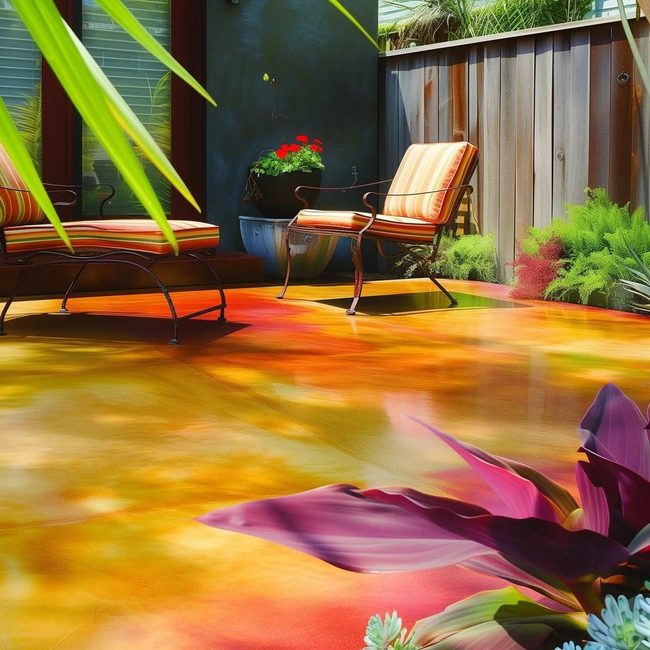
Acid-stained concrete delivers striking visual drama with its bold, permanent colors that paint your exterior space in ways ordinary coatings simply cannot match.
You can choose a fiery blend of sunset hues, ruby red, orange, and golden yellow, splashed randomly across your patio for an energetic look that catches attention immediately.
Another option is an ombre gradient that shifts from deep oceanic blue into soft-toned seafoam green, creating depth and movement across the surface.
A third approach mixes primary colors in red, yellow, and blue tones spread across the concrete in an organic, random pattern that feels both refined and natural.
What makes acid staining special is that the color soaks directly into the concrete rather than sitting on top like paint, so it won't peel or fade away over seasons of sun and weather.
Your neighbors will likely spot something they've never seen before in their own yards since this technique produces one-of-a-kind results.
Eachbatch of acid stain behaves differently depending on the concrete's unique composition, which means your patio becomes truly individual.
If you want a transformation that's both durable and visually bold, acid staining your concrete delivers exactly that kind of lasting impact.
Concrete Fire Pit Gathering Space
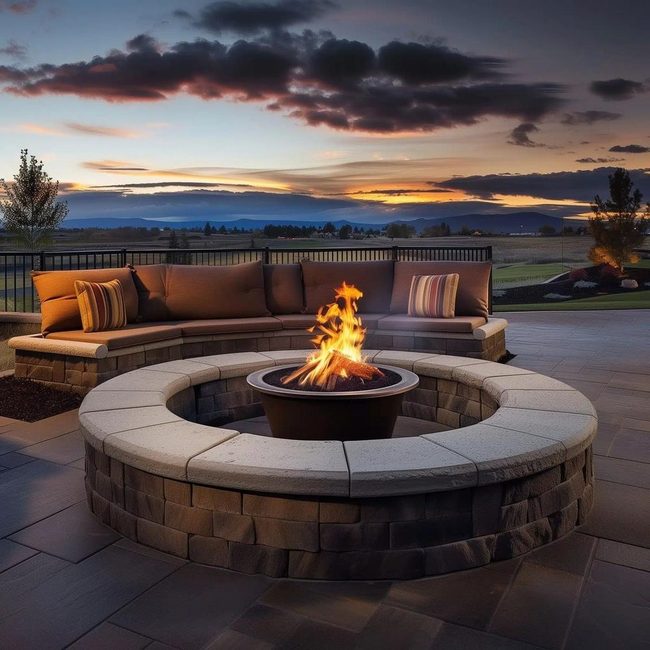
Building your patio around a custom fire pit gives you a natural gathering spot that draws people together, and you can construct it from durable concrete blocks faced with decorative stone or brick to match your surrounding patio surfaces.
Topping the structure with a crisp steel or iron fire bowl in black matte or distressed finishes adds a modern edge to the design.
Arrange built-in concrete benches or standalone chairs around the pit so people naturally want to stay longer and enjoy the warmth.
When evening arrives, the glow from the fire combined with ambient patio lighting creates a relaxing atmosphere that makes open-air gatherings feel special and comfortable.
It's a space-saving way to extend your open-air season and make your patio feel like an actual destination rather than just empty space.
The warmth and light from the fire work perfectly with your other patio elements, and you will find that it becomes the spot where everyone naturally congregates.
Concrete Stamped Stone Look
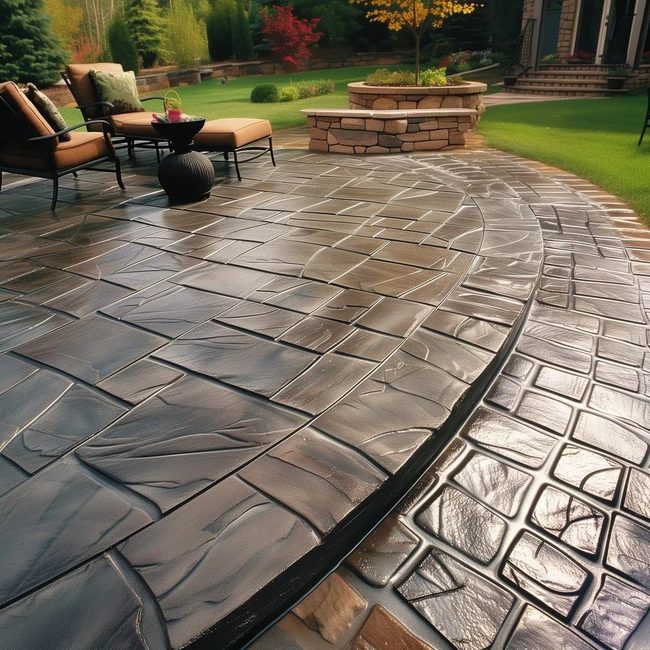
Stamped concrete patios offer remarkable textural depth that can fool the eye into seeing natural stone, brick, or veneer decking while keeping costs low, and you can choose from patterns resembling slate, travertine, bluestone, or varied interlocking brick styles to match your preference.
Color options range from warm beiges and browns to sophisticated grays with mottled finishes that authentically mimic real textures and materials.
For something more distinctive, stamped concrete can look like reclaimed barnwood planks or weathered veneer deck boards, giving your exterior space character without the price tag of genuine salvaged veneer.
The charm comes from that it delivers decorative appeal that successfully hides the built for regular use concrete base underneath, so you get budget-friendly elegance without sacrificing style or durability.
You maintain the surface easily, and it won't crack or splinter like veneer or require sealing like authentic stone does.
This solution lets you design an exterior living area that looks high-end and personalized while staying built for regular use and affordable.
Smooth Pebbles Framing Concrete Surfaces
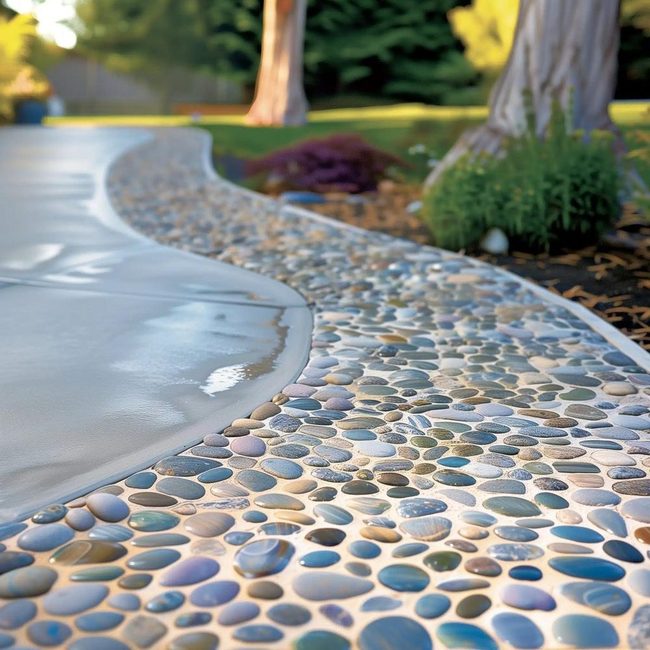
You can press smooth pastel river rocks into wet concrete around your patio's perimeter before it hardens, and this creates a beautiful frame that draws the eye and adds real depth to the space.
For something more playful, try alternating different colors and sizes of sea glass or locally sourced stones to keep things interesting.
Pebble bands laid between concrete sections work well for separating different areas and give your patio clear zones without needing extra walls or barriers.
Beach pebbles and shells hide the plain concrete underneath while their uneven surfaces also provide better grip, which makes the space safer when it's wet.
You don't need to stick to one style either, mixing textures and colors keeps the look from feeling too uniform or boring.
The organic, irregular shapes of pebbles offer something unexpected compared to smooth, flat concrete.
Just let your personal taste guide you when you're deciding how to arrange and use these natural materials on your patio.
Daylit Blooms Soften Concrete Surfaces
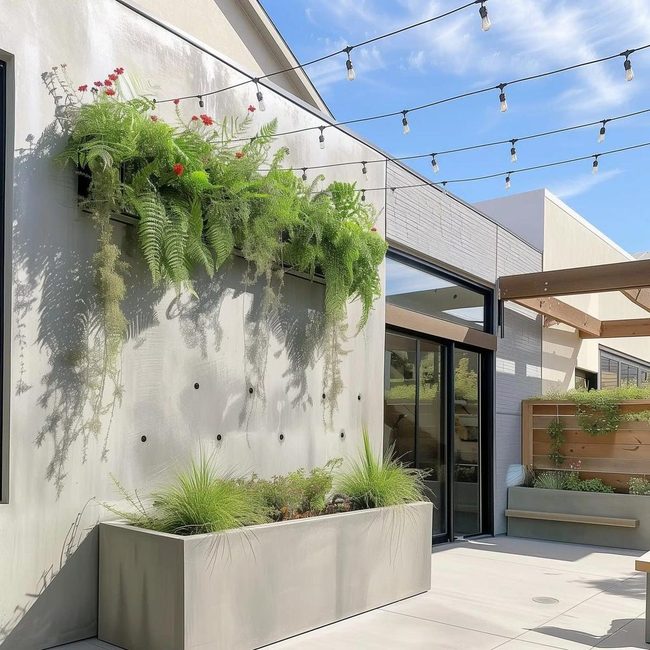
Living plants do wonders for softening harsh concrete surfaces and bringing life to your yard space.
Mounted flower boxes along your home's edge can overflow with colorful blooms that catch the light beautifully.
Consider building planter walls along the borders or between sections of the patio, filling them with lush ferns and ornamental grasses that add texture and movement.
Timbered pergolas installed over parts of the patio work well for growing trailing vines and hanging flowers that frame the space from above.
If you prefer an industrial feel, wrought iron planters hold sculptural plants that add character and dimension.
You might also place potted palms directly into the concrete itself for a tropical touch.
Mixing different greens, varying leaf textures, and scattering pops of color throughout really reworks how concrete feels and looks overall.
Olivia Martinez
Founder & Principal Designer
Expertise
Sustainable Interior Design, Residential and Commercial Space Planning, Historic Preservation and Adaptive Reuse, Custom Furniture Design, Project Management
Education
Parsons School of Design, New York, NY
LEED Accredited Professional (LEED AP)
Olivia Martinez is the founder of Archi Refresh, where she brings style and sustainability together. With a degree from Parsons School of Design and a LEED certification, she’s all about creating beautiful, eco-friendly spaces.
With over eight years in the industry, Olivia has designed everything from cozy homes to commercial spaces, always putting function and sustainability first. She loves working with local artisans and has been featured in design publications for her fresh take on green living.
When she’s not designing, Olivia enjoys exploring historic architecture, painting, and spending time with her rescue dogs, Luna and Max.