
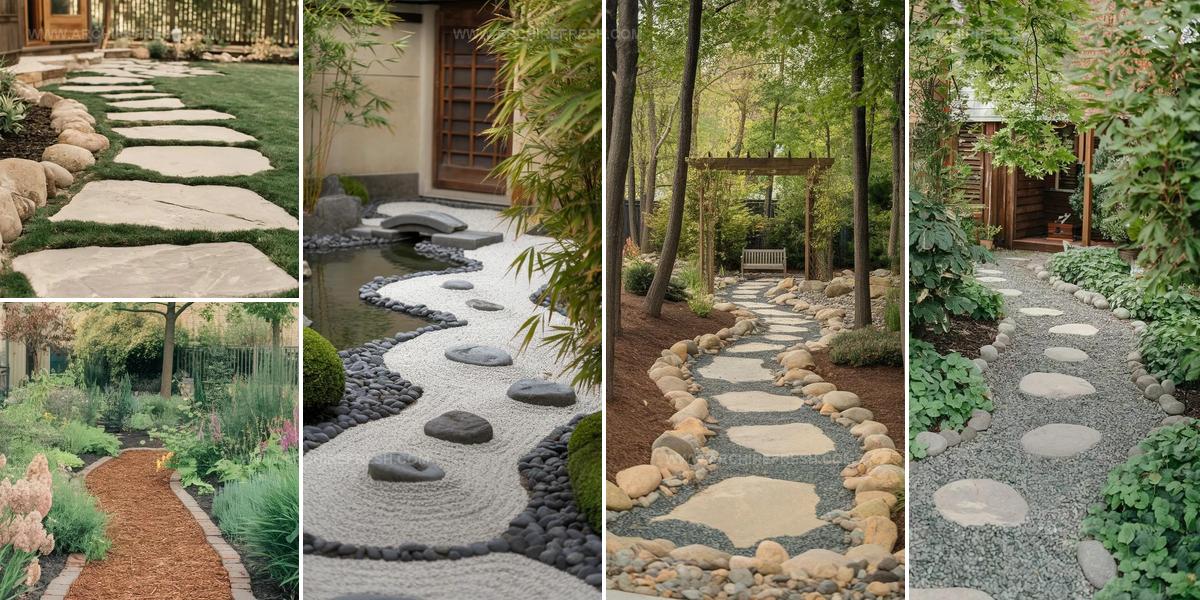
18 Backyard Walkway Ideas That Welcome Every Guest
A backyard walkway can dramatically change how people experience outdoor spaces while connecting different areas with both function and beauty.
Walking paths serve as guides through gardens, between patios, and around landscapes that might otherwise feel disconnected or incomplete.
Homeowners often overlook the potential impact of well-designed pathways until seeing how much character and flow they add to yards of any size.
Simple materials like gravel, pavers, or stepping stones offer practical solutions that also enhance visual appeal without requiring massive budgets or professional installation.
When pathways wind naturally through spaces rather than cutting straight lines, they invite exploration and make even modest yards feel more spacious and intentional.
The right design complements existing features while solving problems like muddy patches or worn grass that appears wherever foot traffic naturally occurs.
Authentic Teak Garden Path
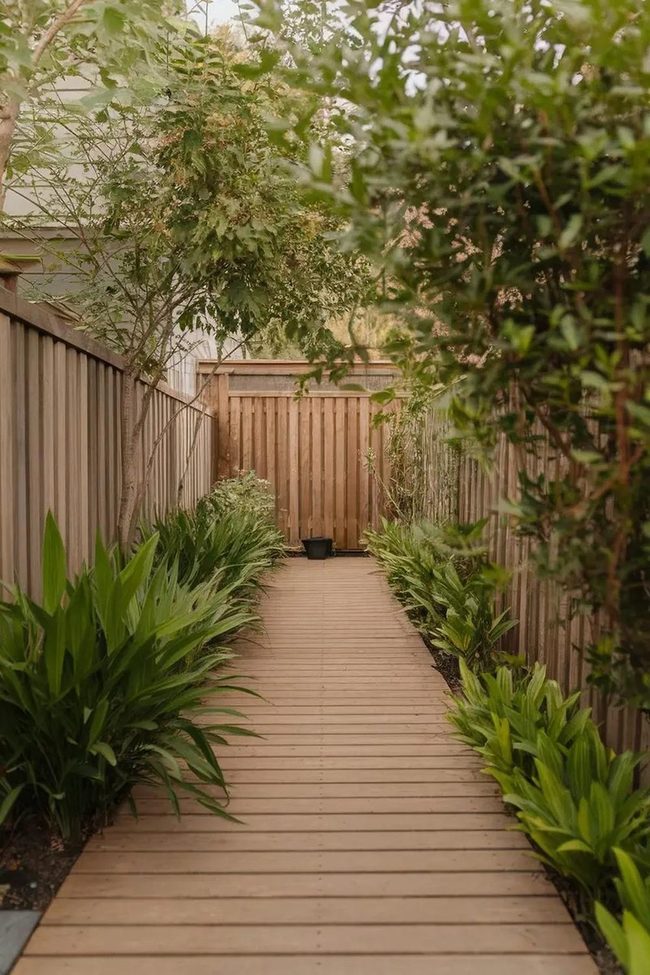
Wooden planks bring raw natural beauty to your backyard walkway and instantly catch attention with their organic warmth.
You can choose long narrow boards for a crisp modern feel or go with short wide planks for something more relaxed and earthy.
These materials blend right into gardens full of greenery and plants without looking out of place.
Weather-resistant finishes and sealants keep your wooden walkway looking fresh for years to come.
Whether you prefer a rustic vibe or something zen-inspired, wood gives you flexibility in how you arrange and style your yard space.
Treating the planks properly is simple and makes a real difference in durability.
This option works well for anyone wanting their yard path to feel grounded and genuine.
Grass Path With Stone Edges
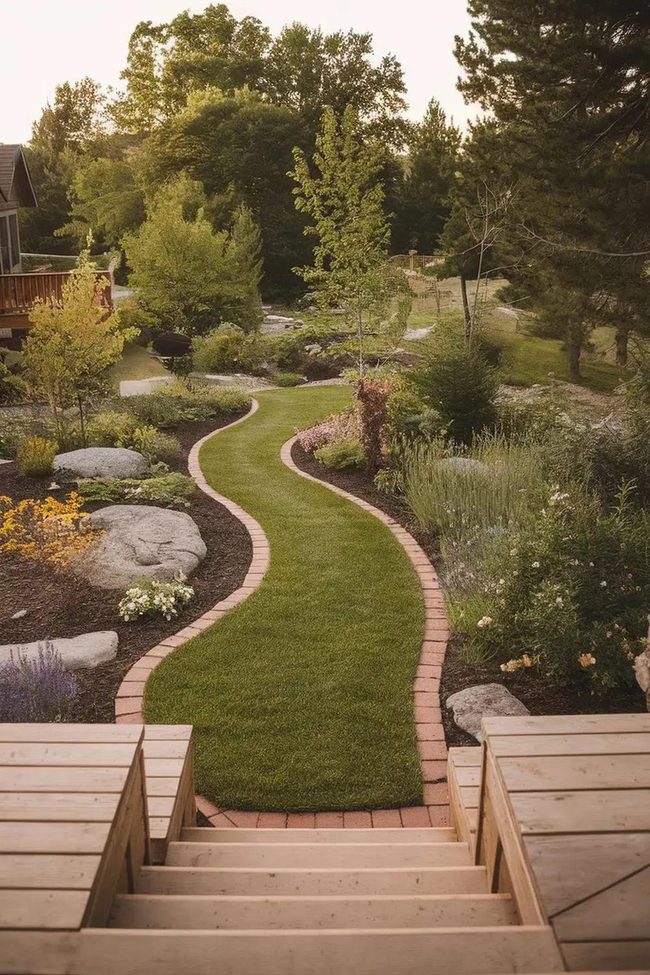
Each grass pathway cuts right through your garden and blends in beautifully with the surrounding lawn.
You can edge it with brick, stone, or metal strips to keep everything neat and prevent the grass from spreading into your flower beds.
This option works best in spots where people walk occasionally rather than constantly, and it suits relaxed garden designs perfectly.
Grass paths need very little upkeep compared to other materials, so maintenance stays simple.
If you want a more defined edge, stone or brick gives you that polished appearance while still keeping the overall feel natural.
For casual garden settings where you want everything to feel connected and easy to maintain, a grass path delivers exactly what you need.
Diffused Brown Garden Path
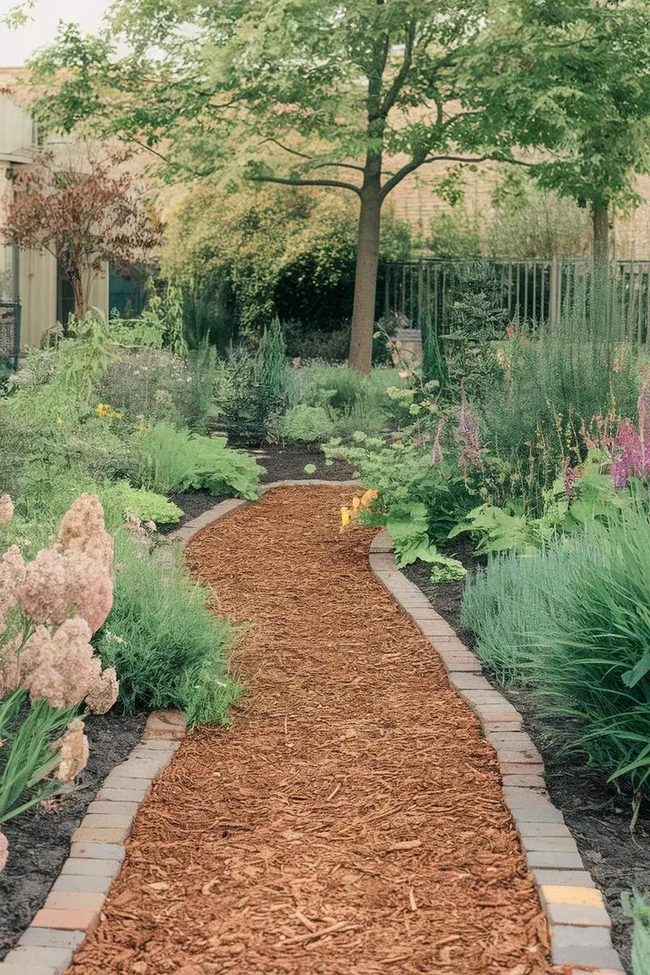
Mulch walkways bring natural, earthy texture to your garden and stand out as one of the most budget-friendly path solutions available.
Beyond looks, mulch does space-saving work by keeping soil moisture locked in and stopping weeds from taking over, so your plants stay healthier overall.
Maintenance stays simple because you don't need constant upkeep to keep things looking good.
If you want your mulch path to appear neat and organized, lining the edges with bricks, stones, or small logs helps define where the walkway sits and keeps everything contained.
You can adjust your mulch as needed, refresh it when it breaks down, and even swap out the edging materials whenever you want a fresh look.
This straightforward approach gives you a natural foundation for your garden without stretching your budget or your time.
Stone Herringbone Pathway
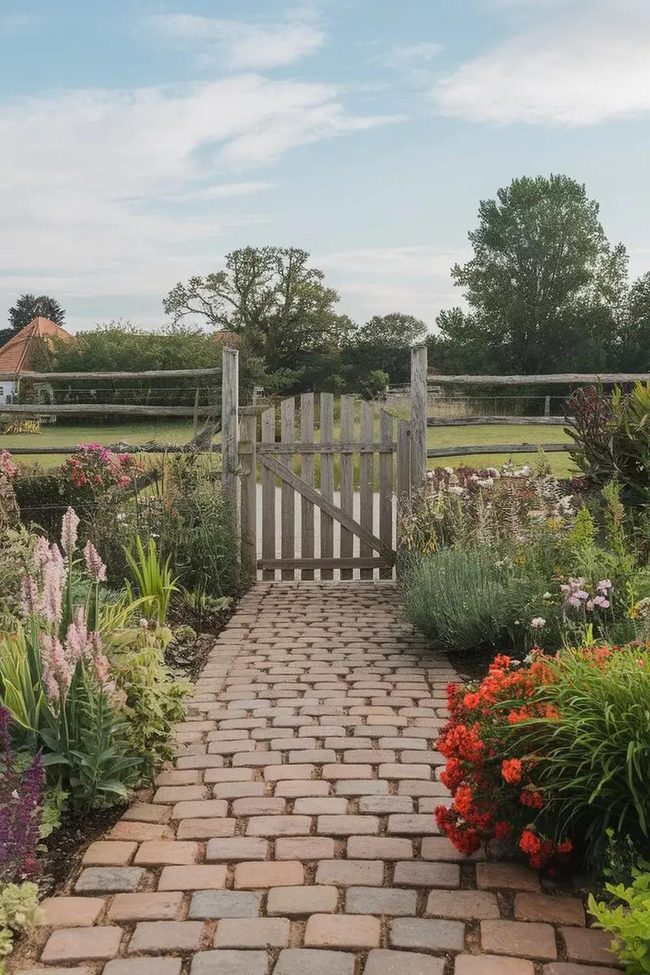
Nothing catches the eye quite like a cobblestone path winding through your garden, and you can arrange these weathered stones in patterns like herringbone or running bond to achieve that charming European look everyone loves.
If your garden leans toward cottage-style or vintage vibes, cobblestones fit right in with that aesthetic and feel at home there.
You might set them in simple rows for a cleaner feel, or go with a more intricate pattern if you want something with character.
Laying down cobblestones gives your open-air space that old-world appeal without requiring constant upkeep.
Whether you're drawn to the rustic charm or the easy to maintain durability, cobblestones deliver both and make a real statement in any yard design.
Glowing Path Through Night Outdoor
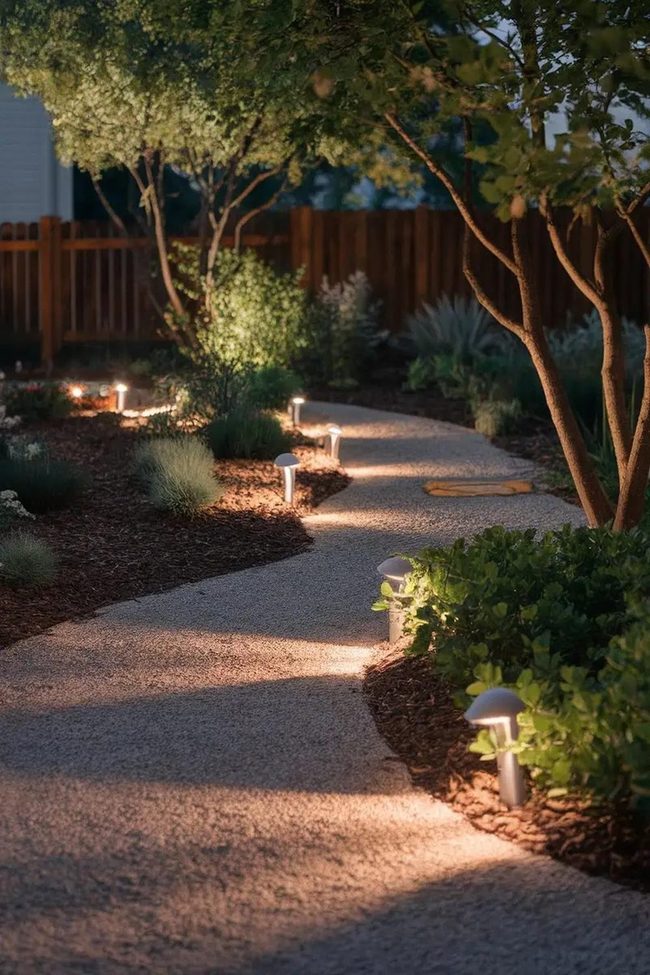
Solar lights or LED strips running along your walkway edges will brighten the path once darkness falls, and they also keep people safe from stumbling on uneven ground.
Lanterns placed at intervals add another layer of glow that spreads across your garden and shows off the plants nearby in a warm light.
You could find that a lit pathway extends how long you can enjoy your backyard after sunset, whether you're heading to a seating area or just taking an evening stroll.
Evening walks through your garden become more pleasant when you can see where you're going, and the overall atmosphere shifts into something special.
Adding this kind of lighting is one of the easiest upgrades you can make to boost both function and appeal in your open-air space.
Broken Tile Outdoor Path
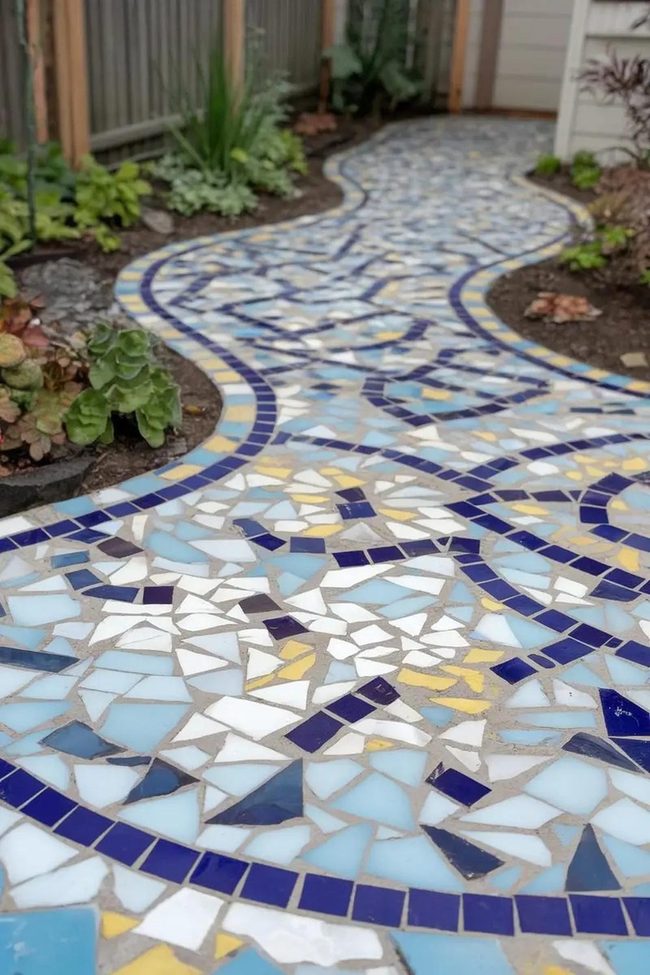
If you enjoy hands-on projects, a mosaic walkway might be the perfect addition to your outdoor space.
Broken tiles, colored glass, and stone pieces come together to form patterns that catch light and draw the eye as you walk through your garden.
You can go simple with geometric shapes or get adventurous with detailed scenes that reflect your personality.
Since mosaics allow endless customization, they fit beautifully in gardens with artistic or eclectic vibes.
The process itself is rewarding and gives you a chance to upcycle materials while building something lasting.
Gardens with this kind of walkway feel more distinctive and show off the care you've put into the space.
Whether you keep the design restrained or bold, a mosaic path becomes something people genuinely want to walk on and talk about.
Winding Stone Path Patio
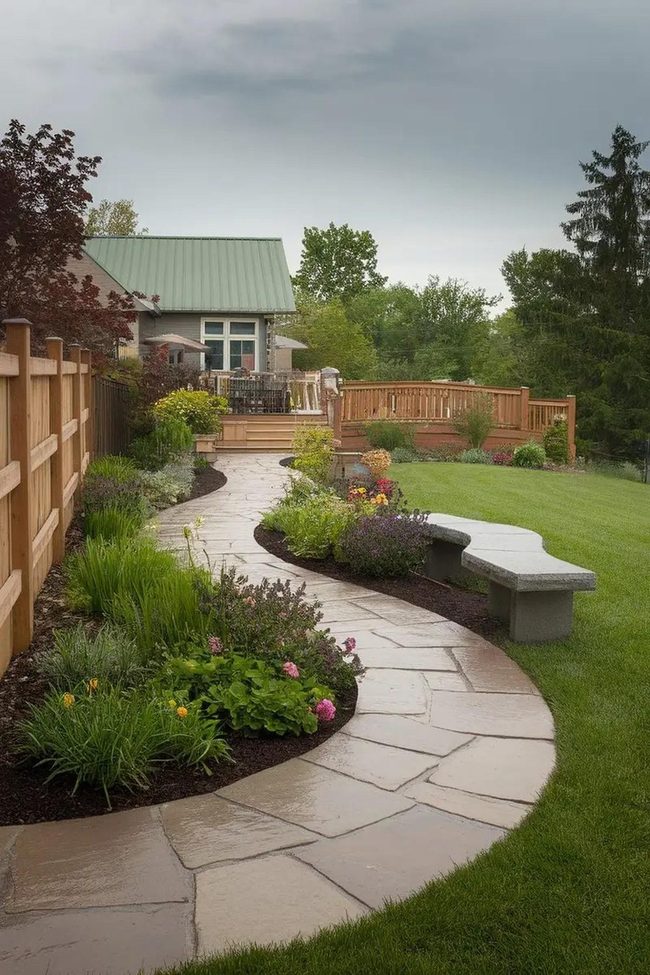
Curved pathways winding through your garden space bring an undeniable sense of movement and natural grace to garden areas.
Rather than straight lines that feel formal and rigid, gentle curves make visitors want to explore and discover what lies ahead as they move through the landscape.
You can build these paths using stone, brick, or gravel, and in all material offers its own character and charm.
Gardens with plenty of space really benefit from through the design, since curved designs help the area feel more relaxed and connected to nature.
Smaller gardens work well with curves too, though you'll want to plan the layout carefully so the path doesn't overwhelm the space.
Whether you're working with a sprawling landscape or a modest backyard, a winding path adds both function and visual interest that straight designs simply cannot match.
Interlocking Pavers Multiple Patterns
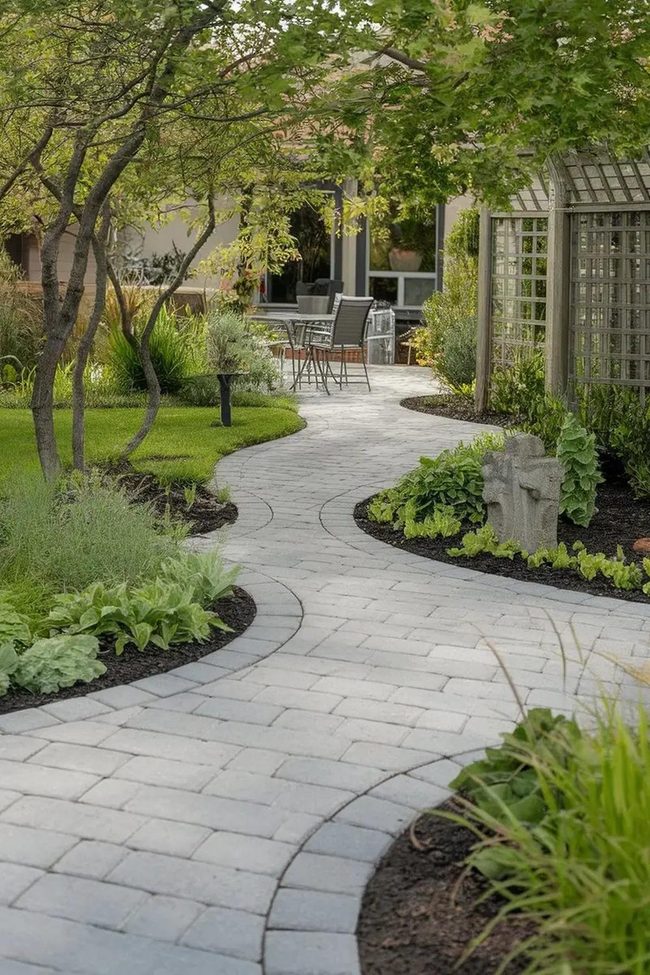
Interlocking pavers make an excellent choice for a backyard walkway because they come in so many shapes, colors, and sizes that you can arrange them into everything from simple square patterns to complex mosaics that really stand out.
Whether your garden leans formal or casual, pavers work well in both settings and they hold up extremely well over time.
You can lay them on a gravel base, and the design lets water drain right through instead of pooling up on the surface.
Pavers give your patio space a neat, structured look that's both easy to maintain and visually appealing.
The flexibility in design means you're not locked into one style, so you can match whatever aesthetic you already have going.
Installing them this way prevents water damage and keeps your walkway in good condition for years to come.
Steel Bordered Path
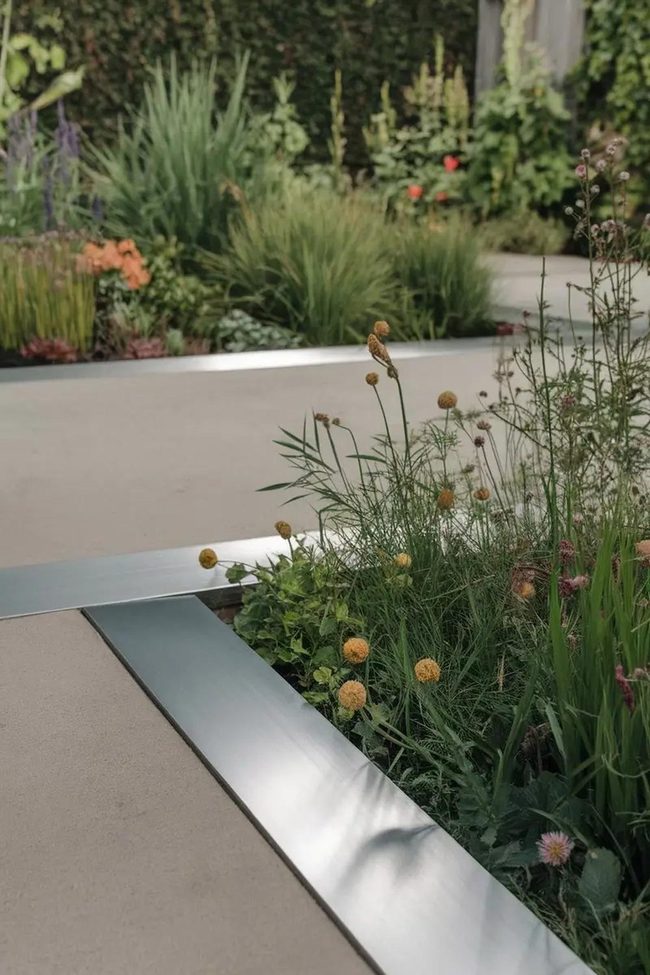
Metal edging along your walkway creates sharp, defined lines that immediately catch attention with its modern aesthetic, making it especially striking in minimalist or industrial garden spaces where clean geometry matters most.
You can choose between corten steel, which develops a rich rust patina over time for that weathered character, or aluminum if you prefer a polished, reflective finish that stays pristine.
Both materials work beautifully whether you want straight pathways or flowing curves through your landscape.
Metal edging holds up well against rain, frost, and sun without losing its shape or appeal.
The easy to maintain benefit here is that composition keeps your walkway borders sharp and prevents soil from spilling onto hardscaping surfaces.
Installation is straightforward and doesn't require much maintenance once it's in place.
If you're going for a contemporary garden design, metal edges pair naturally with stone, gravel, or pavers and give your whole space that put-together look without feeling overdone.
Smooth Stone Woodland Walkway
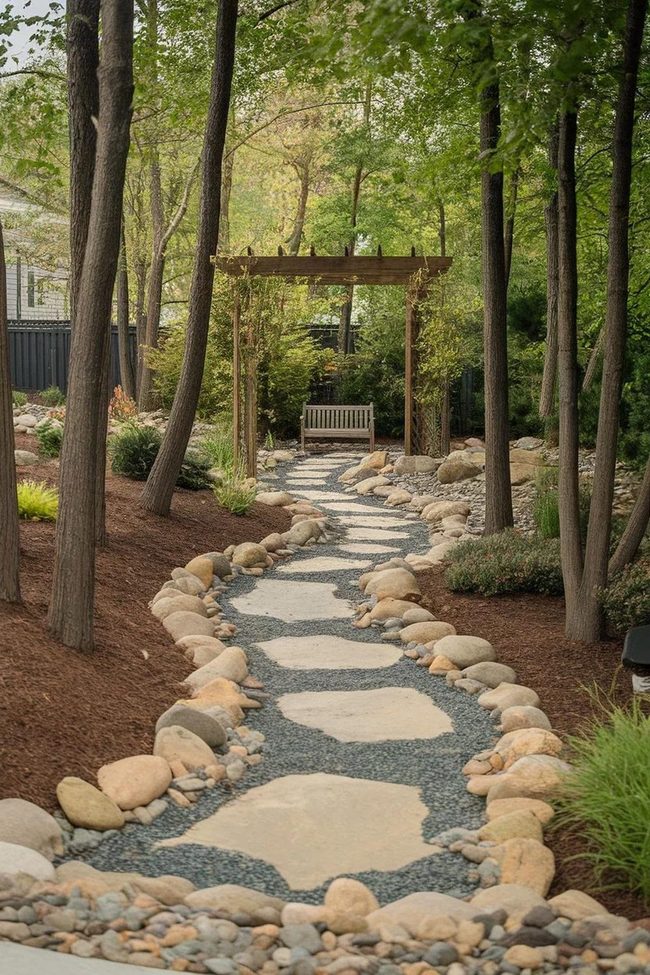
River rocks offer a striking natural element that instantly grounds your backyard in earthy appeal and works beautifully as a pathway material that flows right into your landscape.
You can arrange smooth, round stones to mimic a dry riverbed look, and design choice gives you a surface that needs minimal upkeep while still letting water drain through properly.
Mixing in larger stones or gravel alongside your river rocks adds visual interest and texture to the path.
Such paths look especially nice when they wind through wooded areas or forest-like gardens, where the natural stones enhance the woodland atmosphere and guide people through the space in a relaxed way.
Gravel Hardwood Pathway Blend
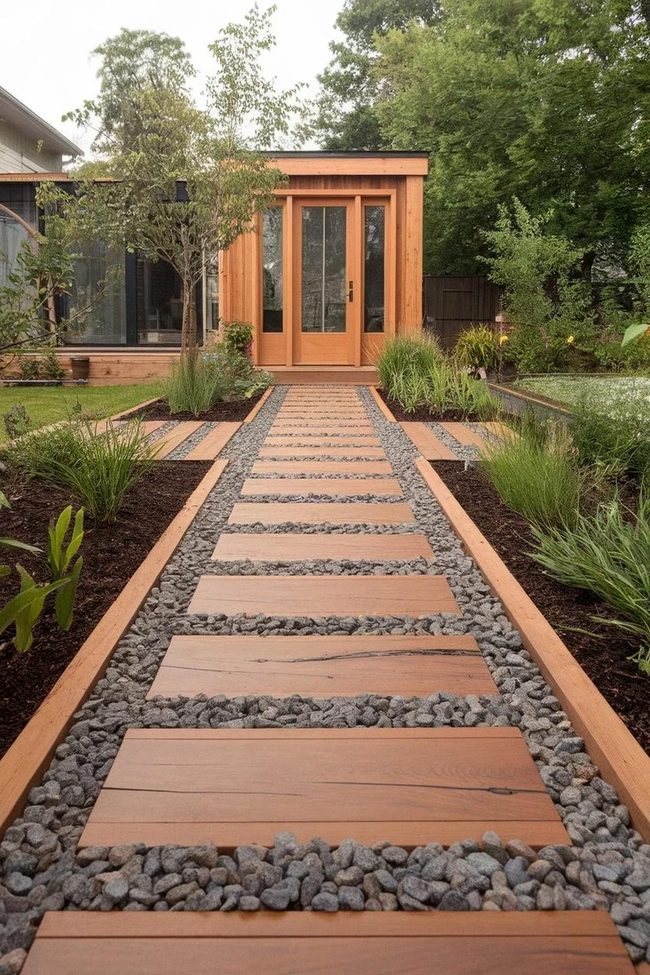
Mixing gravel and wood together gives you a walkway that stands out with its layered, textured appearance and natural colors.
You can build a raised wooden border around a gravel center, which creates depth and draws attention through the contrast of materials.
Another option is to lay wood planks and gravel in alternating strips, making a pattern that's both easy to maintain and good-looking.
Both earthy tones work well with surrounding plants and trees since they echo what nature already offers in your yard.
Wood brings warmth while gravel adds texture, and together they form a path that feels balanced and harmonious.
If you want something that feels both rustic and current, method delivers without looking overdone.
The mix of materials makes your walkway feel while staying functional for everyday use.
Stone Pathway Through Bamboo
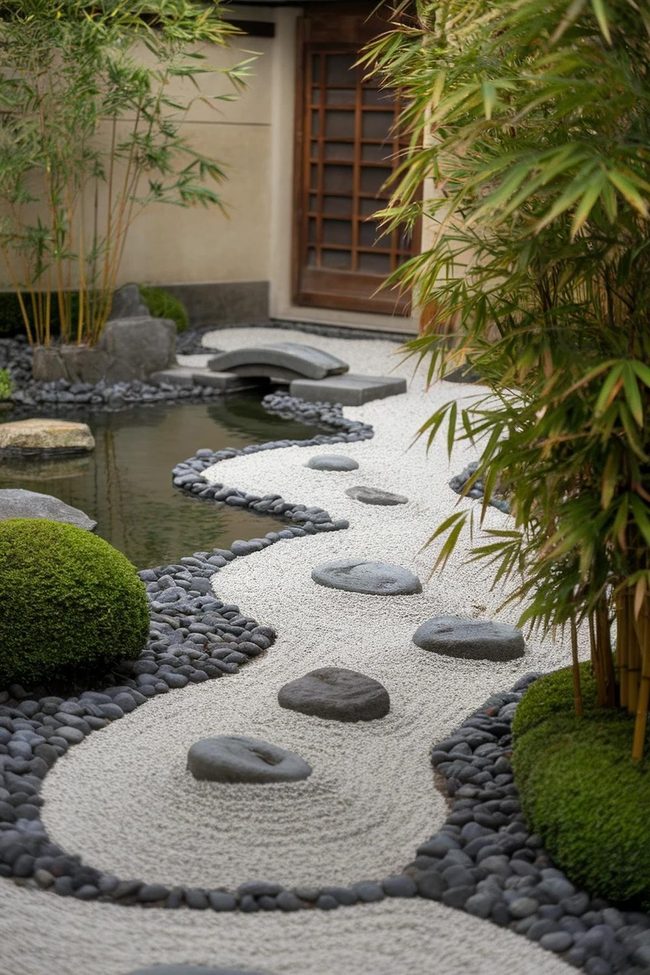
Smooth stones arranged in flowing patterns across your yard command immediate attention and draw the eye with their natural beauty and geometric precision.
Pebbles spread beneath these stones catch light differently depending on the time of day, shifting from silvery white to muted gray tones as the sun moves overhead.
Bamboo elements rise gracefully alongside the path and provide height contrast while filtering views and creating natural privacy screens.
Walking along such a path slows you down naturally since the stepping stones require deliberate placement of throughout foot, and this rhythm naturally encourages you to breathe deeper and settle your mind.
You can build a Zen garden path as the centerpiece of a larger Japanese-style garden where it connects different zones, or you might prefer keeping it separate as its own standalone sanctuary within your landscape.
Simple design choices matter most here because removing unnecessary elements lets your focus rest on what remains, and this restraint is actually what makes spaces feel peaceful rather than empty.
Whether you want a dedicated meditation area or just a place to pause during your day, these pathways accomplish that purpose without needing to be elaborate or complicated.
Grass-Framed Stone Pathways
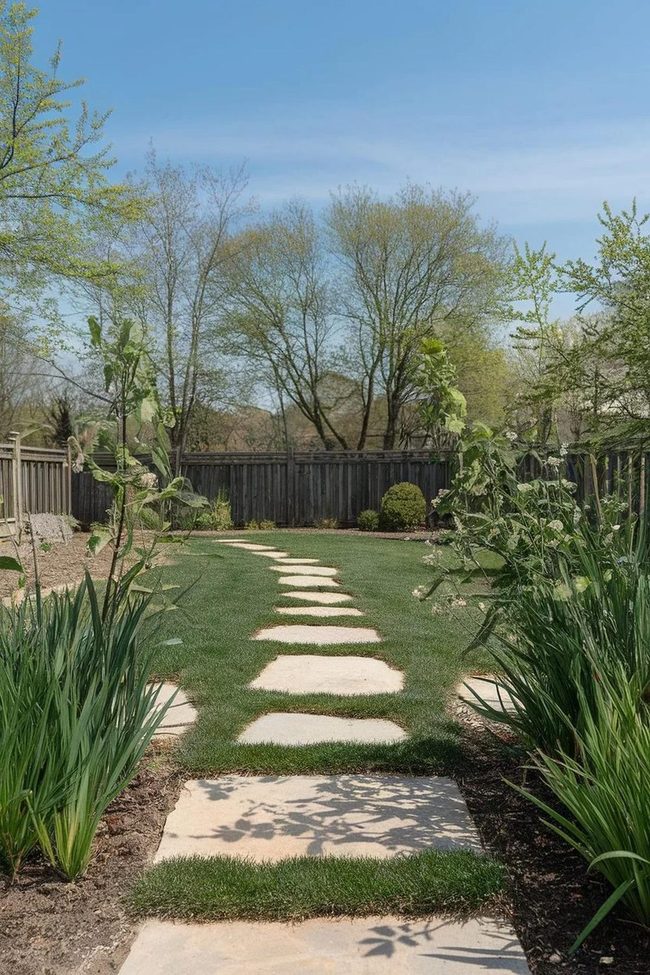
Stepping stones scattered across your garden shape an eye-catching path that guides people through the space while letting grass and groundcover flourish between in all one.
You can choose from stone, concrete, or wood to match your yard's style and personality.
They're straightforward to install and don't require the same level of planning as a traditional paved pathway.
If you want something that looks natural and blends with your landscape, stepping stones deliver that effortlessly.
Your garden gets both function and visual interest, and the whole project is something most people can tackle themselves without special skills or equipment.
Red Brick Herringbone Path
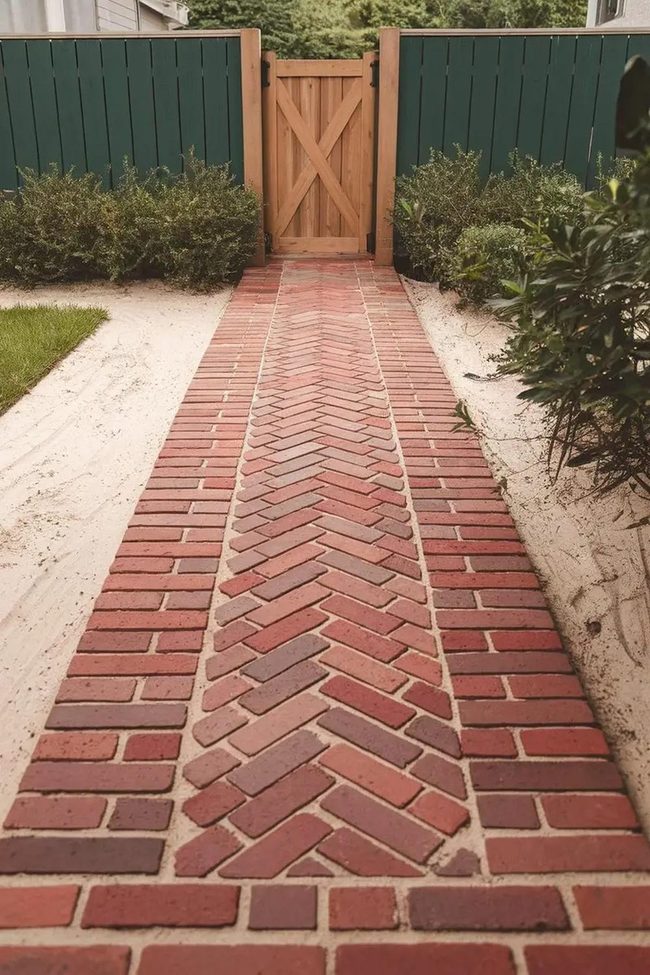
Brick walkways stand out immediately with their rich, warm colors and distinctive textures that grab attention from across your yard, and you will find that this classic material works beautifully in both traditional and modern spaces.
Red, white, or reclaimed bricks let you match your pathway to your garden's colors, so coordinating with surrounding plants and structures becomes simple.
What makes bricks especially useful for everyday living is how many patterns you can lay them in, herringbone, basket weave, or running bond in all offer different visual effects.
Beyond their good looks, bricks hold up extremely well against weather and heavy foot traffic over the years.
You can count on your walkway staying intact and looking good decade after decade.
Installation is straightforward enough for most people to handle themselves.
Since bricks are versatile and long-lasting, they represent a smart choice for anyone wanting a durable path that looks good in nearly any yard style.
Gray Concrete Slabs Between Grass
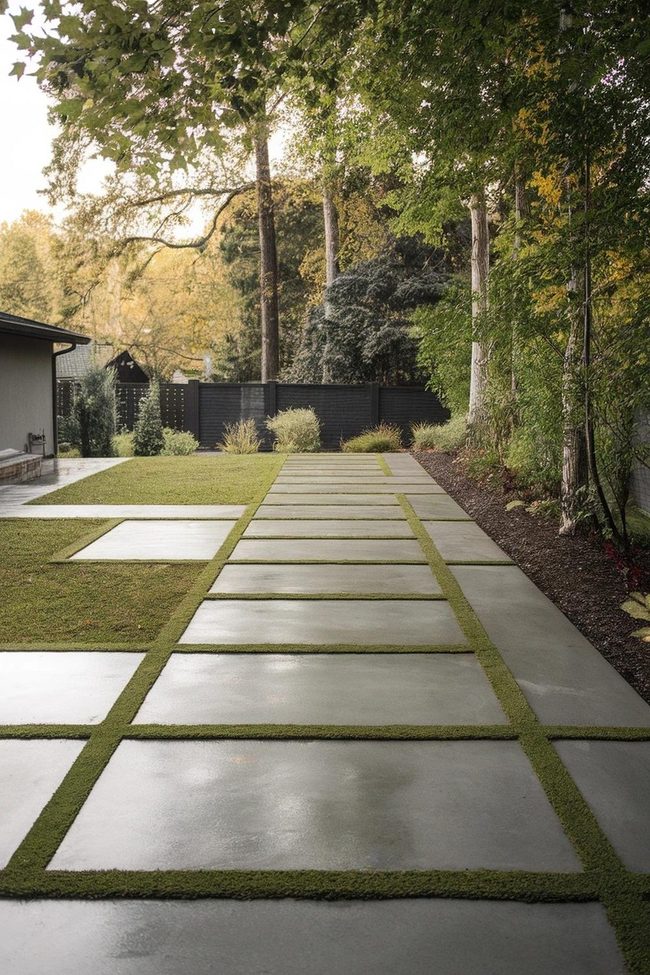
Concrete slab walkways offer a striking modern appearance that works especially well if you want clean lines and geometric shapes in your outdoor space.
You can choose large slabs arranged with gaps for grass or moss to grow between them, creating a minimalist look that feels both simple and polished.
For those who prefer more pattern and texture, concrete allows for stamping techniques that mimic stone or brick surfaces, giving you options that range from understated to more detailed.
We recommend concrete because it's incredibly flexible as a material and can be molded into whatever design appeals to you, whether that's bold shapes or smaller intricate layouts.
This type of walkway pairs nicely with contemporary and urban backyard settings, and it requires less maintenance than natural materials.
If you're drawn to a pared-down aesthetic, the large slab option with breathing room between sections keeps things uncluttered.
Because concrete is durable and long-lasting, your walkway will hold up well over time and still look great.
Brown Chips Muted Pathway
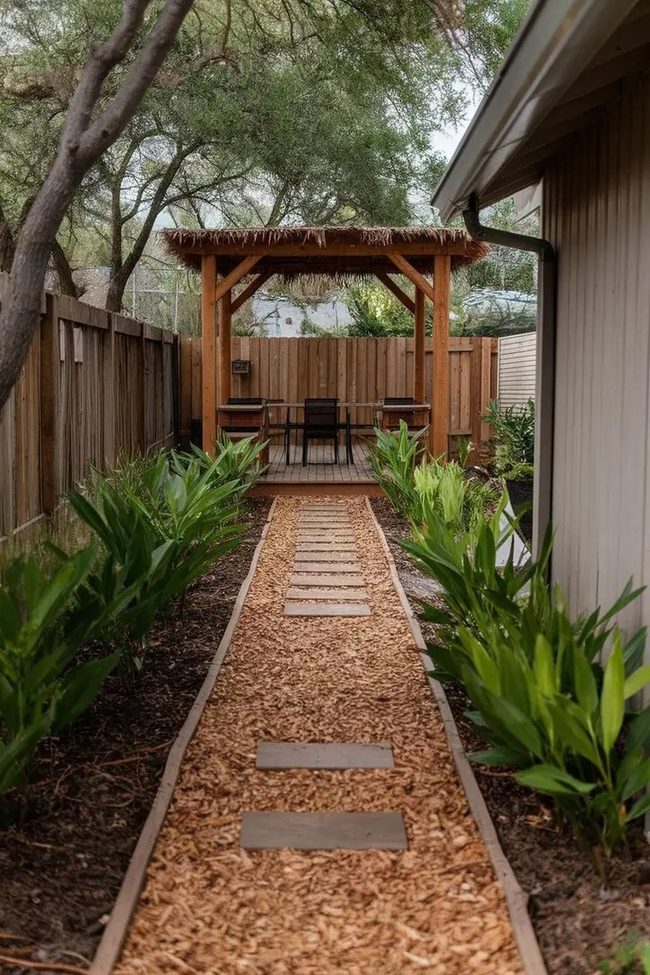
Wood chips make for a laid-back and sustainable choice when you want to build a pathway through your open-air space, and they work best in gardens with a more relaxed personality like veggie patches or wooded areas that need that earthy, natural feeling.
One of the best parts is how gentle they feel when you step on them, and they also help the soil around your plants stay moist longer.
You can scatter them across your path in varying depths and tones to achieve different textures that suit your garden's character.
Because they break down over time, you can want to top them off every so often so your walkway doesn't look thin or worn.
Most people find through the design, budget-friendly and easy to handle on their own without special equipment.
If you're someone who enjoys gardening and likes the look of materials that blend naturally into the landscape, wood chips offer both comfort and environmental benefits.
They pair nicely with informal planting styles and add warmth to spaces that might otherwise feel cold or rigid.
This option keeps your garden feeling grounded and unpretentious while still serving its purpose as a functional pathway.
Stone Pathway Through Authentic Outdoors
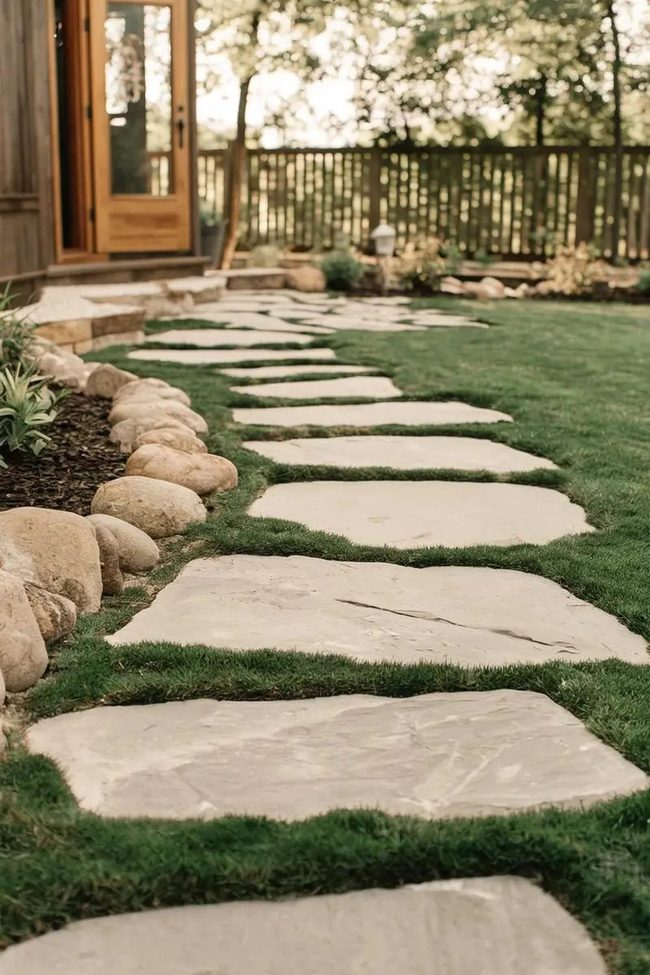
Flagstone pathways stand out immediately with their natural texture and earthy tones, giving your backyard a sophisticated look that feels both timeless and grounded.
You can lay these stone slabs in a random pattern for an organic, flowing appearance or arrange them in structured rows if you prefer something more formal and clean.
What makes flagstone so adaptable to different needs is its durability and how little upkeep it requires, which means it holds up well even when people walk on it regularly.
The surface feels solid underfoot and weathers beautifully over time, actually improving its appearance as it ages.
If you're thinking about your backyard's foundation, flagstone gives you flexibility in design while keeping maintenance simple.
Stone pathways like these become the bones of your outdoor space and guide people naturally through your yard.
Gravel Path With Stone Edging
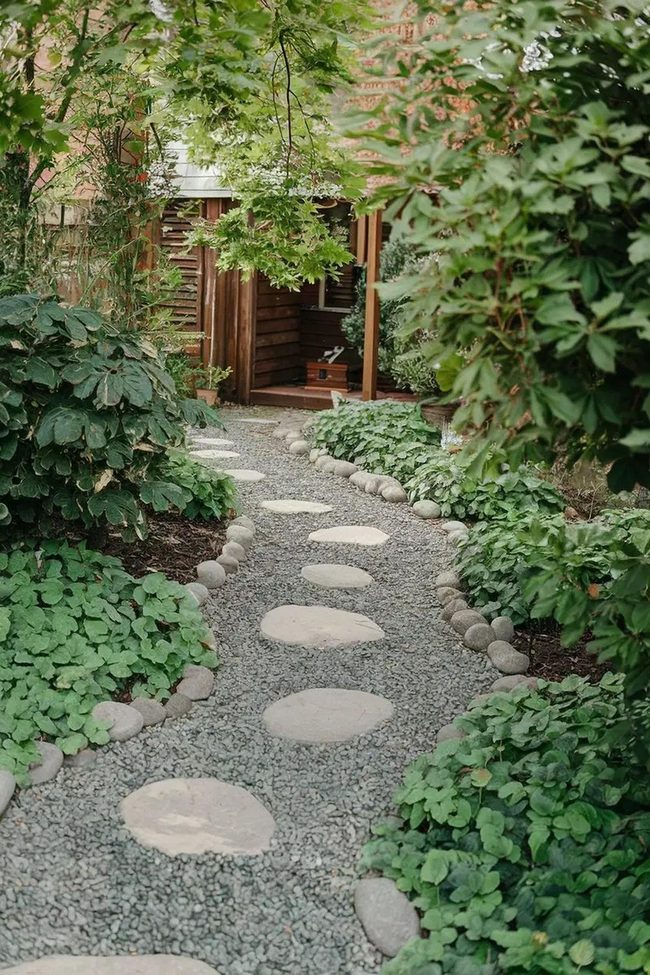
Each gravel walkway brings instant rustic charm to your patio space and serves as a easy to maintain foundation for any garden design.
You can lay gravel down affordably and adjust it easily whenever you want to change things up.
Pairing it with metal or stone edging keeps everything neat and prevents the gravel from spreading into nearby beds.
For a more structured feel, scatter stepping stones or larger rocks throughout the path to guide visitors and add visual interest.
Gravel works beautifully in relaxed garden settings like wildflower beds, herb gardens, or routes leading to a shed or other garden structures.
It blends seamlessly into informal layouts without looking fussy or overdone.
Whether you want something straightforward or slightly more refined, gravel gives you flexibility to design a pathway that fits your style and budget.
Olivia Martinez
Founder & Principal Designer
Expertise
Sustainable Interior Design, Residential and Commercial Space Planning, Historic Preservation and Adaptive Reuse, Custom Furniture Design, Project Management
Education
Parsons School of Design, New York, NY
LEED Accredited Professional (LEED AP)
Olivia Martinez is the founder of Archi Refresh, where she brings style and sustainability together. With a degree from Parsons School of Design and a LEED certification, she’s all about creating beautiful, eco-friendly spaces.
With over eight years in the industry, Olivia has designed everything from cozy homes to commercial spaces, always putting function and sustainability first. She loves working with local artisans and has been featured in design publications for her fresh take on green living.
When she’s not designing, Olivia enjoys exploring historic architecture, painting, and spending time with her rescue dogs, Luna and Max.