
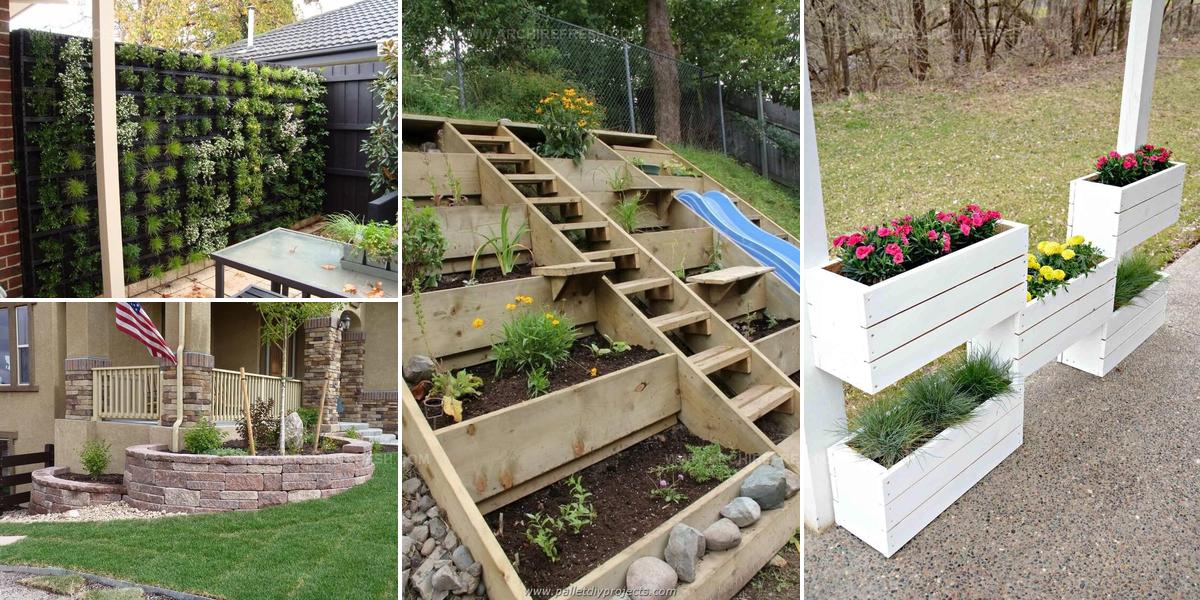
33 Creative Built In Planter Ideas for Your Garden Space
Built in planter ideas can completely change how gardens and outdoor spaces function while adding beauty that lasts for years.
Permanent planters offer structure and definition that portable pots simply cannot match in most landscapes.
Homeowners love how seamlessly integrated designs blend with patios, decks, and walkways to feel like natural extensions of living areas.
Stone, wood, and concrete options provide durability that withstands weather while requiring minimal maintenance over time.
The flexibility in sizing means narrow spaces and expansive yards both benefit from customized solutions that fit perfectly.
Smart placement creates focal points, privacy screens, or herb gardens right where you need them most.
With so many materials and styles available, finding the perfect match for any home becomes an exciting design adventure.
Concrete Bench With Custom Planter
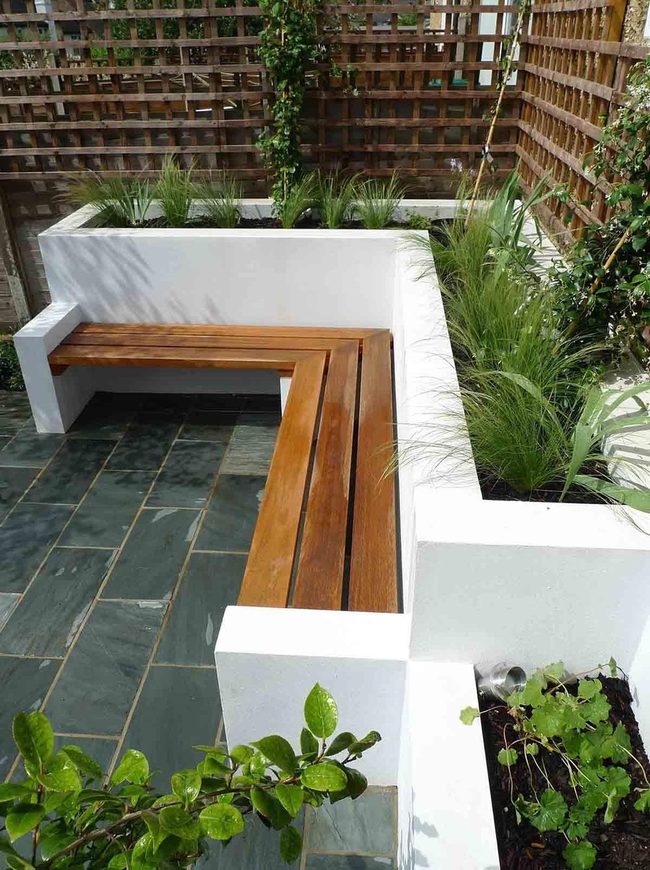
Once you pick a stain that matches your home and personal style, grab some quick-drying concrete countertop mix to build molds for both your planter and L-shaped bench supports.
A caulking gun paired with masonry construction adhesive will hold those supports firmly in place on the planter.
Next, you'll assemble each section of the bench seat by sliding straight ends into notches, then fastening mitered ends to a square piece of wood sitting on top of the center support.
Adding pillows on top brings comfort to the space and makes the whole bench feel warmer and more pleasant to sit on.
Diagonal Black Lattice Planters Corner Accent
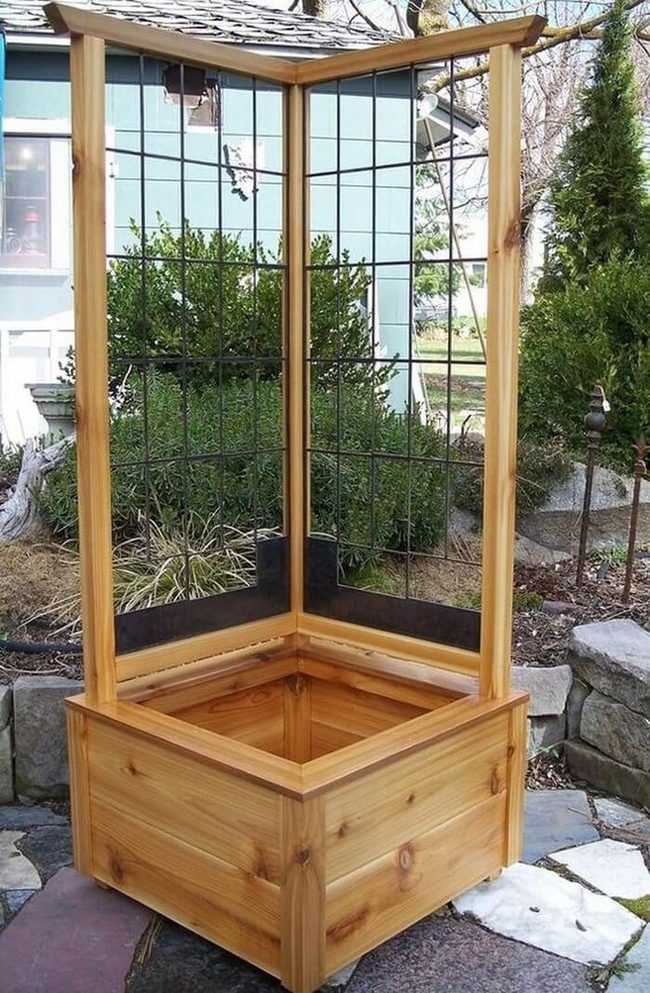
Square planters have a striking geometric shape that catches attention when you angle them diagonally across a corner of your patio or deck, and this simple positioning gives your space an instant refresh.
Two of the sides work perfectly as a trellis system where climbing plants can grow upward, adding height and dimension to your outdoor setup.
Black lattice on the trellis brings an oriental feel to the area, though you can swap it out for other materials and colors to match your style.
Wood choices matter here and mixing different types, stains, and finishes lets you achieve anything from Victorian charm to rustic simplicity depending on what appeals to you.
Modern spaces benefit from cleaner, more streamlined versions of these planters, and they still pack plenty of function alongside their polished appearance.
Whether you go ornate or minimal, this planter setup serves both as decoration and a practical way to grow plants in your outdoor space.
Black Concrete Blocks With Plants
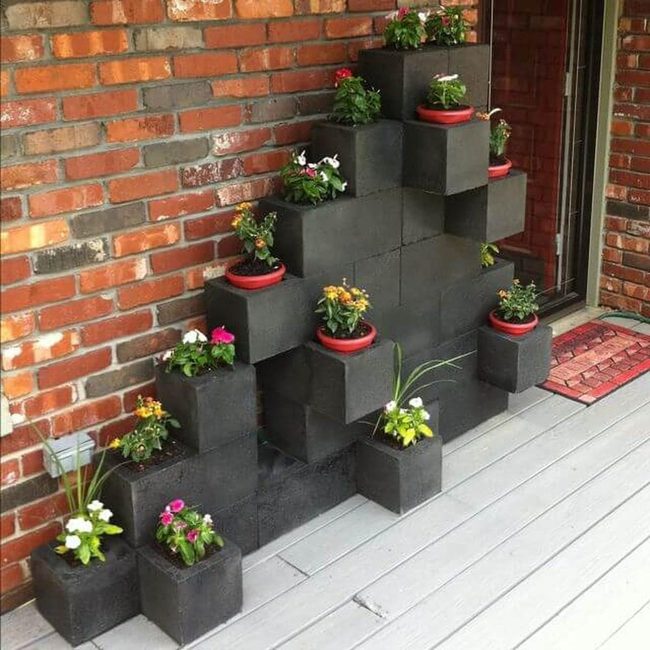
Black concrete blocks stacked into an angular, protruding shape make a statement in any garden or yard, and arranging them so some pieces jut forward from the front creates that bold look right away.
You can use both full and half blocks to build this design, and leaving intentional gaps between certain pieces adds layers and visual interest to the structure.
Once you've stacked everything in place, filling those visible openings with potted plants brings life and color to the composition.
This kind of planter really does stand out no matter where you put it, whether in a small corner or a large outdoor space.
I like how the dark blocks provide a strong background that lets your plants shine and draw attention.
You don't need any special skills to pull this together either, which makes it perfect for anyone wanting to add something distinctive to their landscape.
Stacked Cement Block Planters
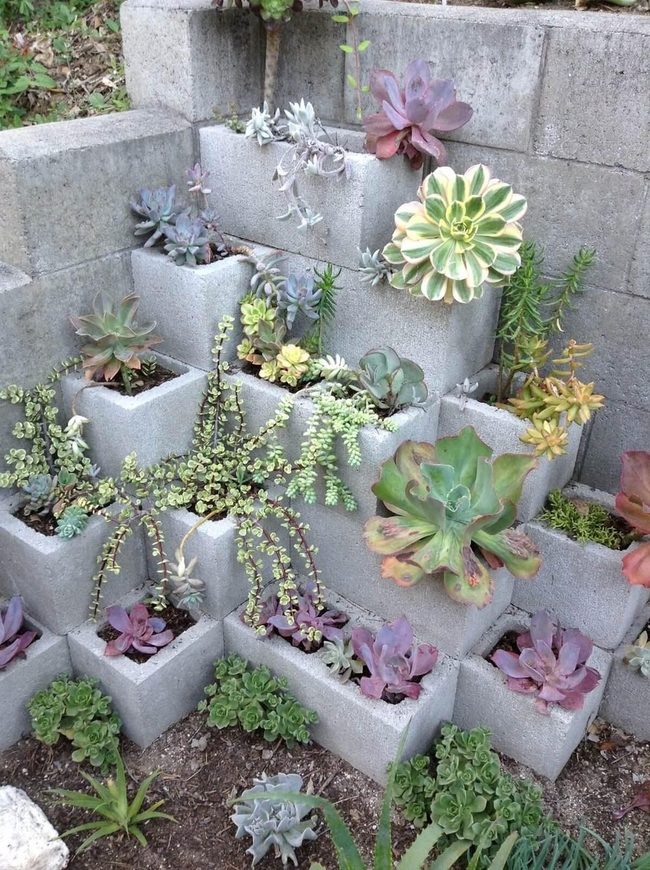
Large, colorful planters catch the eye immediately and can transform even the plainest outdoor corner into somewhere worth spending time in.
You can build one yourself by stacking cement blocks and half blocks into an interesting shape, perhaps starting with a triangle base and working upward.
Fill the openings between blocks with small potted plants in different colors, and suddenly you have layers of greenery and blooms that didn't require much work or expense.
Most people are surprised at how much personality this kind of project brings to a deck or patio, especially when you choose plants that match your taste.
The best part is that anyone can do this, whether you've gardened before or not.
Creativity really does shine through in simple projects like these, and your space becomes genuinely different.
Elevated Planters Native Green Retreat
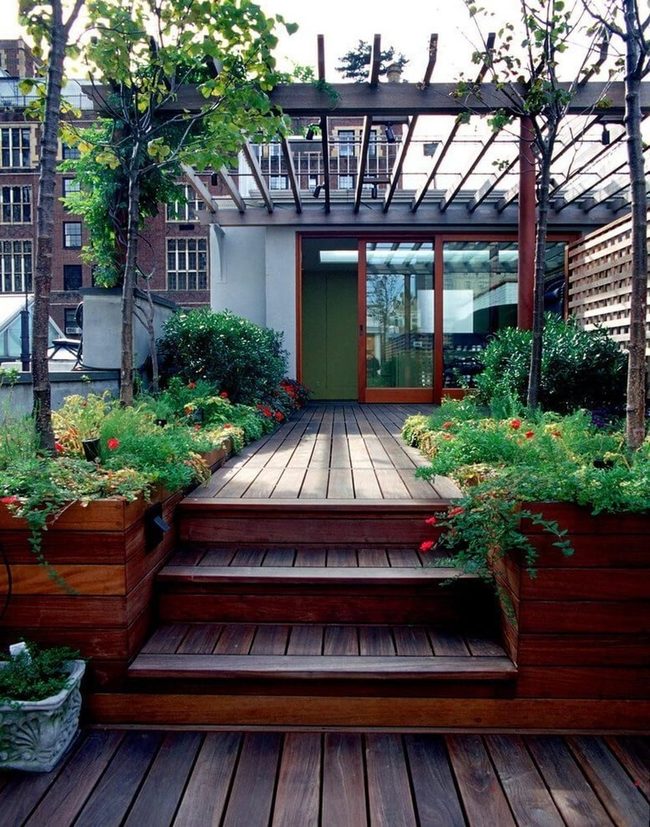
Tall box planters rising above your deck's edge create that striking woodland boardwalk aesthetic that makes people pause and appreciate the view.
When you fill these elevated containers with small trees, colorful flowers, and spreading ground cover plants, you instantly elevate the entire outdoor space.
Native woodland plants work especially well for this style since they're adapted to your local conditions and look naturally at home together.
Greenery arranged throughout your deck adds beauty without requiring complicated planning or upkeep.
Just by positioning these planters strategically, you can shift your deck from ordinary to a place where you actually want to spend time.
It's one of those decorating moves that feels effortless but makes a real difference in how your outdoor area feels.
Concrete Planters Native Forest Canopy
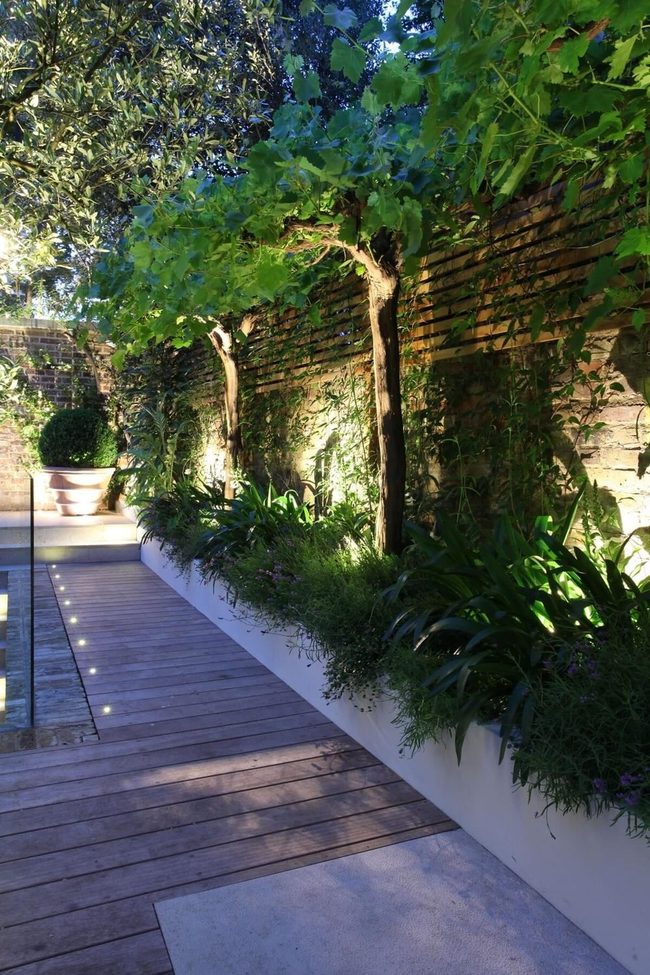
Large concrete planters filled with native trees and shrubs transform your deck into a woodland escape that feels both natural and restful.
You can position these substantial planters around your seating area to frame the space with height and greenery, much like the tree canopy you'd find in a local forest.
Choosing native plants means they'll thrive in whatever shade your deck receives, and they'll grow without demanding constant fussing from you.
Small trees paired with shrubs create layers of foliage that block unwanted views and soften the edges of your outdoor space.
When you settle into your favorite chair, you're surrounded by living greenery that brings the peaceful feeling of a woodland glade right to your home.
Weathered Corten Steel Garden Planters
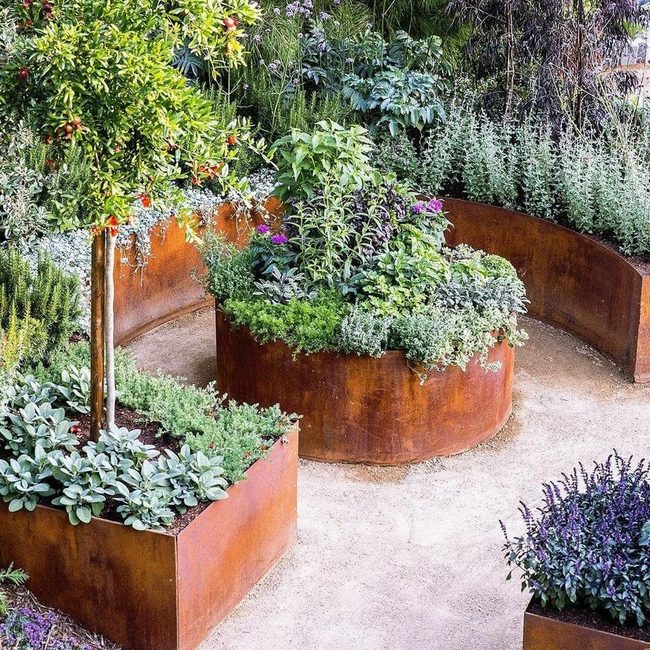
Rusty corten steel planters made from recycled materials bring a striking, weathered charm to garden spaces, and many people now prefer cultural heritage pieces like cast iron manual pumps and hand plows instead of traditional Greek or Roman statues.
You can cut and weld corten steel into virtually any size or shape to match your vision, and the metal develops that distinctive rust patina naturally over three to six months, giving your outdoor area an authentic aged character.
What makes these planters so practical is their interior design, which protects your soil and plants from weather damage while keeping the structure durable for years to come.
When you combine gardening with these historical pieces, you're not just growing plants; you're honoring the past and connecting with traditions that matter to you and your family.
Concrete Stairs Transform Sloped Gardens
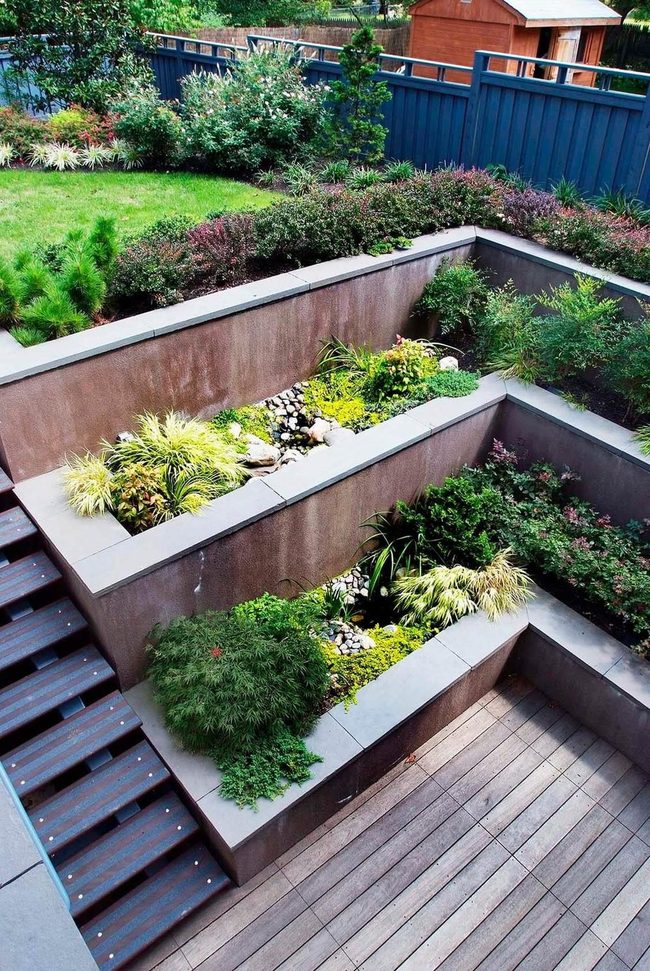
Tiered concrete planters make a bold statement on hillside properties, transforming sloped yards into visually striking garden spaces that catch everyone's attention.
Beyond their modern appeal, these stacked structures solve real problems that come with steep terrain since they eliminate the need for traditional retaining walls and reduce safety hazards in difficult-to-reach areas.
You'll find that managing your landscape becomes much simpler when you don't have to navigate challenging slopes with a mower or struggle with hard-to-maintain sections.
The practical benefits matter just as much as the aesthetic ones because fewer complications mean you can actually enjoy your outdoor space instead of constantly wrestling with upkeep.
Whether you're dealing with erosion concerns or just tired of fighting gravity every season, this approach offers a straightforward path to both a safer and more beautiful yard.
Installing tiered planters lets you plant flowers, shrubs, or vegetables at different levels and makes your sloped property feel organized and intentional.
Tiered Grasses And Flowering Plants
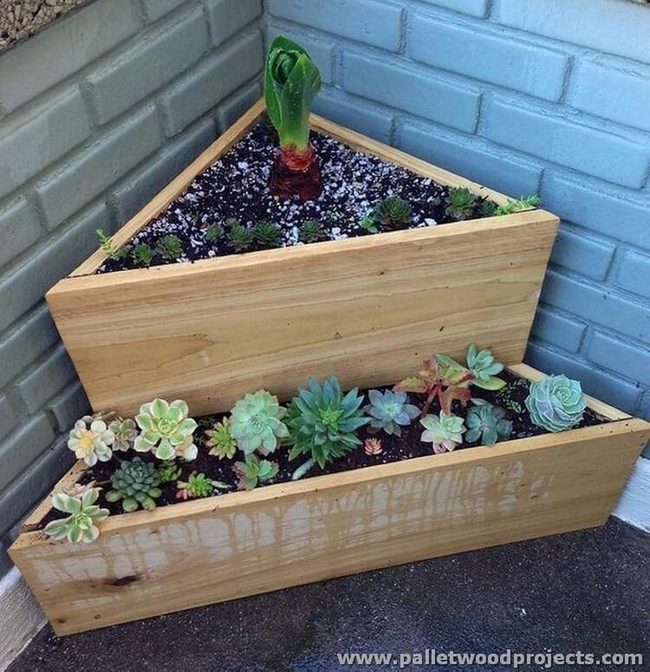
Tiered corner planter transforms that bare patch on your deck or patio into something lively and green, and tall grasses in the upper section give you an immediate visual anchor that draws focus.
Colorful flowering plants tucked below the grasses add brightness and depth to the whole arrangement.
Succulents work really well in this setup since they need minimal watering and care, which makes them perfect if you have a busy schedule.
Beyond just looking good, this kind of planter brings genuine life to an empty outdoor space and makes the whole area feel more welcoming.
You just stack the plants, water occasionally, and watch your patio come alive over time.
It's one of those easy upgrades that pays off without demanding much from you at all.
Dual Crate Succulent Pebble Table
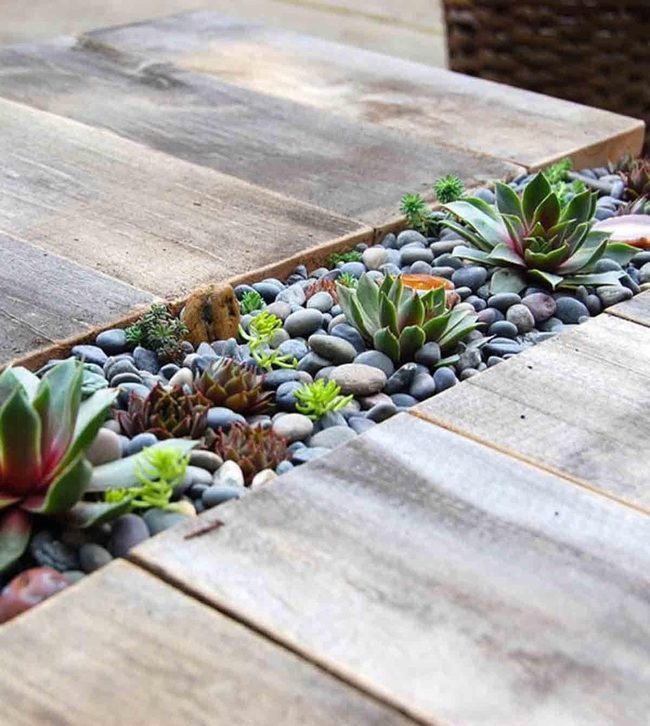
Rustic patio side table with two halves crafted from a repurposed art crate that immediately draws attention in your outdoor area.
Short succulents planted across the surface need very little maintenance and provide natural texture that pairs nicely with smooth stream pebbles and weathered wood scattered throughout.
This unique planter acts as an eye-catching centerpiece that enhances any backyard setup.
You'll find it works equally well alongside southwestern décor or contemporary designs, giving you flexibility with how you style your space.
Its weathered appearance brings authentic charm to patios without demanding much from you in terms of upkeep.
The combination of living plants and natural materials creates something both functional and visually appealing for outdoor gatherings.
Green Layered Balcony Garden
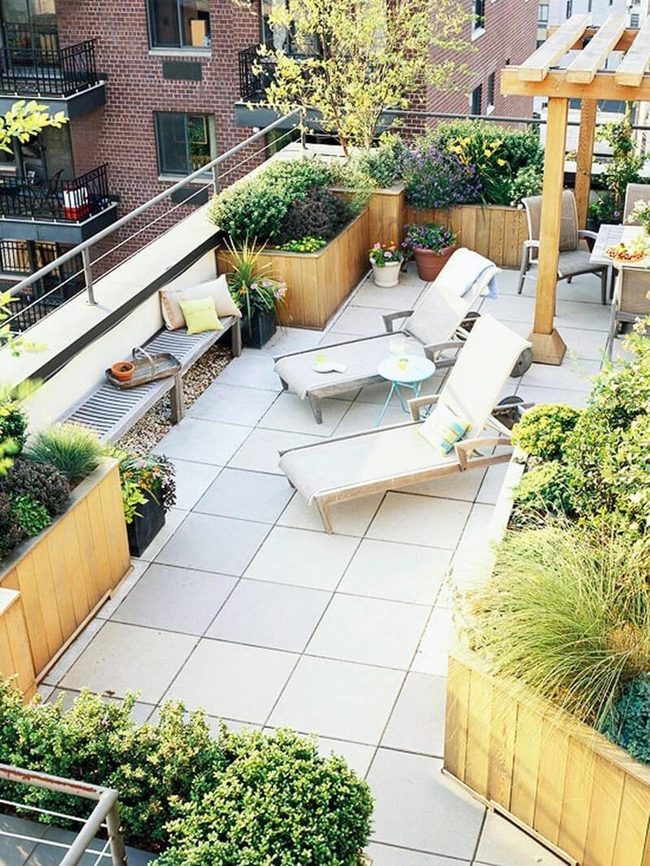
Planter boxes in various sizes along your walls and railings form the backbone of a balcony garden, and you can fill them with small trees, shrubs, and colorful flowers that instantly brighten your outdoor space.
Tall plants or trellises positioned strategically offer privacy while vines draping from hanging baskets add natural beauty overhead.
Herbs and vegetables work wonderfully in containers too, so you get both visual appeal and fresh ingredients steps away from your kitchen.
Starting simple with these layered plantings transforms even a small urban patio into a lush retreat.
Fresh greenery softens hard surfaces and makes the area feel more welcoming.
Your balcony becomes a place where you actually want to spend time relaxing or entertaining.
Vertical Cedar Garden Wall
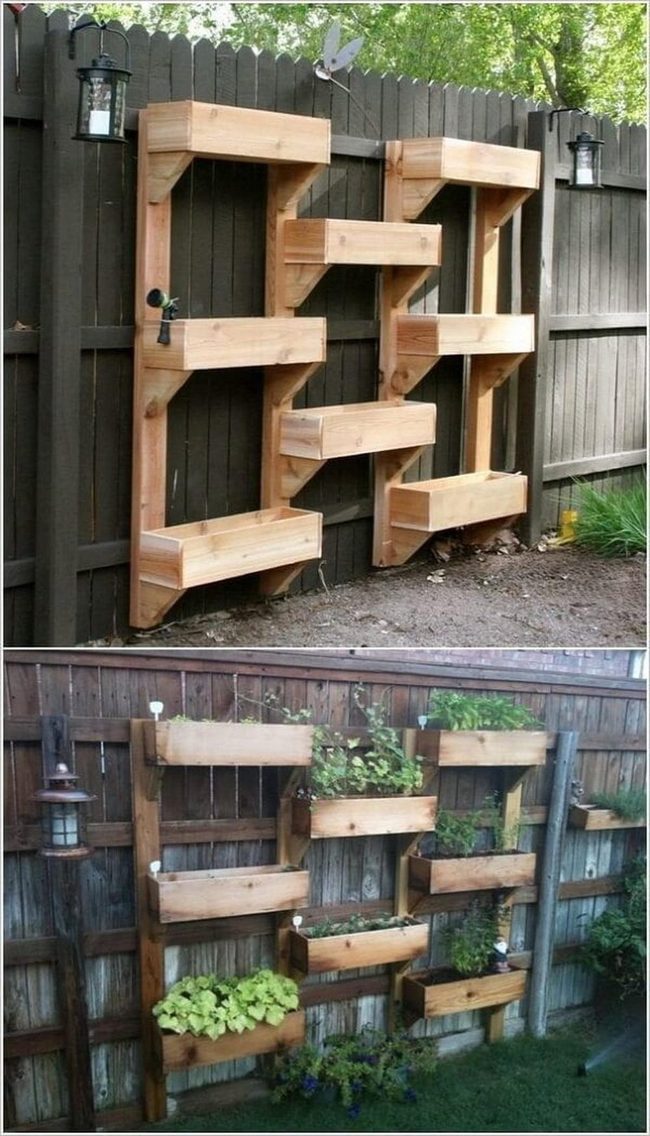
You can grow flowers, herbs, and salad greens in small spaces by going vertical and making use of the wall area above ground.
Cedar window boxes and wood shelves mounted on fence supports create a lush green backdrop that catches the eye right away.
Two-by-fours provide a solid frame that holds everything securely in place.
Between the vertical posts, fill shallow containers with your favorite vegetables and greens for a living display.
Having fresh produce at your fingertips adds both beauty and function to your outdoor area.
Shallow-rooted plants work especially well in this setup since they don't need deep soil.
It's a simple way to bring nature closer to home while maximizing whatever space you have available.
Layered Stone Walls Natural Texture
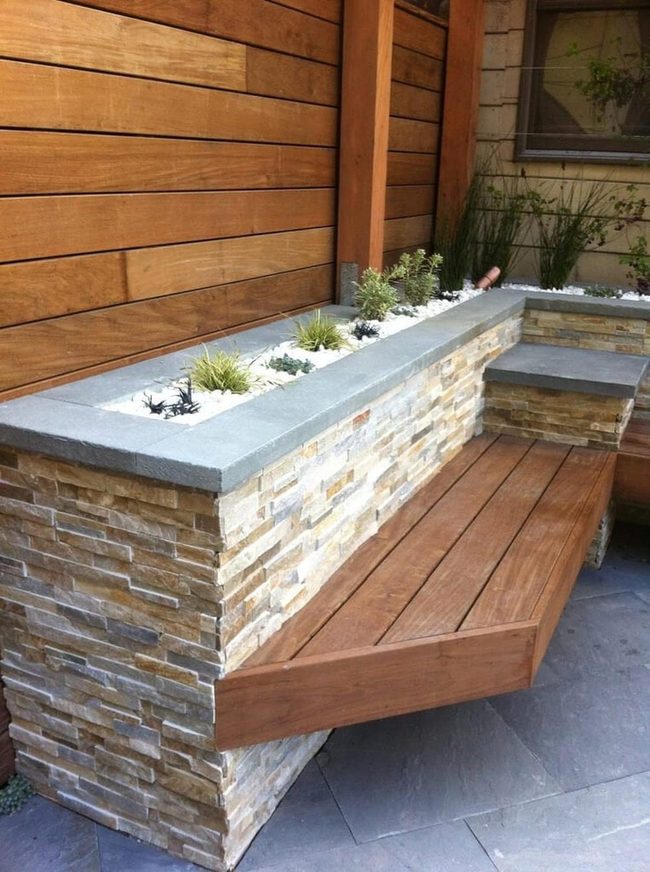
Start by sorting your stones into three groups based on size; large, medium, and small; which makes the building process much easier and helps you lay a strong foundation.
Use your largest and least attractive stones as the base layer, then overlap them where they meet to keep everything stable and secure.
Mixing different stone sizes and colors together gives your wall or structure a distinctive look that really stands out in your space.
For shorter walls under 18 inches, you don't actually need mortar at all, though adding masonry construction adhesive between the layers does strengthen taller builds and makes them last longer.
Playing around with how you position each stone lets you find an arrangement that feels right to you, and you can simply work with natural materials that look beautiful when they frame a deck or garden area.
Backyard Pond With Cascading Water
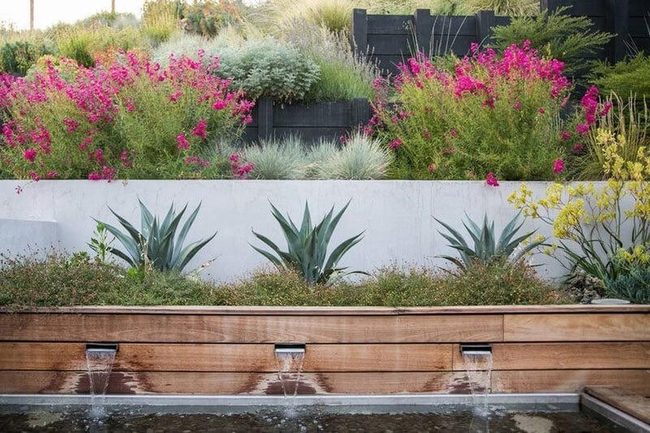
Water features make an instant impact in your outdoor space, and the sound of splashing water instantly soothes anyone who steps outside.
Positioning a planter beside an above-ground or in-ground pond gives you that refreshing element right where you need it most.
Installing a pump, filter, tubing, and waterfall features brings movement and energy to the area.
You can add fish and water plants to deepen that peaceful feeling even more.
Such a setup naturally becomes the centerpiece of a meditation garden.
Your backyard transforms into a calm retreat without requiring much maintenance or effort.
Everyone who visits will notice the difference in atmosphere immediately.
Cedar Grain Staggered Planter Box
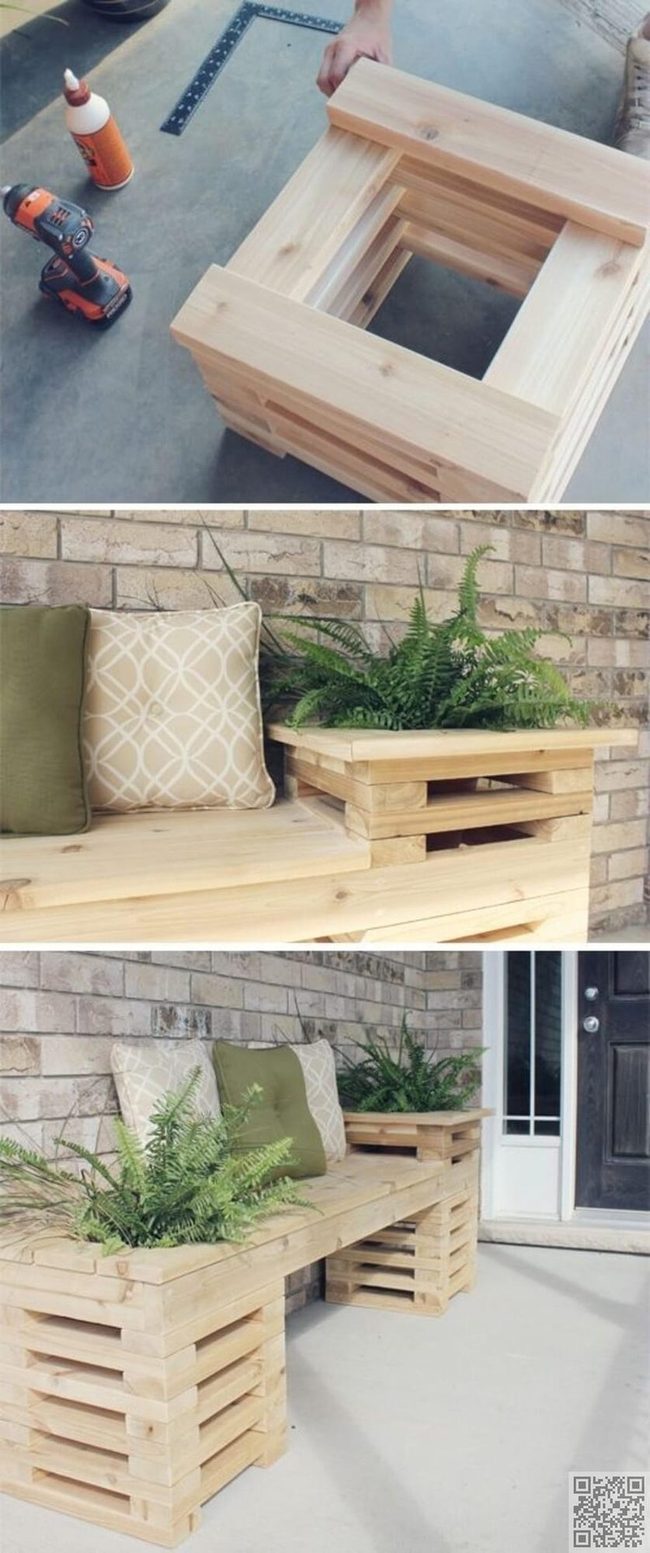
Staggered wooden planters with visible grain patterns catch the eye first because the unfinished varnish lets the natural beauty of the cedar shine through in all its richness.
You can look at how the asymmetrical arrangement of these boxes creates an open, airy feeling that keeps the design from looking too heavy or formal.
Beyond the striking wood elements, this cedar bench offers a casual charm that works equally well on a porch, patio, or even indoors to add some greenery to your living space.
The asymmetrical planters add an unexpected twist that makes the bench feel more interesting than standard designs.
Relaxing outdoors becomes even more enjoyable with this type of setup nearby, and if you prefer indoor gardening, it brightens up whatever room you choose.
Stacked Stone Planter With Candlelight
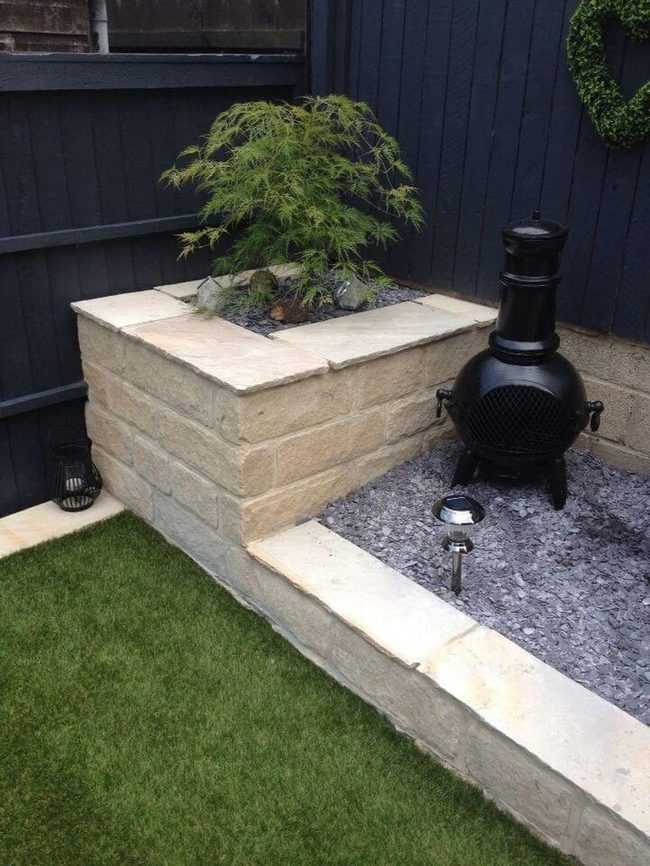
Light stone planter stacked low enough to stay dry sits beside your fence and stove, where you can see each individual stone framed nicely by mortar and its rough surface stands out.
Lush grass spreads around it, and a candleholder placed nearby adds contrast to all that green.
Fern-like leaves from the plant nearby bring softness to the area, and when you combine the stone planter, glowing candleholder, and natural greenery together, your outdoor space feels more balanced and enjoyable.
You don't need much to make a simple corner feel special.
Green Wall Living Screen
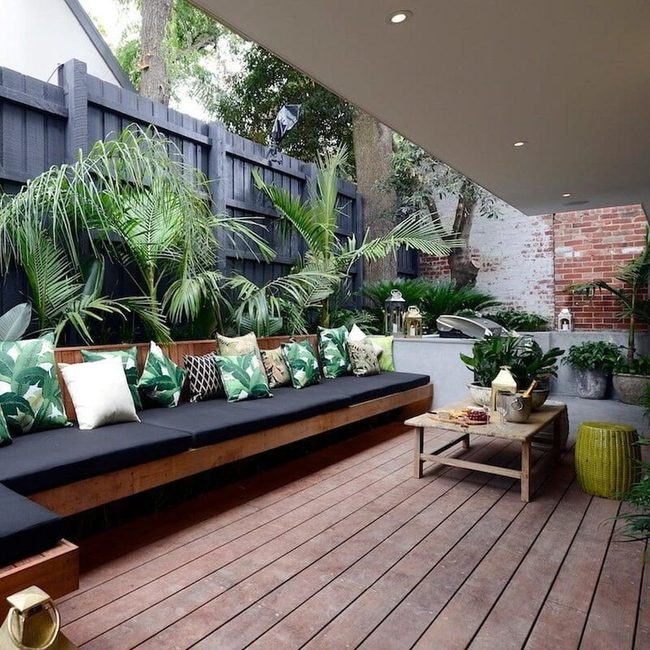
Dwarf trees shaped in an espalier style make a stunning statement when you build a long planter and bench against an unsightly fence or wall, and if you want something taller, tree kale offers dramatic height that really stands out.
Adding a trellis opens up possibilities for climbing vines to spread and grow across your space.
Both options accomplish the same goal of screening out what you don't want to see while building you a peaceful corner for sitting outside.
Concrete Planter With Translucent Stain
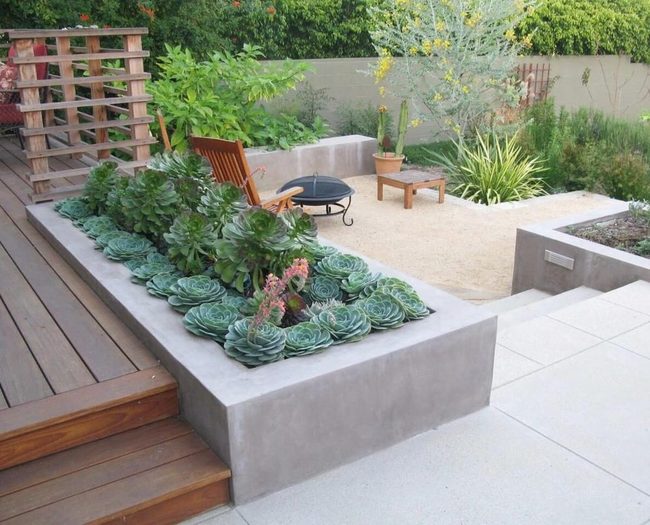
Building your own concrete planter opens up exciting possibilities for your outdoor space, and the process starts simple by selecting your desired dimensions and constructing a plywood mold to hold everything in place.
Once your mold is ready, quick-setting concrete mix fills it efficiently and sets up fast for your project.
A translucent stain brushed across the surface adds personality while harmonizing with your home's existing aesthetic.
Concrete's sleek appearance pairs naturally with modern outdoor settings, especially when you surround it with rustic pieces or weathered accessories to balance the look.
Blending different surfaces and finishes throughout your yard brings dimension and interest to areas you use daily.
I find that homemade planters offer you way more control over the final result than store-bought options.
This kind of project gives your garden personality while keeping costs down compared to buying premade versions.
Stacked Stone Garden Planter
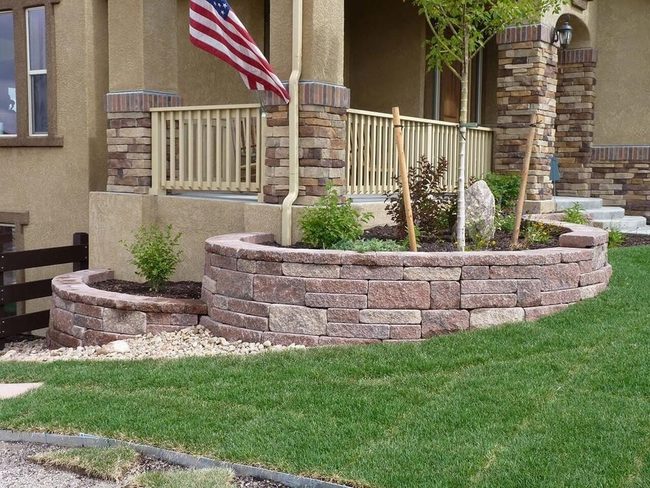
Find a spot in your garden where you'd like to build your stacked stone planter, then use a garden hose or clothesline rope to outline the shape you have in mind and mark it with spray paint so you know exactly where to work.
Clear away a one-foot wide area just inside that line and pack down the soil firmly to give your stone wall a solid foundation that won't shift.
If your garden has any slope to it, you can build two or more tiers instead of just one, starting with the lowest level first and then resting each upper tier on top of the capstone from the layer below it.
This method lets the stones lock together naturally and creates a stable structure that looks intentional without needing any mortar or complicated techniques.
Concrete Fountain Rooftop Retreat
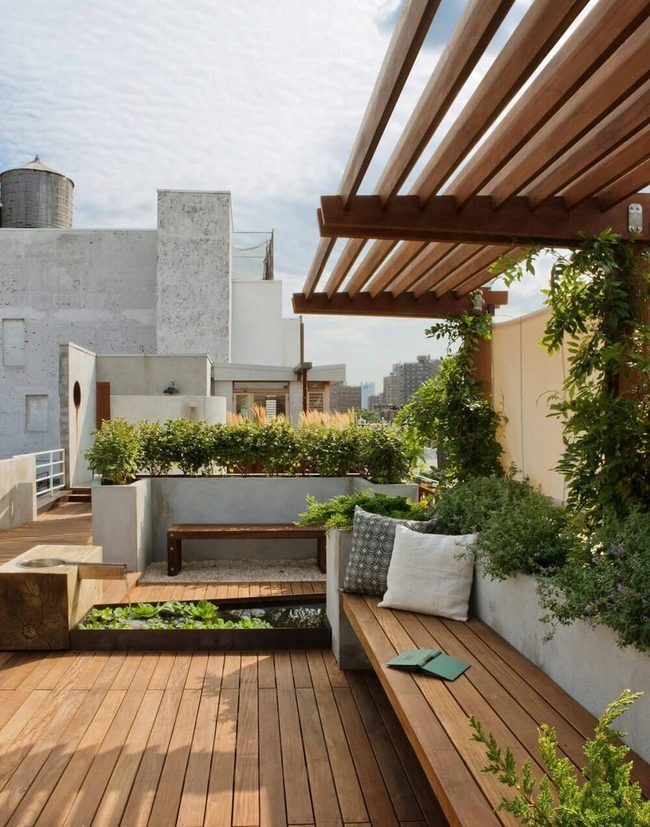
On this rooftop, water spills from a striking concrete and metal fountain into a shallow planter below, immediately drawing your attention as you enter the space.
Climbing vines wrap around the pergola posts and will eventually spread across to offer more shade as they grow.
Soft pillows scattered throughout add comfort and help separate different zones for you to relax and enjoy.
In the front section, a concrete planter with an attached bench gives you extra seating options.
A curved planter shaped like a "C" frames a cozy spot at the back where a second-hand bench sits on raised pebbles that you can access via a ramp.
Vertical Herbs And Blooms Privacy
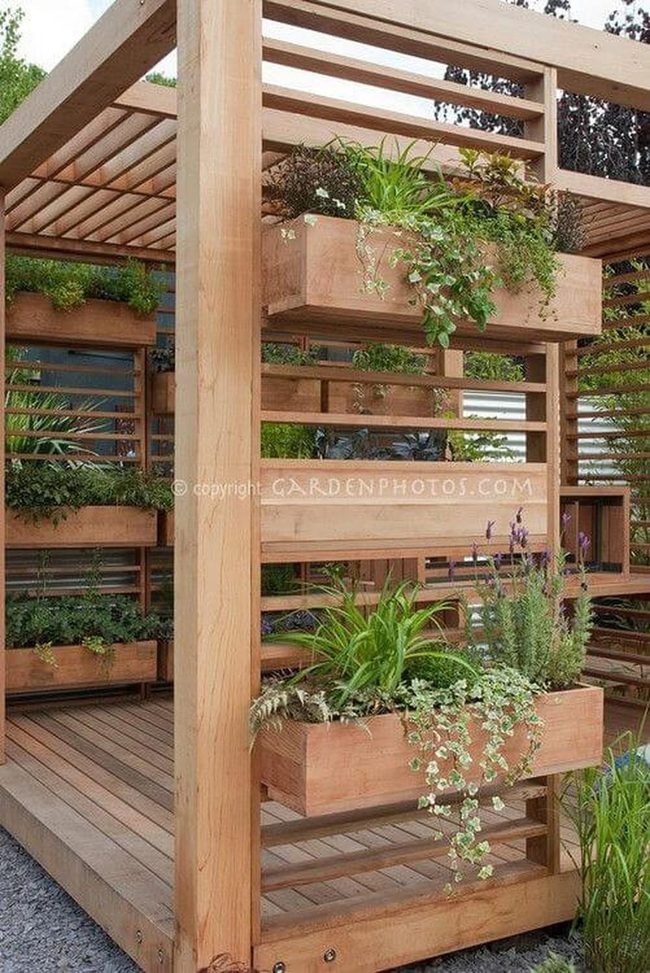
Building vertical gardens on your pergola opens up space for growing herbs, vegetables, and flowers while keeping your outdoor area private and beautiful.
Trellis-like slats with shelves give you room to arrange multiple planters at different heights, which adds dimension to the structure.
You get the best of both worlds here: fresh flavors harvested right from your patio and a lush green backdrop that screens out unwanted views.
Mixing different plants together keeps things visually interesting throughout the seasons.
Since these gardens grow upward rather than across, you save precious ground space and keep the area functional for sitting or entertaining.
Fresh basil, tomatoes, and colorful blooms all contribute to making the space feel alive and welcoming.
Your pergola becomes both a privacy solution and a productive garden in one smart design.
Industrial Railway Tie Garden Bench
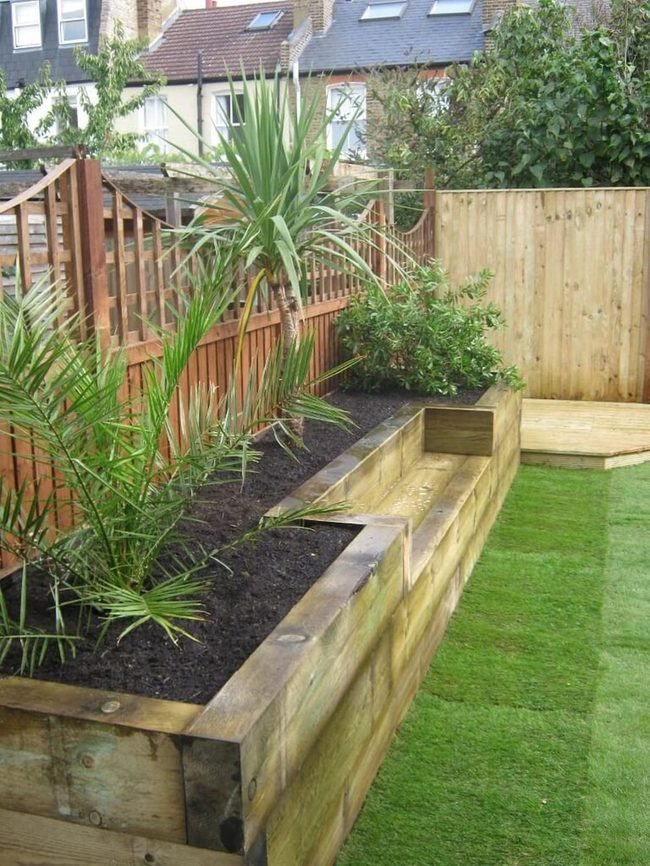
Striking wooden bench constructed from railway ties commands attention at the center of this planter, offering a welcoming spot to sit and enjoy your surroundings.
Its distinctive proportions and shape set it apart from standard lumber, making it a standout feature in any garden layout.
When building projects like this, fresh untreated ties are critical because old ones often contain creosote, a toxic chemical that poses serious health dangers.
You should avoid reclaimed ties altogether since that substance can leach into soil and affect anyone spending time in the area.
Even regulatory agencies like the EPA have issued clear warnings about creosote and its risks, especially for residential landscaping where people and pets spend time regularly.
Selecting new, untreated materials ensures both your space looks exceptional and remains safe for everyone who uses it.
Double-Sided Green Wall System
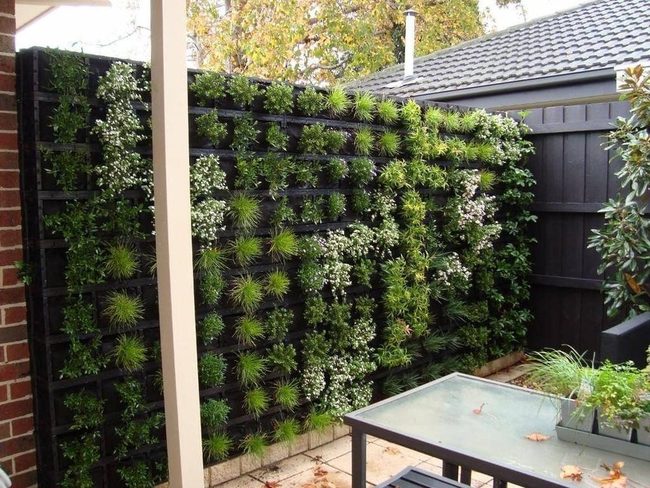
Two-sided wall serves as both a striking privacy screen and a way to bring greenery into your outdoor space, and this modular vertical gardening system fastens securely to any wall or fence so you can adjust the height and length to fit what you need.
Both sides of the structure give you room to grow a lush garden, and you have the option to use just one side or take advantage of both.
Built into each unit is a watering system that saves water by catching and reusing leaks, which means less waste and lower water bills.
Setting up a green display becomes straightforward with this flexible design that works in gardens of any size, whether you're working with a tiny balcony or a sprawling yard.
You get privacy, beauty, and function all rolled into one piece.
This solution works well for anyone looking to make their outdoor area feel more pleasant and personal.
Stacked Wooden Crates, Living Walls
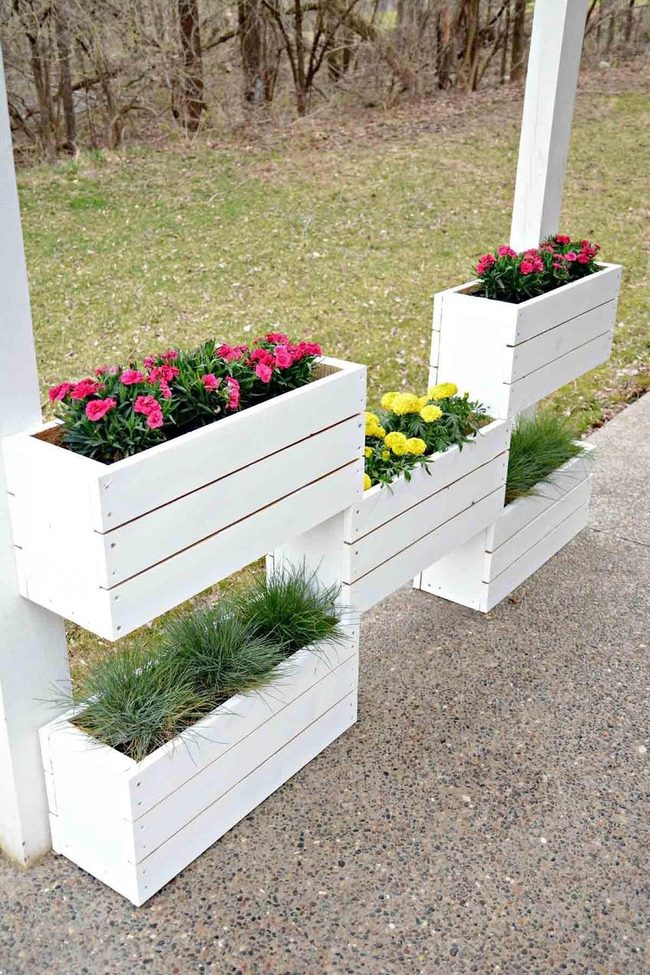
Wooden crate planters stacked and arranged across your porch or patio create an immediate visual statement that catches attention, and mixing shallow and deep styles gives your space layers and dimension.
You can position them in symmetrical rows for a formal feel or scatter them asymmetrically for a more relaxed vibe, and either approach brings personality to your outdoor area.
Mounting these planters directly onto your deck or patio railings transforms those structural elements into living displays of greenery and flowers.
If you have fencing that feels bare or too plain, attaching crate planters along the posts softens those hard lines and breaks up long stretches of wood or metal.
Building these planters is straightforward enough for anyone to manage, and you don't need fancy materials or special skills to get started.
Once you fill them with soil and plants, they become functional art that makes your whole outdoor space feel more finished and alive.
Wood Slats Create Instant Privacy
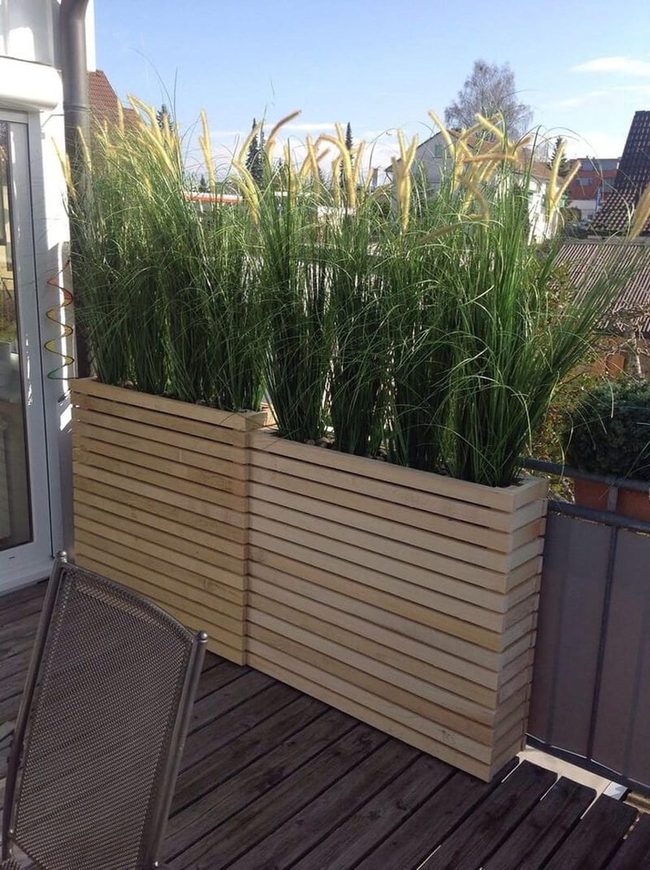
Tall planters made from wood slats offer a striking solution for small patios, balconies, and backyard decks in cities where privacy feels hard to come by, and their horizontal lines bring visual interest without eating up valuable floor space.
Filling these planters with tall grasses creates a natural screen that blocks sightlines while still letting sunlight and fresh air move freely through your outdoor area.
You can enjoy peaceful moments outside without feeling exposed to neighbors or passersby, and this design approach gives you both comfort and a more private retreat.
Wood slat planters work well in compact spaces because they stand tall and lean without spreading out sideways.
Grasses sway gently in the breeze, adding movement to your space while maintaining that shield you need.
Pallet Planter Hides Outdoor Eyesores
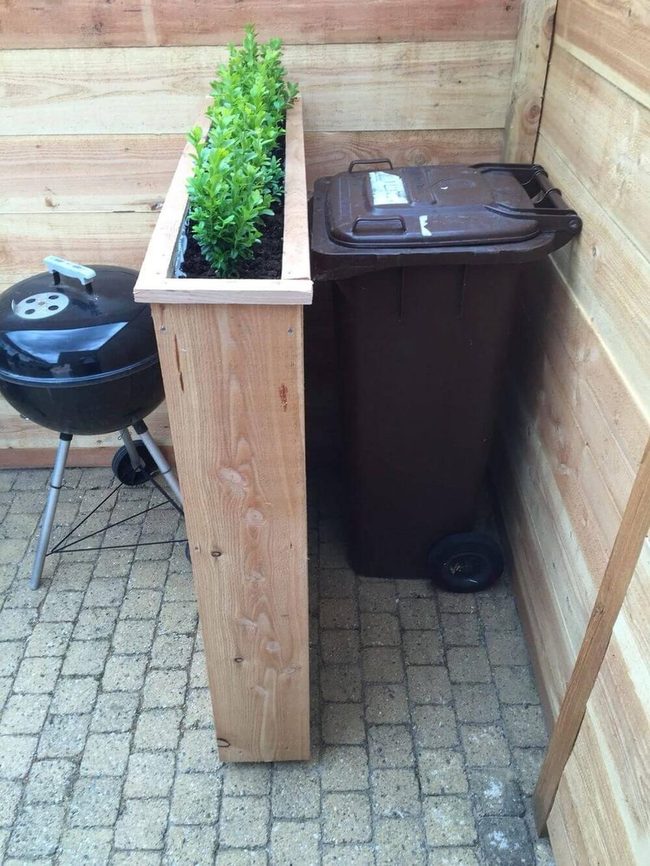
Pallets transformed into a narrow planter can disguise unsightly items like air conditioners or garbage cans on your patio, making it perfect for small outdoor spaces.
Building this project requires you to add boards at each end and secure the base to keep everything stable and sturdy.
Once the structure is complete, installing a cap around the top gives the whole piece a finished look that appears professionally made.
You can then apply varnish, stain, or paint to match your surrounding décor and personal style without much effort.
Blue Slide Hillside With Wooden Planters
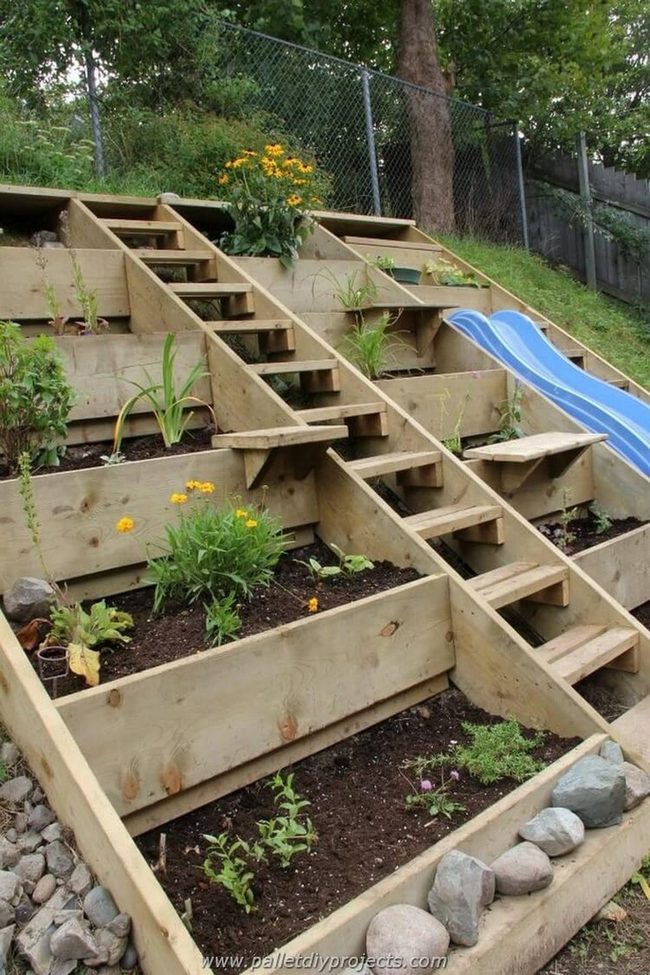
Bright blue slides sweeping down your slope catch everyone's attention and double as a playful waterfall feature that kids absolutely love.
Built-in steps cut through the landscape and solve the practical problem of reaching plants and navigating the terrain without slipping.
Wood planter boxes line the hillside and hold soil back while adding warmth to your yard at the same time.
You get a setup that's both fun and functional, turning what might have been a tricky slope into a space your whole family actually wants to spend time in.
The combination of play equipment and smart gardening solutions means children enjoy themselves outdoors while you can easily tend to your plants.
Everyone benefits from a design that balances entertainment with usefulness.
Green Rooftop Container Garden
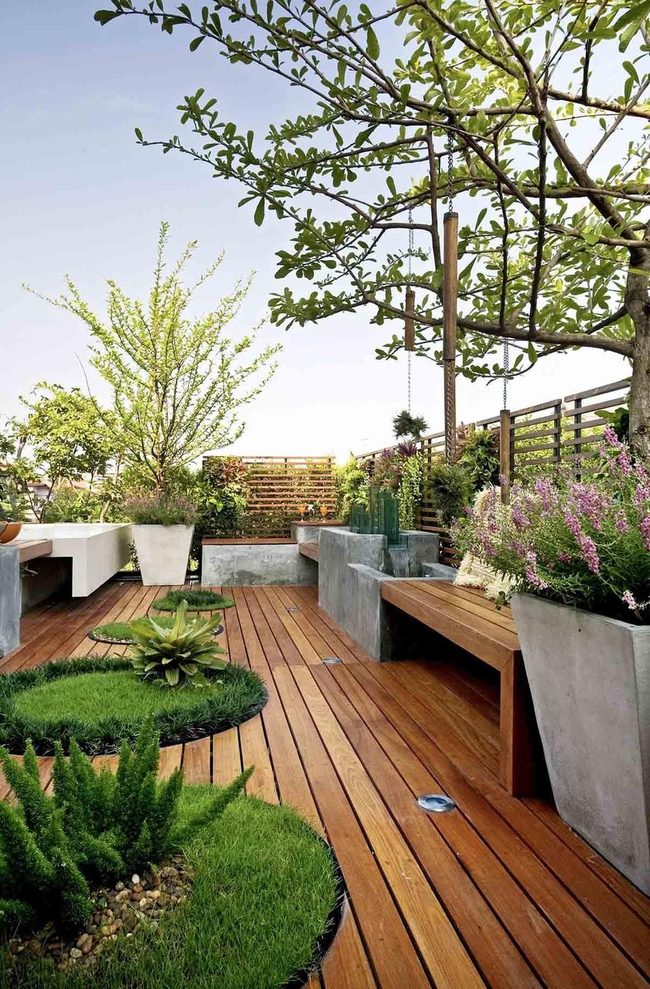
Grass patches in unique shapes cut right from your roofing boards bring immediate life and color to any rooftop or deck space.
White and marbled light gray planters arranged throughout the area showcase small trees, tall climbing vines on trellises, and other greenery that adds both height and visual interest.
These planted containers also work as natural screens, giving you the privacy you need while keeping your outdoor space open and airy.
Beyond just looking beautiful, a rooftop garden transforms what might be unused space into somewhere you actually want to spend time relaxing and enjoying nature.
Growing plants up high means you're making the most of every square foot, whether you have a sprawling roof or a compact deck.
One thing that gives this charm is how straightforward it is to set up and maintain compared to traditional ground-level gardens.
Stacked Wood Planter Boxes
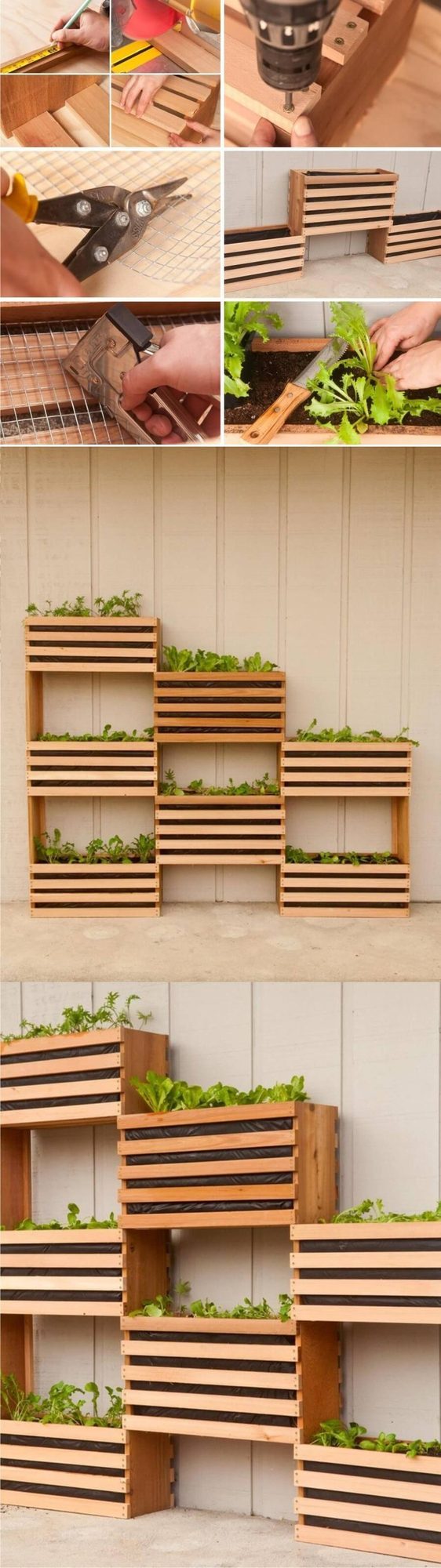
When you're building planters for your outdoor space, start by settling on the dimensions that work best for your setup; how tall, wide, and deep each box needs to be.
Next, cut your boards to size based on these measurements, making sure the slats match the height you want for both the front and back sections.
Once your pieces are ready, nail them together according to your design plan.
You can arrange these planters in so many ways, from stacked columns to graceful arches that frame your entryway or create a natural screen.
Adding them to your yard opens up fun possibilities like growing herbs and vegetables vertically, and that green element transforms how your outdoor area feels and functions.
Black And White Deck Benches
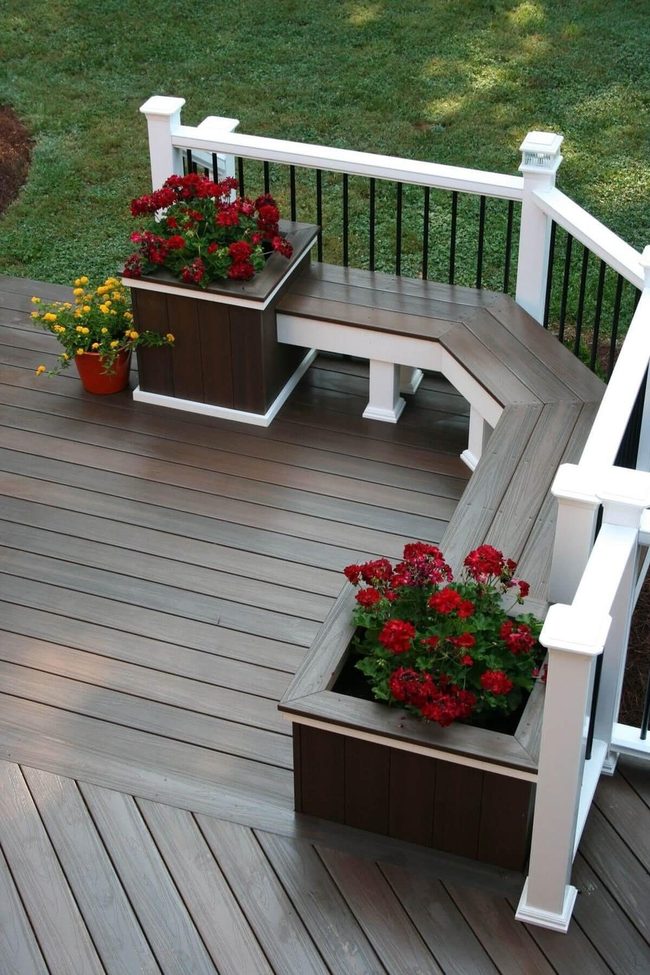
Dark and white finishes from your kitchen can extend onto your deck with matching colors and patterns that bridge the two areas seamlessly.
You might repurpose leftover fencing posts by cutting them down to craft custom bench legs that echo your home's tuxedo-inspired aesthetic.
These handmade benches sit beautifully on your outdoor space and give you a place to relax while maintaining visual harmony between indoors and out.
When your deck and kitchen share the same color scheme and materials, the whole area flows together naturally.
Sitting on your new benches while enjoying fresh air becomes even nicer when everything around you follows the same refined look.
Black Metal Chairs Meet Light Wood
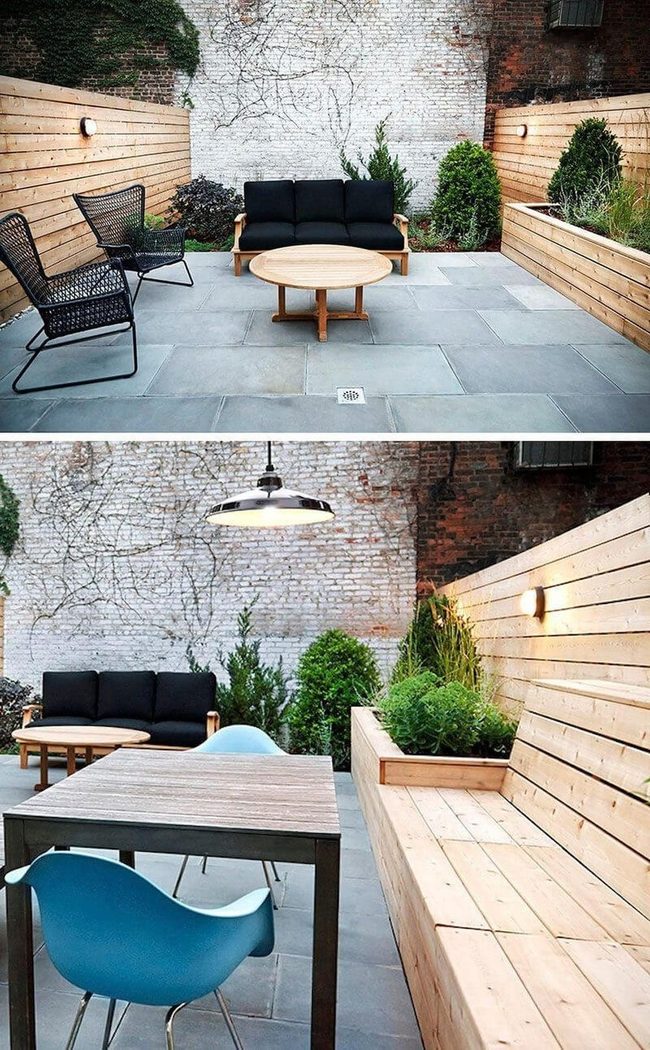
Mixed styles make this patio feel alive and interesting, blending rustic warmth with modern simplicity in a way that works well together.
Light wood planters and a bench glow with natural warmth, while a dark table sits nearby and adds serious visual weight and balance to the space.
Retro character comes through in black metal chairs, chrome-legged seats with plastic tops, and a hanging light that nods to vintage design.
A round coffee table in the center helps unite all these pieces, and the bench gets extra comfort from black cushions placed on top.
You get a relaxing outdoor room here because the space balances old-fashioned charm and contemporary clean lines without feeling confused or forced.
It's a smart approach to outdoor decorating that gives you personality and function at the same time.
Living Trellis Privacy Screen
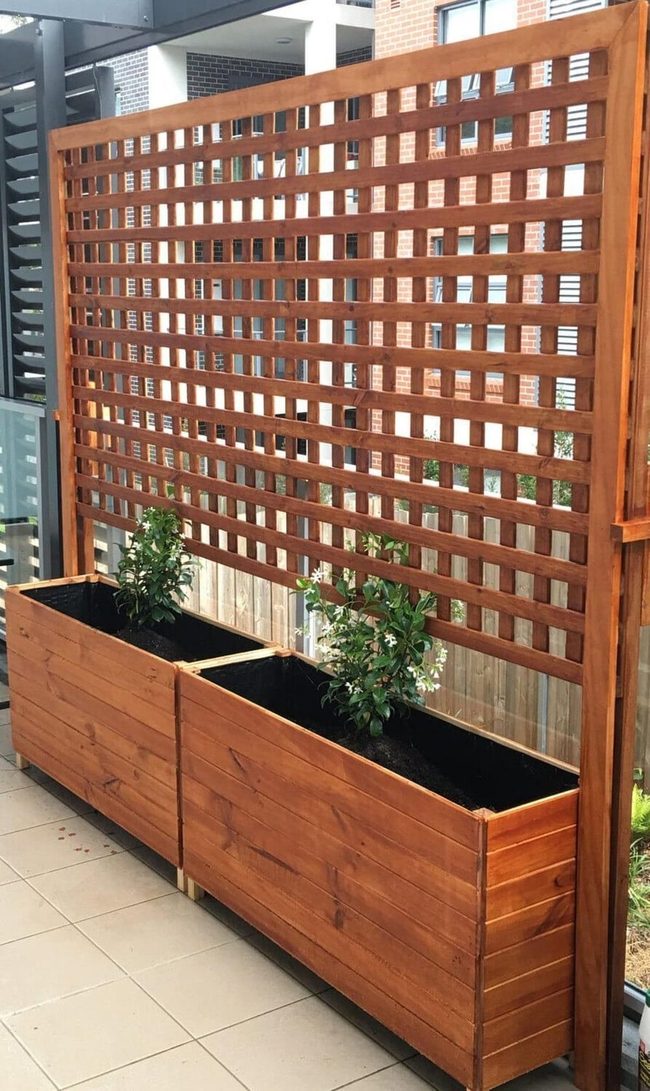
If you want privacy without sacrificing sunlight and fresh air, positioning a row of planters along your space acts as a natural boundary that solves both problems.
Lattice trellises attached to these planters give climbing plants somewhere to grow and sprawl upward.
You can train flowering vines or even vegetables like beans to scale the trellis while filling in the front areas with additional blooms or produce for extra fullness.
Since the plants don't form a solid wall, light still reaches through the gaps and air continues to flow freely around your area.
This setup gives you the screening you need while keeping your space bright and airy.
You get privacy where it matters without turning your outdoor area into a dark, enclosed space.
Raised Metal Tubs For Accessible Gardening
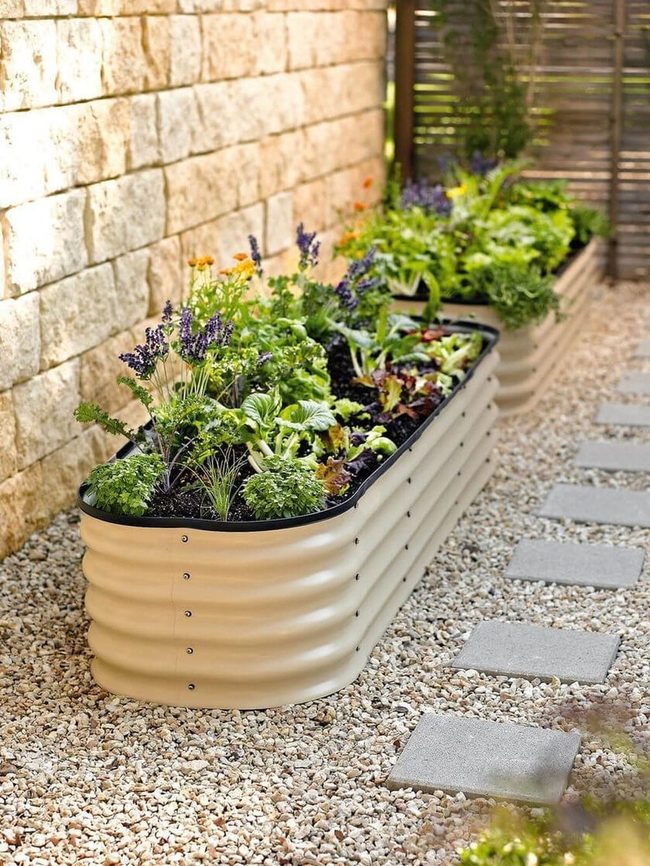
Old metal tubs work wonderfully as raised-bed planters for flowers, herbs, or vegetables, and you'll want to verify they haven't held toxic chemicals before planting anything in them.
If you need fresh options, new tubs come in various shapes to fit your space and style.
Growing these plants brings both beauty and freshness right to your garden or yard.
Metal tub planters are especially helpful if you have mobility challenges since you can reach plants without bending down as much.
Caring for your garden and harvesting fresh produce or blooms becomes much easier when beds sit at a higher level.
This simple change makes gardening feel more manageable and enjoyable for anyone who struggles with kneeling or leaning.
Whether you're starting with recycled tubs or buying new ones, you gain a practical way to grow what you love while keeping everything within comfortable reach.
Michael Harris
Senior Content Editor
Expertise
Home Décor Content Creation, Interior Design Journalism, Editorial Oversight, Digital Media Strategy, Team Leadership and Mentorship
Education
University of Queensland, Brisbane, Australia
Queensland University of Technology (QUT), Brisbane, Australia
Michael Harris is the senior content editor at Archi Refresh, where he turns home design trends into engaging, easy-to-follow articles. With a journalism degree from the University of Queensland and a digital communication certification from QUT, he knows how to craft content that informs and inspires.
With over 10 years of experience in lifestyle and design media, Michael has shaped editorial strategies, mentored writers, and helped readers refresh their spaces with practical tips. His work blends storytelling with expert advice, making home decor more accessible to everyone.
Outside of work, Michael enjoys DIY projects, exploring Brisbane’s art scene, and teaching digital literacy workshops.