
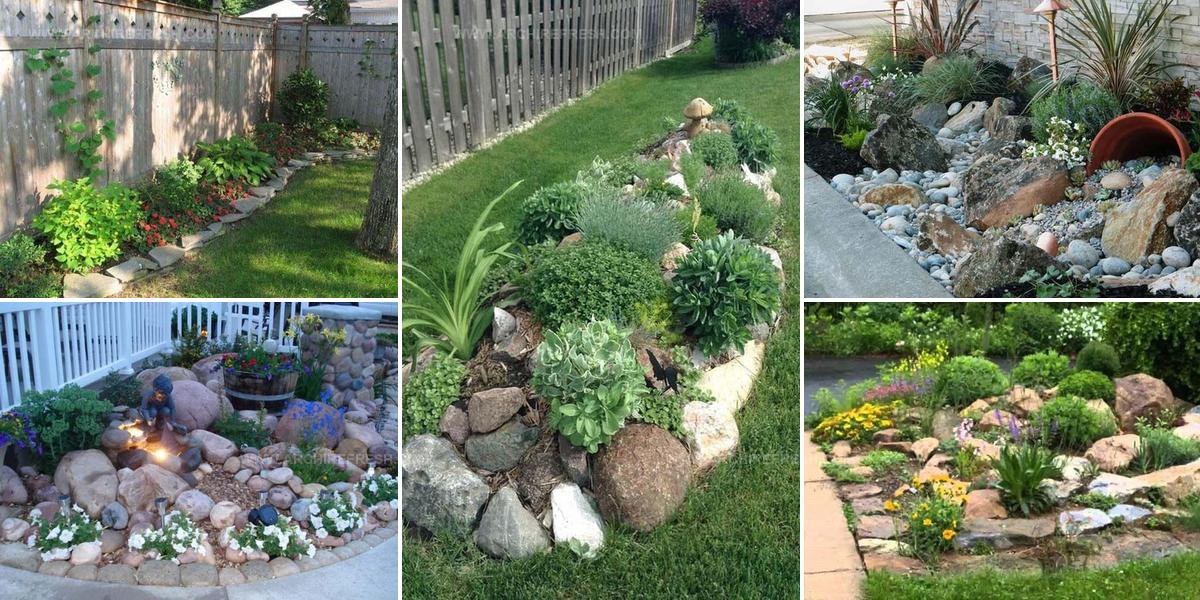
26 Simple Corner Rock Garden Ideas for Small Spaces
A rock garden transforms awkward angles into focal points where textures, colors, and layers work together harmoniously.
Stone arrangements paired with drought-tolerant plants require minimal maintenance while delivering maximum visual impact throughout every season.
Corners present unique opportunities because their boundaries naturally frame compositions and guide the eye toward interesting combinations.
Alpine vegetation thrives among rocky terrain, making such gardens both practical and aesthetically pleasing for homeowners seeking low-water solutions.
Vertical elements like boulders add dimension to flat areas, while ground covers soften hard edges and create balance between mineral and organic components.
Antique Metal Wheels And Cascading Flowers
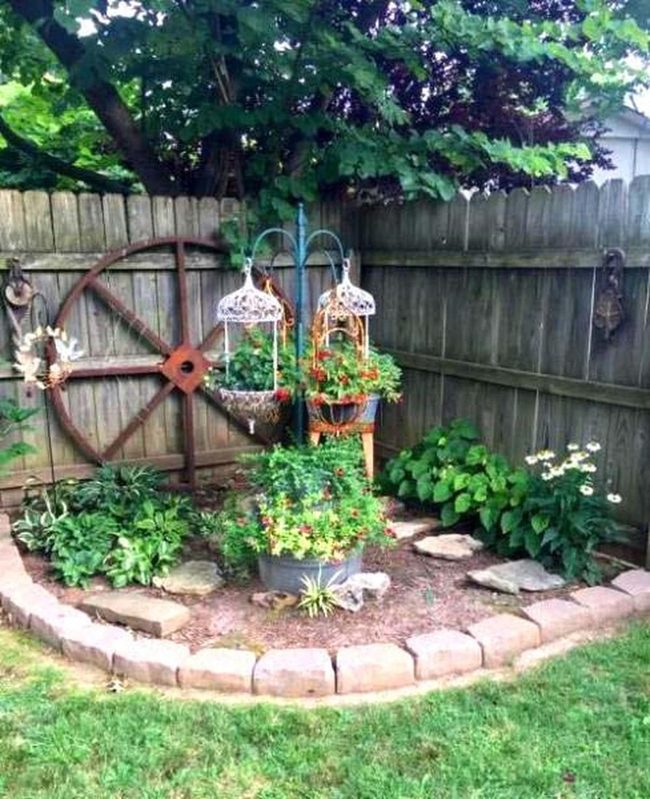
Old mill wheels and antique pulleys leaning against your fence catch the eye immediately with their industrial character and historical appeal.
Vintage pieces like these bring genuine charm to a rock garden and make visitors pause to appreciate the craftsmanship.
Pair these standout items with Victorian-style hanging baskets filled with cascading flowers, and you've got a space that feels rooted in the past.
Metal washbasins holding blooms add another layer of nostalgic detail that complements the larger structures.
Such combinations blend history with living plants in a way that feels natural and unforced.
Your rock garden becomes a genuine journey through time without needing to look overdone or theme-park-like.
It's a simple but effective approach to weaving historical interest into outdoor spaces.
Flowers Between Stone Boulders
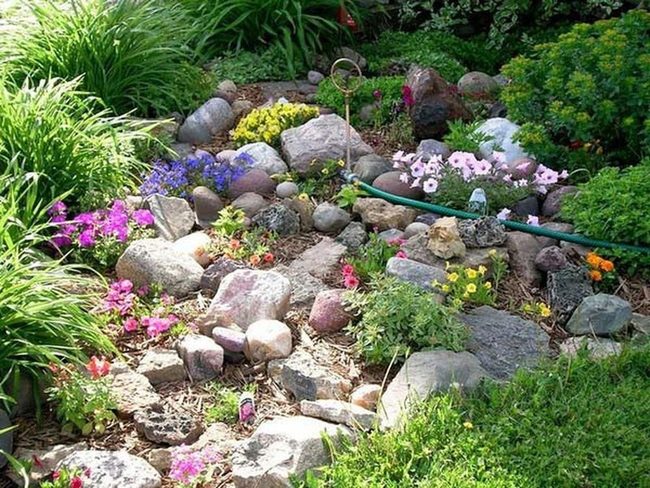
When you have a hillside corner with existing boulders, keeping them there and tucking flowers between the rocks gives you one of the most beautiful outcomes you can achieve.
This approach delivers an explosive burst of color that stands out dramatically against the rough, earthy texture of the stone.
You get the practical benefit too; no digging up and hauling away heavy rocks means less work and lower costs.
It's a smart way to work with what nature already gave you rather than fighting against it.
Plus, arranging plants in the gaps between rocks requires minimal effort compared to a full landscape overhaul.
Green Leaf Ground Cover Solution
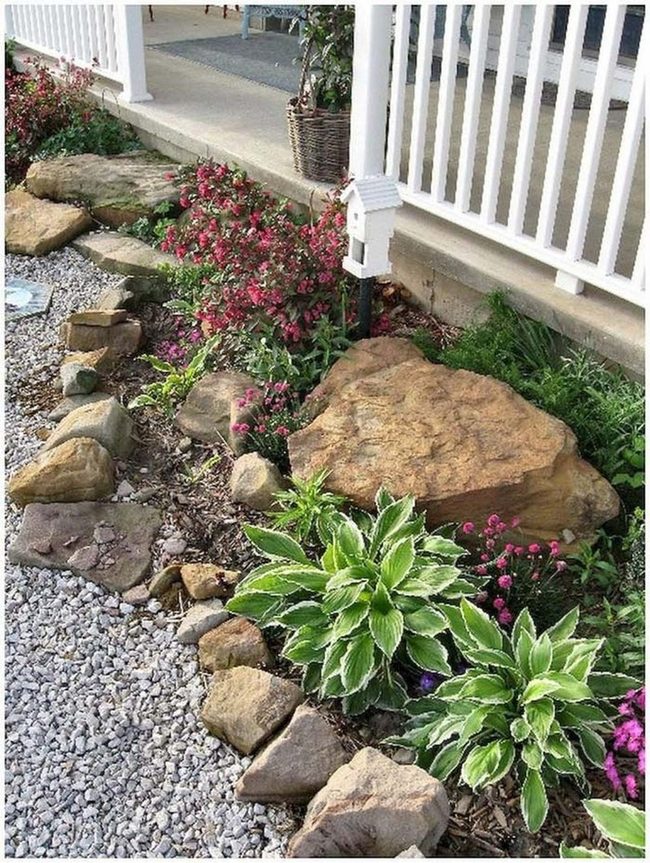
Hosta plants work wonderfully as low-maintenance ground covers that fill in bare patches throughout your rock garden, and they're hardy enough to handle most climates without fussing over them.
The first thing to notice is how these plants gradually spread their lush green leaves across the soil, creating a blanket of foliage that transforms empty spaces into planted areas.
Once established, they handle shade and partial sun equally well and don't demand frequent watering or special care.
If you want something that looks good year after year without constant attention, hostas are exactly what you need.
Their broad leaves add depth and texture to rock gardens where other plants might struggle to survive.
Many gardeners find that hostas solve the problem of empty gaps between stones and larger plantings.
Simply place them where you want coverage and let them do the work for you.
Layered Plants And Scattered Boulders
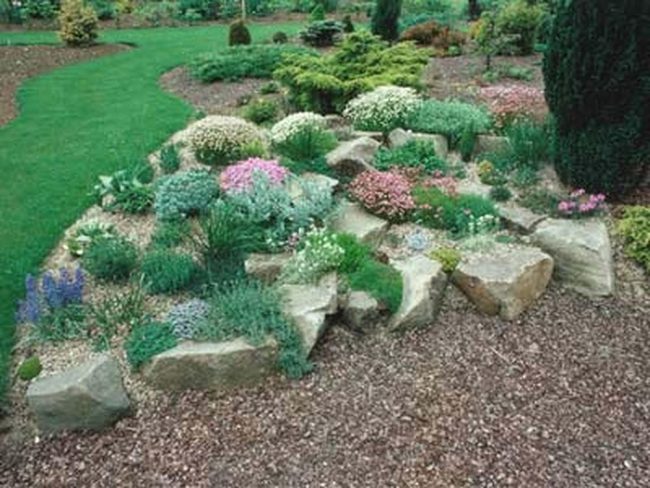
Combining plants of various heights, textures, and hues with oversized boulders scattered throughout transforms a garden into something that feels wild and wonderfully alive.
You can play with contrasting foliage; perhaps pairing feathery ferns against broad-leafed plants or mixing silvery dusty miller with deep green shrubs; and these varied surfaces keep your eye moving across the space.
Rocks of different sizes anchor the composition and break up large planting areas so nothing feels too uniform or staged.
When sunlight hits these elements at different times of day, the whole scene shifts and reveals new combinations you didn't notice before.
Layering plants at multiple levels gives depth and keeps the garden from feeling flat or one-dimensional.
Your garden becomes a place where something new catches your attention each season, and that constant evolution makes spending time there genuinely rewarding.
Stone, Foliage, And Blooms
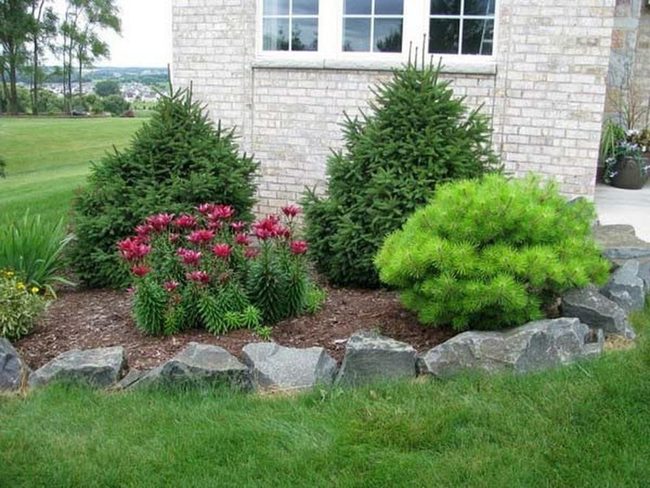
Welsh quartz boulders stand out dramatically against the soft green bushes and cream-colored brick wall behind them, and this contrast immediately captures attention when you look at the garden.
Plants in different shades of green and clusters of colorful flowers grow throughout the space and add layers of texture that keep the eye moving.
You can mix in foliage of various depths and tones to build visual interest without overwhelming the design.
Flowers in bright or warm hues pop against the greenery and give the garden dimension.
The combination of stone, plants, and blooms works well together and gives you plenty of movement and appeal throughout your outdoor space.
Black-Eyed Susans And Lupine Guardians
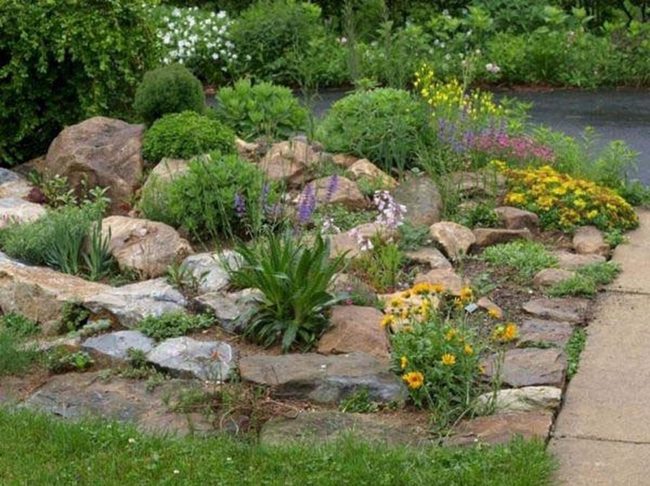
Tall blooms such as Black-Eyed Susans and lupine make rock gardens look fuller and more interesting, and these plants do double duty by discouraging people from stepping on the stones.
You'll find that their vertical growth naturally draws the eye upward and prevents the garden from feeling flat or boring.
Beyond the visual appeal, you get genuine functional benefits that keep your hardscape safe.
It's a smart choice when you want your garden to look good and stay protected at the same time.
Boulders, Succulents, And Ornamental Grasses
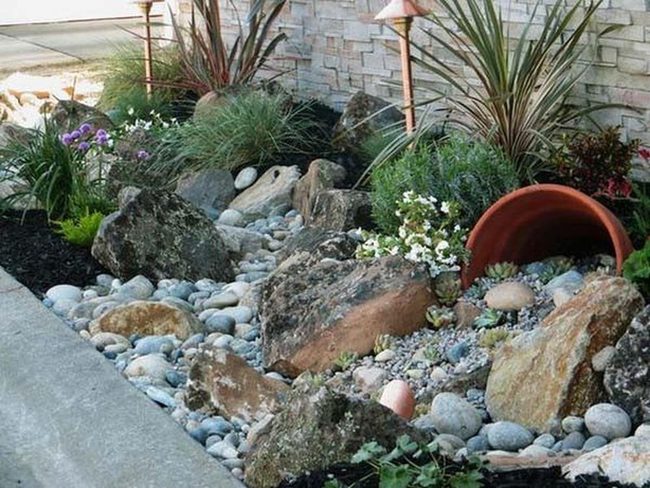
Your landscaping can feature a rock formation that brings the beauty of nature right into your outdoor space, and you'll want to start with larger boulders positioned around the outer edge with smaller river rocks filling the center to mirror how nature arranges these elements.
Inside this rocky structure, succulents such as hens and chicks do wonderfully since they love the drainage that rocky soil provides.
Drought-tolerant flowers scattered throughout add color and interest without demanding constant watering.
Ornamental grasses weaving between the plants bring movement and texture to the display.
You can adjust the size and shape of your rock formation to fit your space, whether that's a small corner bed or a larger landscape feature.
Plants in this setup handle heat and dry conditions with ease, making them perfect if you live in an area with limited rainfall or want to reduce your water usage.
Flowing Stones Water Garden Feature
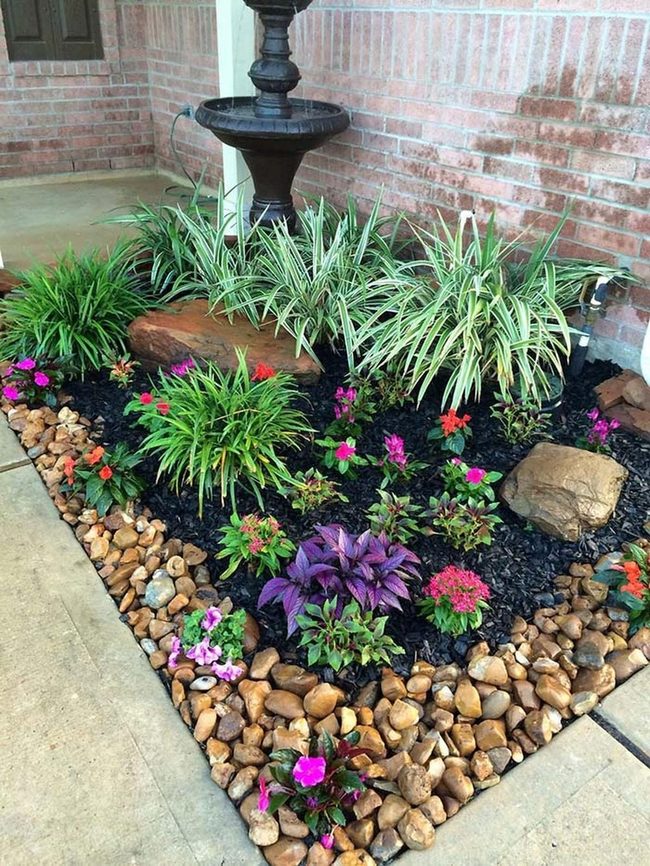
Garden fountain with water flowing over river rocks makes an immediate statement in any outdoor space and gives you that peaceful, calming feeling right away.
Brown stones around the base blend naturally with the surroundings and look much better than exposed pipes or equipment.
Tall grasses and plants positioned nearby do double duty by hiding any mechanical parts while adding layers of greenery that feel organic.
You can enjoy the soothing sound of moving water whenever you step outside, and it transforms a plain corner into somewhere you actually want to spend time.
Plant choices matter because they frame the fountain without blocking the view, and they soften the harder edges of rocks and stone.
This simple setup works well in small yards or large gardens because water features adapt easily to different spaces.
When you spend time near running water, your stress melts away, and the whole area feels more relaxed and grounded.
Building a fountain doesn't need to be complicated or expensive to give you real enjoyment and peace.
Dark Water Through Stone And Green
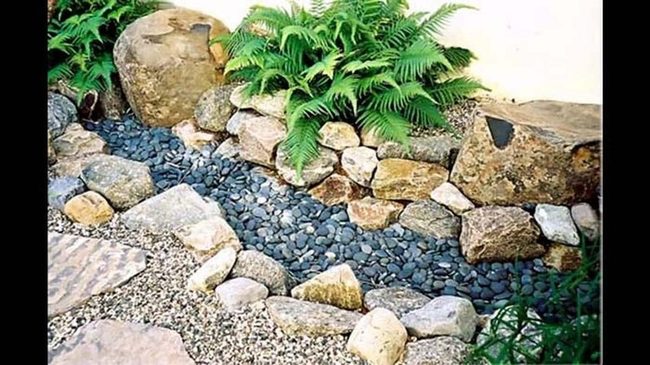
Palms and ferns soften the hard edges of rocks and stone, and this balance makes your garden feel more natural and welcoming.
Dark water flowing through the landscape cuts a striking contrast against lighter plants and pathways, which draws your eye deeper into the space and adds layers of interest as you move around the garden.
You can play with how the shadows fall across the water to boost the drama even more.
Adding these softer plants alongside the stream means visitors naturally follow the path of water and discover different sections of your garden.
Rocks stay in the background once greenery fills in around them, so they become part of the landscape rather than the main event.
This mix of hard and soft elements means your garden feels both grounded and alive at the same time.
Large Rocks Frame Garden Boundaries
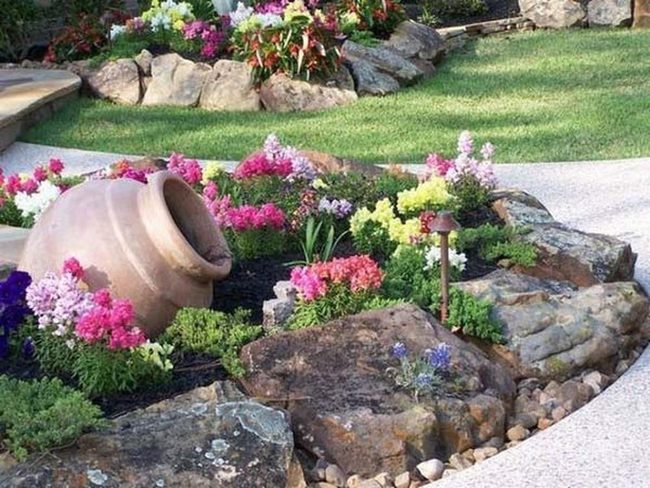
Large rocks positioned around your yard's edges do double duty by keeping people from wandering into your garden beds and marking clear boundaries for foot traffic.
Flowers spilling from containers bring color and height to the space, and a decorative pitcher adds another layer of visual interest.
Together, these elements guide visitors naturally along the path you want them to follow.
You won't need much to accomplish this look, and the setup is straightforward enough for most people to handle.
Plants and simple accessories work well because they're both functional and pleasant to look at.
This kind of border design keeps your garden protected while still making your outdoor space feel welcoming.
Stone Waterway With Toy Sailboat
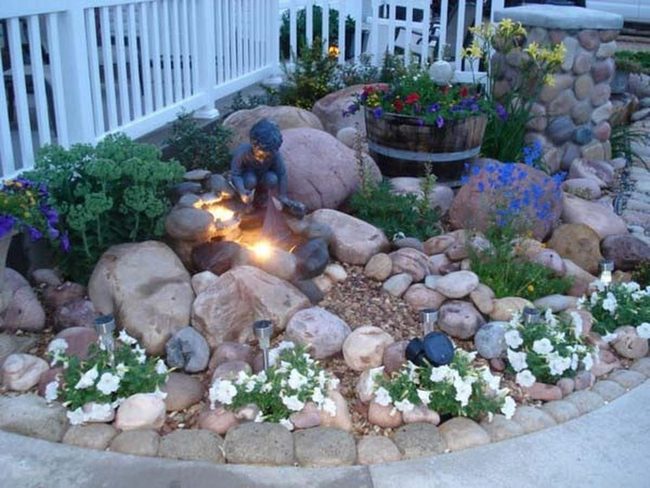
Your yard can feature a whimsical rock garden that tells a story, with smooth pebbles and larger stones arranged to look like a waterway where a boy guides his toy sailboat through an imaginative landscape.
A spotlight positioned nearby casts a warm glow similar to a campfire, adding depth and interest once the sun goes down.
Off to the side, a barrel overflowing with flowers brings height and color to the corner, balancing the horizontal lines of the garden bed below.
You can keep the scene playful by letting the rocks and sailboat be the main attraction and building everything else around them.
This kind of setup works well in any yard size because you control how much space the garden takes up.
The mix of stone, water-like design, and blooming plants keeps visitors engaged as they look around.
Crushed Gravel Plant Showcase Corner
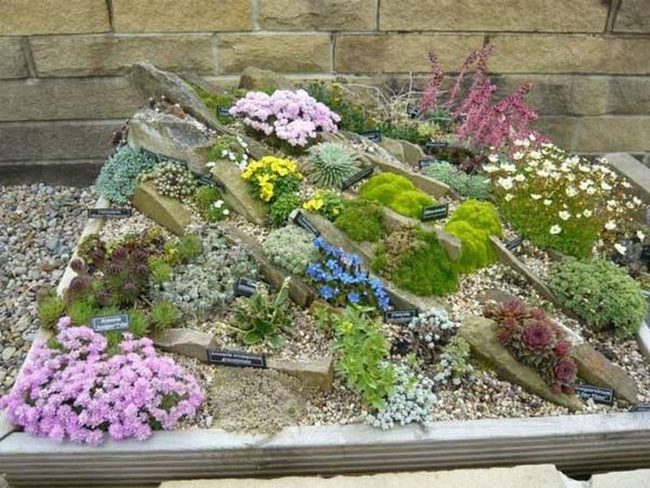
Mini rock garden tucked into your yard's corner makes visitors stop and look, especially when you fill it with samples of everything growing around your space and arrange different small scenes throughout the crushed gravel bed.
You are free to show off your plants in one compact spot while teaching people about what thrives in your garden, and the varied vignettes keep the eye moving from one interesting area to the next.
This kind of display works as both a teaching tool and a beautiful addition to your landscape that naturally draws attention from anyone walking by.
Layered Plants Guide Your Pathways
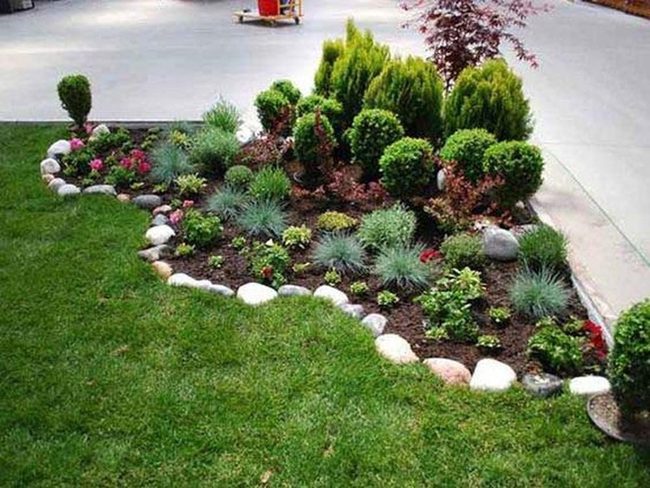
Maple trees and oversized bushes act as natural barriers that keep people off the lawn and preserve those perfectly green patches you want to maintain.
Around the base of these larger plants, softer smaller plantings and ground cover fill in the spaces and guide visitors along the pathways you've designed for them.
This layering of plants not only protects your grass but also establishes a natural flow that feels welcoming as soon as someone arrives.
Ground cover plants spread naturally and fill in gaps while smaller specimens add texture and depth to your garden beds.
By combining these different plant sizes, you're essentially creating invisible boundaries that look natural rather than harsh or constructed.
Your guests will follow the path naturally because the plants show them where to go.
It's a simple way to keep your lawn looking fresh while making your whole yard feel intentional and organized.
Brown River Rocks Red Brick Path
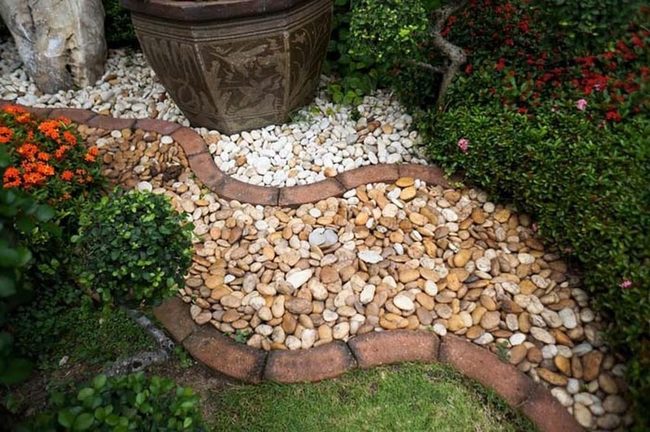
Brown river rocks laid across a rustic pathway catch everyone's attention right away, with red bricks forming a border that guides you naturally through the garden.
Along both sides, white rocks and oversized planters keep things neat and organized while bringing light to the space.
This choice works because the clean arrangement of these elements prevents the garden from feeling cluttered or wild.
Large planters act as visual anchors that break up the landscape and add height variation.
White stones scatter throughout and reflect light, which makes the whole path feel more open and bright.
Red brick edging provides a solid frame that keeps the eye moving forward down the walkway.
Even simple materials like rocks and planters work hard to shape how you experience moving through this garden space.
Tall Plants Bright Corner Garden
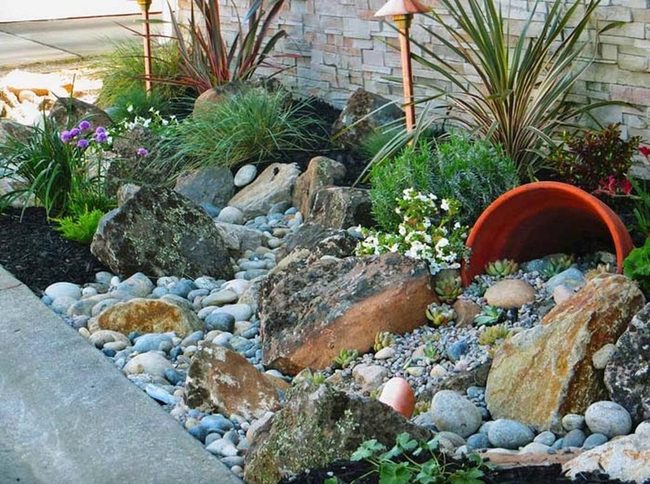
Plants that grow tall and good lighting can completely change how a corner garden looks, especially when the area seems dim or one-dimensional.
Large planters, palm varieties, and string lights or lanterns positioned throughout the space all help build layers and give your eye somewhere interesting to land in the back rows.
Positioning lights among the greenery adds warmth and makes the whole space feel less empty.
You don't need many elements to shift what a corner garden offers; just a few key plants and some light sources can reshape the entire mood.
When heights and brightness work together in your garden, the area suddenly feels more purposeful and full of personality.
Stone Steps Meet Contained Garden Beds
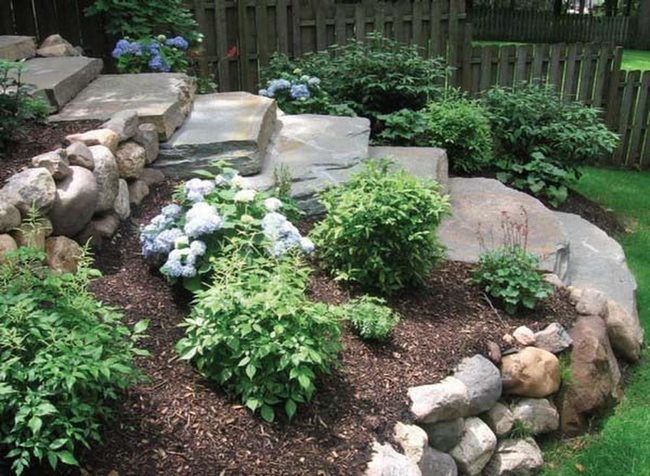
Retaining wall built at the base of your stone slab steps serves as both a practical and visual boundary for your rock garden.
By holding soil in place and stopping debris from spreading, this wall protects your stairway from erosion and keeps everything neat.
Flowers and plants can flourish in the contained space without worry about soil washing away or shifting.
I've seen how much this simple structure helps gardens stay stable on sloped ground.
You can extend your rock garden further without constantly dealing with maintenance issues.
Building the wall right where steps meet the garden creates a natural stopping point that looks intentional and organized.
Soil stays put, plants grow happily, and your stairway stays safe from damage.
Cream Pebbles, Terra Cotta Simplicity
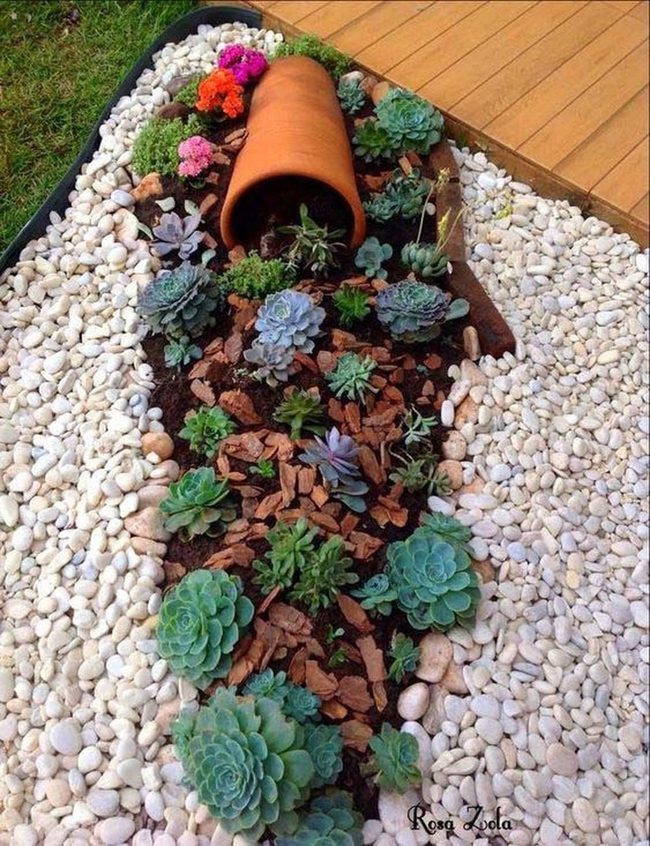
Building a small succulent garden works best when you keep things simple and let the natural elements shine through.
Start with a patch of sandy soil as your base, then line it with smooth, cream-colored pebbles that catch the light and add visual interest to the space.
Terra cotta pots blend beautifully with this setup and pair well with drought-tolerant plants like succulents that thrive in dry conditions.
This approach gives you a clean, minimalist garden corner that looks great without needing much maintenance from you.
You'll find that the neutral tones of the pebbles and pots keep the focus on the plants themselves.
Simple spaces like this one prove that you don't need complicated designs or lots of fussy elements to make something beautiful.
Your garden can feel calm and organized while still bringing natural charm to any corner of your home.
Boulder Garden Water Feature
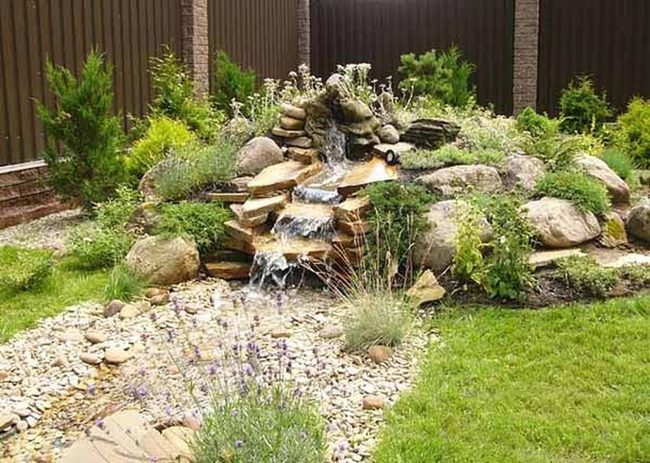
Large boulders scattered across a garden space demand careful placement, and combining them with flagstone steps transforms the whole area into something far more polished and navigable.
One hilltop water feature demonstrates how well a fountain or stream can blend seamlessly into the surrounding landscape when positioned thoughtfully among existing rocks and plants.
Your guests will appreciate both the beauty of the water feature and the practical way it functions without disrupting the natural look.
Consider how different materials work together when you're planning your own boulder garden, since mixing stone types adds depth and prevents the space from feeling one-dimensional.
Even small touches like concealing equipment can make a significant difference in how polished and finished a garden appears.
Vines, Stone, And Ground Blooms
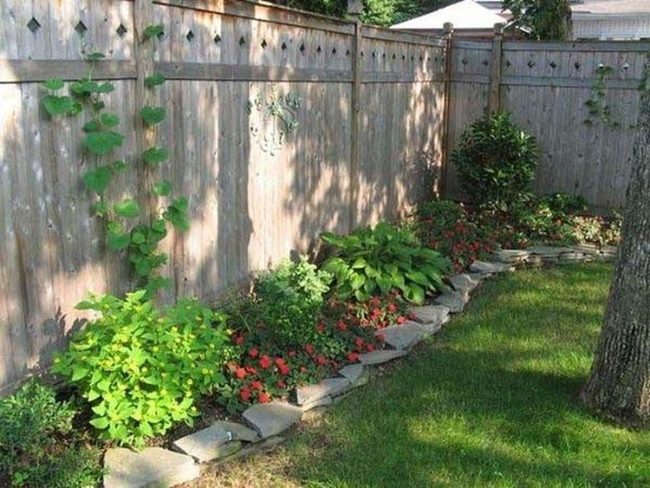
Climbing vines spilling over a fence create one of the most striking features you can add to a corner garden, and they transform a plain boundary into living art.
Slate flagstone edging beneath these vines serves double duty by clearly marking where your garden begins and matching the natural tones of the surrounding landscape.
Flowering ground cover works wonderfully in those shadowy areas where other plants struggle, and it brings color and texture right to the garden's borders.
The visual pull comes from how these three elements work together without feeling overdone.
Each piece plays its role naturally, from the dramatic height of the vines down to the soft ground-level blooms.
Your corner space goes from overlooked to genuinely lovely with these simple additions.
Stone Borders With Whimsical Garden Ornaments
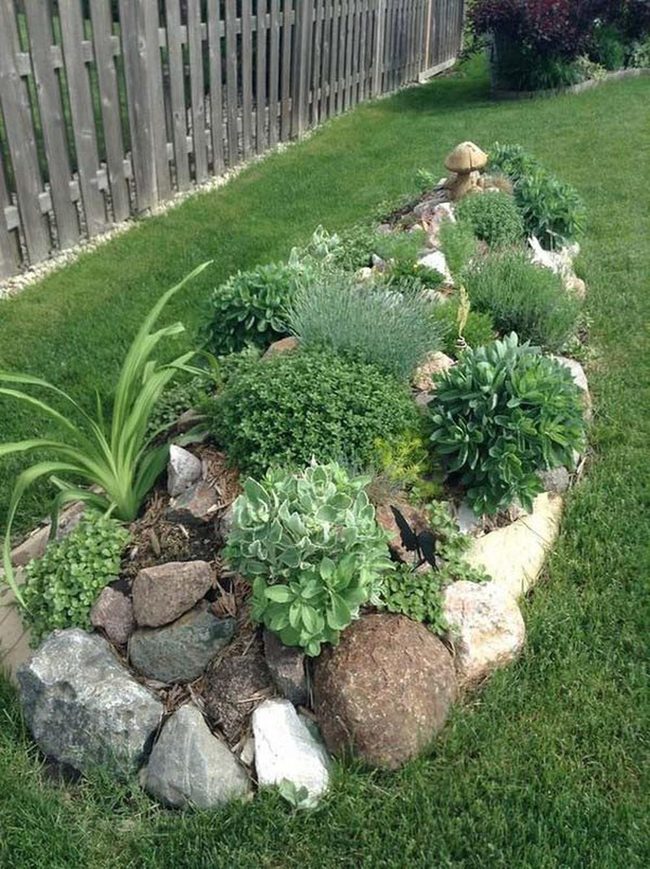
Larger rocks forming a bold border around shrubs and ground cover immediately catch the eye and solve the problem of dead grass patches in difficult growing areas.
Butterfly and mushroom ornaments scattered throughout the space add personality and whimsy that make the garden feel uniquely yours.
Rock gardens work well in spots where regular grass just won't thrive, and you can fill them with plants that actually enjoy those conditions.
I like how these decorative pieces break up the landscape and give you something fun to notice as you move through the yard.
You can arrange the rocks to guide the eye through the space and create natural pathways.
Small garden ornaments let you show off what matters to you and make the space feel more like home.
With minimal maintenance and maximum character, a rock garden becomes a spot where you can relax and enjoy something you built yourself.
Boulders, Gravel Paths, Wild Flowers
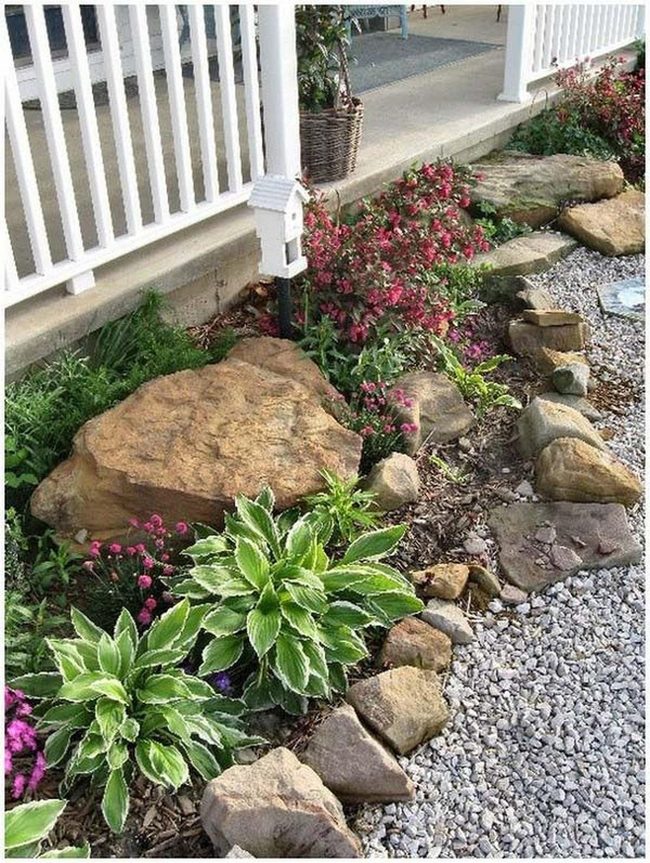
Oversized boulders scattered throughout the garden and trailing vines climbing over them establish that raw, weathered charm people love in rock gardens.
You can walk along paths made from crushed gravel that winds between the planted areas.
Small flowers emerge between the stones and gaps, giving the whole space a relaxed and unpretentious feel.
Ground cover plants drape down the sides of rocks and soften hard edges.
Flowers in different heights and colors add visual interest without looking too organized.
It's simple to maintain once established, and the stone and plant combination holds up well over time.
You get that connection to nature without needing a lot of fussy upkeep.
White Stones And Green Leafy Contemporary Garden
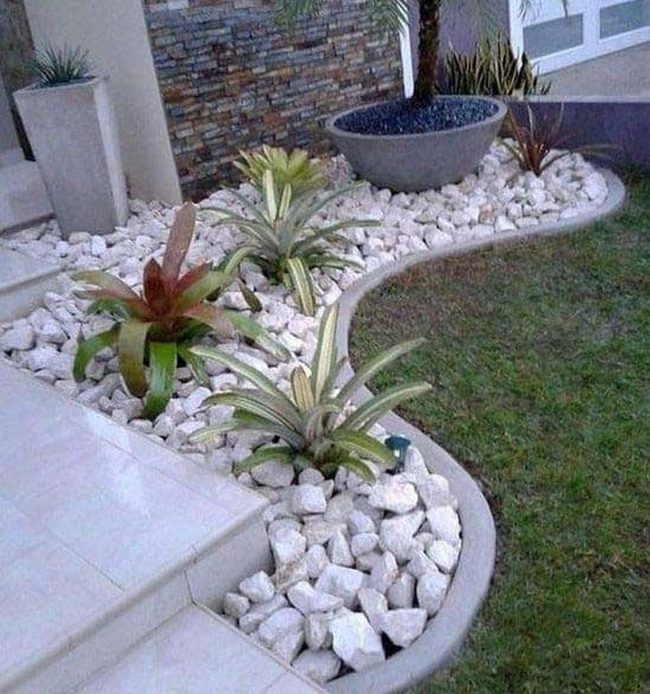
White stones and tall leafy plants fill this corner garden space with a clean, modern style that stands out right away.
Poured cement borders keep everything looking sharp and organized around the edges.
You get that fresh, uncluttered feel from the simple design, and the bright green leaves pop against the neutral tones.
It's a straightforward approach to landscaping that works well if you like things neat and unfussy.
The combination of hard edges and natural greens balances nicely in a space like this.
If you're drawn to contemporary gardens, this setup shows you how minimal elements can still feel complete.
Standing back, the whole arrangement has a calm, ordered quality that appeals to many people.
Curved Black And White River Stones
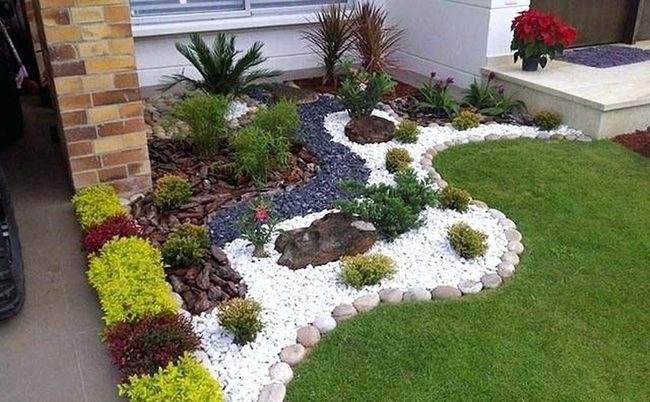
Smooth river rocks in curved layers with contrasting white and black stones form a striking arrangement that immediately draws attention in any garden space.
You can use the play between different shades and textures to build something that looks both interesting and distinctive.
Layering stones in this way means the eye naturally follows the curves you've created.
The pattern becomes more engaging when darker and lighter rocks sit side by side.
Simple color choices like black and white against neutral tones help the design stand out without feeling overdone.
Rock gardens benefit from this kind of organized arrangement because it shows intention without requiring constant upkeep.
You'll find that combining smooth textures with defined color contrasts gives you a landscape feature that feels polished and put-together.
Gray Boulders Frame Colorful Blooms
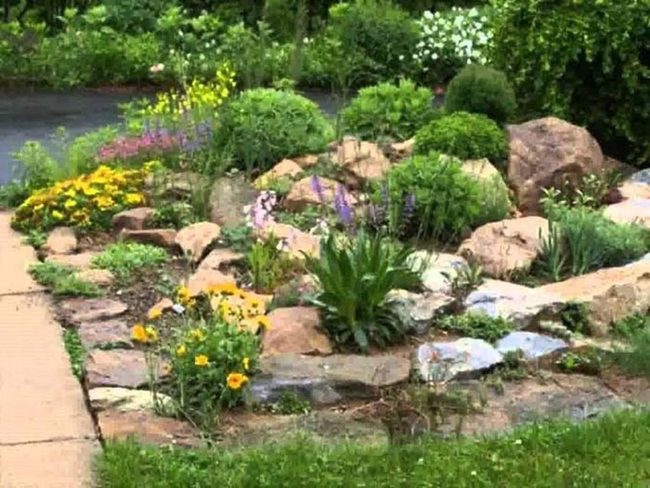
Large boulders scattered around your garden beds offer a striking natural look that rivals traditional wood borders or retaining walls.
You can position these rocks to frame your planting areas while letting taller flowers and plants rise up behind them, and the whole setup stays relatively easy to maintain while giving your space plenty of color and visual interest.
Rocks work well because they last for years without needing replacement like wood does.
Plants naturally soften the hard edges of the stones, and people tend to appreciate how the combination of rough textures and blooming flowers balances each other out.
Since boulders sit where you place them without rotting or deteriorating quickly, they're a smart long-term solution for defining your garden spaces.
Your flower selection matters too; pairing taller varieties with low groundcover plants around the boulders creates nice layers and keeps weeds down between the stones.
Clean Garden Edges Cement Blocks
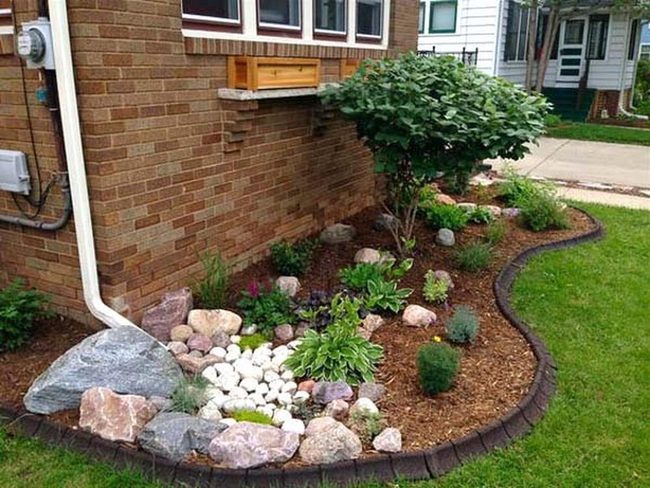
Precast cement blocks offer a straightforward way to keep your garden borders sharp and prevent mulch from spilling into your lawn, so you can maintain that clean appearance without much fuss.
You'll find these blocks in many different colors at most home improvement stores, which makes it easy to match your garden style.
For extra visual interest and function, large rocks positioned near rain downspouts protect your soil from water damage while adding natural texture to the landscape.
The combination of neat edging and strategic rock placement keeps your garden looking organized and well-maintained without requiring complicated installation or special skills.
Blue Glass Stream Through Succulents
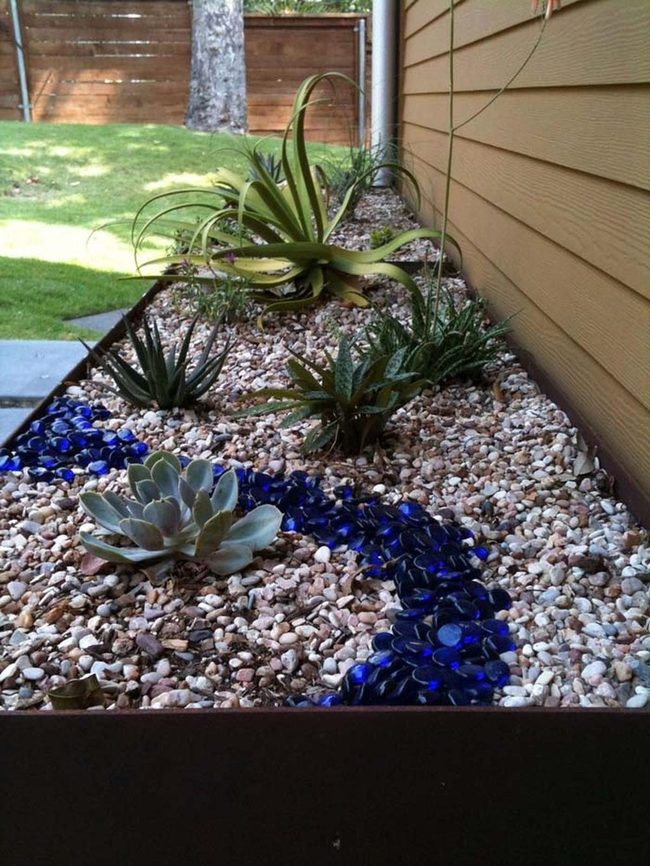
Blue glass pebbles scattered across a raised garden bed offer an eye-catching pop of color that mimics a flowing stream winding through your agave and Sansevieria plants.
I like how these pebbles function as a visual anchor that makes the whole bed feel more interesting and alive.
Beyond their good looks, they serve a practical purpose by helping with drainage and keeping soil moisture regulated.
You can find blue glass pebbles pretty easily at pet stores or home improvement shops, so sourcing them won't take much effort.
Arranging them in a curved pattern gives the impression of water flowing through your plants, which adds dimension and movement to what might otherwise feel static.
Michael Harris
Senior Content Editor
Expertise
Home Décor Content Creation, Interior Design Journalism, Editorial Oversight, Digital Media Strategy, Team Leadership and Mentorship
Education
University of Queensland, Brisbane, Australia
Queensland University of Technology (QUT), Brisbane, Australia
Michael Harris is the senior content editor at Archi Refresh, where he turns home design trends into engaging, easy-to-follow articles. With a journalism degree from the University of Queensland and a digital communication certification from QUT, he knows how to craft content that informs and inspires.
With over 10 years of experience in lifestyle and design media, Michael has shaped editorial strategies, mentored writers, and helped readers refresh their spaces with practical tips. His work blends storytelling with expert advice, making home decor more accessible to everyone.
Outside of work, Michael enjoys DIY projects, exploring Brisbane’s art scene, and teaching digital literacy workshops.