
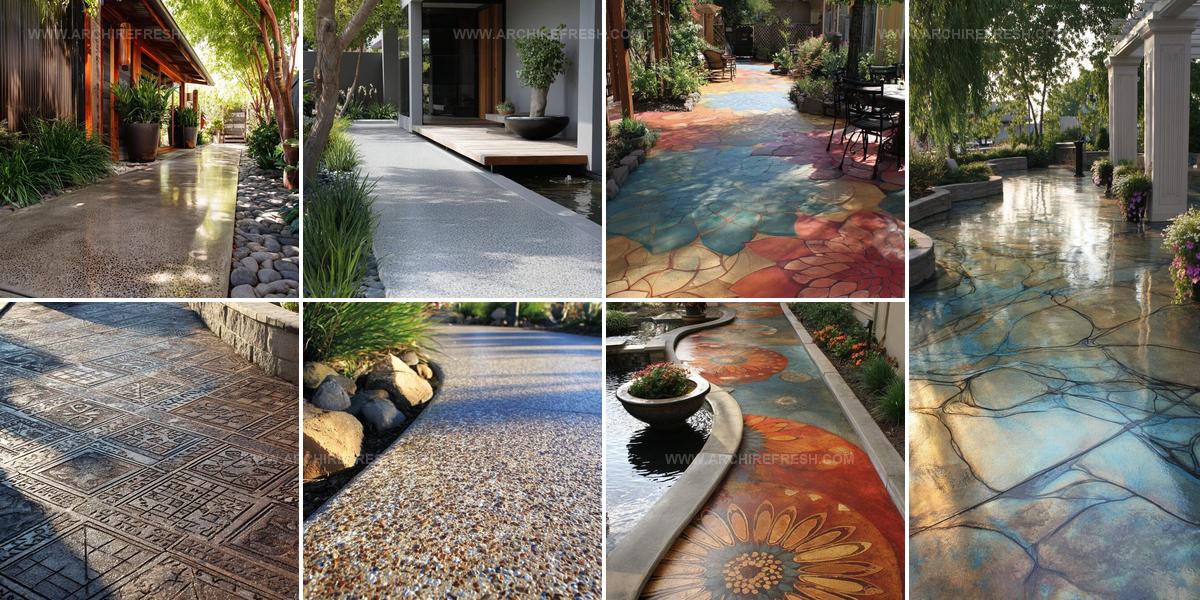
10 Fresh Decorative Options for Concrete Resurfacing
Homeowners often overlook the stunning decorative potential that concrete resurfacing can bring to driveways, patios, and walkways.
A dull gray surface doesn't have to stay boring when modern techniques offer beautiful transformations.
Stamped patterns, rich color stains, and textured overlays provide aesthetic appeal while maintaining durability.
Budget-friendly solutions exist alongside premium finishes, ensuring every project finds its perfect match.
Professional contractors continue developing new methods that mimic natural stone, brick, or tile at a fraction of the cost.
The versatility available today makes choosing between styles an exciting challenge rather than a limitation.
When considering renovations, concrete surfaces deserve attention because they combine lasting strength with visual charm that enhances property value.
Liquid Metal Swirling Floor Art
Metallic epoxy finishes transform floors into three-dimensional works of art that shift and shimmer as you move across them, resembling flowing lava, marble, or abstract paintings with their swirling, pearlescent effects.
The process starts with a solid color base coat that provides depth, then metallic pigments suspended in clear epoxy resin get poured onto the surface and manipulated with various tools to set up either deliberately arranged patterns or random formations that never look exactly the same twice.
You have access to dozens of metallic options ranging from copper and silver to gold, blue, green, and red, and the glossy finish reflects light dramatically to clearen rooms and make spaces feel larger than they are.
Black base coats paired with clear metallic pigments produce the most striking contrast and showcase the dimensional effects especially well in spaces with good lighting that highlights how the appearance changes from different angles.
Indoor residential applications work beautifully in living rooms, basements, and bathrooms, while commercial spaces like showrooms, retail areas, and restaurants benefit from the wow factor that adds real value to the property.
You can customize further by using different metallic pigments in separate areas or stirring in clear chips and glass for extra texture and visual interest.
Beyond their dramatic appearance, these floors deliver adaptable to different needs benefits with their seamless, waterproof surface that resists stains and requires only regular sweeping and occasional damp mopping with mild cleaners.
Stone-Pattern Concrete Under Fifty Percent
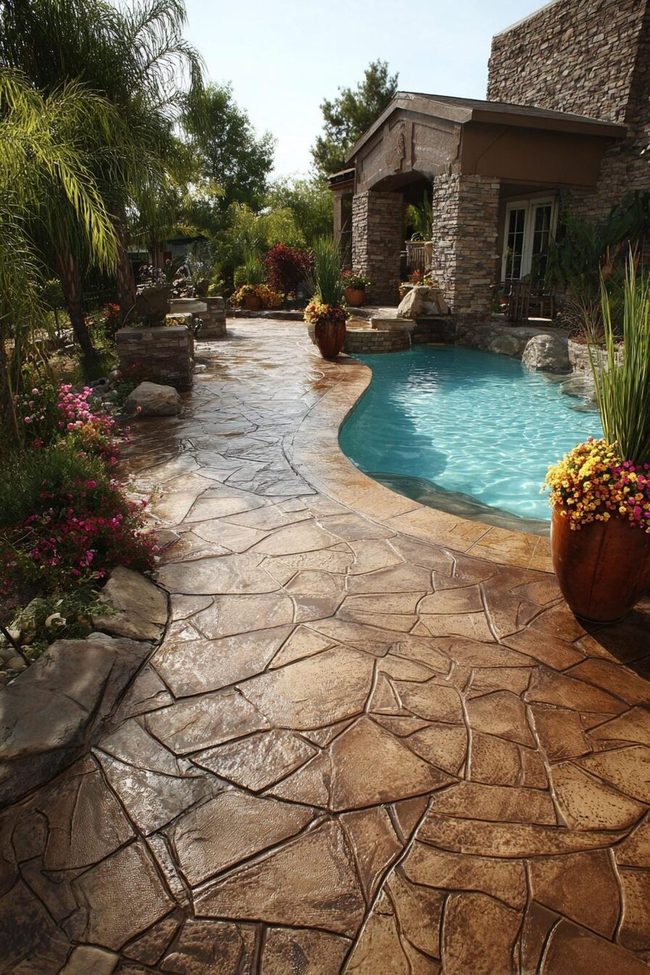
Stamped concrete overlays transform a plain concrete surface into something that looks like expensive natural stone, brick, or wood without the high price tag or complicated installation.
These thin layers of cement-based material, usually about 1/4 to 3/8 inch thick, get pressed with large rubber stamps while still wet to give rise to realistic texture patterns that mimic slate, flagstone, cobblestone, brick, and even wood grain.
You can choose from dozens of stamp designs and add color either directly to the overlay mix or later through stains and dyes that give rise to natural-looking variations and depth.
Installing stamped overlays costs about 30-50% less than laying actual stone or pavers, which makes them perfect if you want your patio, driveway, pool deck, or walkway to look like an exquisite slate terrace without breaking your budget.
Professional installation works best since the timing of the stamping process is critical, and workers can add finishing touches like antiquing colors that highlight texture and enhance dimension.
You are able to get a durable surface that typically lasts 10-15 years with proper care, plus the textured finish provides natural slip resistance around pools and wet areas.
Keeping stamped overlays looking great means resealing every 2-3 years to maintain protection and appearance.
Colorful Flaked Epoxy Floor Surface
Epoxy flooring with decorative flakes creates a , multi-dimensional surface that resembles terrazzo or molten metal, offering you unlimited design options for any space.
Colored vinyl flakes scatter across the wet epoxy base coat in sizes ranging from tiny specks to bold chips, letting you build anything from delicate speckled patterns to dynamic, confetti-like designs with countless color combinations.
Metallic epoxy options deliver a flowing, three-dimensional appearance that shifts with light and makes rooms feel brighter and larger through their high-gloss finish.
You can even customize designs further by incorporating business logos or embedded patterns using specially colored flakes for a truly personalized look.
Once the base coat cures, loose flakes are removed and a clear topcoat seals everything, creating an exceptionally durable surface built to last 15-20 years in homes and withstand heavy use in commercial settings.
Epoxy flooring handles whatever you throw at it, chemical spills, moisture, and daily wear, thanks to its seamless, non-porous construction that resists damage and cleans up easily with just a sweep and mop.
You can add texture to the final coat for slip resistance and comfort underfoot, while modern formulations keep odors and harmful VOCs to a minimum.
Etched Concrete Patterns Without Grout Lines
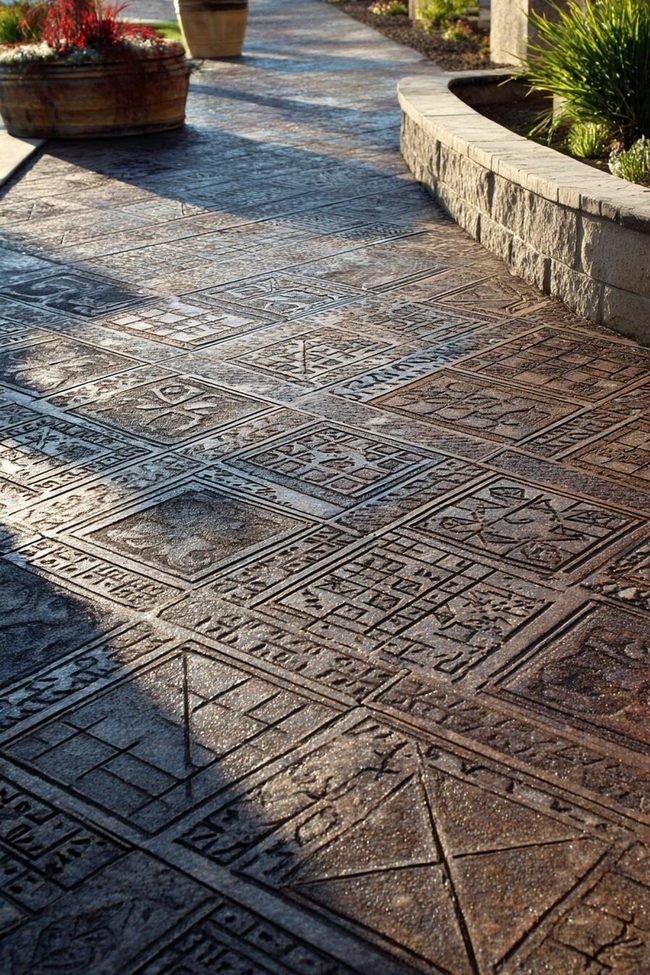
Decorative scoring and engraving cuts shallow lines or designs into concrete surfaces to bring about patterns that mimic tiles and other custom artwork, transforming plain concrete into a visually striking canvas for geometric designs, borders, and medallions.
Special concrete saws and engraving tools cut lines between 1/16 to 1/4 inch deep into existing concrete while keeping the structure completely intact, and you can choose anything from simple grid patterns to complex geometric designs or custom logos.
Once the concrete is scored, the lines can stay as they are or get filled with contrasting grout for extra definition, and staining or coloring applied before or after scoring bring abouts multi-colored effects that mimic inlaid stone or intricate tile work.
Precision modern tools allow for intricate including circles, curves, and custom graphics that give your space a personalized touch.
For homeowners with good concrete that just needs visual updates, this ranks among the most affordable transformation options available.
You won't deal with crumbling grout or constant tile maintenance since these lines don't require the upkeep of traditional tile installations, and scoring works beautifully on patios, pool decks, entryways, kitchens, and living areas where a custom floor design makes a real statement.
Concrete Stones Shine Through Naturally
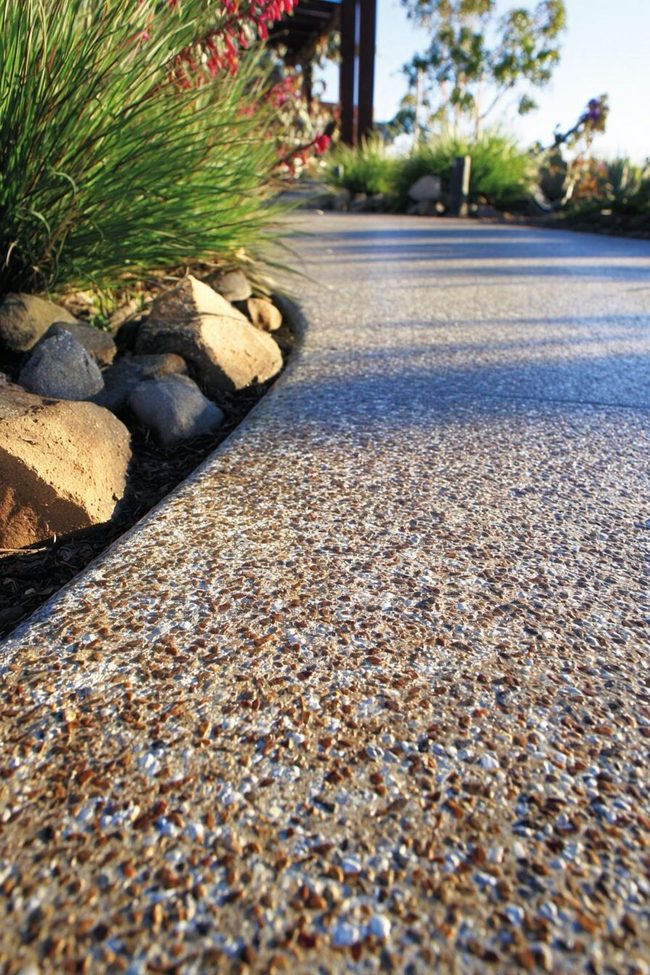
Exposed aggregate finishes reveal natural stones within concrete for a textured, decorative surface that stands out with raw visual appeal.
You can choose from natural river rock, crushed granite, glass, or even seashells as the exposed materials, and color options are available in virtually every shade and size imaginable.
Modern techniques allow for smoother finishes where the aggregate is just barely exposed for a refined look, or you can go traditional with a rough texture that works beautifully around pools and on sloped driveways for slip resistance.
Seeding is a technique where additional decorative aggregates are broadcast onto the surface for higher concentrations, and you can bring about patterns and designs by using different colored aggregates in defined areas with border treatments that incorporate smaller or contrasting stones for visual definition.
For contemporary homes, white cement with black or dark gray aggregates delivers a sophisticated appearance, while beach properties benefit from seashells or blue glass for a coastal feel that suits your setting.
Maintenance involves occasional pressure washing to remove dirt and refresh the appearance, plus sealing is recommended to enhance the colors and protect against staining.
This timeless approach means your investment will stay in style for decades to come.
Permanent Concrete Art Installations
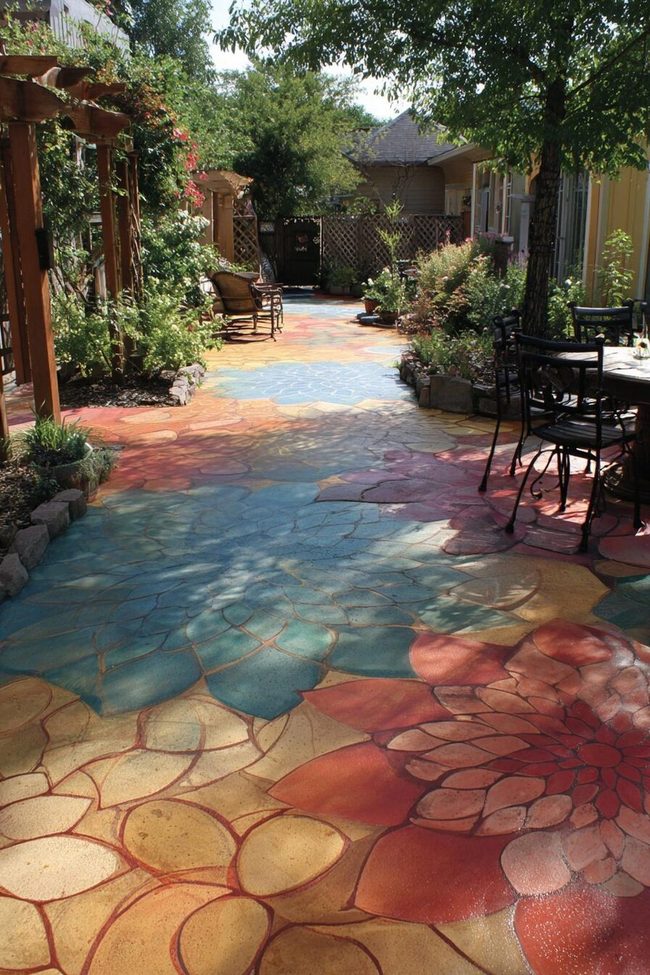
Custom concrete murals and graphics turn plain concrete surfaces into personalized art that speaks to who you are, and the possibilities range from photographs and abstract designs to company logos and any imagery you can envision.
Hand-applied stains, stencil systems, and engraving techniques all offer different ways to achieve your vision, with some methods even allowing photo-realistic transfers that capture fine visual cues on concrete.
You might add glow-in-the-dark elements for unique nighttime effects in entertainment areas, or choose UV-resistant colorants for patio spaces so your design stays color-driven despite sun exposure.
Complexity matters when budgeting, simple geometric patterns cost less than multi-colored scenes with intricate visual cues, and professional artists who specialize in concrete work tend to deliver the most impressive results.
Proper sealing is essential because it protects your design and ensures the artwork lasts for years without fading.
Location and context shape your design choices, so think about nautical themes near pools, natural elements along garden paths, and how people will view the piece from different angles.
Larger spaces can handle more detailed designs visible from a distance, while smaller accent pieces work well to highlight entryways or areas around fire features.
With these innovative techniques, your tired concrete can become one of the most striking features of your home.
Marbled Concrete Floors In Earth Tones
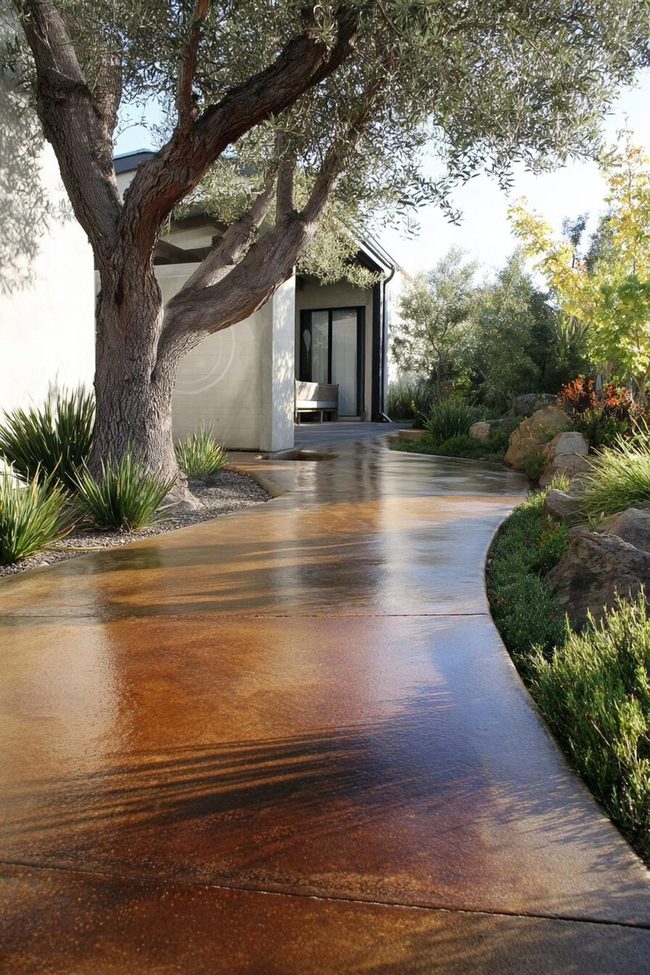
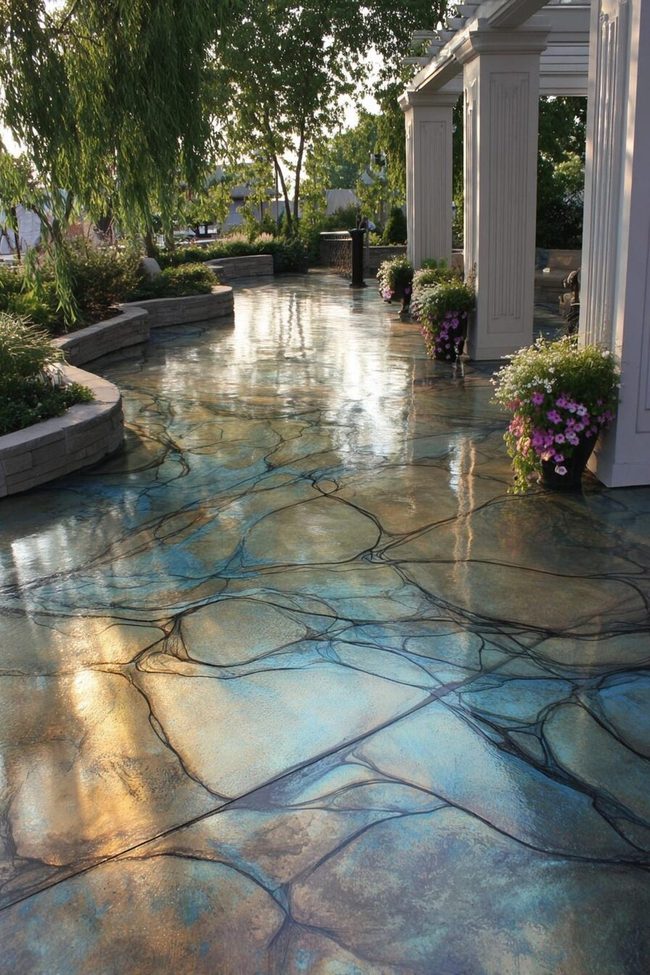
Acid staining refreshes concrete into rich, marbled surfaces with one-of-a-kind patterns that resemble natural stone or leather, and these permanent color effects won't fade, chip, or peel like paint does.
Installation turns out completely unique because the chemical reaction between the acid-based solution and the concrete's minerals depends on factors like the surface's composition, age, and texture.
You can select from earthy tones like amber, blue-green, brown, and terra cotta to match your space and style.
Open-Air areas benefit especially well since acid staining resists UV damage and handles harsh weather beautifully.
Existing concrete that's in decent shape works best, and the technique can even hide minor imperfections while adding warmth and character indoors.
After staining, applying a sealer protects the surface and lets you choose between high-gloss, satin, or matte finishes based on your preference.
Keeping your acid-stained floors in good condition is straightforward, just sweep regularly and mop occasionally with a neutral cleaner.
You can design more complex looks by using stencils or tape to section off areas for different colors, and this works well in rustic or modern spaces alike, making it a cost-effective alternative to hardwood or natural stone flooring.
Cement Thin Layer Gray Surfaces
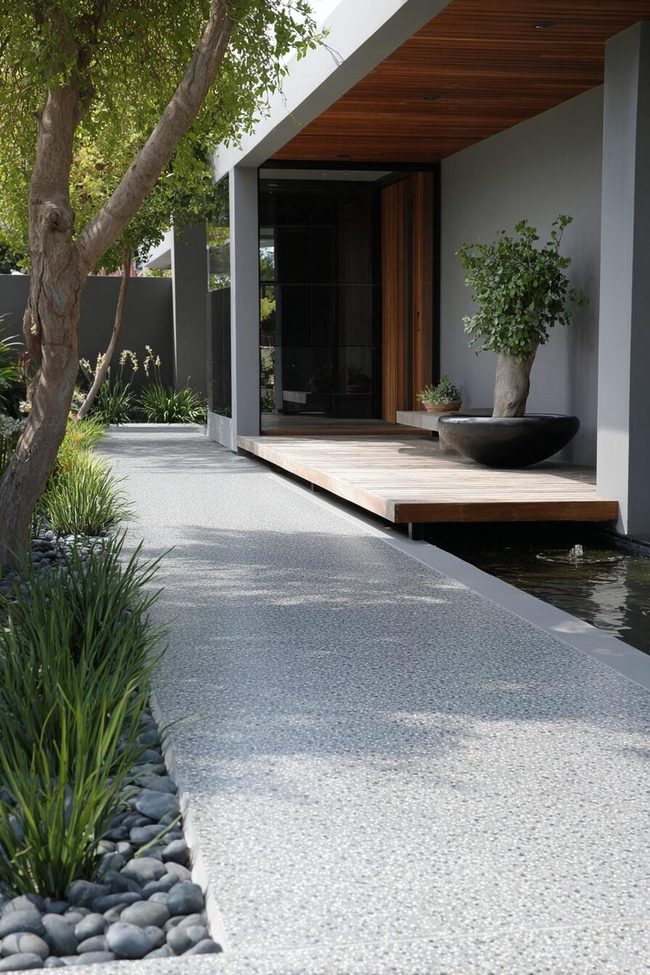
Microtoppings and skim coats are ultra-thin layers of polymer-modified cement that transform existing concrete surfaces into smooth, modern canvases through applications as thin as 1/16 inch.
You can achieve looks ranging from modern and minimalist to artistic and colorful, with hand-troweled effects and variations in texture and color that form truly distinctive finishes.
Modern microtopping formulations contain advanced polymers that bond exceptionally well with underlying concrete, and colors can be integrated directly into the material or applied afterward using dyes, stains, or tinted sealers for complete customization.
Installation involves multiple thin layers, in all troweled on and allowed to dry before the next application, and most projects wrap up in just a few days including drying time between coats.
Because the application is so thin, you don't lose headroom in spaces with low ceilings unlike thicker overlays, and the smooth surface works equally well on horizontal and vertical surfaces including countertops and wall features.
Regular cleaning and occasional resealing keep the surface looking fresh for years, making maintenance straightforward and manageable.
Commercial spaces benefit from branded environments with custom colors and designs, while homes with multiple floor levels gain a unified look without thick transitions between rooms.
These surfaces work well with radiant heating systems too, since the thin material allows heat to transfer efficiently throughout your space.
Patterned Concrete Overlay Surfaces
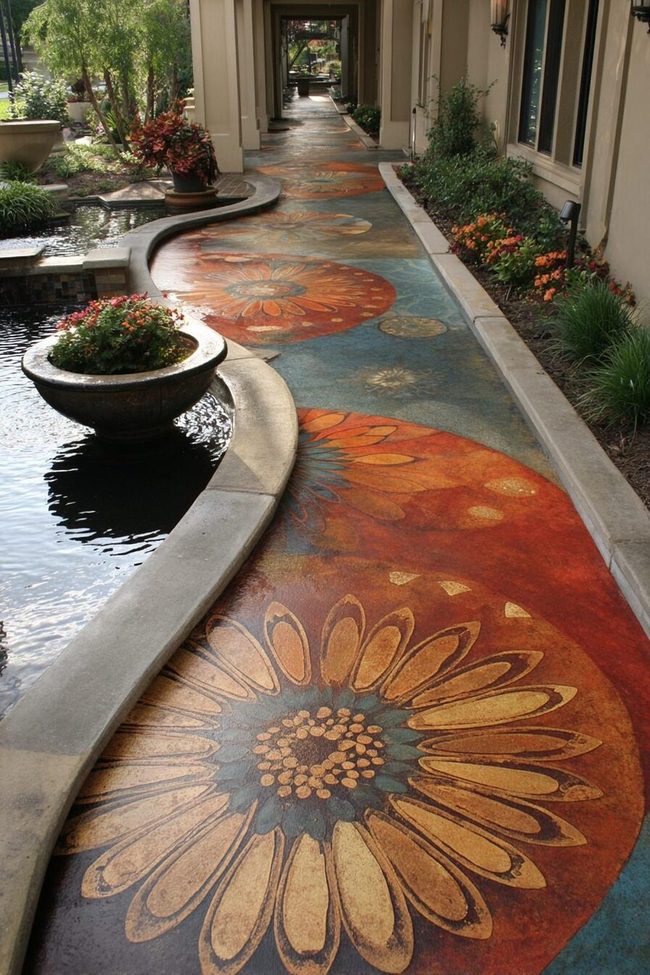
Concrete stenciling opens up bold design possibilities by letting you apply striking patterns directly onto concrete surfaces, and you can go for dramatic color contrasts that serve as eye-catching visual anchors in any room or yard area.
Starting the process means prepping your concrete and laying down a base coat of colored overlay material, then positioning adhesive stencils in your chosen pattern before applying a contrasting overlay color on top.
Once you remove the stencils, your design appears underneath, and options range from geometric shapes and tile patterns to completely custom artwork that suits your space.
If you prefer something quieter, stenciling in similar tones creates a refined look that whispers rather than shouts, while bolder color combinations pack real punch.
You have hundreds of ready-made stencil options to choose from, or you can commission custom stencils for something completely one-of-a-kind, and styling direction works just as well on existing concrete as it does during new installations.
Modern stencil materials deliver precise, detailed designs that rival hand-painted work, and many people love this technique because it recreates the look of expensive encaustic cement tiles without the hefty price tag.
Both indoor and yard spaces benefit from this method since concrete durability pairs nicely with design flexibility that other materials sometimes limit, and after the pattern sets, sealing protects everything and brings out the colors.
Mirror-Smooth Concrete With Industrial Shine
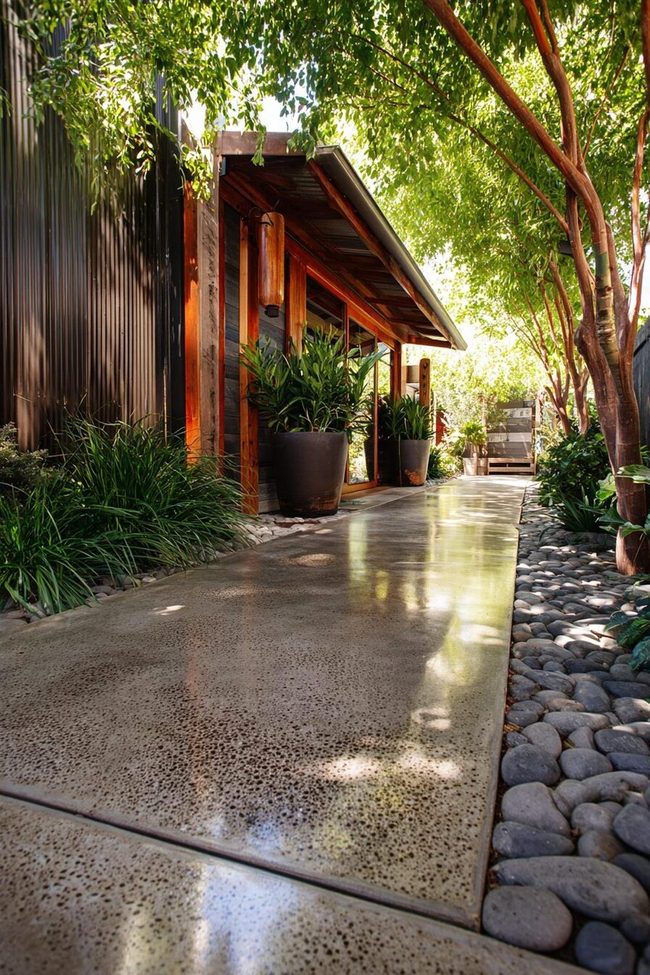
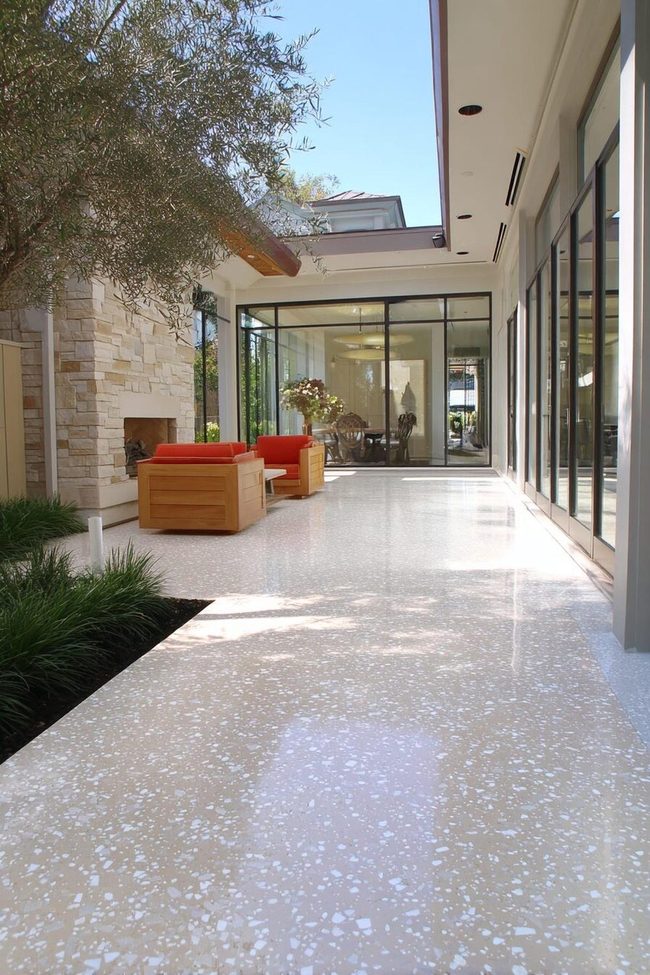
Polished concrete floors deliver a refined, mirror-like surface that bounces light around your space and cuts down on how much artificial lighting you need, making them both beautiful and efficient for your home or business.
You can dial in the shine level yourself, choosing anything from a gentle matte finish to a high-gloss reflection, all by controlling how many polishing steps the contractor performs on your surface.
During the grinding process, diamond tools work through progressively finer stages to smooth and refine the concrete, and a chemical hardener gets applied to strengthen and densify the material so it resists staining and moisture far better than untreated concrete.
Custom looks come easy with this method since you can add dyes or stains that soak into the concrete, expose different colored or textured aggregates at varying depths, or even embed glass or metal fragments before the final polish for one-of-a-kind effects.
Decorative saw cuts and engravings can be incorporated into the design before polishing to add patterns or personalized touches throughout the floor.
Unlike coatings that chip and peel away over time, the polished finish actually becomes part of your concrete itself and stays intact through heavy foot traffic, pet claws, and regular wear.
Maintenance hardly takes any effort beyond regular sweeping and the occasional damp mop, so you are able to spend less time cleaning compared to other flooring options.
Olivia Martinez
Founder & Principal Designer
Expertise
Sustainable Interior Design, Residential and Commercial Space Planning, Historic Preservation and Adaptive Reuse, Custom Furniture Design, Project Management
Education
Parsons School of Design, New York, NY
LEED Accredited Professional (LEED AP)
Olivia Martinez is the founder of Archi Refresh, where she brings style and sustainability together. With a degree from Parsons School of Design and a LEED certification, she’s all about creating beautiful, eco-friendly spaces.
With over eight years in the industry, Olivia has designed everything from cozy homes to commercial spaces, always putting function and sustainability first. She loves working with local artisans and has been featured in design publications for her fresh take on green living.
When she’s not designing, Olivia enjoys exploring historic architecture, painting, and spending time with her rescue dogs, Luna and Max.