
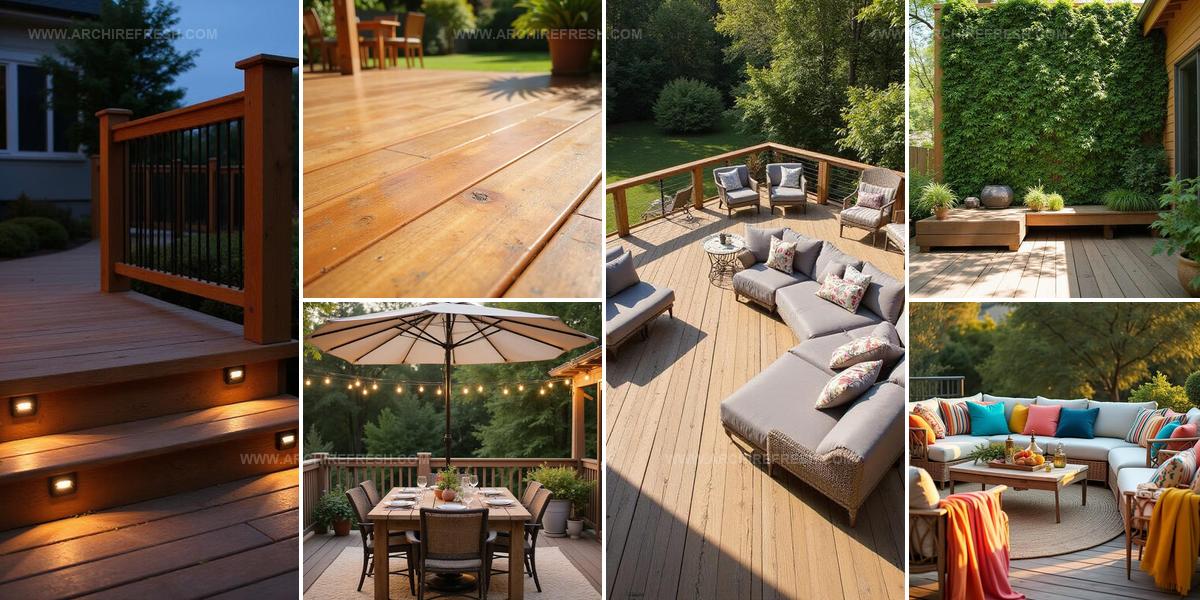
21 Fresh Deck Decor Ideas That Spark Outdoor Living
Homeowners often overlook how dramatically a refreshed outdoor living space can reshape their entire property's appeal and functionality.
Simple changes to an exterior retreat area make weekdays feel more relaxing and weekends infinitely more enjoyable.
Fresh deck decor ideas offer affordable solutions that don't require major construction or professional installation services.
A well-styled outdoor platform becomes an extension of indoor comfort while adding character that reflects personal style preferences.
Small updates like new cushions, lighting fixtures, or planters generate surprisingly powerful visual impact without draining savings accounts.
The beauty of reimagining an outdoor space lies in how quickly changes take effect compared to interior renovation projects.
Exterior Room Zones Garden Deck
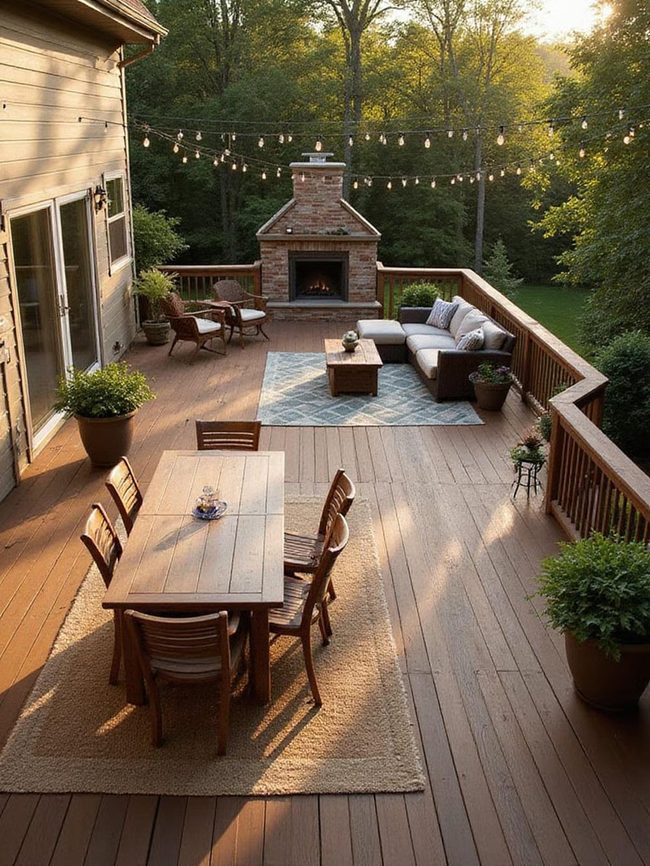
When organizing your deck space, think of it as building separate outside rooms that in all serve a purpose.
A dining area positioned near your house makes it easy to bring food out, while a lounging section catches the afternoon warmth, and a planting zone sits where light works best for your plants.
Dividing these areas works well without needing actual walls, use different furniture styles to show what in all zone is for, like upright dining chairs for eating and deep seating for relaxing, plus benches near raised planters for tending to your garden.
Container plants act as natural dividers and green boundaries between spaces while you grow your own food.
Keep pathways open and clear so you can move watering cans, harvest baskets, and dinner plates without obstacles.
Multipurpose spots help you use every inch of your deck smartly.
Even a small water feature adds another dimension to your outside area and helps define these different zones.
Weatherproof Deck Ideas Boxes
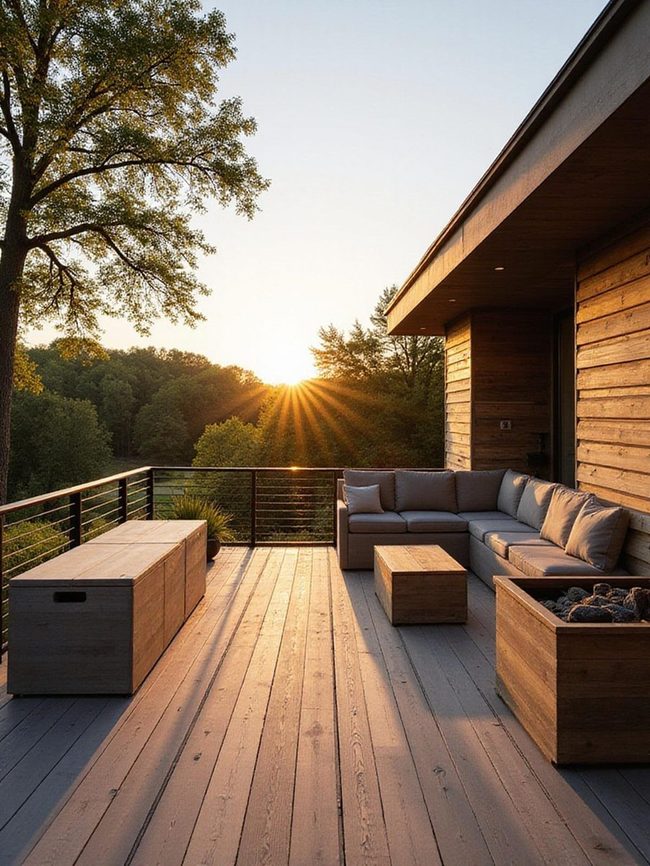
Storage solutions on your deck deserve the same attention as furniture and plants, so consider weather-resistant boxes that serve double duty as seating and keep your space organized and clutter-free.
Ventilated designs prevent moisture from building up inside, which matters when you're storing tools that could rust or cushions prone to mildew.
Wall-mounted cabinets save floor space and make it easy to grab what you need without digging through piles, while neutral-colored pieces blend naturally with most deck styles and won't compete with other design elements.
If you garden in a smaller urban space, dedicated storage for tools, soil, and amendments keeps everything in one spot and makes maintenance simpler and more enjoyable.
Good lighting around your storage area lets you find items quickly, even after the sun goes down, and helps you navigate safely.
We all benefit from having our supplies close at hand and properly protected from the elements, since with this layout, means your deck stays open and welcoming rather than crowded with scattered gear.
Strategic organization alters how you use your patio space, making both entertaining and gardening far more pleasant.
Solar Step Pendant Lamps For Evening Pathways
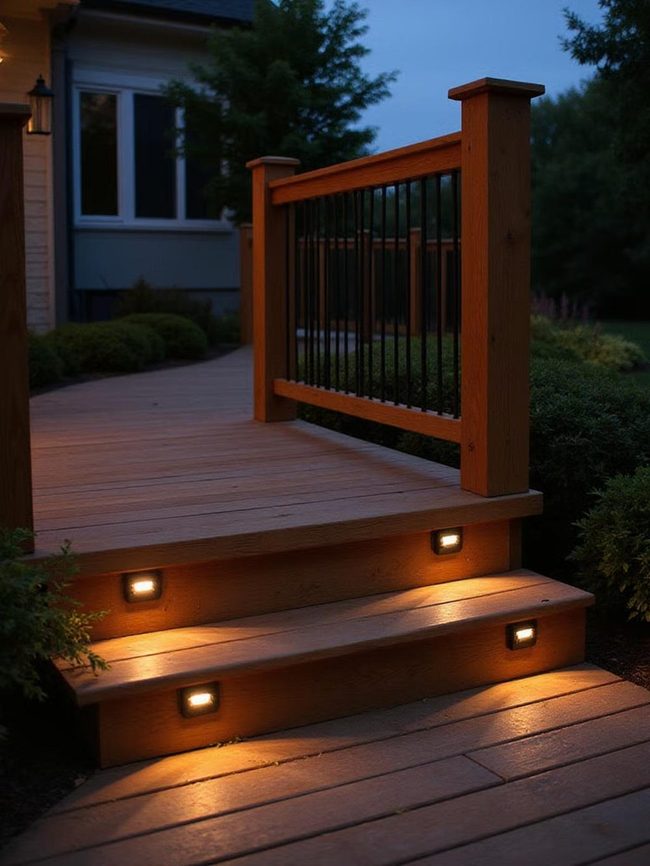
Pathway and step lighting serves as the finishing piece that brings your entire deck together, and placing lights strategically on deck boards and risers gives you gentle illumination without creating tripping hazards or getting in the way.
Solar-powered options work well if you're adding lights to an existing deck since they need no wiring, while low-voltage systems keep brightness steady no matter the weather.
Positioning lights around transitions between different zones, along steps, and near seating areas extends how long you can enjoy your open-air space into the evening hours, which is especially helpful if you tend your plants after work or prepare fresh vegetables for dinner.
Keep in mind that many plants need true dark periods to thrive, so aim lighting away from sensitive species in your growing areas.
Beyond safety benefits, this type of lighting opens up your deck for use throughout the seasons and keeps everything functional as daylight fades.
Modern open-air living has shifted toward spaces that work well at all hours and in different seasons, and your deck can now serve you beautifully whether the sun is up or down.
Seasonal accessories round out your space with one more chance to express your personal style.
Colorful Outdoor Living Cushions Yard Seating
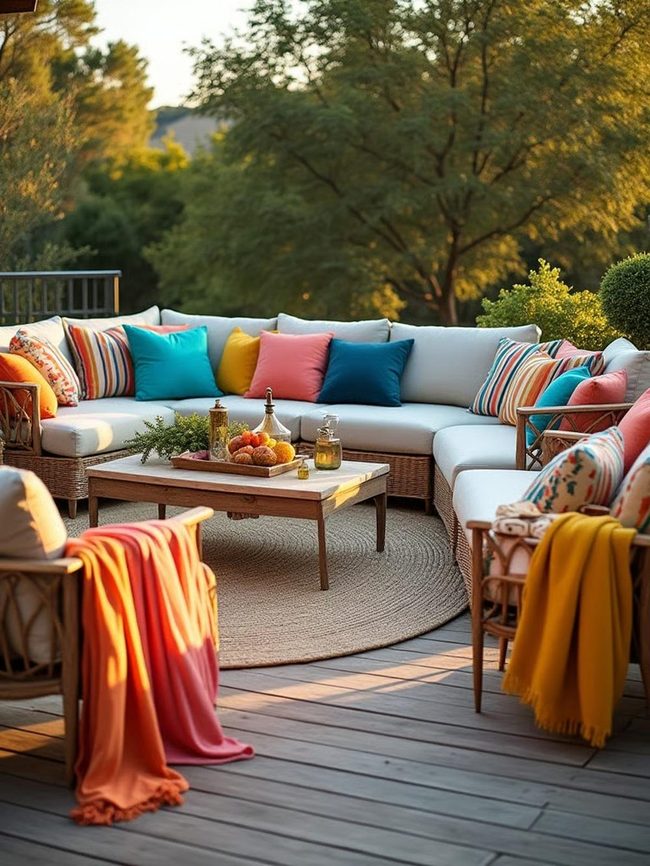
Colorful patio cushions and throws bring immediate visual interest to your garden deck, transforming it from basic to something you can actually want to spend time in, and choosing fabrics made for patio use like solution-dyed acrylics keeps them looking fresh without fading or developing mildew.
Draw inspiration for your color choices from the plants around you, deep purples from eggplants, light-filled reds from ripe tomatoes, or silvery-greens from sage leaves, since these natural connections between your seating and garden introduce a sense of unity throughout the space.
Beyond just adding color, these textiles understateden the hard lines of a deck and give you a reason to relax among your plants rather than simply passing through.
Storage options that keep moisture out extend the life of your cushions and pillows during wet weather, and traditional patterns featuring botanical prints or vegetable designs celebrate the growing heritage that makes edible gardens so special.
Green Wall Edible Living Tapestry
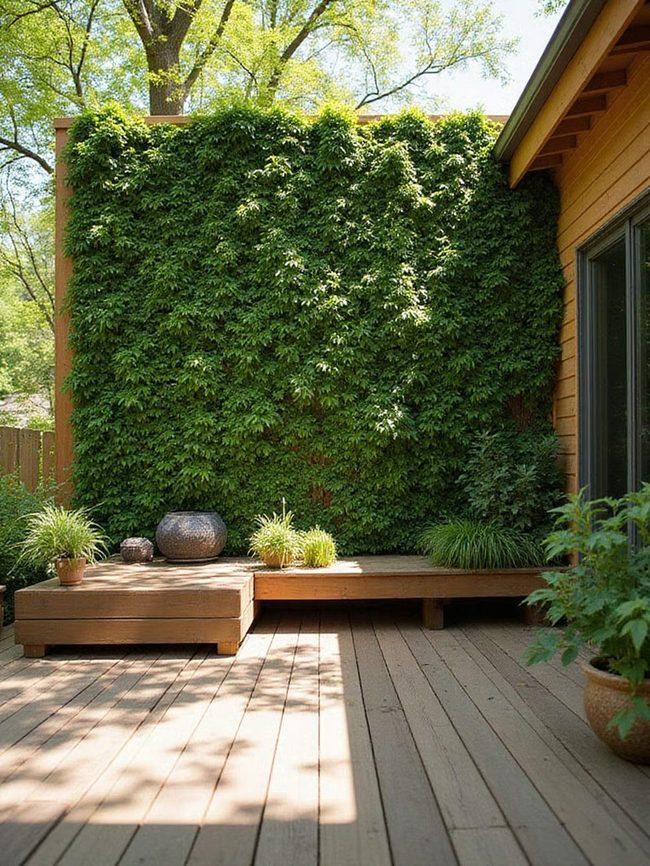
Vertical gardening systems transform deck walls, railings, and dividers into lush productive spaces that dramatically expand your growing area without eating up precious floor space, and these living installations become striking visual features while producing herbs, greens, and even compact vegetables for your kitchen.
Pocket planters made from weather-resistant fabric hang on walls or railings to tapestries of edible and ornamental plants, while modular systems with individual cells let you customize arrangements and swap plants out easily.
Gutters repurposed as horizontal planters can be staggered on walls for shallow-rooted crops like lettuce, strawberries, and herbs, and trellis panels support climbing vegetables such as peas and beans when you want vertical options.
Before you choose a system, think about the weight when soil and water are fully saturated, how drainage will work to protect your deck surfaces, and whether you can reach plants easily for harvesting and upkeep.
Beyond the food production, these living walls cool down your deck and more comfortable outdoor spaces during hot weather.
We can also layer in sensory elements like sound to go along with these green vertical features and round out your overall deck experience.
Mobile Bar Cart For Alfresco Entertaining
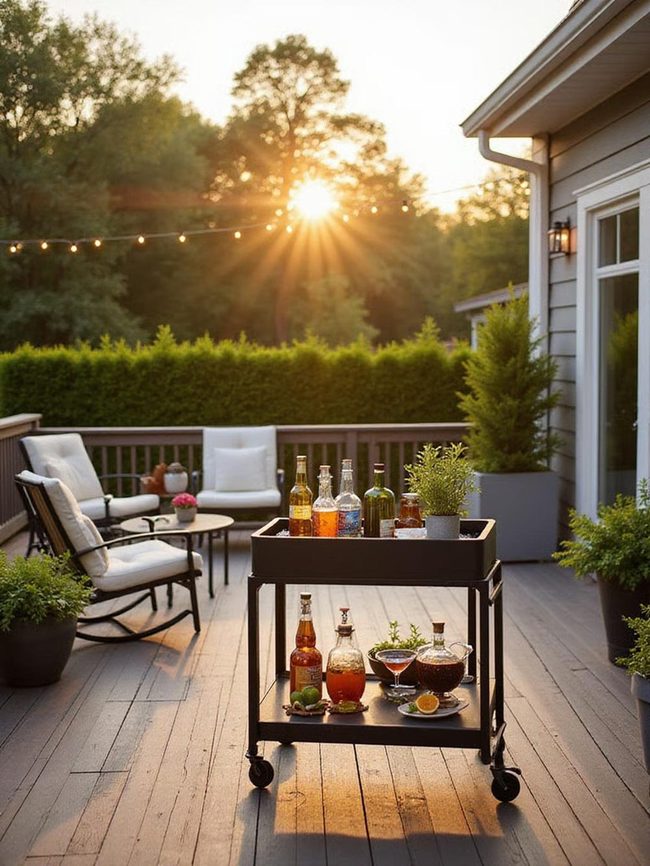
That stylish bar cart serves as the perfect finishing touch when you want to entertain with ease on your deck, and it keeps you from making constant trips back to the kitchen so you can stay present with your guests while serving drinks and snacks.
If you grow your own herbs and edible flowers, this mobile station becomes even more valuable because it's an ideal spot to display homegrown cocktail ingredients like mint, basil, cucumber, or edible blooms right where everyone can see them.
Look for carts made with weather-resistant materials and sturdy wheels that glide smoothly across your deck surface, and choose one with removable trays, wine glass racks, and storage compartments to maximize what you can fit.
Position your cart near where people sit but away from the main paths so guests won't trip over it while moving around.
Stock it based on how you like to entertain, perhaps locally distilled spirits, tools for mixing garden-inspired drinks, or a selection of refreshing non-alcoholic beverages you can garnish with your homegrown herbs.
Well-made carts combine beauty with practical function, which is what makes them such a smart choice for yard entertaining.
Wooden Screens Growing Vertical Plants
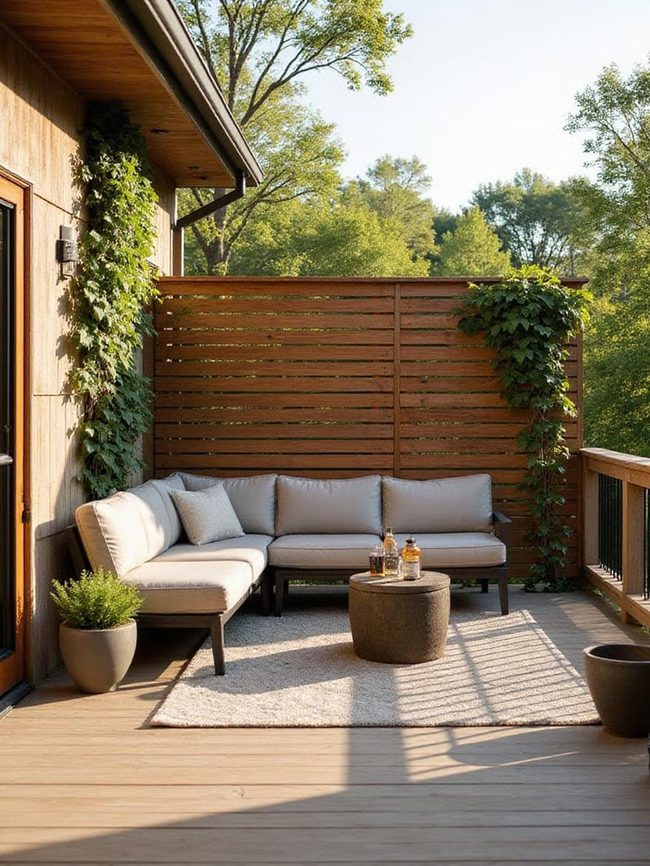
If you're tired of feeling exposed on your deck, a privacy screen or trellis can solve that problem while giving you room to grow plants at the same time.
Slatted wooden screens let light filter through while keeping neighbors from looking directly at you, and metal panels with custom cutouts cast artistic shadows across your space.
Living walls of plants shift with the seasons and offer natural screening that looks beautiful, or you could go with bamboo for a sustainable option that feels organic.
Cedar and redwood screens bring warmth and hold up well to weather, while metal panels give you a streamlined, modern look that lasts for years.
Here's what makes these structures so space-saving for city gardeners: combining solid sections for privacy with open trellis areas for climbing plants means you get both seclusion and growing space.
Beans, peas, cucumbers, and flowering vines like morning glories or clematis grow upward and make full use of your limited deck area.
These structures also help you organize your space into different zones for different activities, so your deck becomes more functional and enjoyable overall.
Polypropylene Deck Rugs Define Space
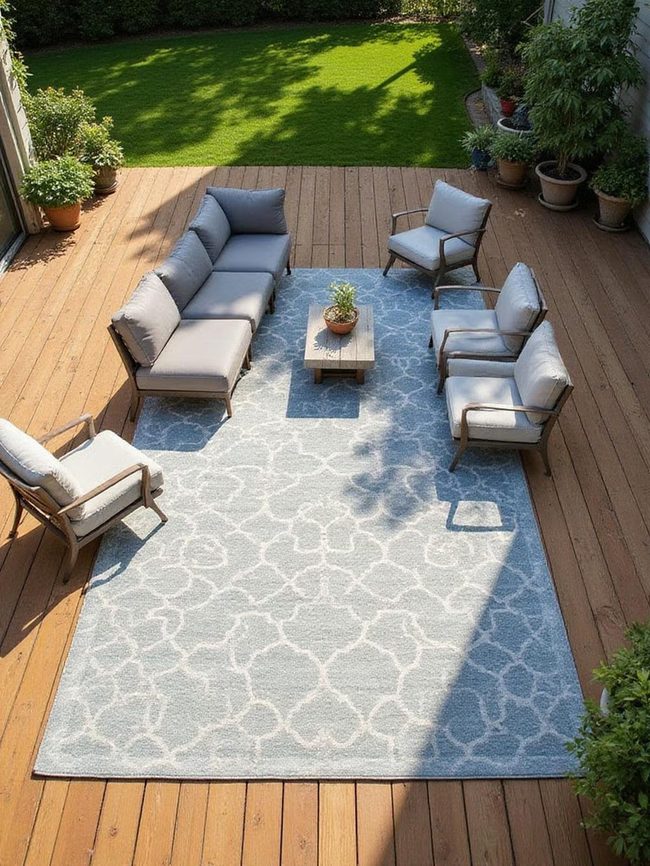
Outside rugs ground your deck space and transform it from a simple wooden platform into an actual living area where you can relax and entertain.
Most people are surprised by how much a rug does, it sets visual boundaries, adds texture under your feet, and helps arrange your furniture in a way that makes sense, whether you're creating zones for plants or spots for sitting.
When you're shopping for a deck rug, focus on materials built to handle yard conditions like polypropylene, which resists fading, mildew, and water damage from regular watering.
If you care about sustainability, look for options made from recycled materials since they work just as well.
Size is important too, so pick a rug large enough that the front legs of your chairs and tables sit fully on it rather than awkwardly half on and half off.
As the sun sets, adding some evening lighting to the design really pulls everything together and makes your deck feel like a true yard room.
Modern Shade Sails Filter Sunlight
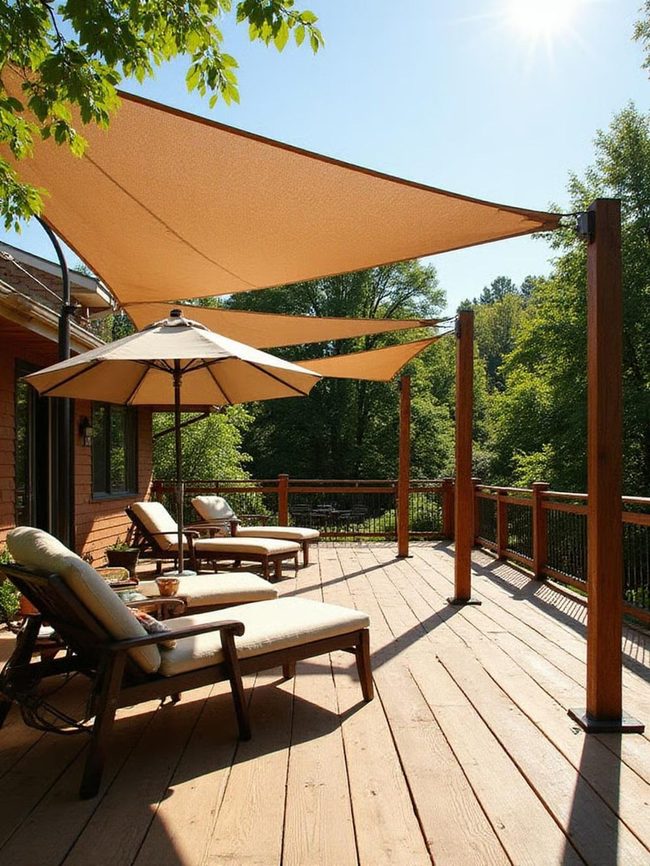
Many homeowners wonder how to make yard spaces work all day long, not just when the weather is perfect, and the answer often lies in thoughtful shade solutions that serve double duty.
Shade sails build a striking modern look while letting filtered light through, which works beautifully if your plants need dappled sunshine rather than full coverage.
Cantilever umbrellas offer flexibility since they can follow the sun as it moves across your deck throughout the day and seasons.
Combining several smaller shade structures instead of one large one gives you more control and lets you set up both sunny spots and shadier areas for different plants and activities.
Strategic shade refreshes a scorching deck into somewhere comfortable and usable while also protecting plants that struggle in intense afternoon heat.
Beyond function, the right shade structure becomes a real design statement that defines how your deck looks and feels.
Material quality matters too, as it determines how well your shade elements hold up and whether they'll look good year after year.
Once you've got your horizontal space sorted with shade, you can focus on building up your deck's vertical elements.
Layered Lighting Heights Transform Decks
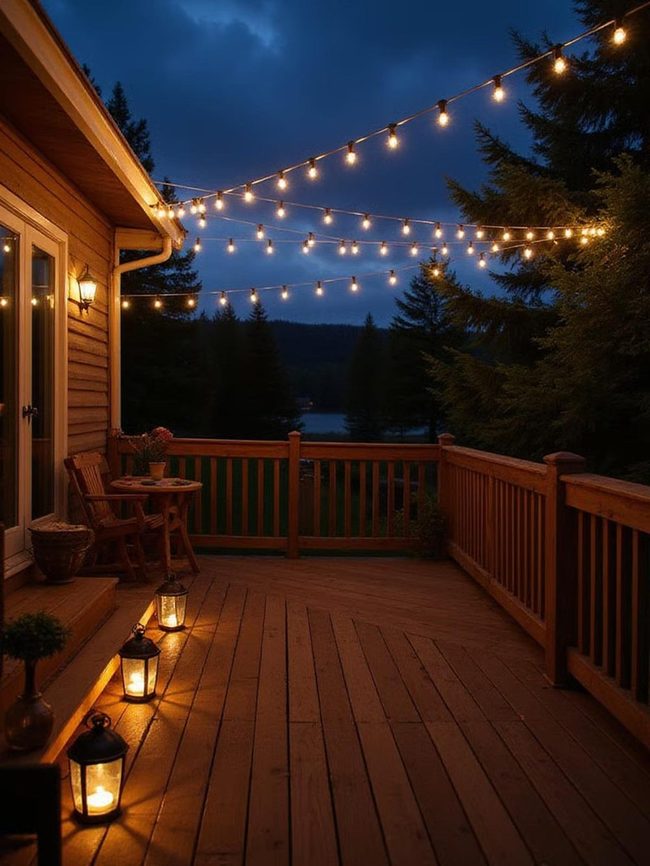
Hanging string lights overhead and placing lanterns on tables and steps shift your deck's entire mood once the sun goes down by layering light at different heights that mirror how natural light falls.
Warm-toned LED bulbs and solar lanterns work well if you want to skip cords and reduce energy use, plus they won't draw insects toward your plants the way light-filled lights can.
Edison-style bulbs give off a nostalgic warmth, while clip lights let you highlight specific plants or garden features you want people to be aware of.
Low path lights combined with mid-level lanterns and overhead strings add depth that makes your deck feel bigger and more comfortable after dark.
Beyond looks, good lighting lets you garden into the evening and shows off plants you've worked hard to grow.
Candle lanterns add a gentle flicker and natural glow if you prefer something less electric.
You may find that mixing different light sources at various heights reworks an ordinary deck into a space where you actually want to spend time when daylight fades.
Solar options keep things simple and eco-friendly, so you can focus on enjoying your garden room instead of worrying about electricity bills.
Cream Fabric Panels For Deck Shade
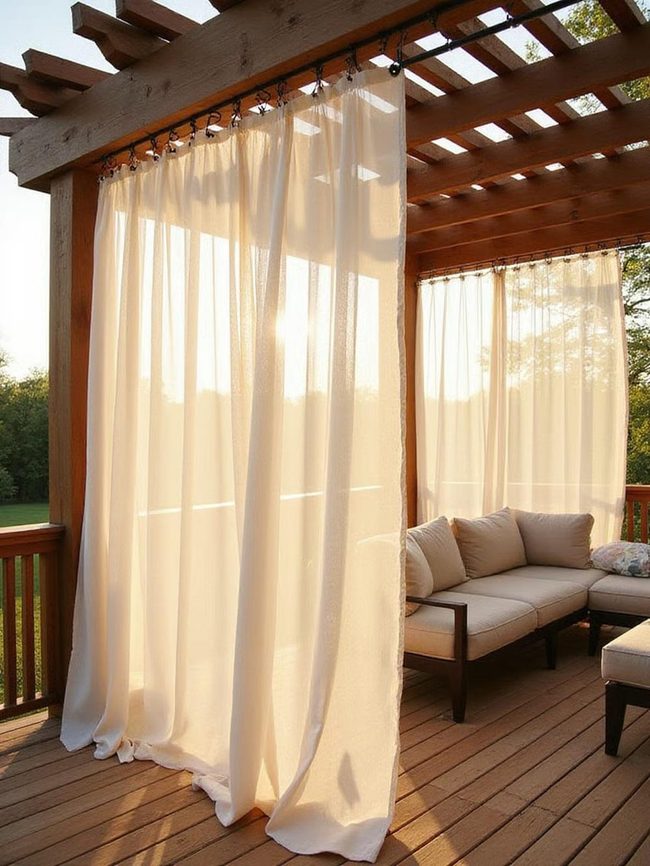
When you drape patio curtains across your deck, you instantly soften those hard wooden beams and railings into something that feels luxurious and resort-like, which is why this simple addition struck me as such a game-changer for patio spaces.
Beyond the visual transformation, these fabric panels do serious work for you by providing adjustable shade, blocking wind, creating privacy screens, and carving out distinct zones within your deck area.
Look for solution-dyed acrylics or marine-grade polyester fabrics since they stand up to sun, moisture, and mildew far better than regular materials.
Installing sturdy curtain rods or cables matters because they need to handle wind without ripping away from their mounting points.
Weights sewn into the hem help prevent the fabric from flapping wildly in the breeze, while tie-backs let you control how much coverage you want throughout the day.
If you're growing plants on your deck, these curtains also build protective pockets that shield delicate greenery from harsh afternoon sun and strong gusts.
Once your curtains are up and moving gently with the wind, you could pick up on how differently your whole space feels and flows.
Weatherproof Wicker Patio Seating
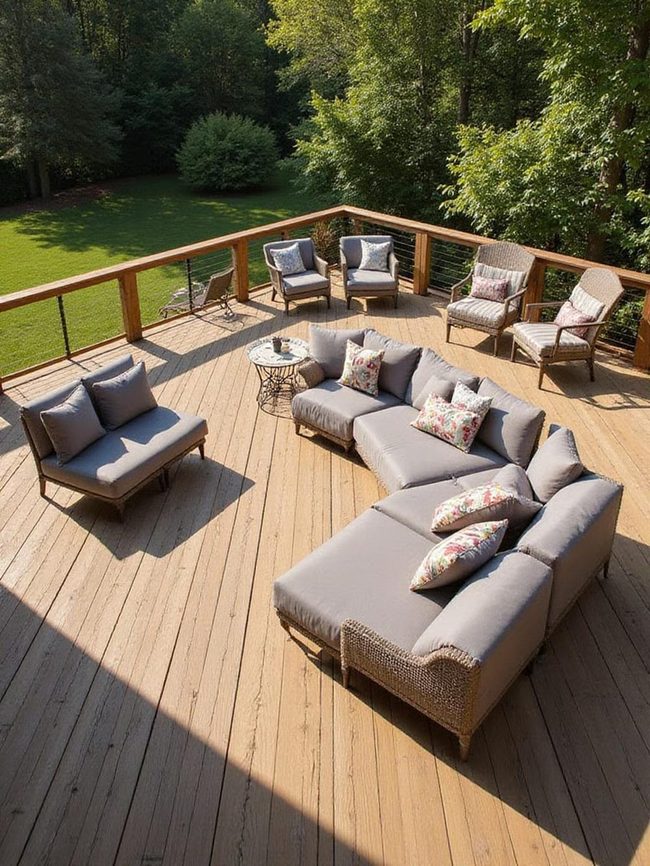
Comfortable and stylish outdoor seating forms the foundation of any space where people actually want to spend time, so start here if you're planning your outdoor setup.
Beyond basic plastic chairs, look at weather-resistant materials like teak, synthetic wicker, or powder-coated aluminum that stand up to rain and sun while keeping you genuinely comfortable for hours.
Multifunctional pieces work especially well for urban gardeners, benches with hidden storage for tools, sectionals with washable covers, or chairs you can rearrange around a harvest table when it's time to share your garden's bounty.
Layer in outdoor-rated cushions and throws in colors that match your plants and home's style.
Once your seating actually invites people to linger and relax, you can naturally want to define that area more clearly with an outdoor rug beneath it.
Good seating is what gets people outside in the first place, and everything else builds from there.
Vertical Green Deck Boundaries
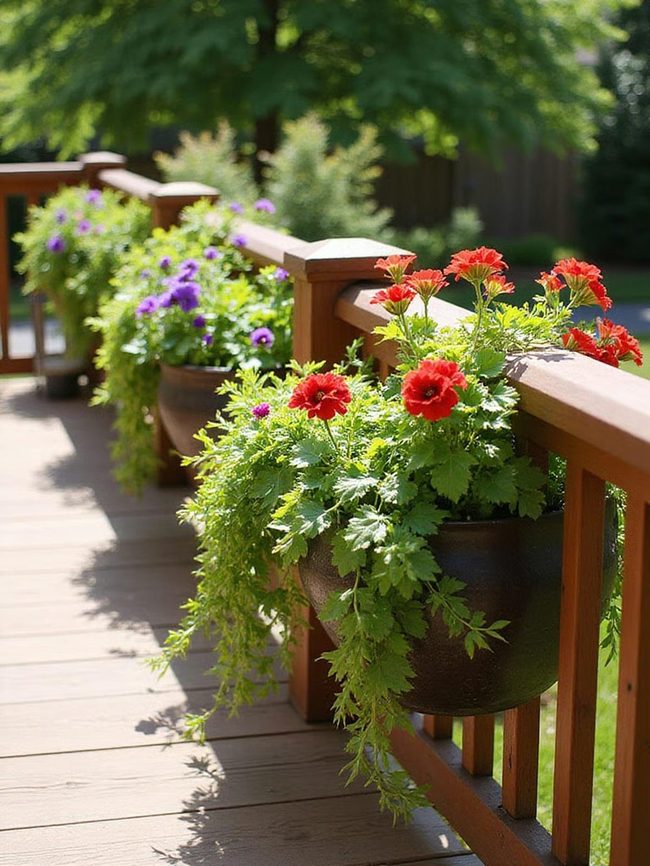
Railing planters transform your deck boundaries into living gardens that mix with color and greenery right at eye level, making them one of the most striking ways to maximize small exterior spaces.
You can attach these specialized containers directly to wood, metal, or composite railings without damage, converting unused vertical areas into prime real estate for flowers, herbs, and compact vegetables.
Cascading varieties like trailing herbs, nasturtiums, or strawberries spill down the sides and set up dramatic visual effects that catch attention from every angle.
When planning your railing garden, distribute weight evenly by alternating heavier planters with lighter ones and check that your deck structure can support the added load once plants are fully grown and watered.
Self-watering options keep maintenance simple and reduce water waste throughout the season.
Position fragrant herbs right outside your kitchen door for easy harvesting and brushing against them as you pass.
Urban gardeners with limited deck space find these planters expand growing capacity significantly.
This feels balanced because functional and beautiful they are, giving you fresh produce and soft textures that balance out harder deck materials.
Gas Fire Table With Herb Patio Edges
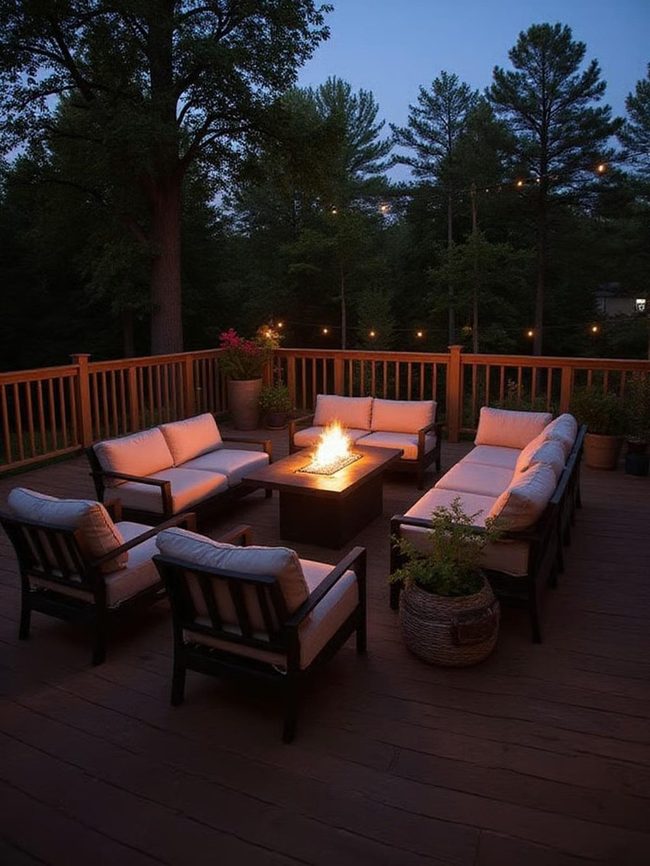
Adding a fire pit or table to your deck brings warmth and extends how long you can enjoy outside time throughout the year, and modern gas options require far less upkeep than you might think.
A well-chosen fire feature naturally becomes where everyone gathers on cool nights, and people tend to stay outside longer when there's comfortable heat and dancing flames nearby.
Propane or natural gas models prevent the worry of flying embers damaging your plants or deck surface, plus they give you control over flame height and intensity.
Safety matters most, so keep your fire feature positioned away from overhead structures and flammable materials, and use protective barriers on wood decks to block heat transfer.
Some fire tables even have space around the edges for heat-loving herbs like rosemary or lavender, which release their oils when warmed and add another sensory layer to your space.
Elevated fire bowls work well if you want dramatic lighting without taking up much room, while tabletop models suit smaller decks perfectly.
Bioethanol options burn cleanly without needing gas lines, giving you another path if standard gas isn't useful for everyday living for your setup.
Expandable Deck Dining Furniture
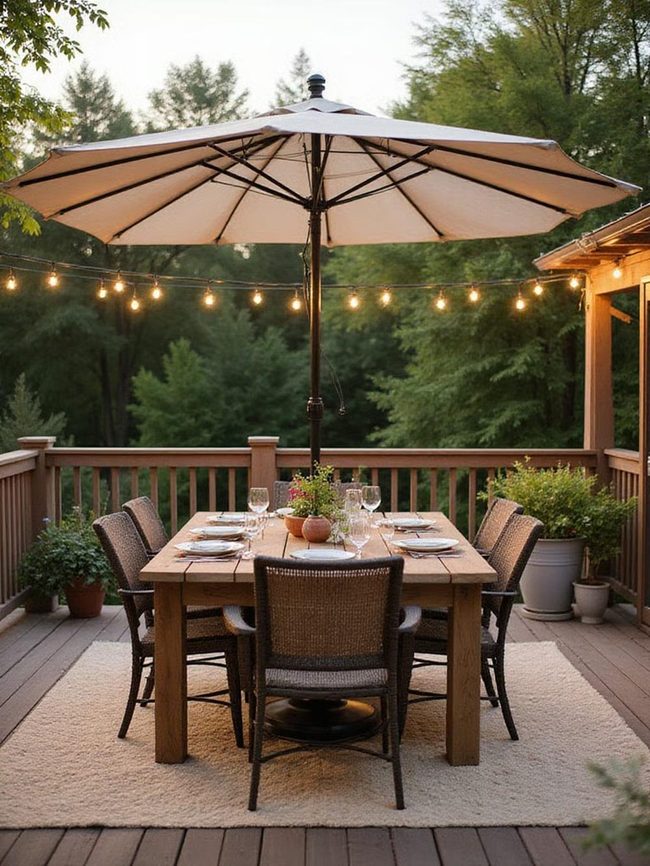
Setting up a functional garden dining area on your deck starts with selecting weather-resistant furniture that suits how you like to entertain, and extendable tables work well for hosting larger groups while bistro sets fit nicely into smaller spaces or intimate dinners.
Height matters when you choose your table, as counter-height options let diners see past the railings to enjoy distant views, while standard dining tables keep you connected to the container gardens surrounding your eating space.
You are able to want to leave enough room for chairs to pull out comfortably, usually about 36 inches from the table edge to any wall or obstruction, and positioning your dining area close to your kitchen door makes it simple to carry food back and forth.
Sustainable materials like bamboo, recycled plastic, or responsibly harvested wood bring both durability and beauty to your garden dining setup.
Many gardeners find that eating meals right where they grow their vegetables creates a satisfying cycle of planting, harvesting, preparing, and enjoying food all in one spot.
Awkward deck spaces become much easier to work with when you stay flexible about where you place your dining furniture.
Aluminum Tubes Producing Clear Tones
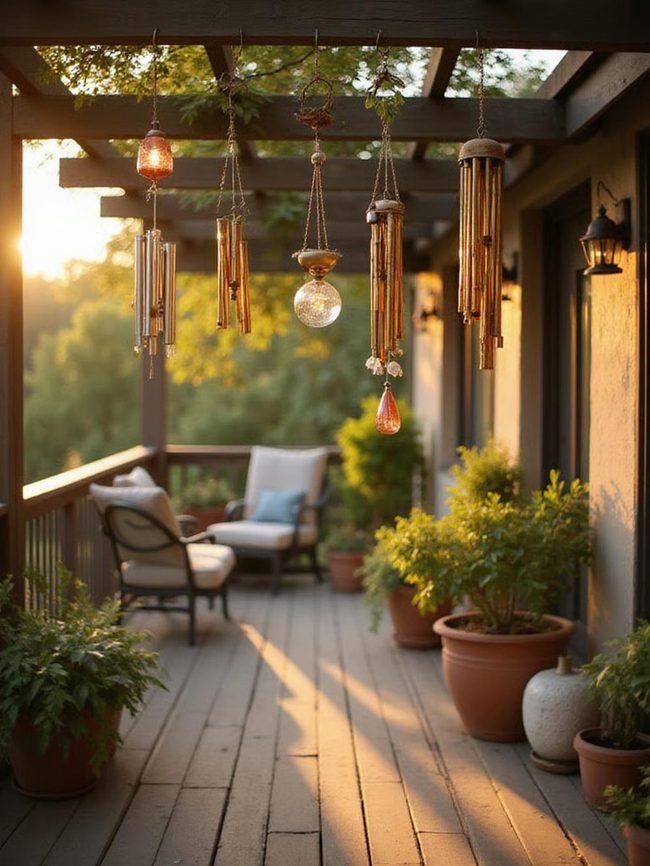
Wind chimes bring gentle, random melodies that dance with the slightest breeze and add sound to your open-air space in ways you'll pick up on immediately.
Aluminum tubes produce clear, long-lasting tones while bamboo shapes gentleer, more natural sounds, so pick based on what appeals to your ear.
In the city, these gentle tinkling sounds help mask street noise and signal air movement that benefits plant pollination and cooling.
Size matters when you're working with a smaller deck, delicate chimes won't overwhelm the area and will blend better with your surroundings.
Position them where natural air currents will catch them, but avoid spots where wind gusts might make them ring constantly and become irritating.
Some people place different types of chimes around their deck to track wind direction, which helps with plant care decisions.
Properly tuned wind chimes shape harmonious notes instead of random clanging, and that quality difference separates handcrafted pieces from mass-produced options.
Adding pleasant sounds rounds out your deck experience and sets the stage for making the most of your railings with both style and utility.
Cedar Deck Stain With Plant Safety
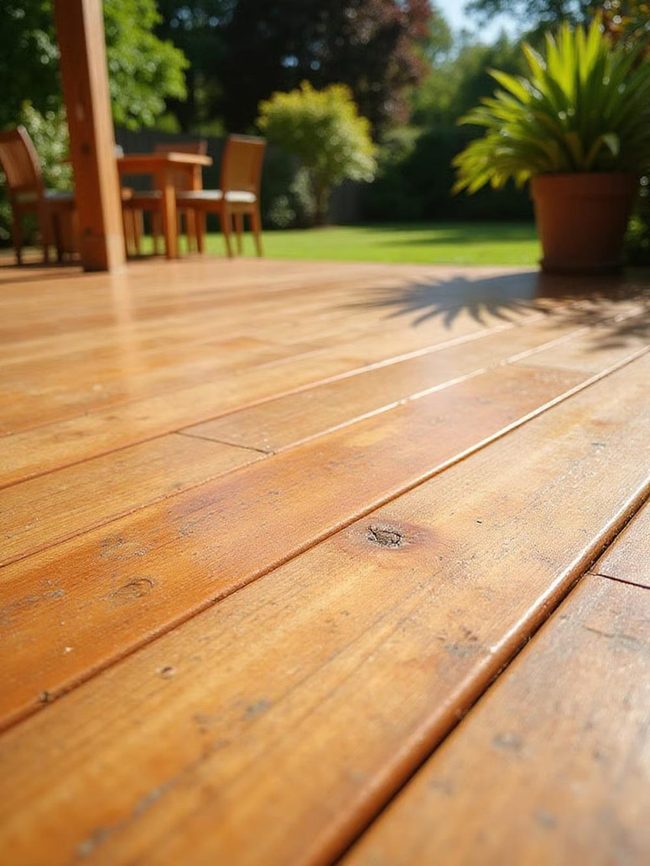
That fresh coat of stain or paint on your deck does far more than improve how it looks, it shields your investment from weathering, extends the life of your wood, and gives you a clean foundation for your decorative elements.
Quality finishes really show their worth over the years, keeping your deck looking good and standing strong through seasons of use.
For those growing plants in containers, picking products labeled as plant-safe once they're dry matters, especially if edibles might touch the surface.
Warm cedar tones pair beautifully with terra cotta pots, while cool grays offer a modern feel next to lush greenery, so think about what complements your plantings and furniture.
Semi-transparent stains let the wood grain show through while adding color, which looks natural and ages well over time.
Before you apply anything, clean your deck thoroughly with the right cleaner and let the wood dry for about two days.
Paint or stain works best when temperatures stay between fifty and ninety degrees, and you might want to mix in slip-resistant additives for spots that get wet from watering.
Metal Plant Silhouettes For Decks
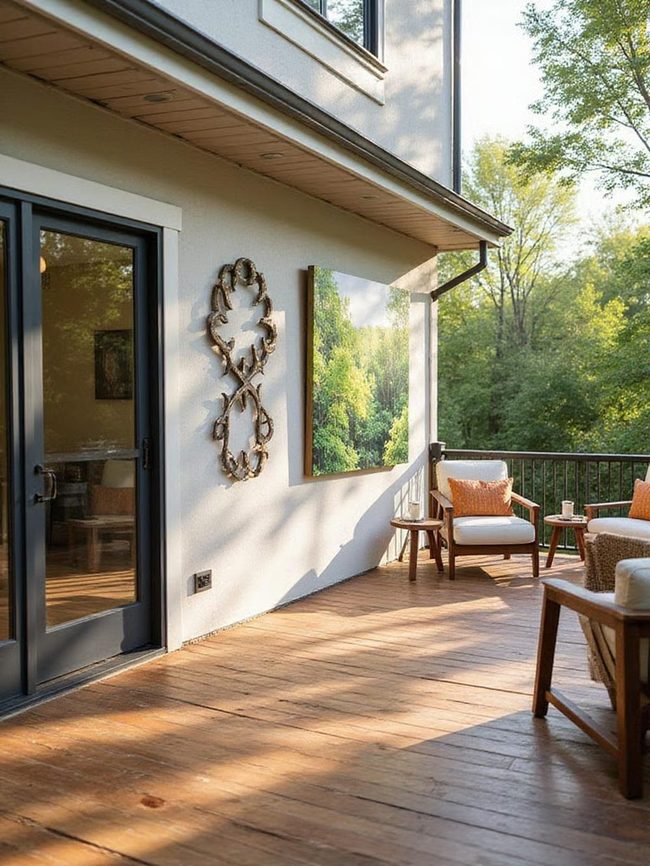
Hanging outside wall art reshapes even compact decks into personal galleries that catch attention and showcase what matters to you, since weather-resistant pieces like metal sculptures, mosaic work, and treated prints turn bare walls and fences into spaces that reflect your style and add visual depth beyond the usual potted plants and seating.
For those growing gardens in tight urban spots, art that ties to your plants, think botanical prints made for outside conditions, metal designs featuring plant life or insects, or useful pieces like decorative thermometers and rain gauges, keeps everything feeling connected to your growing efforts.
Mount your selections at different heights so they draw the eye around the space, and anchor in all piece firmly against wind and rain damage.
You can either group smaller artworks together for stronger presence or pick one larger statement piece that anchors the whole area.
Silhouettes inspired by natural shapes bring harmony between the art itself and your living plants, and as nights get cooler, this curated outside environment becomes an even nicer place to spend your time enjoying what you've built.
Flowing Water Brings Exterior Life
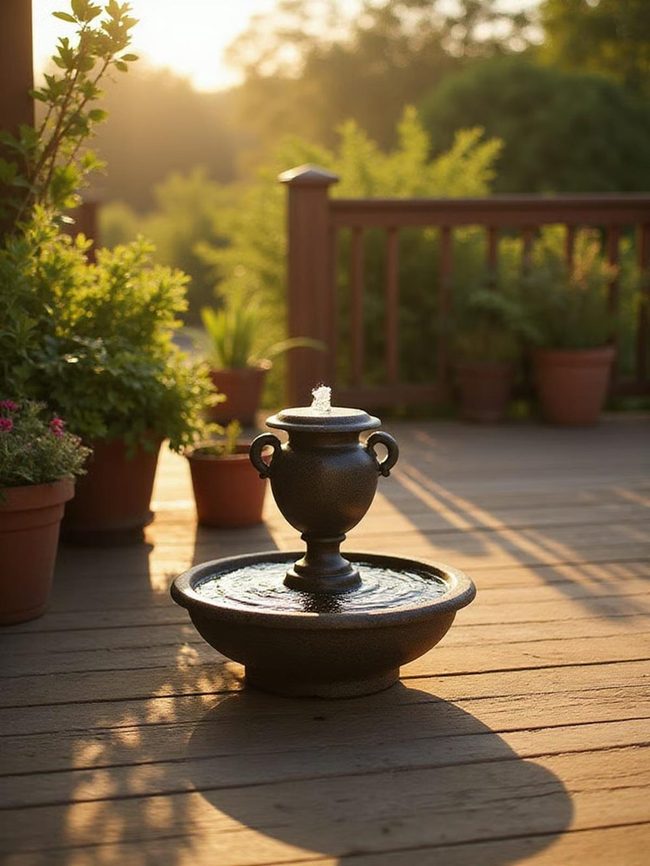
Small water feature like a bubbling urn, tabletop fountain, or compact waterfall brings the soothing sound of moving water to your deck and creates an immediate sense of peace in your patio space.
Beyond the auditory appeal, these self-contained units attract beneficial pollinators, increase humidity around moisture-loving plants, and help mask unwanted city noise if you're in an urban area.
When you're choosing a water feature, think about your deck's weight limits and whether you have access to electricity, though solar-powered options work well too.
Self-contained units with recirculating pumps need little upkeep and deliver plenty of enjoyment without demanding much from you.
Position your water feature where you can sit and hear it while also watching it from your main seating spot, perhaps near fragrant herbs or flowers that enhance the overall sensory experience.
Water in motion brings life to spaces that might otherwise feel flat and one-dimensional, turning your deck into something that feels alive rather than simply functional.
Running water also creates microclimates on your deck that benefit nearby plants needing higher humidity levels.
Seasonal Deck Accessories Rotation Guide
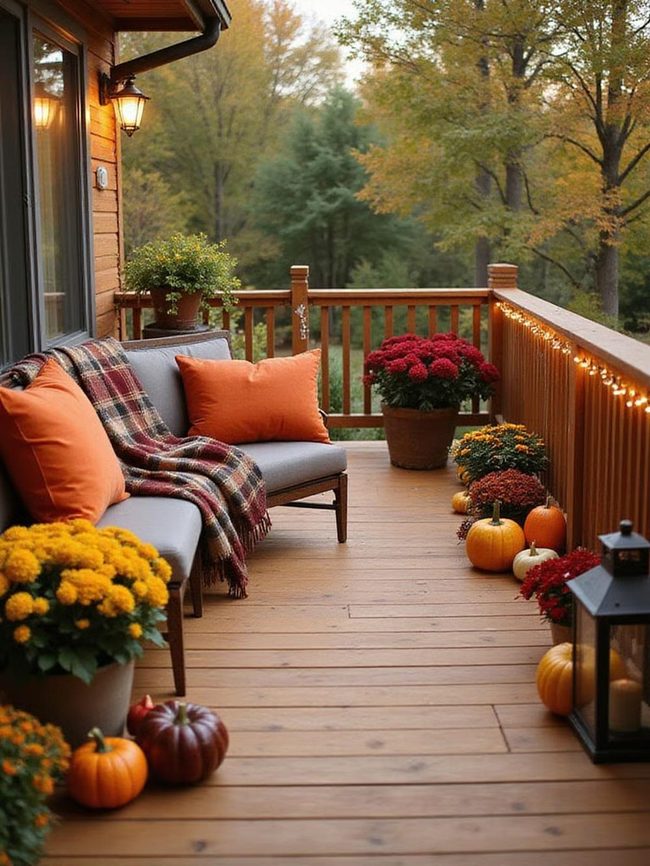
Morning light filtering through the space shifts moods as seasons change, and rotating accessories throughout the year keeps your deck feeling fresh and responsive to the weather.
Spring brings pastel accents and radiant planters with seedlings, while summer calls for saturated colors, harvest baskets, and garden dinnerware for entertaining.
As fall arrives, warm-toned accessories, lanterns, and preserved flower arrangements take over, and winter welcomes evergreen plantings along with garden-safe string lights and weather-resistant wreaths.
Urban gardeners can align their decor with growing cycles, celebrating harvests with produce displays or marking cold months with hardy plantings.
Start with quality, weather-resistant core pieces and layer in seasonal items that you can store away when they're no longer needed.
Simple textile swaps and container rotations between seasons noticeable changes without major expenses or complete redesigns.
We recommend investing in a few versatile pieces that work across multiple seasons, then updating with smaller items that reflect what's currently happening in your garden and garden life.
This way, your deck stays coordinated with the time of year and maintains interest throughout all twelve months.
Green And Edible Deck Yard
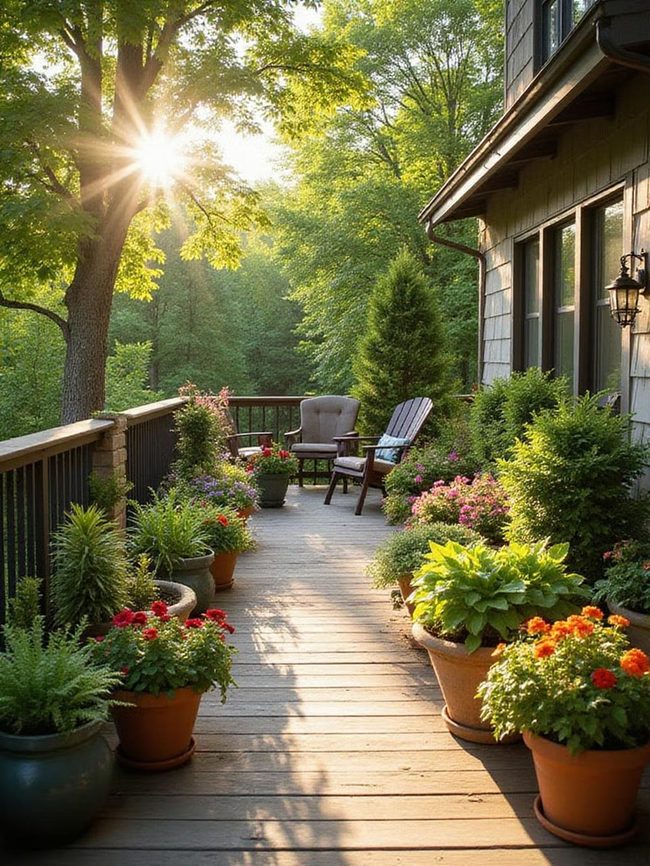
Building a lush container garden reworks your bare deck into a thriving outdoor space where you can grow both food and flowers in even the tiniest spots.
Mixing ornamental plants with edible varieties creates visual balance, trailing nasturtiums offer both beauty and flavor alongside compact tomato plants or clear Swiss chard.
When you're choosing containers, check your deck's weight limits and make sure across one drains properly, and self-watering options work great for people with busy schedules while fabric grow bags let roots breathe in sunny spots.
Grouping plants by their water and light needs makes maintenance easier, and playing with different heights keeps things interesting, tall growers like tomatoes go in back, medium plants fill the middle, and trailing herbs or flowers spill over the edges.
Lettuce can become a border plant, blueberries can serve as eye-catching features, and vertical herb gardens do double duty as privacy screens and growing space.
Michael Harris
Senior Content Editor
Expertise
Home Décor Content Creation, Interior Design Journalism, Editorial Oversight, Digital Media Strategy, Team Leadership and Mentorship
Education
University of Queensland, Brisbane, Australia
Queensland University of Technology (QUT), Brisbane, Australia
Michael Harris is the senior content editor at Archi Refresh, where he turns home design trends into engaging, easy-to-follow articles. With a journalism degree from the University of Queensland and a digital communication certification from QUT, he knows how to craft content that informs and inspires.
With over 10 years of experience in lifestyle and design media, Michael has shaped editorial strategies, mentored writers, and helped readers refresh their spaces with practical tips. His work blends storytelling with expert advice, making home decor more accessible to everyone.
Outside of work, Michael enjoys DIY projects, exploring Brisbane’s art scene, and teaching digital literacy workshops.