
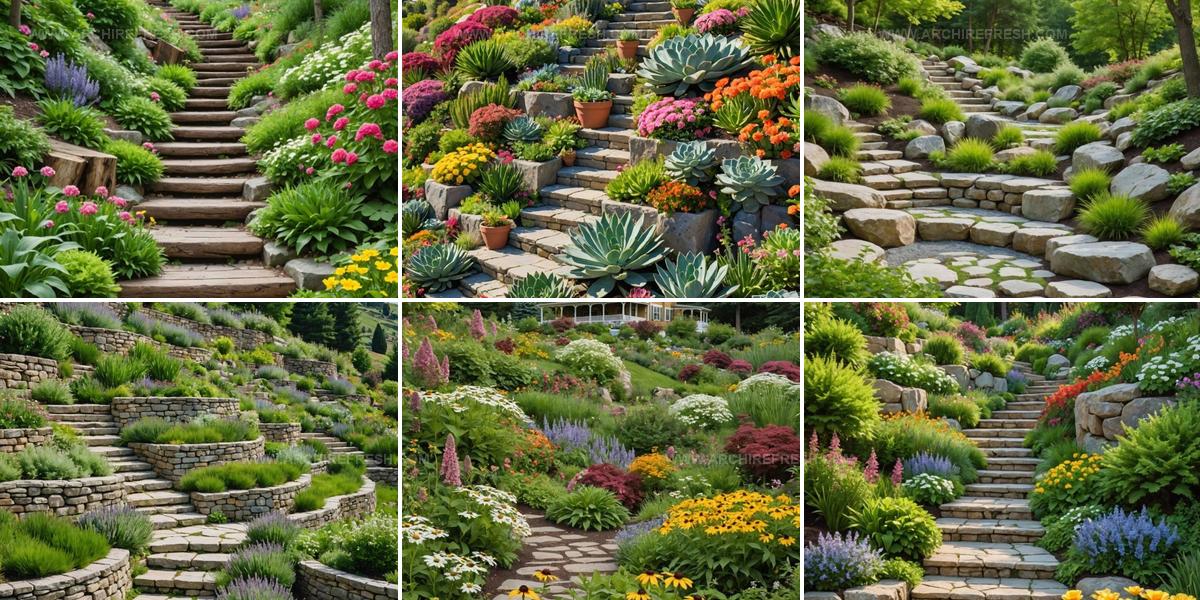
20 Hillside Garden Ideas That Work on Steep Slopes
Hillside garden ideas can turn a challenging slope into one of the most beautiful features on a property.
Many homeowners feel overwhelmed when facing uneven terrain, but sloped land actually offers unique opportunities for creative landscaping.
Working with natural contours rather than against them opens up possibilities that flat yards simply cannot provide.
Drainage issues become manageable, erosion transforms into a non-issue, and vertical interest happens almost effortlessly.
Successful slope gardens combine practical solutions with aesthetic appeal in ways that surprise most people.
The right approach makes maintenance easier while creating visual drama that neighbors admire.
If you have been staring at a barren slope wondering what to do, there are proven solutions that will change how you see that space forever.
Stone Hillside Seating Wall
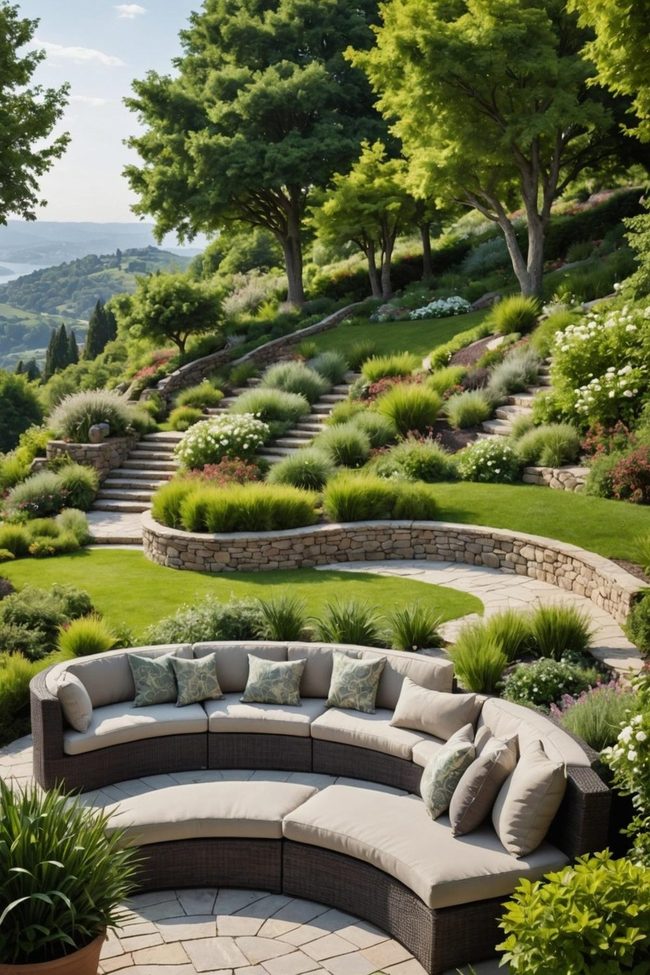
Built-in seating walls running through hillside gardens offer one of the most striking design solutions because they carve out defined spaces while you sit back and enjoy the surrounding views.
You gain a functional spot to rest while these structures naturally divide your garden into distinct zones, and the effect makes each area feel more separated and special.
When you integrate the seating wall directly into the landscape rather than treating it as an add-on, the garden flows from one section to another without jarring transitions.
This kind of construction brings people closer to the plants and terrain around them, making the whole space feel warmer and more personal.
Stone or wood materials blend nicely with existing gardens and age well over time.
Your guests will naturally gravitate to these built-in spots because they offer both comfort and a genuine connection to the outdoor environment.
Sloped Fruit Trees Hillside
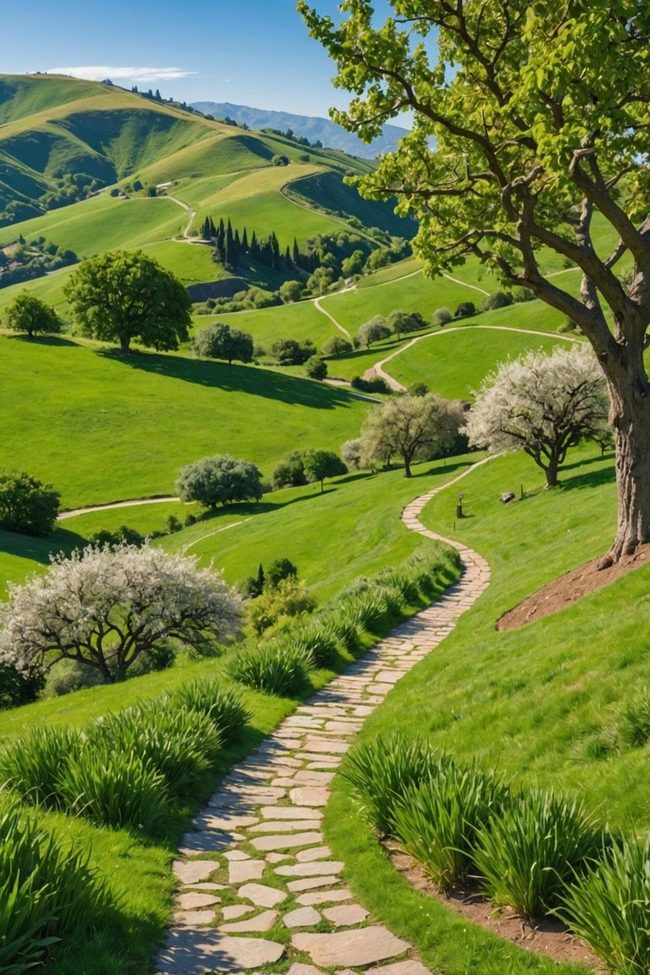
Rows of fruit and nut trees cascading down a hillside make for one of the most striking ways to use a sloping landscape, and you get the bonus of harvesting your own fresh produce throughout the seasons.
When you plant on an incline like this, you're essentially solving drainage and aeration challenges that often plague flat gardens, so your trees stay healthier without you having to work as hard at maintenance.
Beyond the practical side, there's something genuinely satisfying about walking through rows of your own orchard and picking ripe fruit or nuts right from the branch.
Such a landscape setup gives you both beauty and function all in one space.
The hillside orchard becomes a productive garden that you can enjoy for years to come.
Rocky Hillside Wildflower Garden
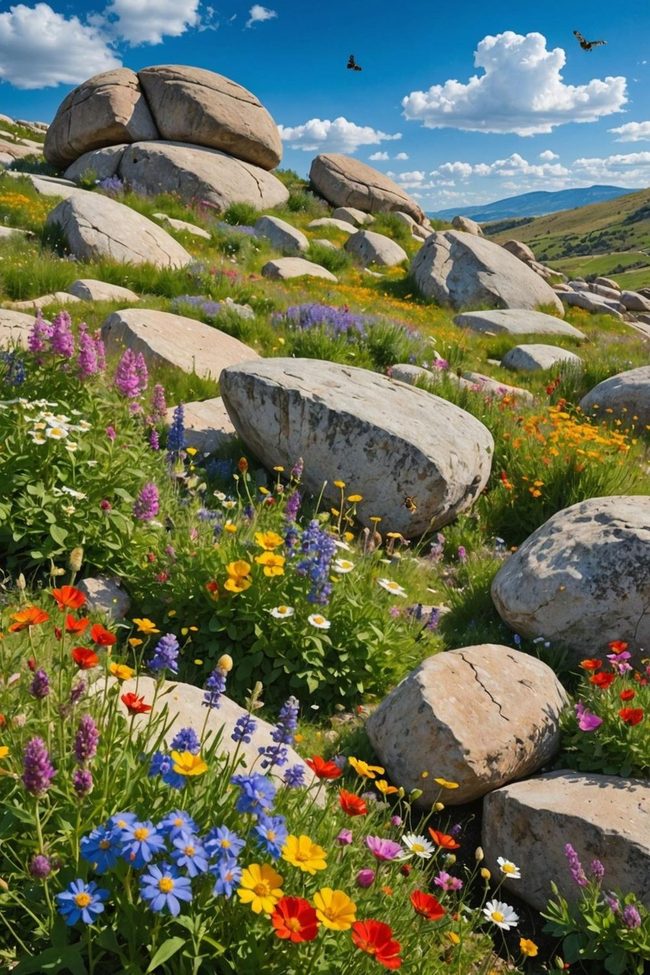
Large boulders scattered across your hillside slope stop erosion while giving the landscape a dramatic, textured look that anchors the whole space.
Between and around these rocks, wildflowers bloom in waves of color that soften the hard edges and bring movement to the garden Birds and butterflies get drawn to the flowers, which means your hillside becomes alive with activity and sound.
You don't need much maintenance once wildflowers establish themselves, so the garden keeps looking fresh and wild year after year.
Plants fill in gaps naturally and spread where they thrive, giving everything an organic, flowing feel.
Adding both elements together keeps soil from washing away during heavy rain while also filling your view with something genuinely beautiful to look at from any angle.
Daffodil Hillside Spring Awakening
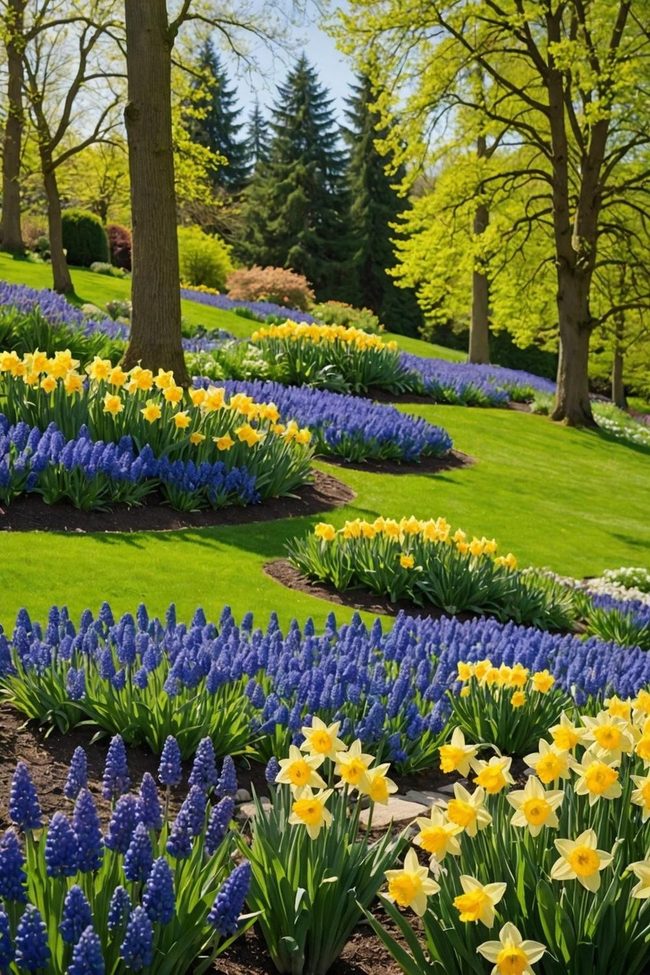
Planting naturalized bulbs across a hillside creates a breathtaking spring display of color that spreads naturally across the slope, with daffodils, grape hyacinths, and crocuses scattered in random patterns that look like they sprouted on their own.
Over time, these bulbs multiply and fill in the spaces between them, building a full and green landscape without much effort from you.
Once established, they need very little care and thrive on hillsides where many other plants struggle to grow.
Each spring, you'll get to enjoy waves of blooms rolling down the slope in a way that feels effortless and organic.
You simply plant them once and let nature do the rest, returning each season to reward your patience with fresh color.
Terraced Herbs on Slope
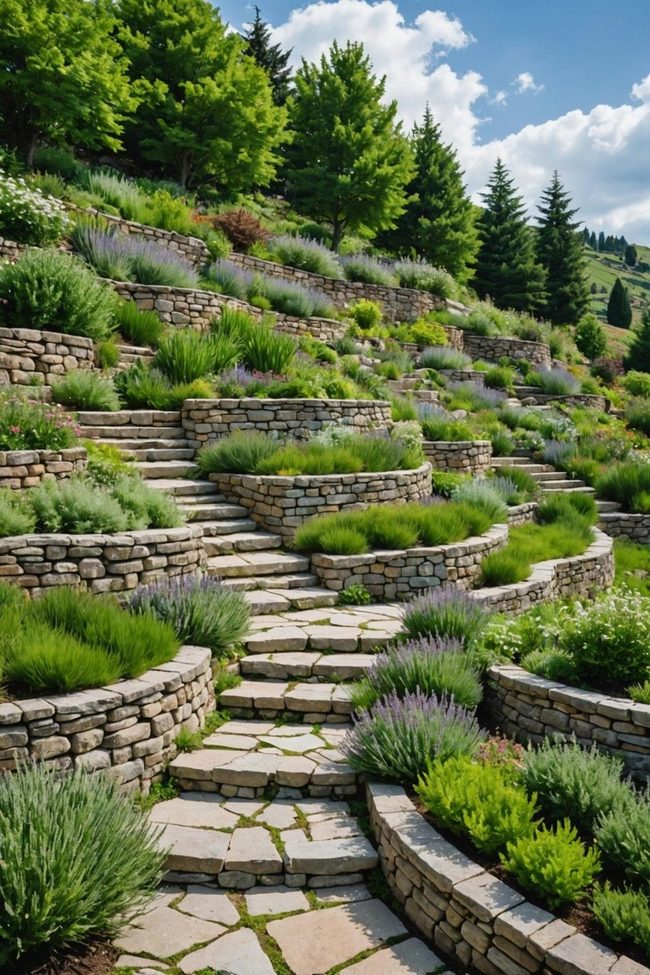
Hillside herb garden transforms sloping terrain into a productive space where you can grow rosemary, thyme, oregano, and other sun-loving herbs that flourish in well-draining soil.
Terraced beds or retaining walls give your yard structure and visual interest while solving the challenge of uneven ground.
Herbs planted on a slope benefit from excellent air movement, which naturally reduces fungal problems that commonly trouble traditional flat gardens.
You'll find that the elevation change adds dimension to your landscape and makes the garden both beautiful and highly functional.
Positioning herbs where they get full sun and good drainage means healthier plants with stronger flavors.
Building this type of garden on a slope saves you from expensive leveling work and lets you work with what nature already gave you.
Stone Wall Garden Terracing
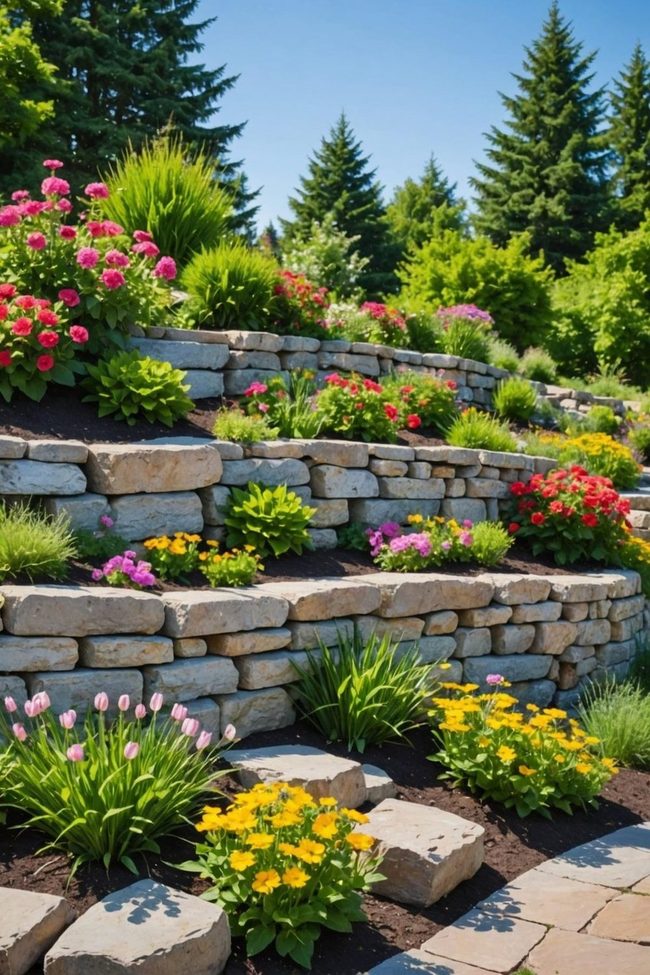
Building a stone retaining wall on a hillside gives you a rustic structure that stops soil from washing away while dividing your garden into distinct zones, and the natural texture of stacked stone brings real character to your outdoor area.
You'll want to start by digging a trench for your foundation and making sure it sits level before you begin placing your stones.
Stagger the joints as you stack each layer, which makes the wall stronger and more stable over time.
It takes patience and physical effort to complete this project, but the result is a functional wall that serves double duty; it prevents erosion and looks great doing it.
When you finish, you'll have a durable feature that blends naturally into your landscape.
We recommend starting small if this is your first time with stonework, since you can always expand later.
Building this wall yourself means you control exactly how it looks and sits on your property.
Your garden will feel more organized and polished once the wall is in place.
Green Hillside Stairs with Plants
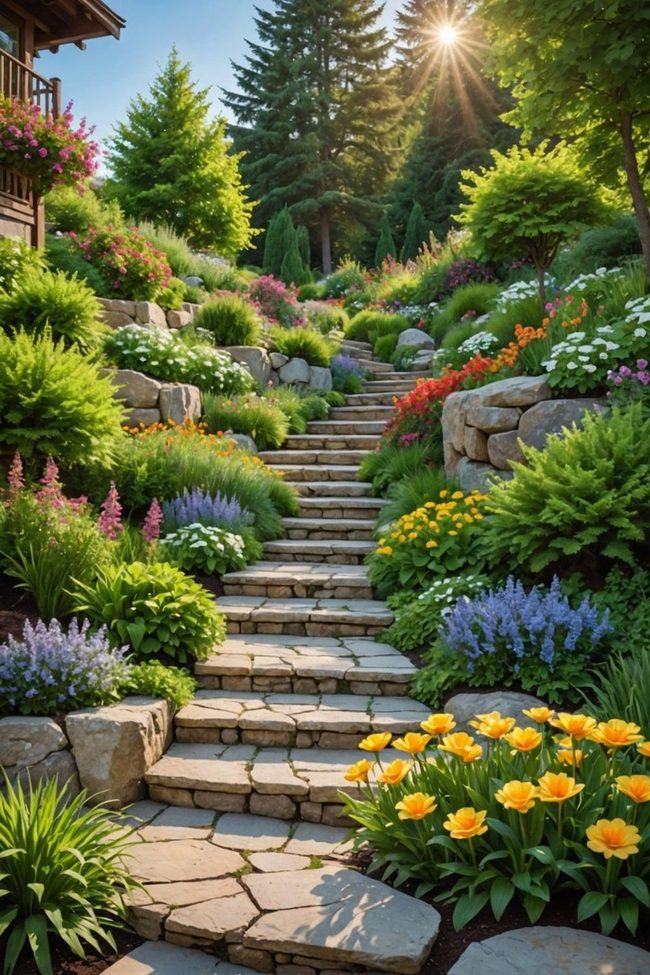
Hillside gardens benefit greatly from landscaped steps that bridge the gap between different elevations, and when you add plants, greenery, and decorative elements along the way, you get a natural-looking transition that feels nothing like a standard staircase.
Lush vegetation softens hard edges and lets the steps blend right into your garden rather than standing out awkwardly.
Ornamental plants positioned along the sides and between treads add layers of growth and movement as you walk through your space.
You can mix materials like stone, wood, and mulch to keep things interesting while the plants around them tie everything together and make the whole feature feel part of the landscape Many gardeners find that stepping back to observe the way plants frame and soften these pathways reveals how much more welcoming a steep garden becomes.
Butterfly Perennials on the Slope
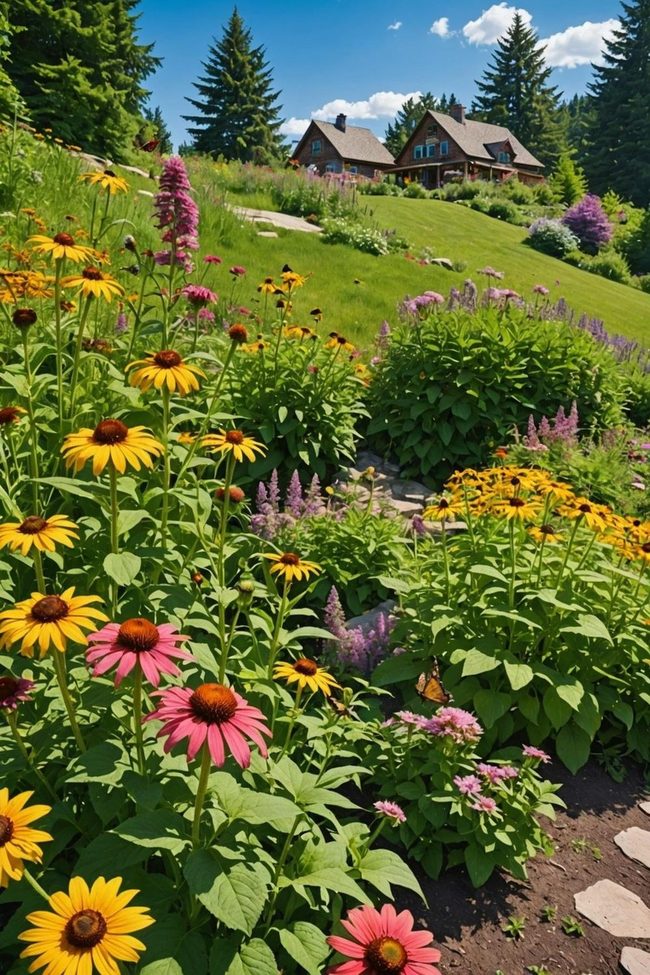
Colorful perennials can make a hillside garden feel full of life.
Coneflowers, black-eyed susans, and bee balm spread beauty across the slope while also inviting butterflies and hummingbirds in.
Native Plants Attract Feathered Visitors
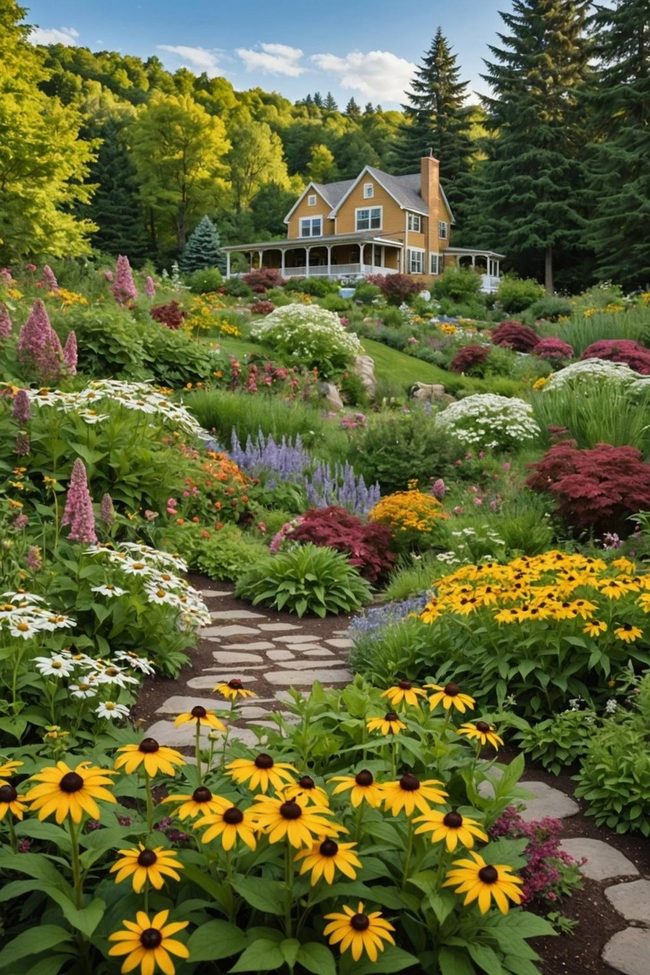
Bird-friendly plantings transform any hillside garden into a thriving habitat where you can watch feathered visitors thrive while enjoying natural beauty and variety in your outdoor space.
Native plants, shrubs, and trees that produce berries, seeds, or nectar will draw different bird species to your garden and look wonderful doing it.
Plants such as coneflowers, black-eyed susans, and shrub dogwoods work especially well because they're attractive to look at and offer birds the food sources they need to survive.
You might also explore other native options that match your region's climate and soil conditions.
When you choose plants that naturally support birds, your garden becomes more dynamic and alive throughout the seasons.
We know that birds add movement and sound to outdoor spaces in ways that few other elements can match.
Beyond the practical benefits, these plantings simply make your garden feel more connected to nature and give you something meaningful to observe from your windows or outdoor seating areas.
Stacked Greenery Layers
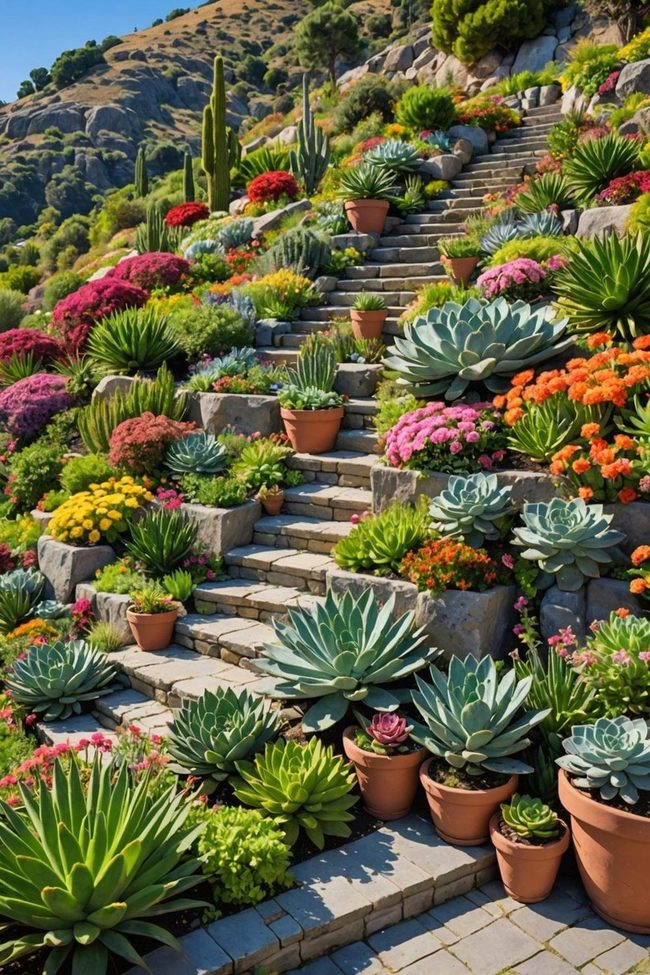
Stacked planters built into a hillside create eye-catching layers that pull your attention upward across the landscape and make even small spaces feel larger and deeper.
When you arrange multiple containers on sloping ground, you get a practical solution for growing flowers, herbs, and succulents in places where flat garden beds just won't work.
Each level catches light differently and shows off different plants, so your eye keeps moving and discovering new things as you look around.
Building these tiered displays is straightforward and doesn't require special skills or tools, making it a project most people can handle themselves.
Because the planters sit at different heights, water drains naturally and plants get better air circulation than they would in a traditional bed.
You also get easier access to maintain and harvest from each level without bending down so far or reaching across as much space.
It's a smart way to make use of tricky terrain while getting more growing room out of your garden.
Stone Boulders Frame Hillside Views
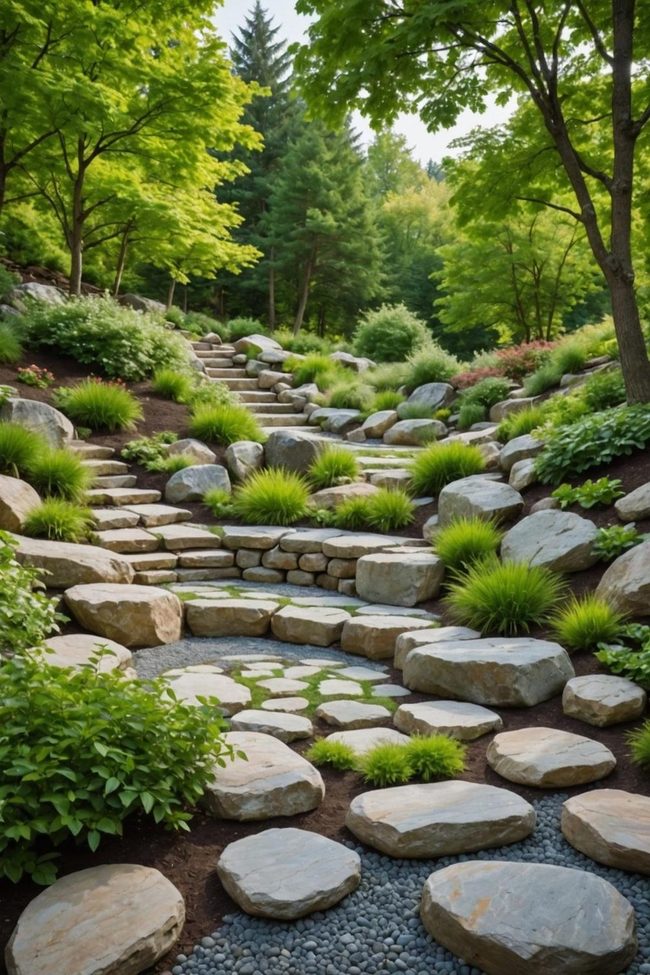
Massive boulders and flat stones arranged across your hillside create a stunning seating area that feels like part of the landscape itself.
You can layer in smaller stones and pebbles around the edges to define the space and add natural texture that blends right in.
This kind of organic setup invites you to sit down and really soak in the views surrounding your garden.
Stone seating areas have a grounded quality that makes people want to linger and relax Building something with natural materials means it looks like it belongs on the hillside rather than feeling placed there.
Once you settle into a stone seating area like this, you'll find yourself naturally slowing down and enjoying the peaceful surroundings your garden offers.
Stone Trail Through Garden
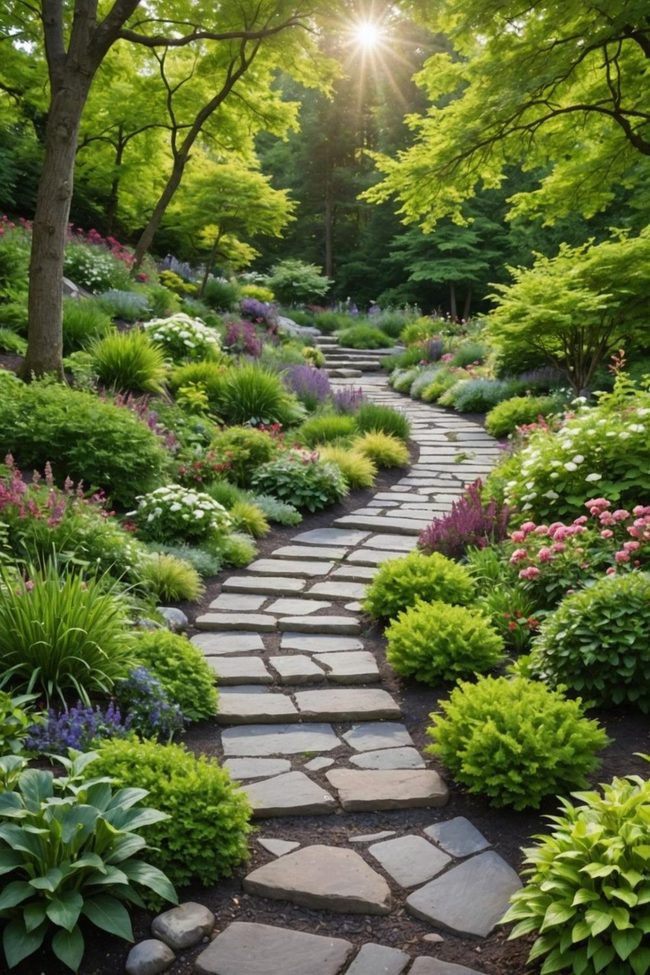
Winding pebble path curves and twists through your hillside garden, guiding visitors on a journey of exploration and discovery as it leads them toward hidden corners and secret spots.
Light gray and neutral pebbles stand out against the green landscape, drawing eyes along the route and adding visual interest to the terrain Walking the path naturally slows you down and encourages quiet moments of reflection.
Soft earth tones in the pebbles blend right in with surrounding plants and trees, so the design feels like a natural part of the garden rather than something imposed on it.
You'll find that a meandering route feels more engaging than a straight one, as it makes people want to keep moving forward to see what comes next.
Visitors gain a peaceful feeling just from strolling along the gentle curves, and the whole experience becomes one of relaxation and quiet enjoyment.
Cascading Metal Water Chain
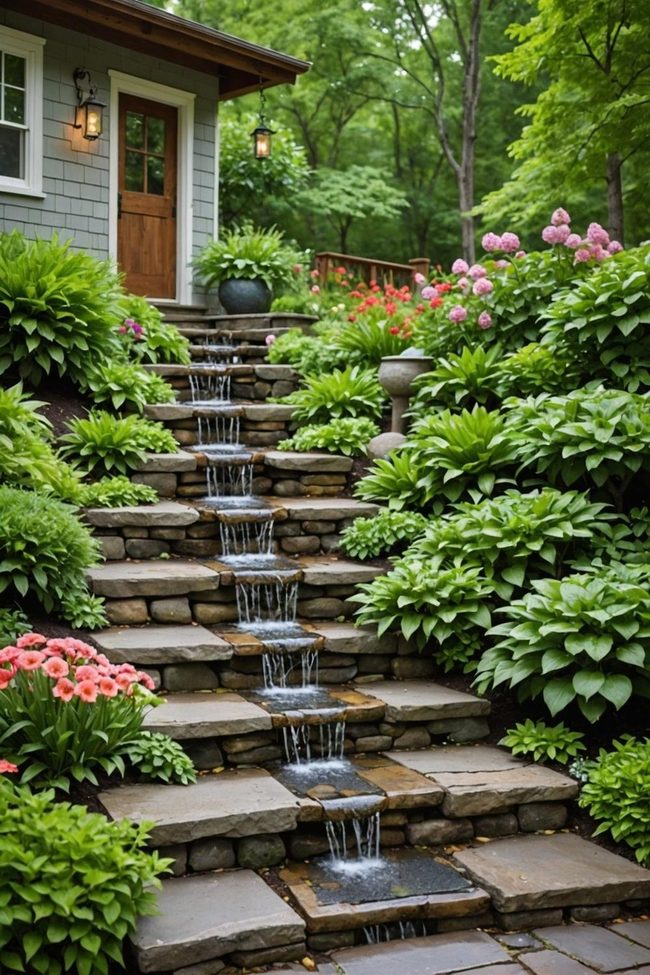
Rain chain hanging from your roof becomes one of the most eye-catching elements in a hillside garden, and it serves as both a practical water drainage system and an artistic statement that draws attention whenever it rains.
As water cascades down the linked metal, it produces gentle clinking sounds that bring a sense of calm to your outdoor area.
You'll notice how the flowing water moves with life and energy, giving your garden a dynamic quality that stays interesting throughout different weather conditions.
Beyond just looking beautiful, rain chains actually channel water from your roofline to the ground in an efficient way If you're looking to add something special to your landscape, a rain chain offers that balance in a way that standard gutters simply cannot.
Water trickling and bouncing along each link creates a sensory experience that makes your whole garden feel more connected to nature.
Purple Clematis Hillside Trellis
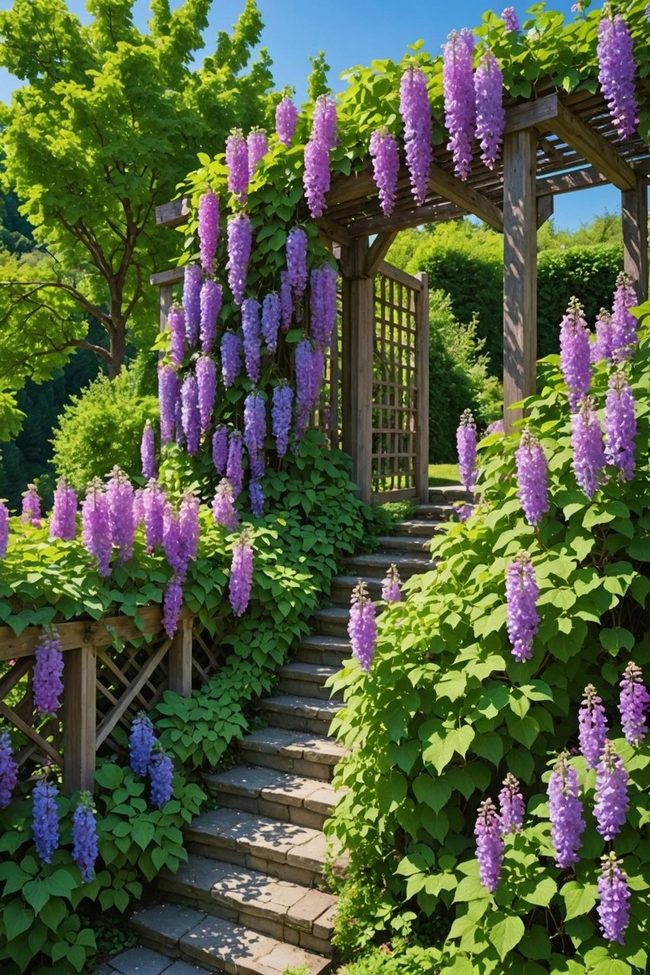
Flowering vines cascading down a hillside trellis offer one of the most eye-catching garden displays you can achieve, with bursts of color and fragrance that draw attention from across your yard.
Clematis, wisteria, and honeysuckle all flourish on slopes and deliver the showy blooms that make hillside gardens stand out.
If you're looking to disguise bare earth or steep terrain, these climbing plants do double duty by covering problem areas while adding visual interest at the same time.
Setting up a sturdy trellis gives your vines something to grip and climb, and the plants reward your effort with lush growth throughout the growing season.
Beyond the beauty, these vines also serve practical purposes like blocking harsh sun or creating natural screening between yard sections.
Most of these varieties are fairly low-maintenance once established, so you won't spend all your time fussing over them.
Positioning your trellis on a hillside where morning light hits it helps the flowers show off their colors best and keeps the plants healthy and vigorous.
Stone Steps Through Wild Growth
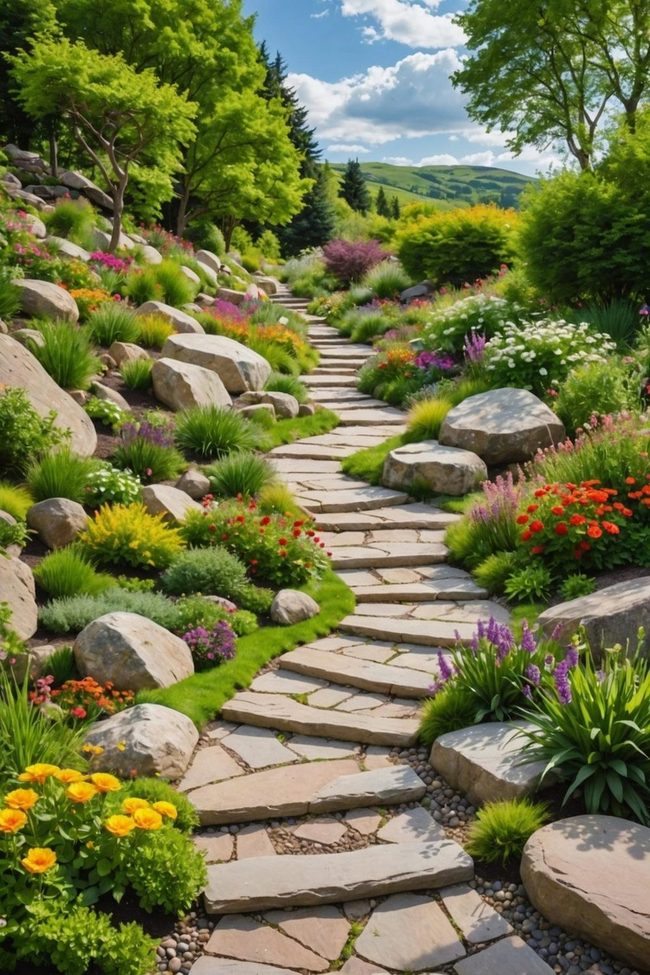
Scattered rocks of different sizes form a winding path that cuts through your hillside garden with striking natural appeal.
When you mix small and large stones together, they guide people through your outdoor space in an organic way and prevent soil from washing away on slopes.
Beyond the practical benefit of controlling erosion, this type of pathway brings harmony between the natural terrain and the plants you've chosen to grow there.
Light and shadow play across the uneven surfaces of the stones, and the range of textures and colors keeps your eyes moving as you walk along the trail.
Gravel and Mulch Garden Trail
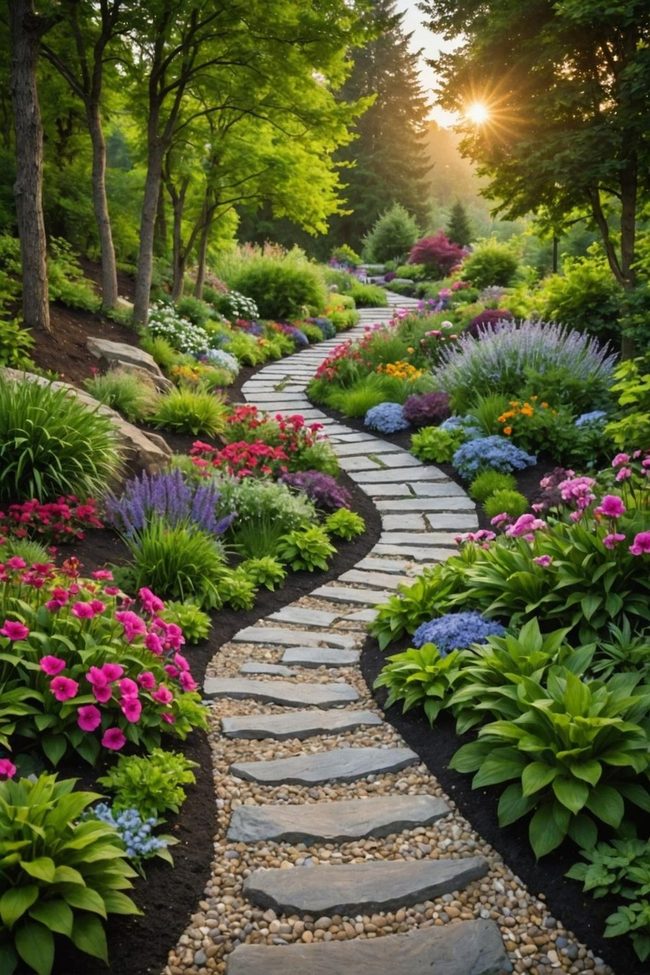
Winding path of gravel and mulch cutting through your hillside garden, and you'll immediately see how much texture and character it brings to the space.
Combining these two materials gives you a walkway that serves both beauty and function as it moves through your planting areas.
Gravel offers a solid, water-draining surface underfoot, while mulch brings warmth and color that enhances the soil's ability to hold moisture If you're working with slopes or uneven terrain, this mix adapts well and prevents erosion while looking completely natural.
The rustic quality of a gravel and mulch path feels less formal than paved options and works especially well in gardens where you want things to feel connected to the earth.
Weathered Logs Through Green Hills
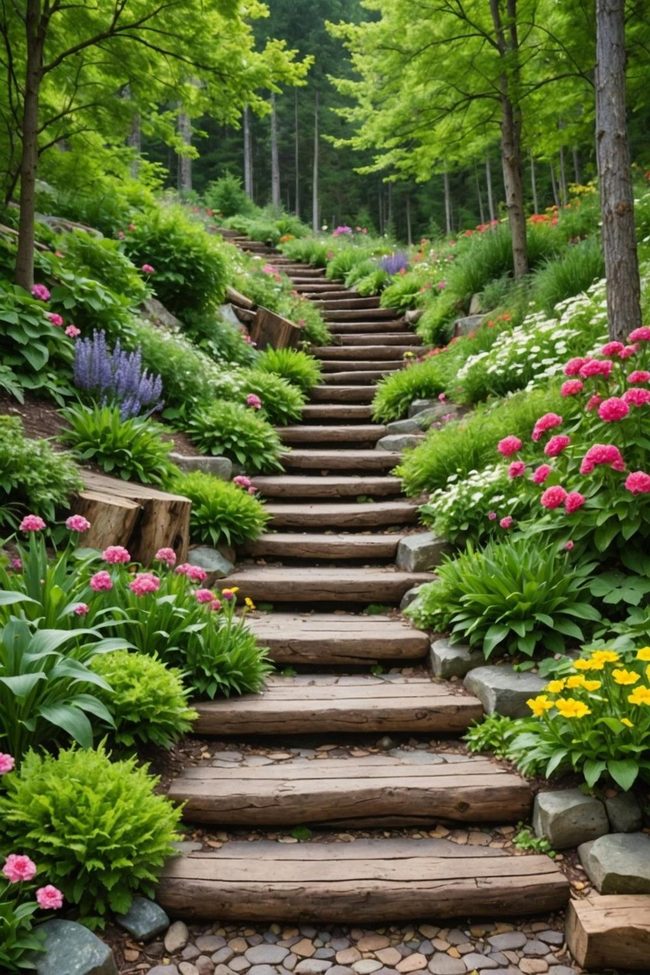
Log steps cut into a hillside make a striking first impression as they wind through your garden, blending stone and earth in ways that feel naturally right Plants and greenery growing around and between the steps help them disappear into the landscape rather than standing out as separate structures.
You can tuck moss into cracks, let climbing vines drape over edges, and scatter shade-loving plants alongside them.
This approach softens what could feel harsh or man-made and instead makes the steps feel like they've always been part of the garden.
Ground-level flowers and shrubs frame the path upward and guide people naturally from one level to the next.
When greenery surrounds these log steps on all sides, they become less of a construction project and more of a genuine garden feature that belongs where it sits.
Hillside Ornamental Trees Cluster
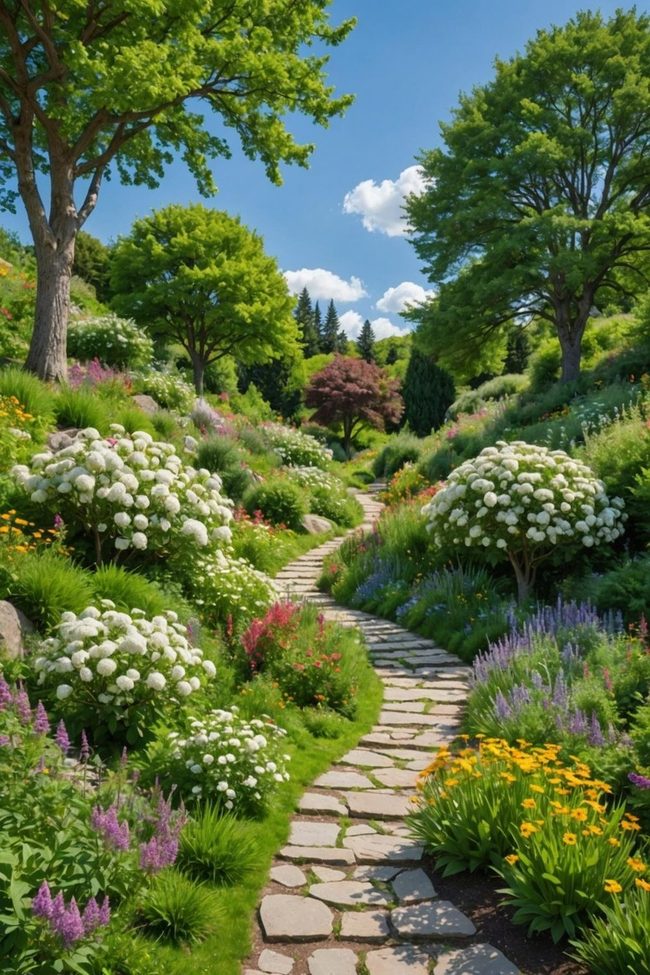
Ornamental trees clustered together on a hillside will catch everyone's attention first, so start there when planning your garden layout.
Plant trees at different heights and with varied bark textures and foliage to keep things interesting to look at.
Native species work best since they already know how to survive in your local climate and soil conditions.
You'll want to space them far enough apart so roots have room to spread and air can flow between the branches.
This small grove brings a quiet, sheltered feeling to your outdoor space and makes people want to slow down and breathe.
Leave gaps in the canopy if you can so light filters through and creates dappled shadows on the ground below.
We suggest stepping back and looking at your arrangement from different angles before finalizing where each tree goes.
Spacing matters just as much as selection when you're building something that will grow and thrive for years.
Drought-Resistant Slope Garden
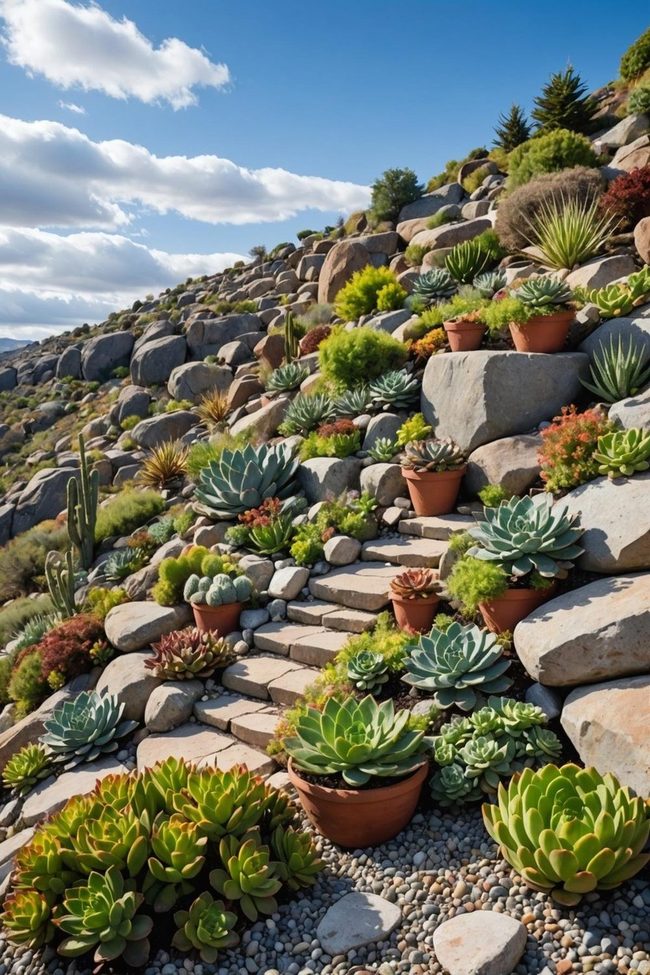
Hillside succulent garden offers the perfect way to handle slopes that are tough to care for, and the eye-catching array of shapes, sizes, and colors these plants display makes them stunning to look at across your landscape Their shallow root systems work to hold soil in place on sloped terrain and prevent erosion from washing away your hard work.
Since these plants thrive in conditions where other greenery struggles, you get a low-maintenance garden that doesn't demand much attention yet rewards you with natural beauty.
Hillside Waterfall Cascade Design
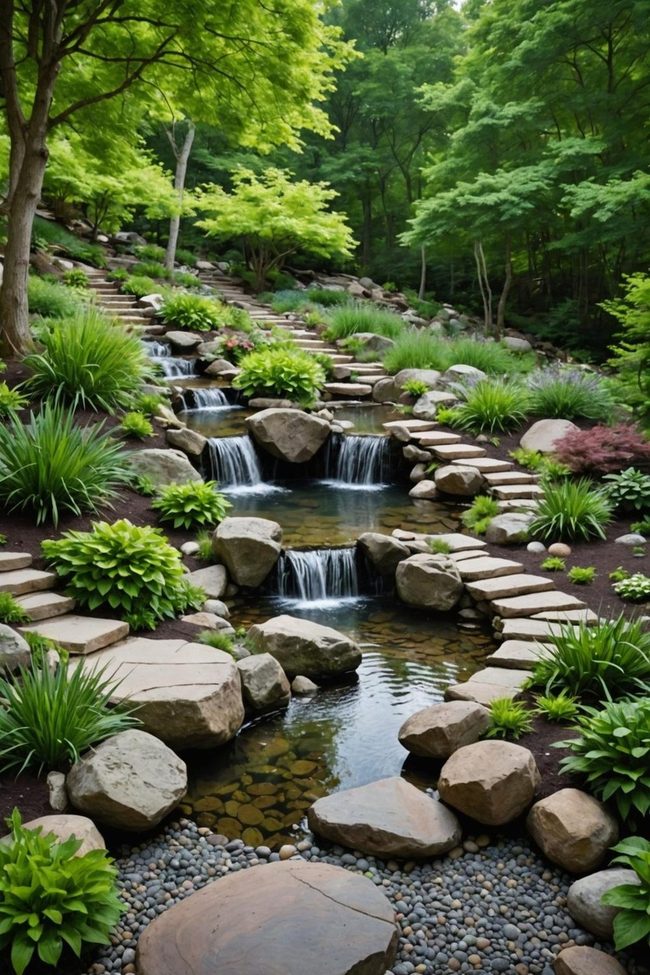
Water cascading down a hillside garden makes an immediate impression that stops people in their tracks, and the flowing movement of water from level to level creates a mesmerizing display you won't forget Building one involves setting up a series of small ponds or waterfalls stacked on top of each other, letting water travel from one section to the next in a natural rhythm.
Sound plays an important role here; that gentle murmur of running water helps settle your mind and makes the whole space feel more peaceful.
You can tailor the size and style to fit your garden's shape and personality, whether you want something modest or more elaborate.
Most people find that even a simple setup brings so much more interest to a hillside that might otherwise feel flat or bare.
If you're thinking about adding water to your outdoor space, this kind of cascading design works well because it uses gravity to its advantage and doesn't need fancy equipment to run smoothly.
Michael Harris
Senior Content Editor
Expertise
Home Décor Content Creation, Interior Design Journalism, Editorial Oversight, Digital Media Strategy, Team Leadership and Mentorship
Education
University of Queensland, Brisbane, Australia
Queensland University of Technology (QUT), Brisbane, Australia
Michael Harris is the senior content editor at Archi Refresh, where he turns home design trends into engaging, easy-to-follow articles. With a journalism degree from the University of Queensland and a digital communication certification from QUT, he knows how to craft content that informs and inspires.
With over 10 years of experience in lifestyle and design media, Michael has shaped editorial strategies, mentored writers, and helped readers refresh their spaces with practical tips. His work blends storytelling with expert advice, making home decor more accessible to everyone.
Outside of work, Michael enjoys DIY projects, exploring Brisbane’s art scene, and teaching digital literacy workshops.