
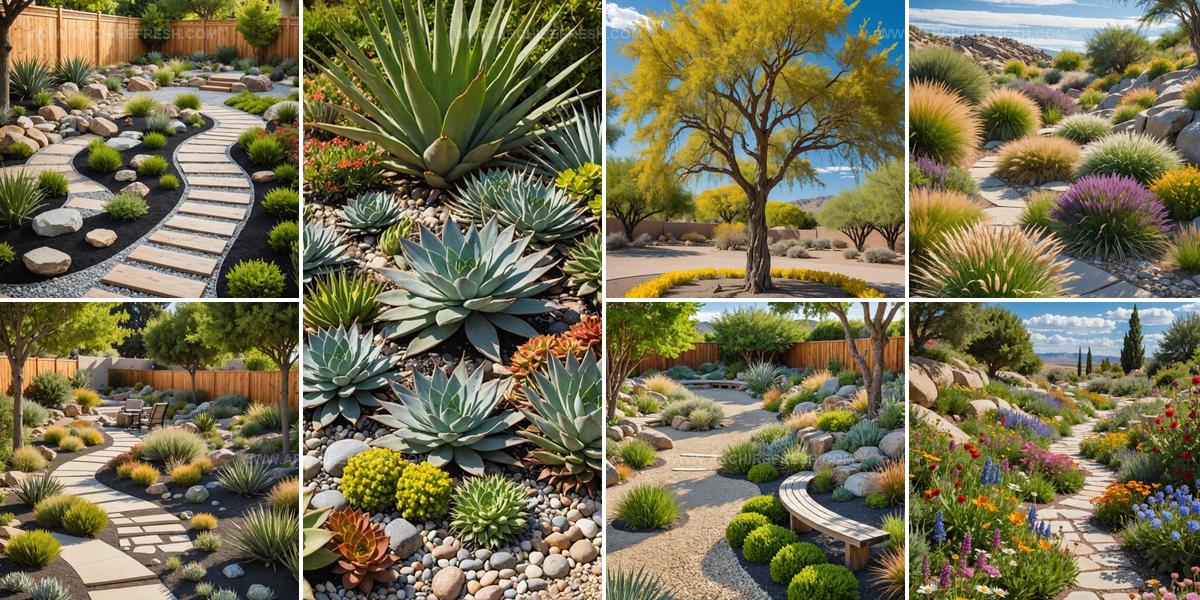
20 Practical Home Dry Garden Ideas That Work
A home dry garden ideas approach lets anyone cultivate stunning outdoor spaces without constant watering demands.
Drought-resistant landscapes have become essential for regions facing water restrictions and climate challenges.
People who embrace xeriscaping principles can maintain beautiful yards while conserving precious resources and reducing maintenance time.
Low-water plants, decorative rocks, and strategic design elements work together to form sustainable environments that thrive naturally.
Such landscaping solutions benefit homeowners financially through lower utility bills and less expensive upkeep requirements.
The aesthetic appeal of arid-adapted gardens rivals traditional lawns while supporting local ecosystems and wildlife habitats.
Browse through practical concepts that will inspire confident steps toward creating a resilient, water-wise outdoor retreat.
Drought-Tolerant Garden Design
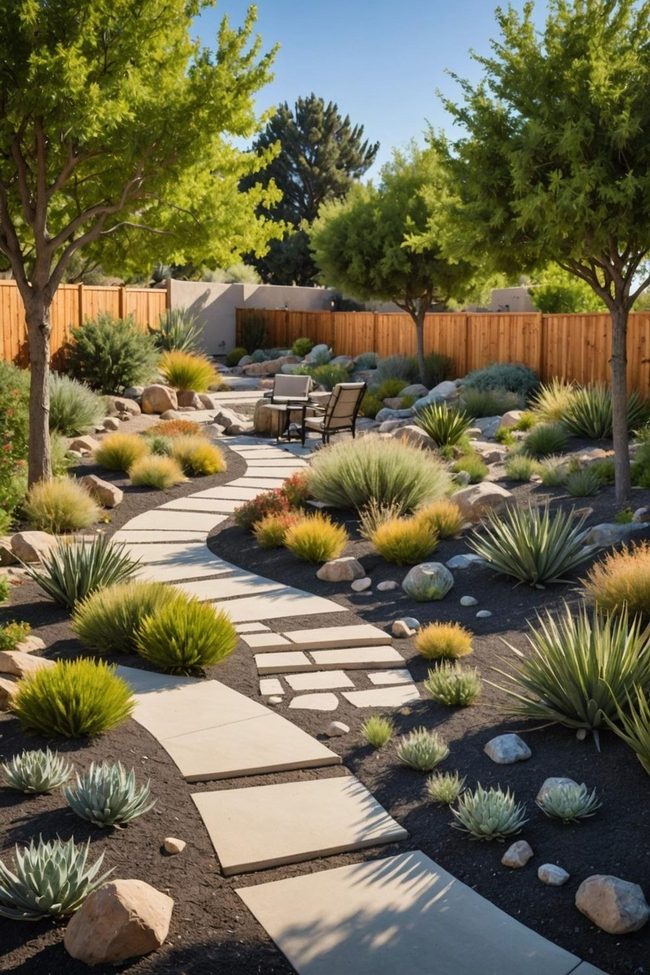
Building a beautiful landscape that doesn't waste water starts with seven key principles you can follow to make it work.
Planning your garden design around your local climate and soil type gives you the best foundation before you even start planting.
Drought-tolerant plants naturally need much less water, so they're your best choice for this kind of garden.
Improving your soil by mixing in organic matter helps it hold moisture better and keeps plants healthier.
Keeping turf areas small and using mulch on top of your soil stops water from evaporating too quickly.
When you do water, set up an efficient irrigation system that delivers water right where plants need it.
Regular maintenance throughout the seasons keeps everything functioning properly and ensures you're saving as much water as possible while still having a garden you love.
Native Wildflowers Attract Pollinators
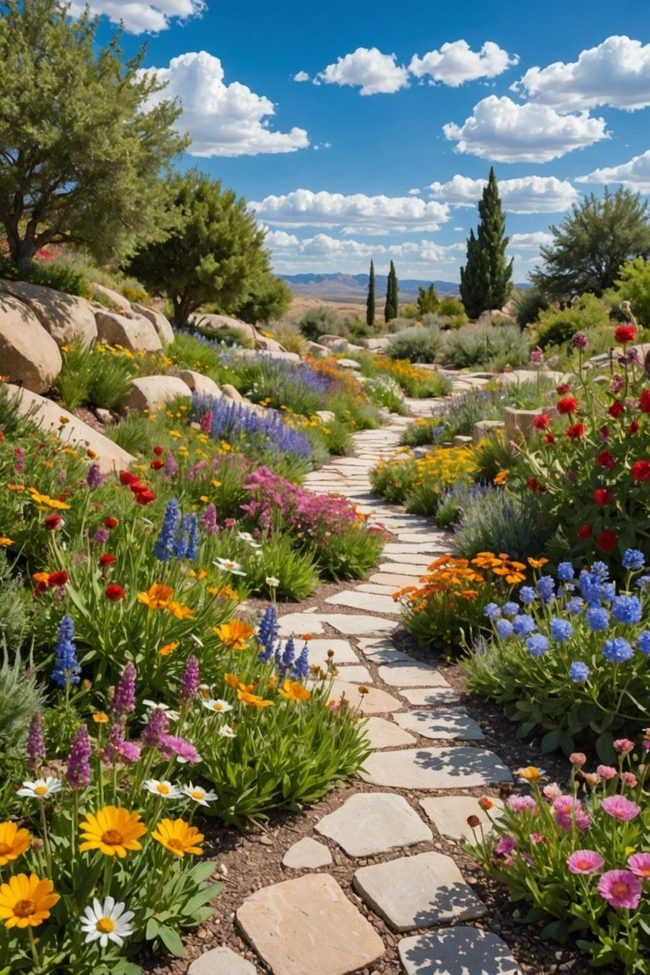
Wildflower gardens burst with color and movement as butterflies and bees dance across delicate petals throughout the growing season.
These gardens need very little water and care, which makes them perfect for anyone who wants a low-maintenance outdoor space.
Native wildflowers work best because they're already adapted to your local climate and soil conditions.
Since they handle dry spells well, water-conscious gardeners find them ideal for their yards.
Beyond the beauty and ease, you'll be supporting the plants and insects that belong in your region when you plant natives.
Pollinators thrive in these spaces and return year after year.
Your garden becomes a haven for local wildlife while you enjoy less upkeep and lower water bills.
It's a smart choice for anyone wanting natural beauty without the fuss.
Desert Spike Green Garden
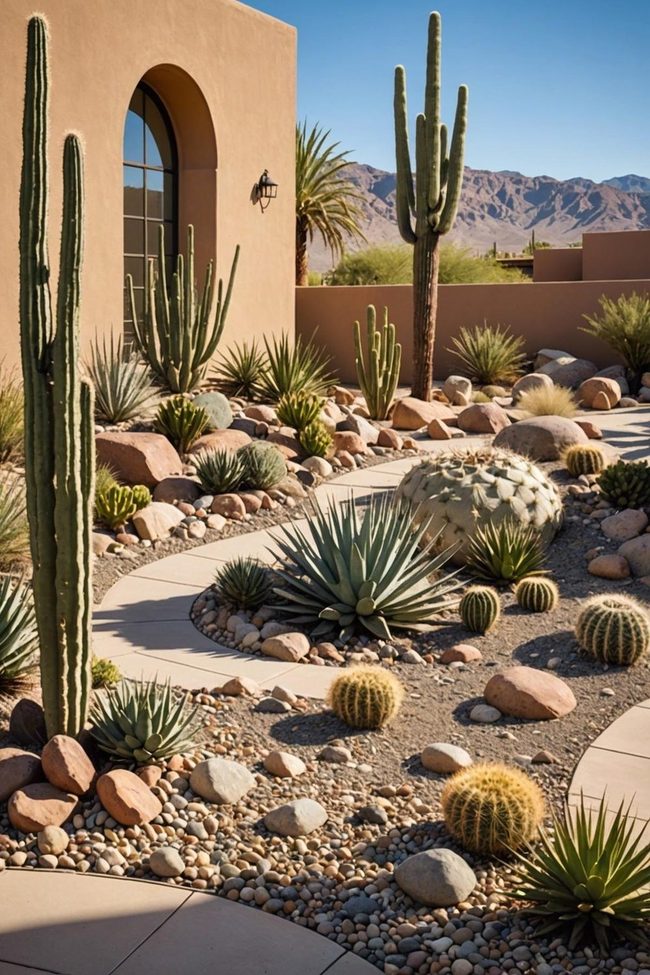
Cacti and yucca plants deliver bold, architectural shapes that instantly transform any dry garden into something visually striking and modern.
You'll find these plants come in countless varieties and sizes, so you can mix and match them to build an interesting landscape that feels uniquely yours.
What makes them so practical is how little they demand in terms of watering and care since they store water right in their leaves, stems, and roots.
This trait means they thrive in dry climates without constant attention from you.
They also handle pests and diseases far better than many other plants, so your garden stays healthy without extra effort.
Whether you're dealing with rocky soil or sparse rainfall, these plants adapt well and keep looking good year after year.
The combination of low maintenance, durability, and their striking appearance makes them a smart choice for anyone wanting a garden that looks great and doesn't require daily upkeep.
Drought-Resistant Succulents Low Water
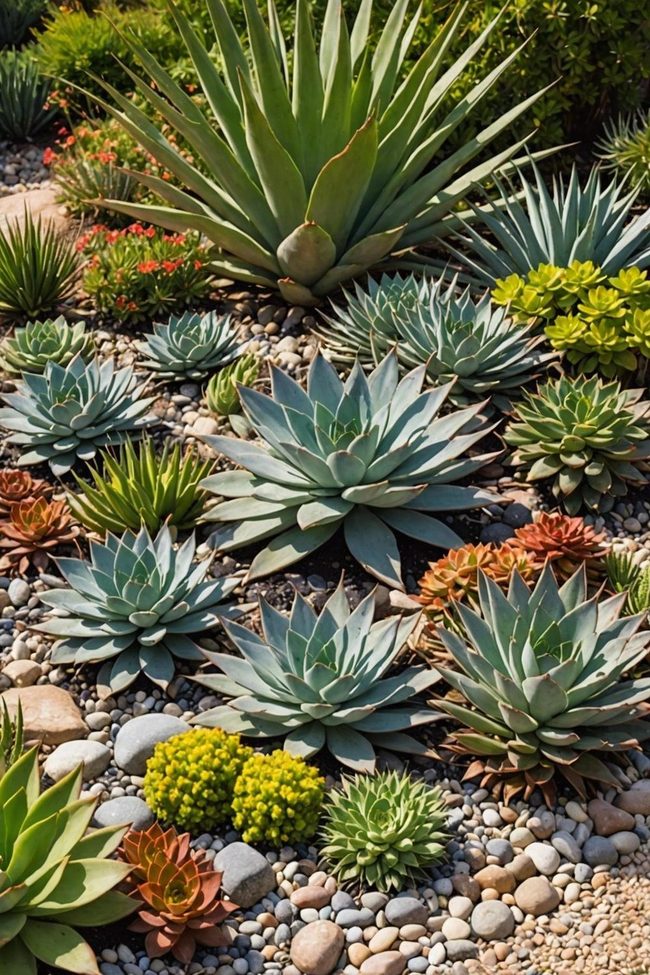
Succulent garden beds make an excellent choice if you want to grow something striking without draining your water supply.
We can enjoy these spaces because succulents and cacti store water in their leaves, stems, and roots, so they need very little watering to thrive.
You get a garden full of variety and color while also being responsible about water usage.
Many people find this approach refreshing since it removes the stress of constant maintenance and watering schedules.
Growing these plants opens up design possibilities across different climates and environments.
Whether your space gets full sun or partial shade, you can find hardy varieties that work well there.
It's a practical way to have something lush and interesting in your yard without the guilt of wasting resources.
Gray Stone Garden Anchors
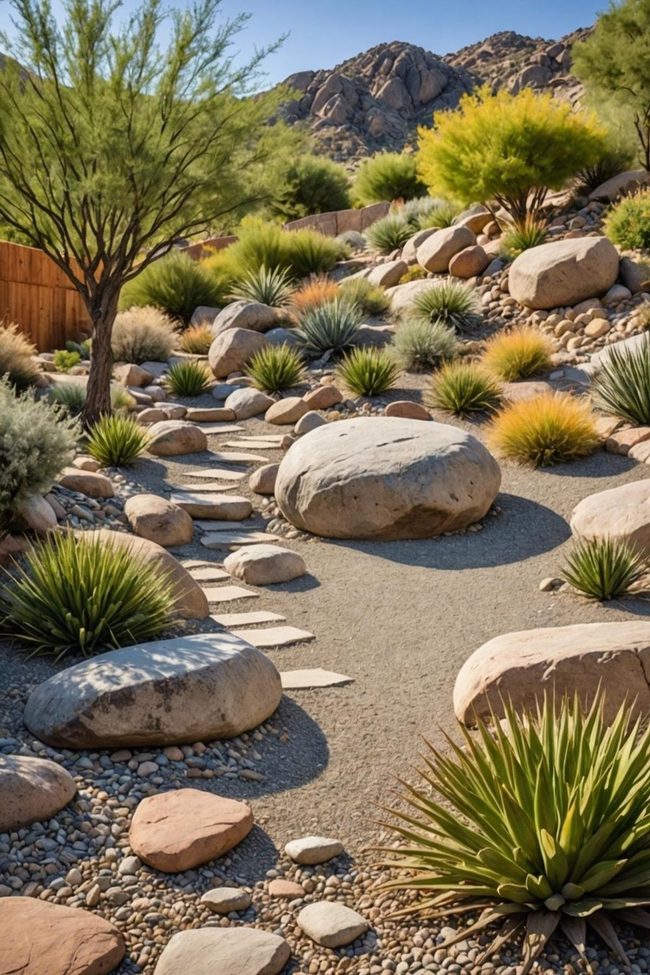
Large boulders and rocks offer one of the most dramatic ways to shape a dry garden landscape, and placing them throughout your space creates immediate visual depth and interesting textures.
Beyond the look, boulders serve a practical purpose by reducing how much soil you need to water overall.
You can arrange them in groupings or scatter them individually depending on the style you want.
Stone elements also help define pathways and separate different garden zones without requiring extra materials.
Many people find that adding rocks to a dry garden makes maintenance simpler while the landscape still feels rich and well-designed.
It's a straightforward way to boost your garden's appeal and function at the same time.
Orange Flames Garden Gathering
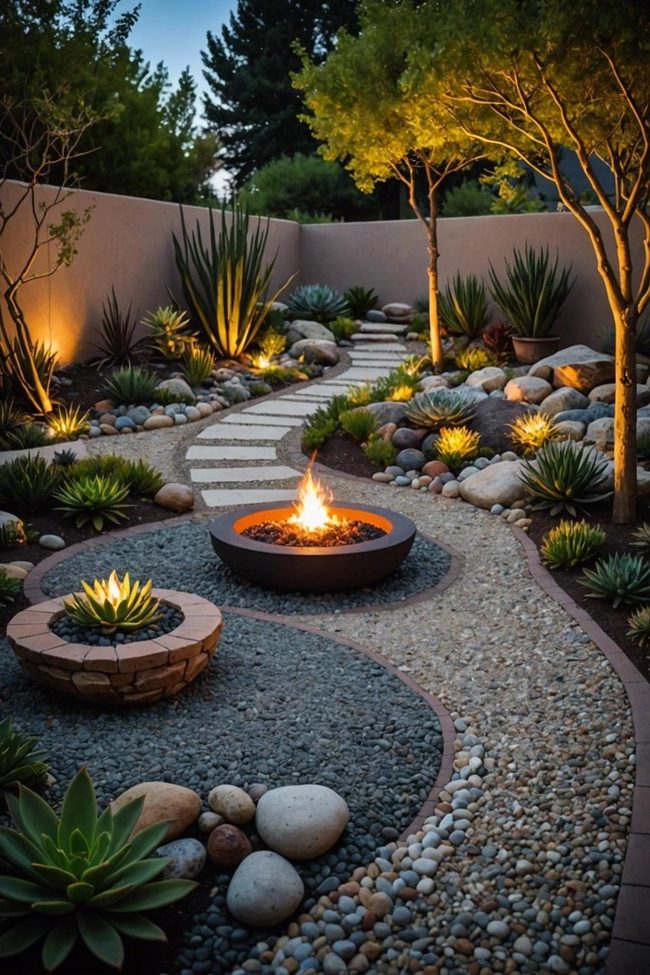
Your garden gains instant drama and warmth from a fire pit or outdoor fireplace, which serves as both a stunning centerpiece and a practical gathering space for loved ones.
Beyond the visual appeal of dancing flames against your water-wise plants, these structures let you use your outdoor area well into cooler months and transform an ordinary evening into something special.
We know that fire naturally draws people together, and in a dry garden setting, the contrast between glowing heat and desert-like plants creates an atmosphere that simply feels right.
You can enjoy more time outside year-round, whether you're relaxing solo or hosting others, and the gentle warmth becomes a reason to linger longer in your landscape Adding this feature means your investment in water conservation doesn't mean sacrificing comfort or those moments when everyone wants to gather in one spot.
Drought-Resistant Stone Gardens
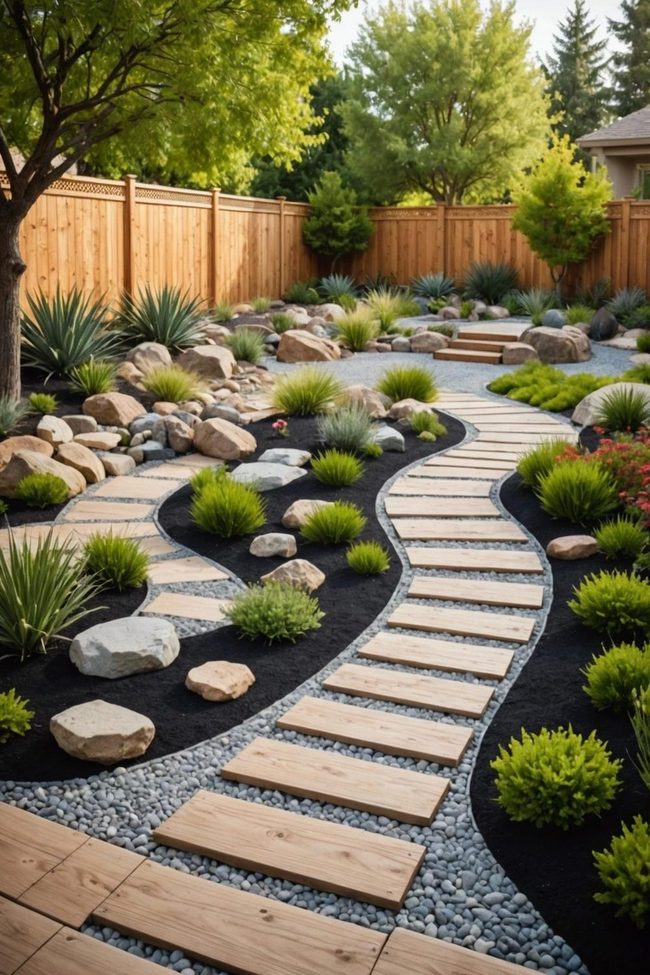
Rock and mulch gardens stand out as excellent ways to design your outdoor area while being mindful of water use.
If you choose organic mulch such as wood chips or bark, you'll keep soil moisture locked in, stop weeds from taking over, and keep temperatures steady in the ground.
Decorative stones paired with plants that handle dry conditions demand very little water, so they work well if you live in an area that gets little rain.
Both options look polished in your yard and help the environment at the same time.
You get to save money on watering bills while reducing maintenance work throughout the seasons.
Many people switch to these setups because they're practical and look good without requiring constant care.
Your outdoor space becomes easier to manage and still looks well-kept all year long.
Pink Rockrose Purple Lavender Drought Garden
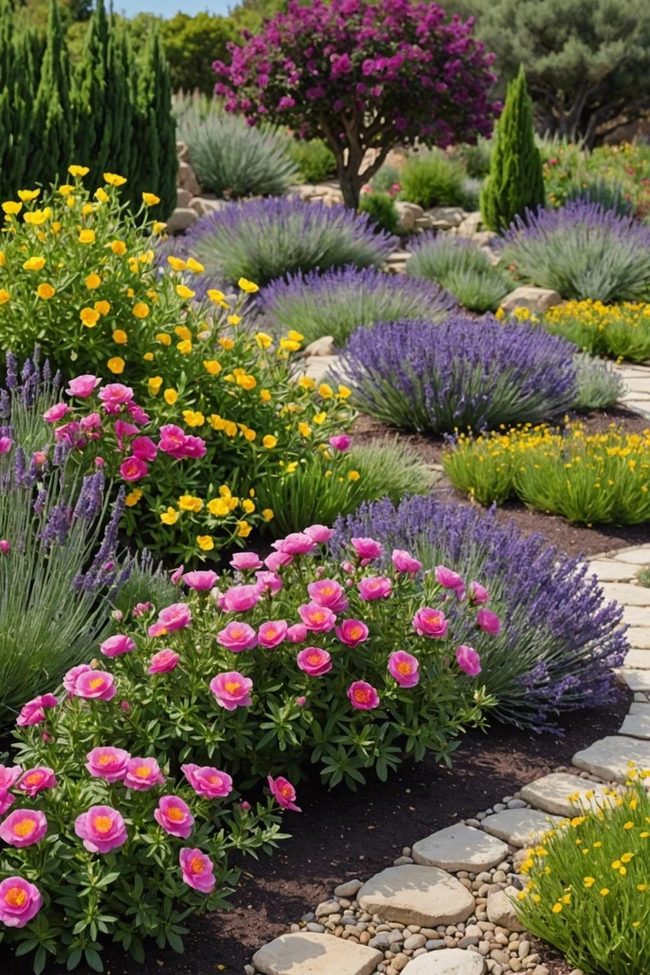
Rockrose shrubs burst with vibrant pink, yellow, or white flowers that demand attention in any garden space, and lavender follows with its striking purple blooms that you'll spot from across the yard while also drawing bees and butterflies with their sweet fragrance.
Both plants thrive in dry conditions and need minimal water once established, so you won't spend your weekends constantly watering or fussing with them.
They love full sun and prefer well-draining soil, which means they're happiest in spots where other plants might struggle.
If you're concerned about your water bill or simply want low-maintenance plants, these two are genuine workhorses for your landscape.
Lavender releases a calming scent whenever you brush past it or when the breeze picks up, and that aroma drifts through your garden all season long.
Since they ask for so little in return for their beauty and fragrance, you get maximum reward from minimal effort.
Nectar Seeds Berries for Birds
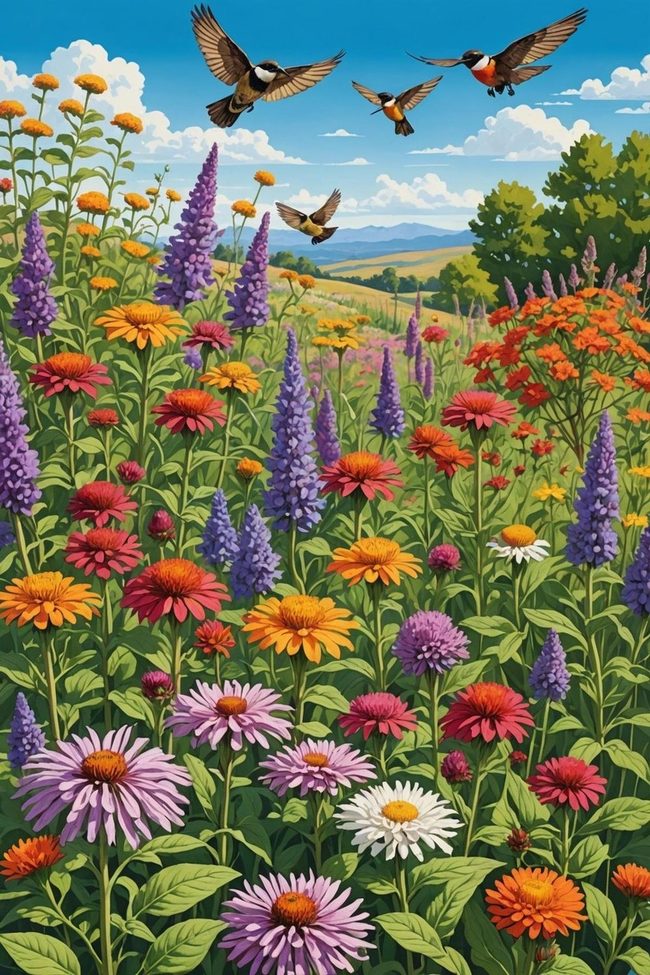
Native and drought-tolerant plants like California Buckwheat and Purple Coneflower bring birds right into your garden space because they offer natural shelter and habitat that birds need to thrive.
Adding Salvias, Bee Balm, and Lantana to your landscape attracts various bird species through their abundant nectar and seeds while requiring minimal care on your part You get the bonus of low-maintenance gardening and a lively garden full of activity at the same time.
Seeds and berries from these plants become food sources throughout different seasons, and that keeps birds coming back regularly.
Plants like these work well in drought-tolerant gardens and don't demand much attention once established.
When you choose species that are native to your region, birds recognize them as reliable food and shelter options.
Your outdoor space becomes an active hub for wildlife while staying easy to maintain and water-efficient.
Grey Stone Garden Paths
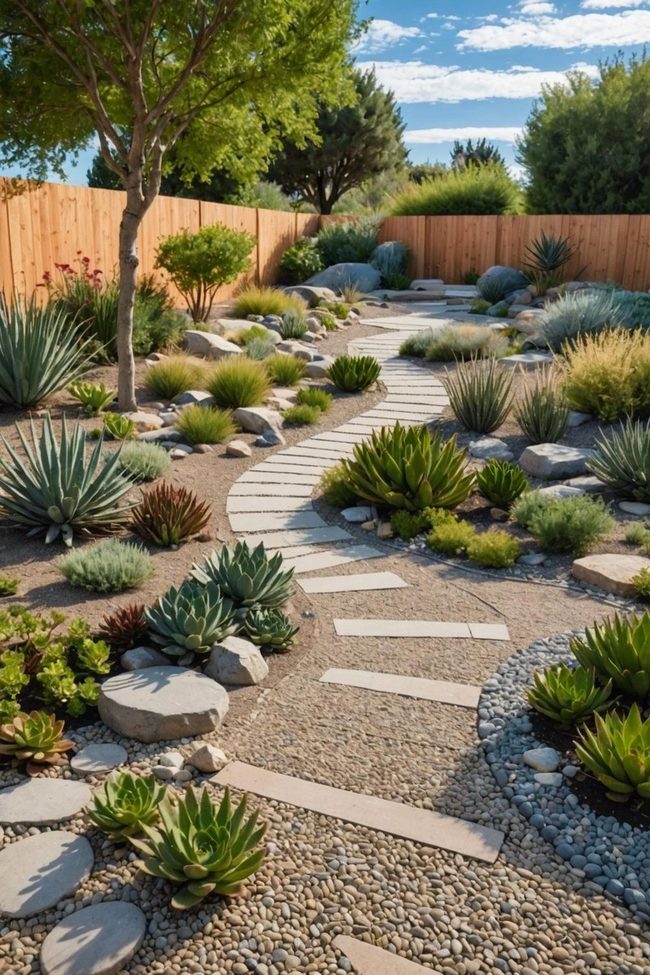
Gravel pathways give your dry garden an instantly appealing look while serving multiple practical functions at once.
Water flows right through the gravel and down into the soil below, which cuts down on runoff and keeps erosion from becoming a problem.
You won't need to spend much time maintaining these pathways since gravel stands up well to regular foot traffic and doesn't require constant upkeep.
Weeds have a harder time growing through gravel, so you can skip the herbicides and harsh chemicals that many gardeners rely on.
Beyond the low-maintenance appeal, gravel is an environmentally smart choice for your landscape.
It works well in dry garden settings where you want something durable and attractive without adding extra burden to your outdoor space.
Yellow Blooming Desert Trees
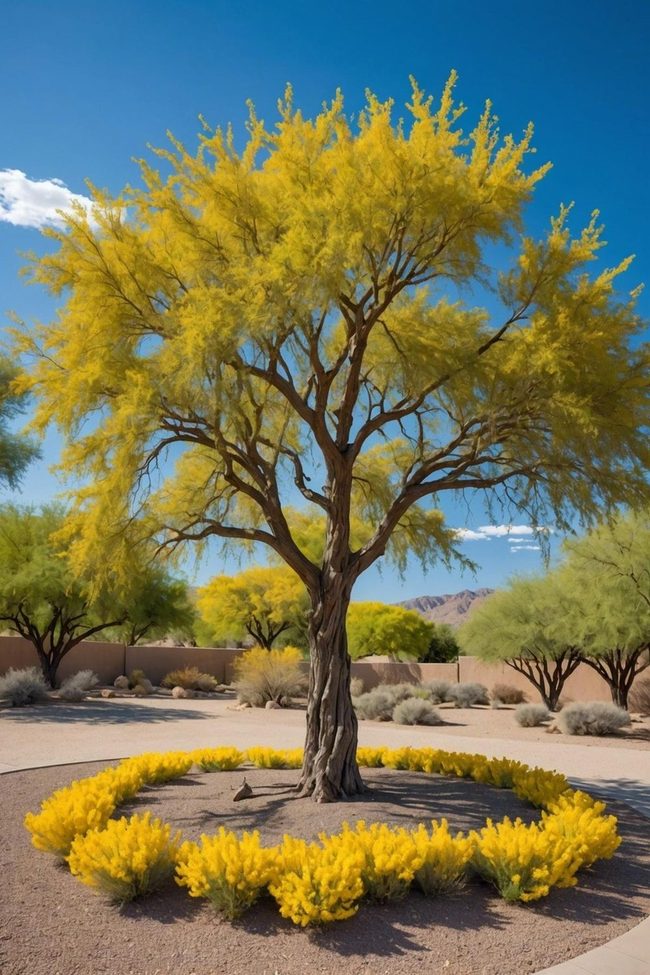
Native Southwestern trees like Desert Willows and Palo Verde make your dry garden stand out with their bold spring flowers and year-round presence.
Desert Willows deliver showy trumpet-shaped blooms in shades that range from pink to purple, while Palo Verde trees burst with bright yellow blossoms that light up the landscape.
Both species grow well in arid conditions and need very little water once established, so you save time on maintenance and reduce your water bill.
You get plenty of shade from these trees, which helps cool your outdoor spaces during hot months.
Since they're native to the Southwest, they naturally belong in your climate and support local wildlife.
Choosing either one means you're building a landscape that works with nature instead of against it.
These trees prove that a water-wise garden doesn't have to sacrifice beauty or function.
Weathered Granite Particles for Dry Gardens
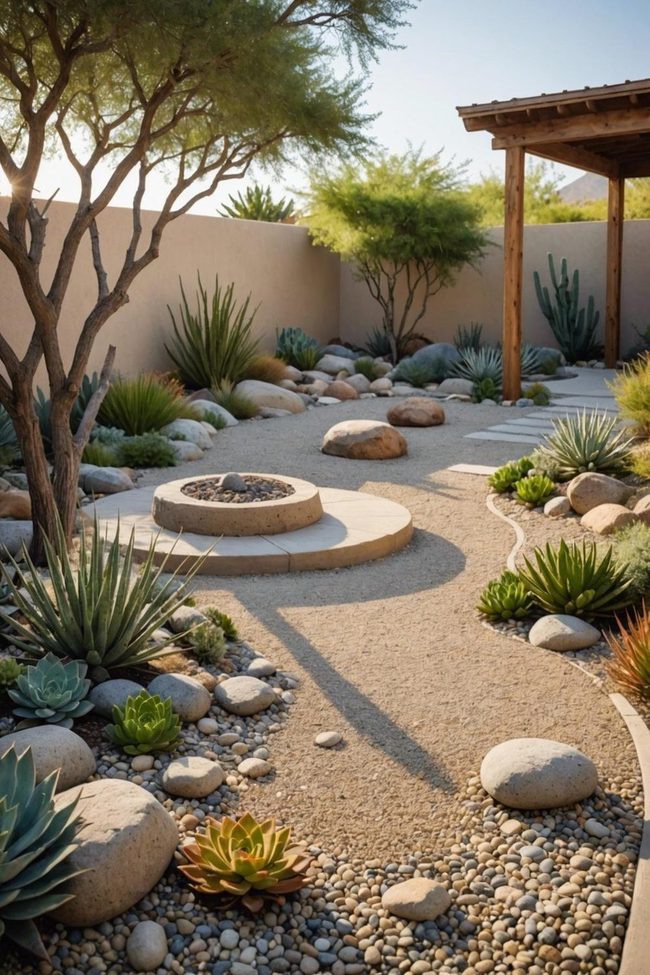
Decomposed granite patios shine in dry gardens because they blend function with natural beauty in a way that's hard to beat.
You get a surface made from weathered granite particles that look warm and earthy while water seeps right through instead of pooling or washing away soil Because water drains straight down, you save money on your water bill and help protect your landscape from erosion damage.
The material holds up well to foot traffic and weather changes without needing constant repairs or special treatments.
One bonus we often overlook is how affordable and simple it is to install or refresh decomposed granite compared to other patio options.
If you're working in a region that gets little rain or you want to reduce unnecessary watering, this choice makes both sense and cents.
Aged Wood Patina Desert Garden
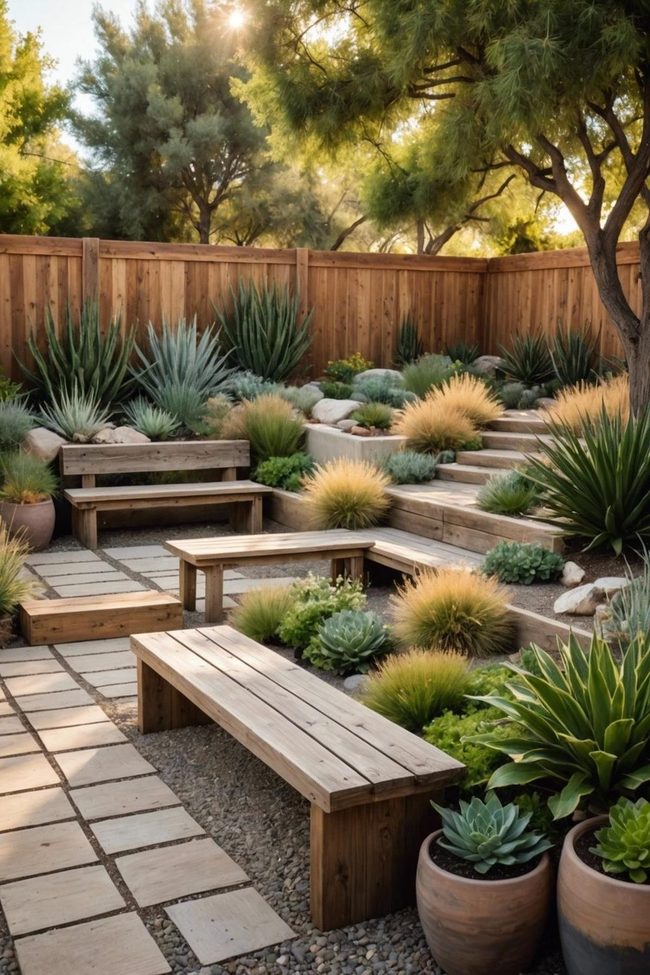
Weathered wood elements stand out as some of the most eye-catching features in a dry garden, and they bring genuine rustic charm to your outdoor space.
Benches, planters, and fencing made from aged wood blend right into the surrounding landscape and bridge the gap between nature and human-made structures in a really satisfying way.
Over time, this wood develops a rich patina that gives your garden authentic character and visual interest without needing much maintenance You don't need a lot of fancy additions when weathered wood does so much of the heavy lifting on its own.
It pairs beautifully with native plants and rocks because everything shares that same earthy, natural quality.
Simple wood pieces scattered throughout your garden space keep things grounded and honest-looking rather than overly designed.
Recycled Wood Bench in Dry Garden
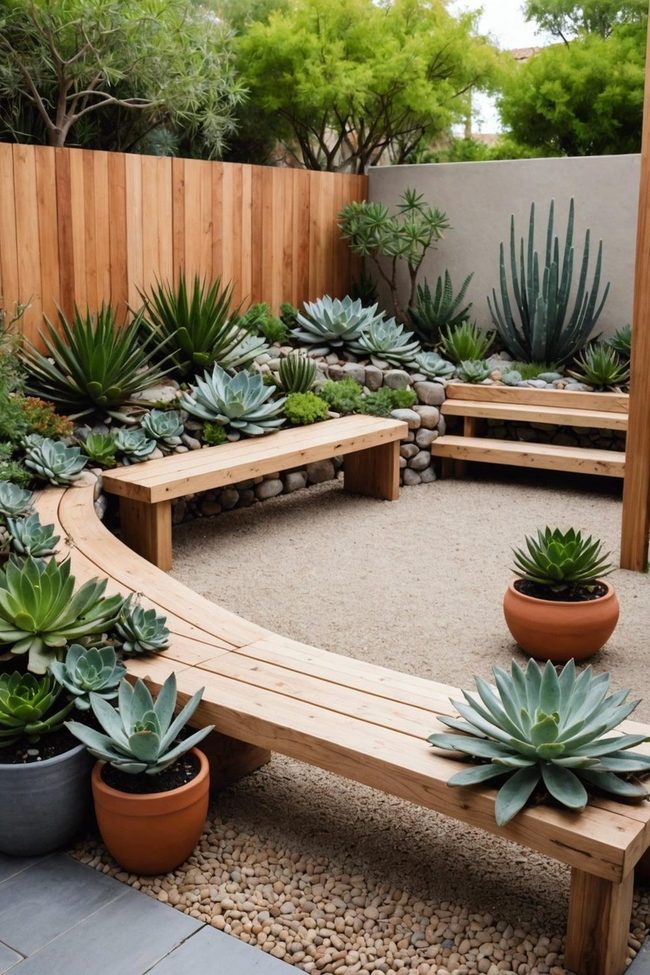
Garden bench positioned among drought-resistant plants offers you both a practical resting place and a striking visual pause in your landscape design.
Stone walls with built-in seating areas work especially well if you're working with limited space and want everything to feel connected.
Wood from sustainable sources or recycled materials keeps your setup aligned with eco-friendly values while looking natural in the garden setting.
Benches don't need to be fancy; simple designs in neutral tones sit comfortably alongside succulents and ornamental grasses without competing for attention.
You might place seating near a cluster of native plants to frame your view and give the space purpose.
Built-in options save room compared to freestanding pieces and help guide how people move through your garden.
Stone benches blend seamlessly with rock features you might already have, while wooden ones add warmth and contrast against the arid plants around them.
Positioning these spots thoughtfully makes your dry garden feel less like an empty expanse and more like an intentional outdoor room.
Succulents and Sage for Dry Gardens
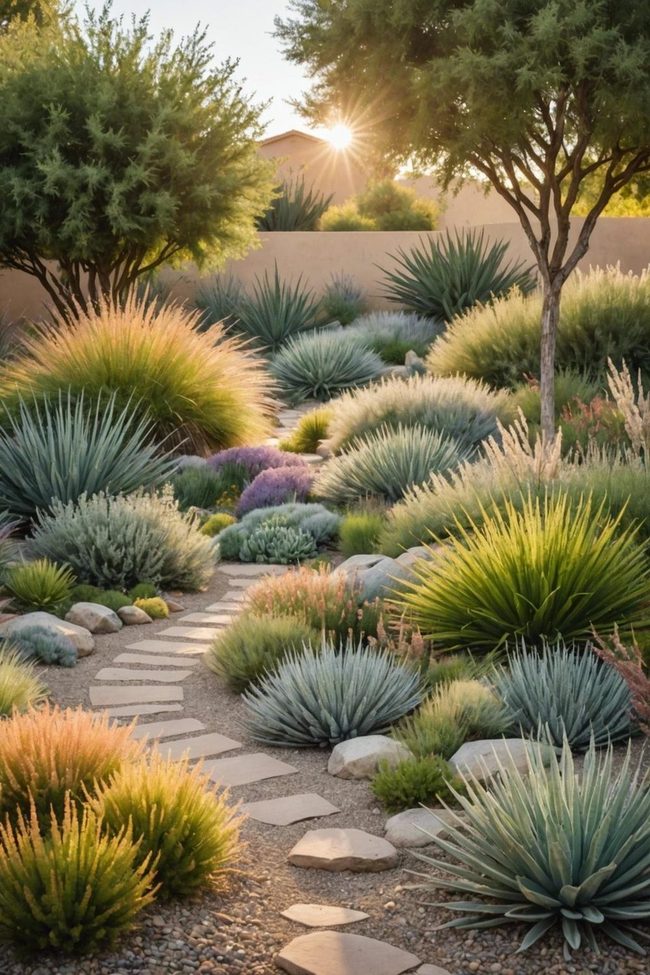
Drought-tolerant plants form the foundation of any dry garden, and succulents like aloe, agave, and echeveria stand out with their striking forms and fleshy leaves that store water to survive long stretches without rain.
Ornamental grasses, yarrow, and Russian sage also thrive in arid conditions and add texture and movement to your landscape.
These plants are the unsung heroes of water-wise gardening because they require minimal watering and care once established in your space.
By choosing these hardy varieties, you reduce your water consumption significantly and keep your garden looking good year-round with far less effort than traditional landscaping demands Incorporating them into your beds means you can step back and enjoy your outdoor space without the constant maintenance burden.
Your garden becomes both beautiful and practical when you work with what grows well in dry environments.
Drought-Resistant Succulents for Dry Gardens
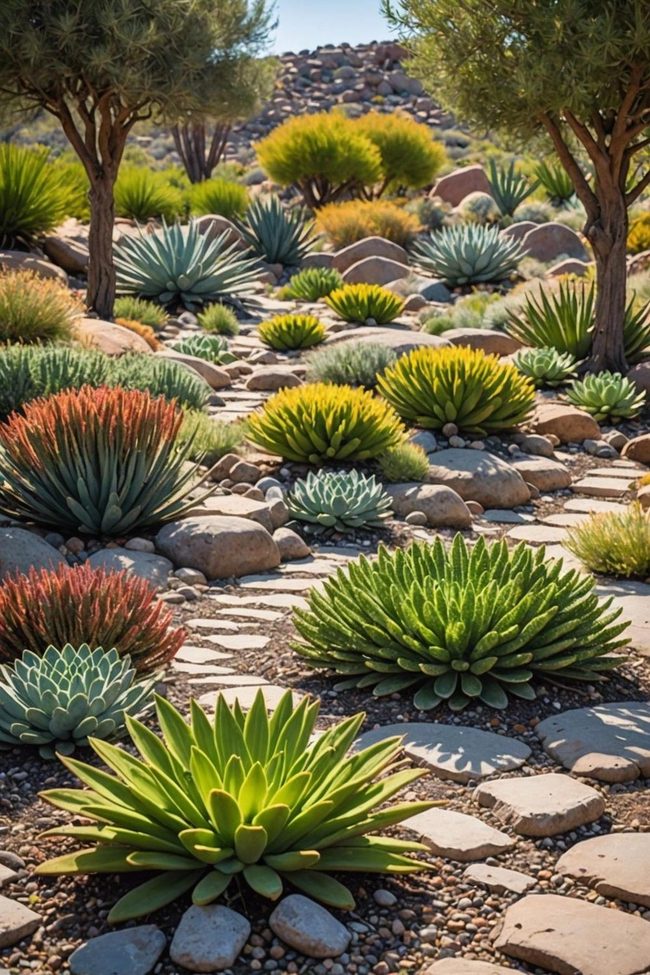
Ground covers that need little water work wonderfully in dry gardens because they demand so much less care than traditional plants and help keep weeds from taking over your space.
Beyond their low maintenance needs, these plants also shield the soil from erosion and give your garden a full, green look that many people find appealing.
Creeping thyme spreads across the ground with tiny leaves and colorful flowers, sedum offers fleshy foliage in interesting shapes and colors, and succulents like aloe and agave stand out with their bold, architectural forms that make a real statement in any landscape.
What makes these options so reliable is their ability to handle tough conditions; they thrive even in poor soil where other plants struggle and can survive on rainfall alone in most climates.
You don't need to amend the soil heavily or water constantly to see them flourish.
These plants adapt to whatever your garden throws at them and reward you with steady growth season after season.
Whether you're working with a sandy plot or rocky terrain, low-water ground covers deliver both beauty and practical benefits without demanding your constant attention.
Weathered Wood Dry Garden
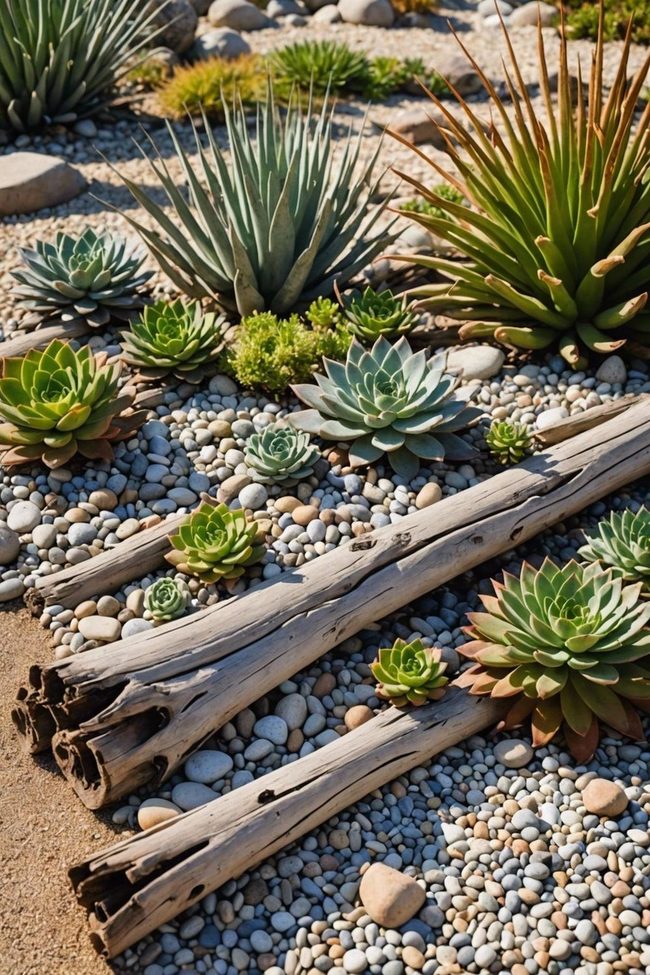
Arrange driftwood pieces with unusual shapes into bold patterns or eye-catching centerpieces that immediately draw attention in your dry garden space.
You can gather these weathered wood pieces from beaches and position them to form striking sculptures or displays that stand out against sandy or rocky ground.
Another approach is building a natural-looking boundary or fence using driftwood, which gives your garden a rustic edge while marking off different zones.
The texture and color of driftwood work well alongside drought-resistant plants and gravel beds, adding warmth to minimalist garden designs.
If you want something lower-key, simply scatter smaller driftwood pieces throughout planting areas as accent elements.
This type of decoration fits perfectly with dry garden styles because it needs no water and actually improves over time as it weathers further.
Gray Stone Garden Pathways
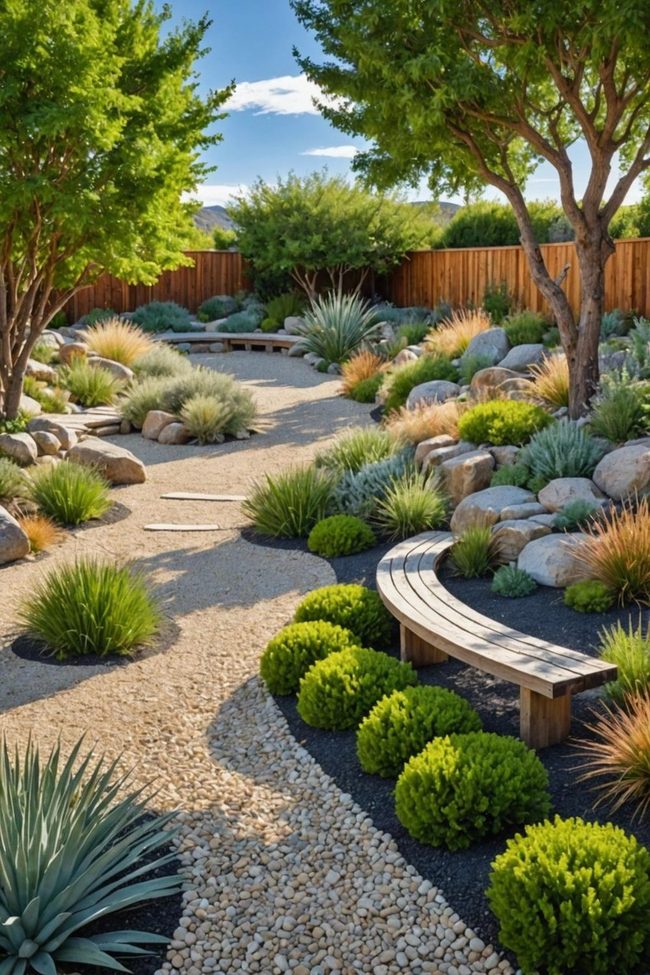
Ground-level stone and pebble features stand out as some of the most noticeable elements you can add to a dry garden space You can lay them out as winding paths that lead visitors through your garden or spread them across open areas as a base layer.
Since they come in so many different colors and textures, you have plenty of ways to shape the overall feel of your landscape.
Whether you prefer smooth river rocks or rough crushed stone, there's an option that matches your style.
The range means you can easily shift from one color tone to another or mix several options together for visual interest.
Stone accents are practical for dry climates and give your garden a natural, earthy character.
Building your design around these elements makes it simple to achieve a garden that both looks good and functions well.
Dramatic Stone Anchors Desert Garden
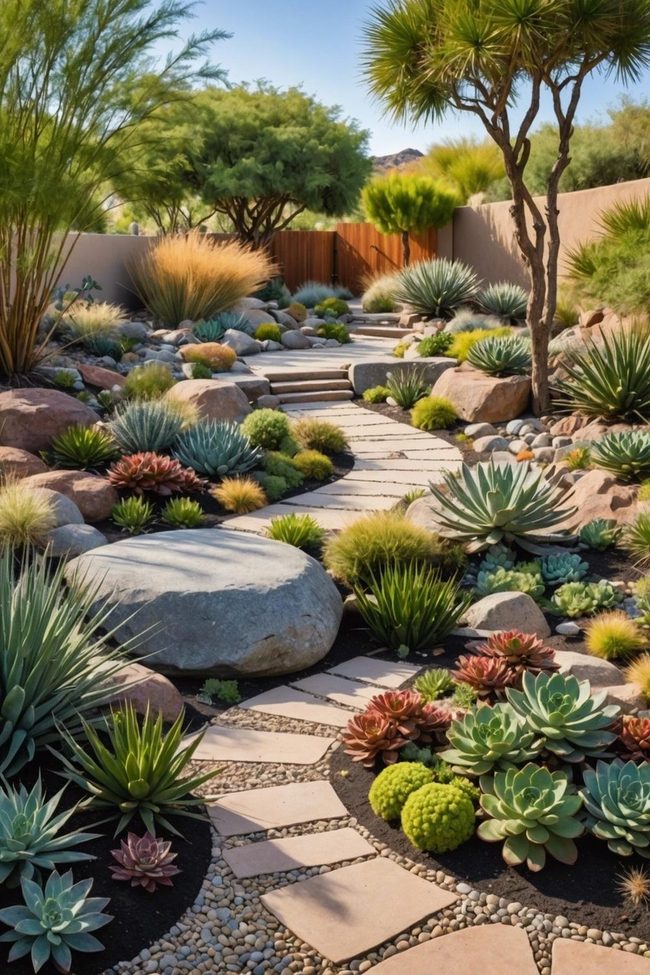
Rock formations and dramatic succulents make up the strongest visual elements in a dry garden, and placing them in key spots helps guide your eye through the space.
Ornamental grasses that sway and shift in the breeze add movement and energy to these anchor points.
When you position these eye-catching features around your garden, they work as natural gathering spots that pull your attention and encourage you to explore different areas.
Your eye moves from one standout element to the next, which gives the whole design a sense of depth and makes the space feel larger than it actually is.
These bold pieces break up flat ground and prevent the garden from feeling monotonous or dull.
You can arrange them to create pathways and natural routes that encourage people to walk through and discover all the different sections.
Simple placement of these striking features makes your dry garden feel intentional and well-organized, even if you haven't filled every corner with plants.
Feathery Plumes for Drought Gardens
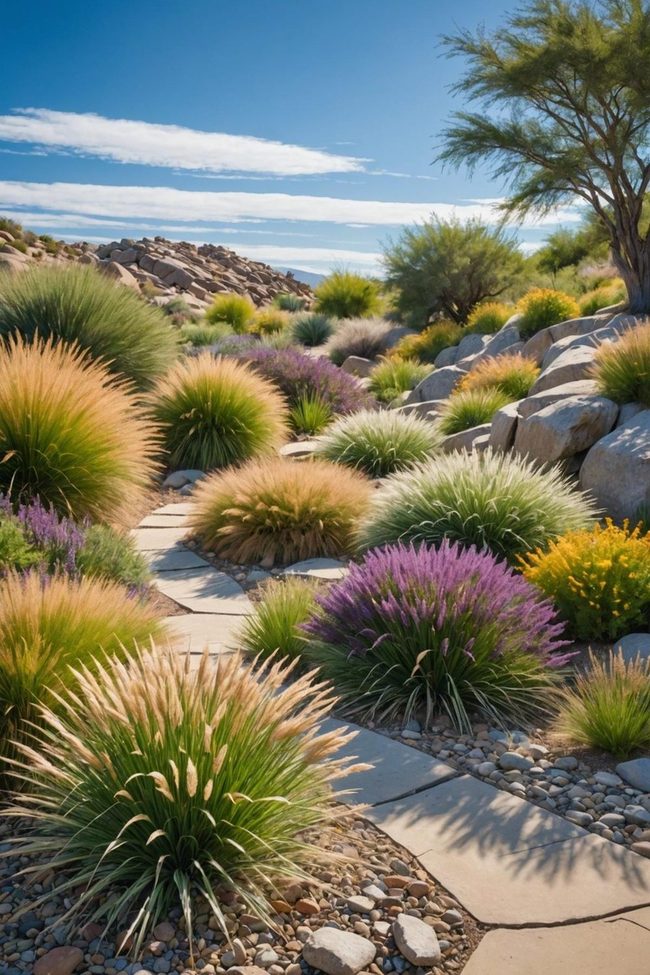
Ornamental grasses bring drama to your drought-tolerant garden with their feathery plumes and striking foliage that sway in the breeze and catch light beautifully.
These plants need very little water and almost no maintenance once established, so they're perfect if you want a garden that doesn't demand constant attention.
Grasses also pull in pollinators like butterflies and bees, which helps your entire garden thrive.
Deer tend to leave them alone, so you won't find your plants nibbled down overnight.
Beyond being practical, they add wonderful texture and movement that makes your space feel alive and dynamic Whether you're in a dry climate or just want to reduce watering, ornamental grasses deliver real beauty without the fuss.
Michael Harris
Senior Content Editor
Expertise
Home Décor Content Creation, Interior Design Journalism, Editorial Oversight, Digital Media Strategy, Team Leadership and Mentorship
Education
University of Queensland, Brisbane, Australia
Queensland University of Technology (QUT), Brisbane, Australia
Michael Harris is the senior content editor at Archi Refresh, where he turns home design trends into engaging, easy-to-follow articles. With a journalism degree from the University of Queensland and a digital communication certification from QUT, he knows how to craft content that informs and inspires.
With over 10 years of experience in lifestyle and design media, Michael has shaped editorial strategies, mentored writers, and helped readers refresh their spaces with practical tips. His work blends storytelling with expert advice, making home decor more accessible to everyone.
Outside of work, Michael enjoys DIY projects, exploring Brisbane’s art scene, and teaching digital literacy workshops.