
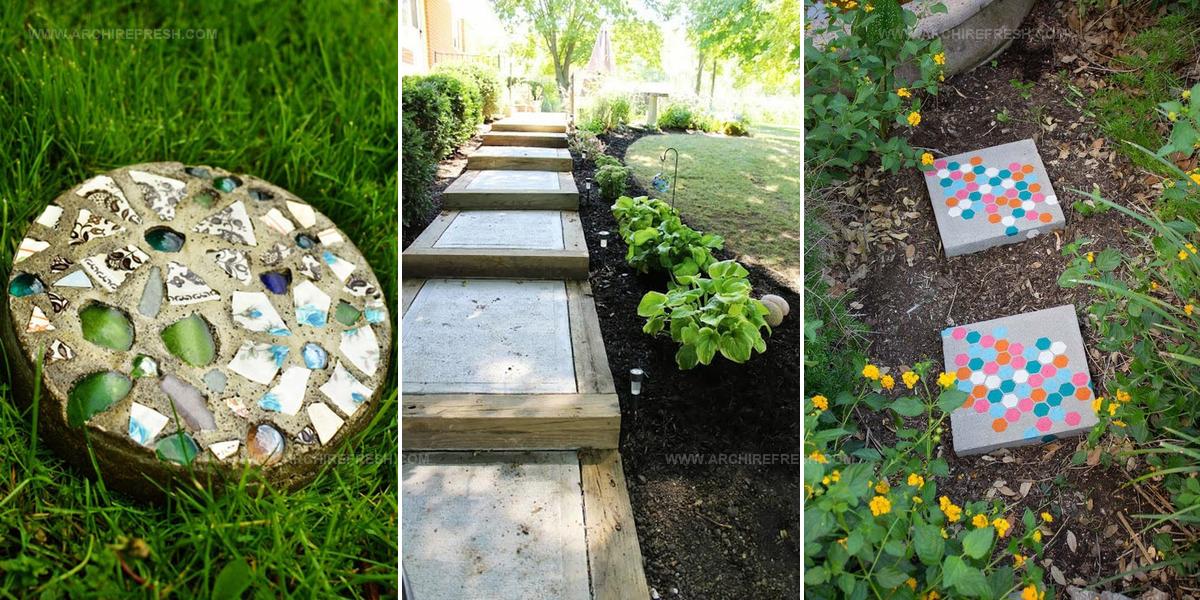
13 Budget Garden Path Ideas That Look Beautiful
Low cost garden path ideas can completely change how people experience outdoor spaces without draining bank accounts or requiring professional help.
A well-designed walkway connects different areas while adding structure and visual interest to landscapes of any size.
Budget-friendly materials like gravel, mulch, stepping stones, and reclaimed bricks offer practical solutions that look beautiful and last for years.
Many homeowners assume that attractive pathways require expensive installations, but creative approaches prove otherwise every single day.
Simple techniques combined with resourceful material choices deliver stunning results that rival costly alternatives.
The right pathway enhances curb appeal, prevents muddy footprints, and guides visitors through gardens with purpose and style.
Stepping Stones Of Personal Journeys
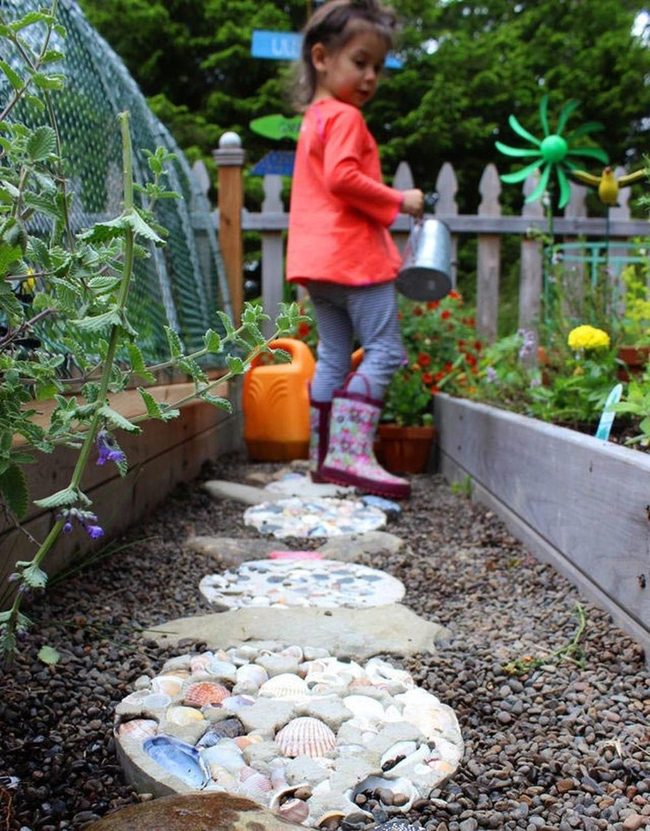
Smooth stones and shells from your travels can become stunning stepping stones for your garden path when you arrange them in cement and frame them with cardboard tubes.
If you add glass jewels into the mix, they'll catch light as you walk and give your pathway a sparkly touch that feels special.
This project costs very little but delivers big results because you're using things you already have from vacations.
Your garden gets a one-of-a-kind path that no one else will have, and it's something you made with your own hands.
The best part is how simple the process becomes once you gather your materials and set up your cardboard frame.
Kids enjoy this craft too, so it can be a fun weekend activity for the whole family.
Lace Pattern Concrete Stepping Stones
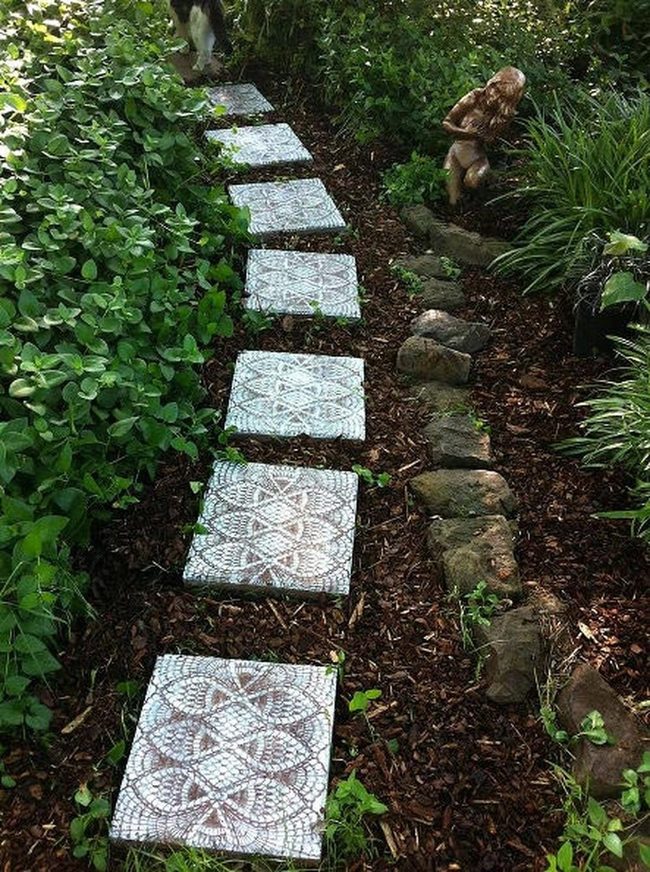
Lace stepping stones turn plain concrete into beautiful garden accents that really stand out, and the best part is you can make them yourself with just a doily as a stencil and some spray paint.
Start by picking pavers you like and setting up cardboard frames around them to keep your lines sharp and clean.
Once you spray paint the lace pattern onto the stones, seal everything with an exterior clear coat so your work lasts through rain and sun.
When you place these decorated stones on a mulch bed, they work as a natural weed barrier and look great at the same time.
You'll find that this simple project doesn't cost much but gives your outdoor space a polished, handmade feel.
Maintenance stays easy since the mulch keeps weeds down around your new stepping stones.
Whether you're upgrading a garden path or adding charm to a plain yard, this approach brings affordable artistry right into your landscape.
Colorful Pebble Mosaic Pathways
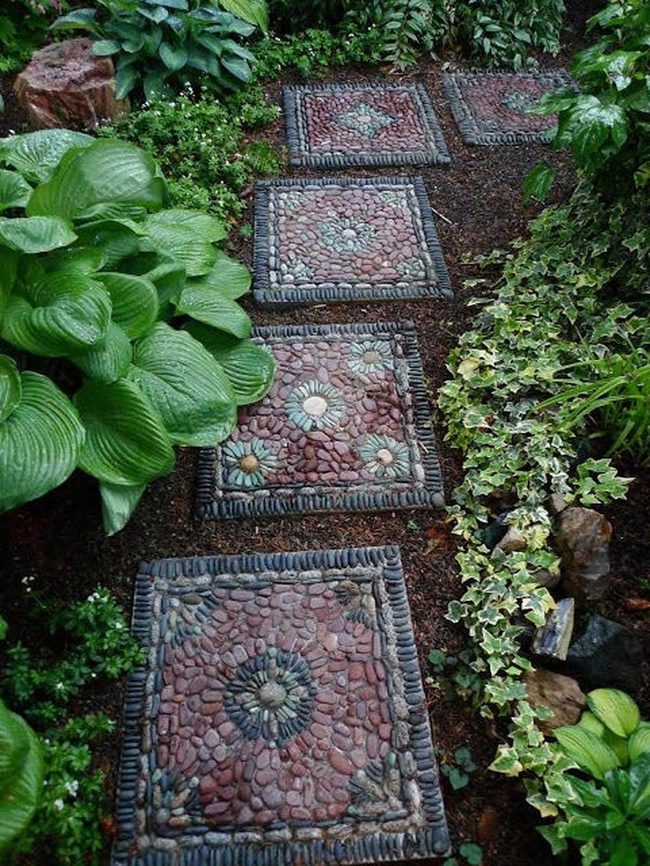
Your garden can shine with a pebble mosaic path that won't break the bank, and colorful stones arranged in thoughtful patterns deliver an eye-catching visual experience underfoot.
Sorting your pebbles by size and color helps you plan unique designs before pressing them into mortar within wooden frames.
Local beaches and rock yards offer fantastic treasures of textures and colors to work with, so spending time building your collection one stone at a time rewards you with materials that feel personal to your space.
Granite Scraps Into Garden Pathways
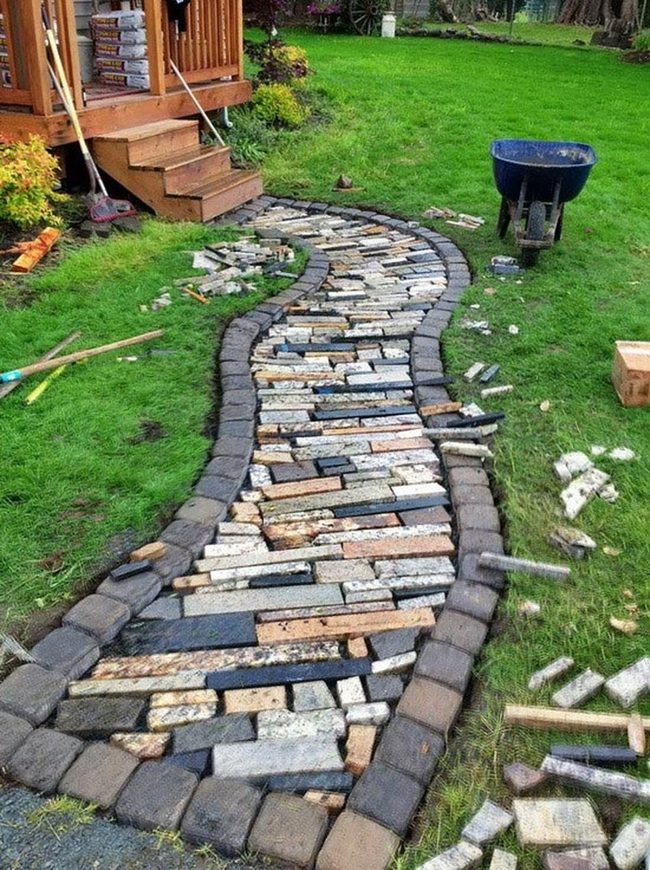
Granite scraps from countertop remnants make a striking garden walkway that bursts with random shapes and colors you won't find in ordinary paving materials.
Building one starts with clearing away sod and spreading gravel to level the ground, then setting concrete edging along both sides to keep everything in place.
Next, you'll lay mortar over the gravel base and press each granite piece into it, working section by section until the path takes shape.
After the mortar dries, grouting between the stones gives you a smooth, finished surface that looks polished and handles foot traffic well.
Along the edges, low-growing flowering perennials add living color and soften the hardscape without overwhelming the design.
This approach gives you a one-of-a-kind pathway that costs less than buying new stone while putting waste materials to good use.
Colorful Stone Pathways Through Green
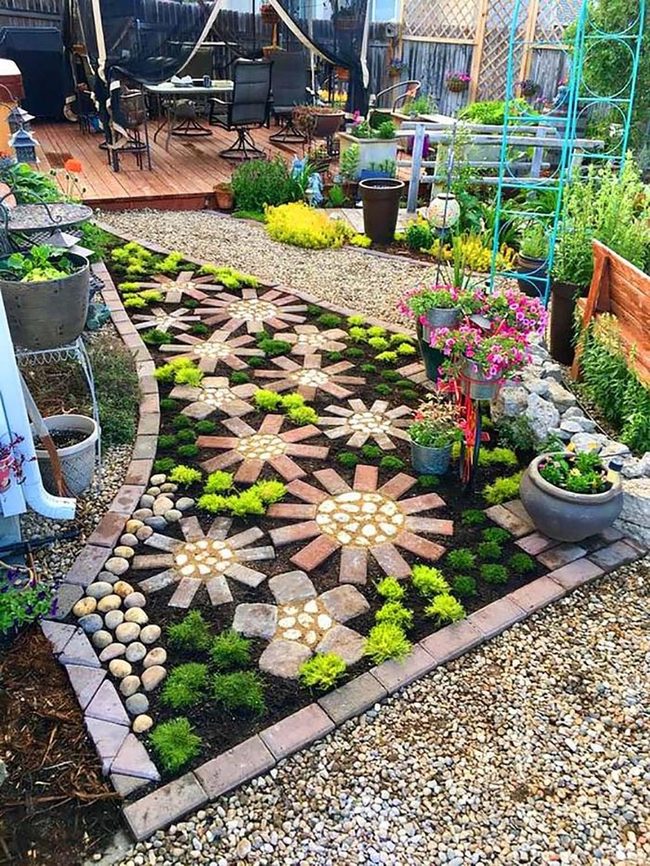
Mosaic garden trail built from colorful stones and vibrant ground cover can transform an ordinary walk through your yard into something visually striking and full of personality.
As you move along the pathway, each step reveals new patterns and perspectives that encourage you to explore further and notice how the hard surfaces blend with the natural beauty around them.
You get both function and artistry when you combine different colored stones with living plants that soften the edges and fill in the spaces.
The contrast between the structured pathway and the flowing greenery creates visual interest that keeps drawing your attention as you walk.
Beyond the beauty factor, these trails guide guests through your space in a natural way and make it easier to move around when the ground is wet or muddy.
Broken Plates Become Garden Stones
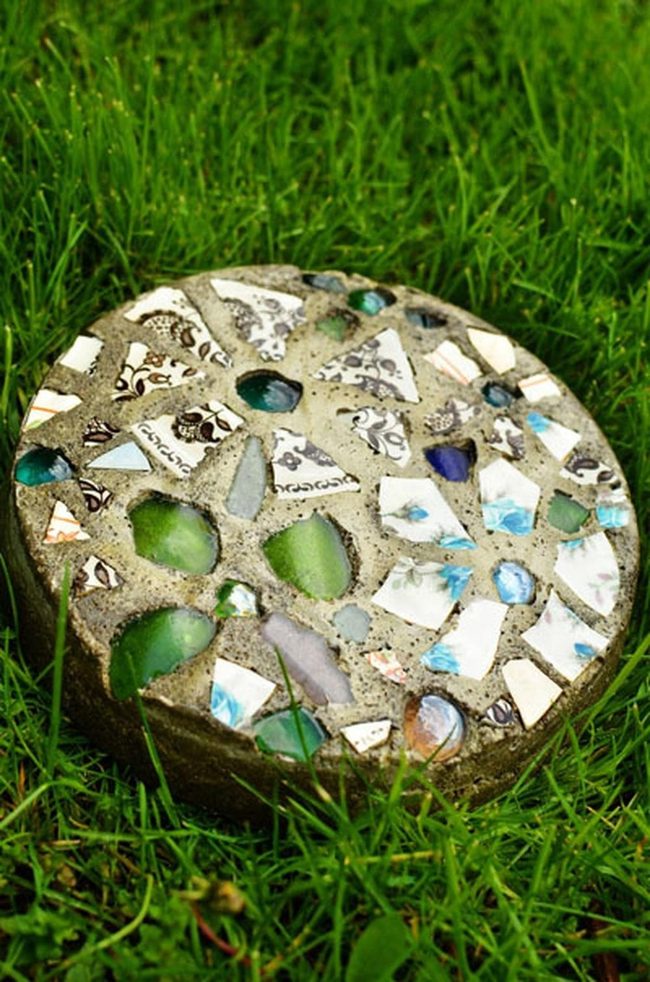
Build a mosaic stepping stone path in your garden by smashing colorful plates and arranging the pieces inside a cake pan lined with contact paper, then securing everything with concrete for a unique outdoor feature that costs almost nothing.
Old dinnerware transforms into brilliant fragments that catch the light and add personality to your yard, and we love how this project lets you and me turn broken dishes into something beautiful.
Start by wrapping plates in an old pillowcase before smashing them, which keeps the mess contained and makes cleanup simple while you work.
Once you've sorted through your colorful shards, place them inside the cake pan however you like, mix in the concrete, and let the whole thing set for just two days.
Unveiling your handmade stepping stones feels rewarding, especially when you see how they brighten up pathways and garden beds.
Patterned Concrete Path On Budget
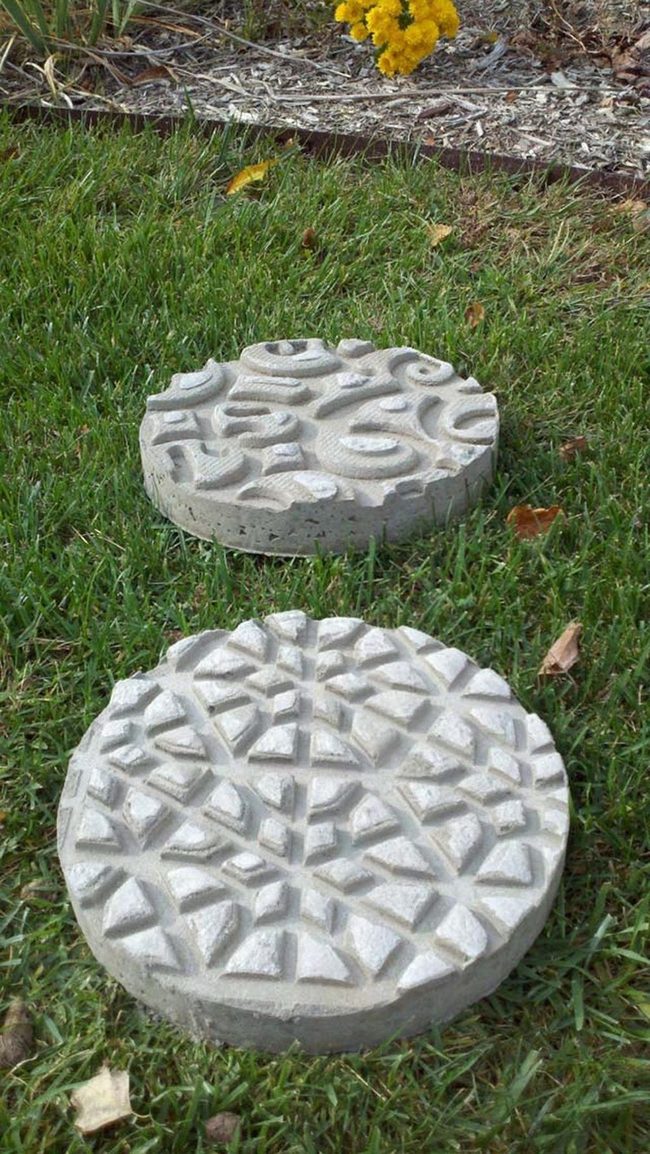
Patterned stone path offers an inventile way to enhance your garden without breaking the bank, and open-work doormats can create impressive designs that stand out beautifully against the earth tones of nature.
Constructing this pathway is straightforward; you simply use cardboard tubing as molds for circular patterns on wet concrete, and vegetable oil spray ensures a smooth release.
Once you allow time for the concrete to set and harden, removing the mats reveals a unique serpentine layout.
Your outdoor space gains character from this budget-friendly solution that doesn't require special skills or expensive materials.
You can adapt the design to fit any garden size, making this approach accessible whether you have a small patio or sprawling yard.
Pastel Stenciled Stepping Stones
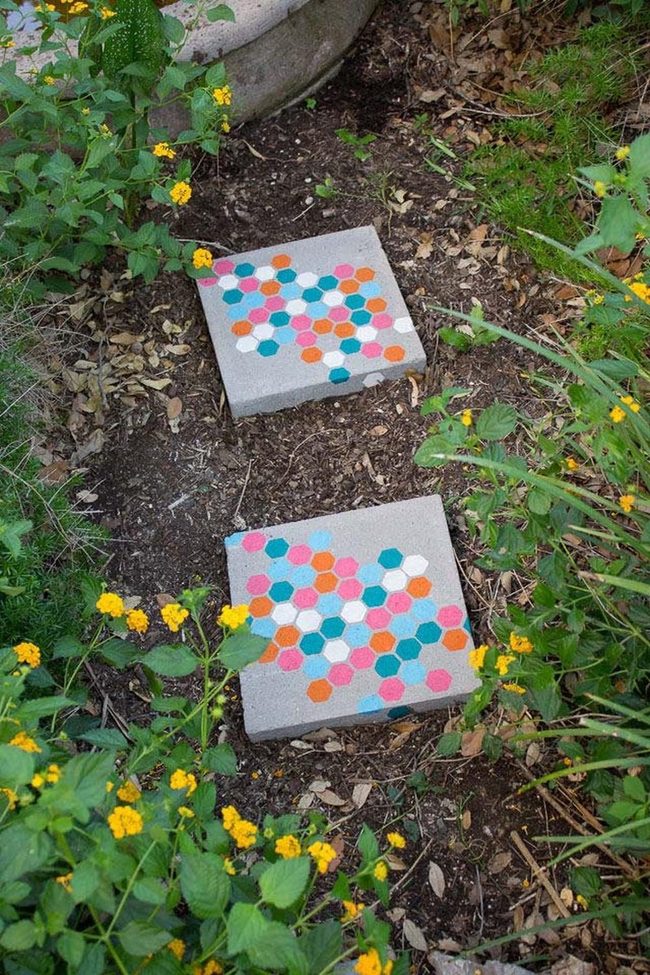
Stencil stone designs transform your garden pathways into eye-catching displays of color and personality, where each stepping stone showcases vibrant pastels and unique patterns that reflect your creative style.
Building this look requires just a few basic supplies; commercial stencils, weather-resistant acrylic paints in various shades, and foam brushes; making it an accessible project for anyone interested in adding a playful touch to their outdoor space.
You can apply one color at a time with your foam brush to build random patterns that stand out beautifully against the natural landscape.
One thing that gives this charm is how simple it actually is; you don't need special skills or experience to achieve results that enhance your garden significantly.
As you work through painting each stone, you'll discover the genuine satisfaction that comes with personalizing your outdoor environment through your own hands.
The random patterns you create naturally complement most garden designs and add visual interest without requiring much effort.
Compass Rose Paver Spiral Path
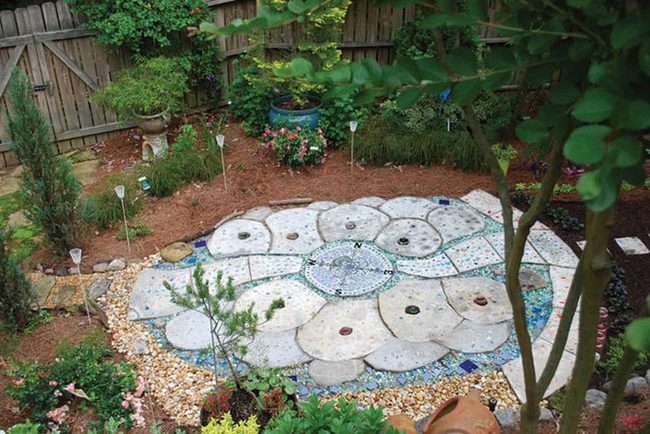
Swirling wave pattern flowing outward from a central compass rose can turn your outdoor space into something wonderfully playful and fun to explore.
Start by sketching out the shapes you want on your patio, then use rope to outline the edges and mark your work area.
Spray paint helps you see exactly where each paver will go before you break ground.
Water the soil overnight to make digging much easier the next day.
As you lay down each paver, mix in different materials to add texture and visual interest throughout the path.
Let everything dry completely before you walk your new pathway deeper into your garden.
The result is a unique route that feels both creative and connected to nature.
Limestone Gravel Steps Through Slopes
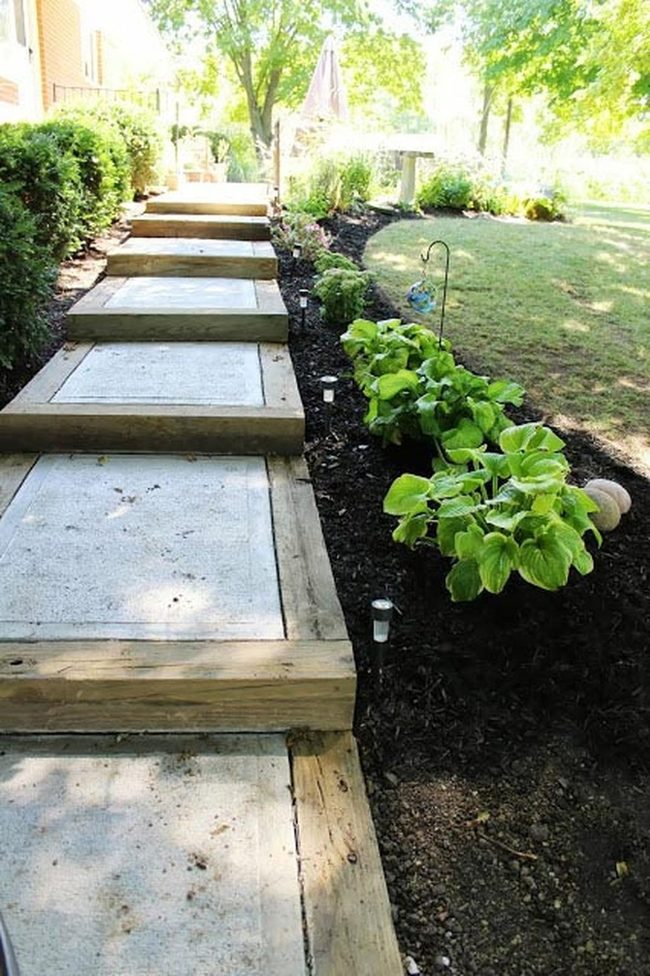
Sloped garden path becomes both beautiful and functional when you build it as a series of steps that guide visitors up and down naturally.
Start by measuring how high and how far the slope extends so you can plan gradual steps that feel comfortable to climb.
Reclaimed pressure-treated beams work wonderfully for framing each step, and L-brackets bolster the structure from underneath.
Before you pour concrete, lay down limestone gravel as your base layer to ensure proper drainage and stability.
Neighborhood walks often reveal useful materials and design ideas that you might adapt for your own space.
This kind of pathway blends practicality with visual appeal in a way that improves how your whole landscape looks and functions.
Sky Blue Floral Concrete Transformation
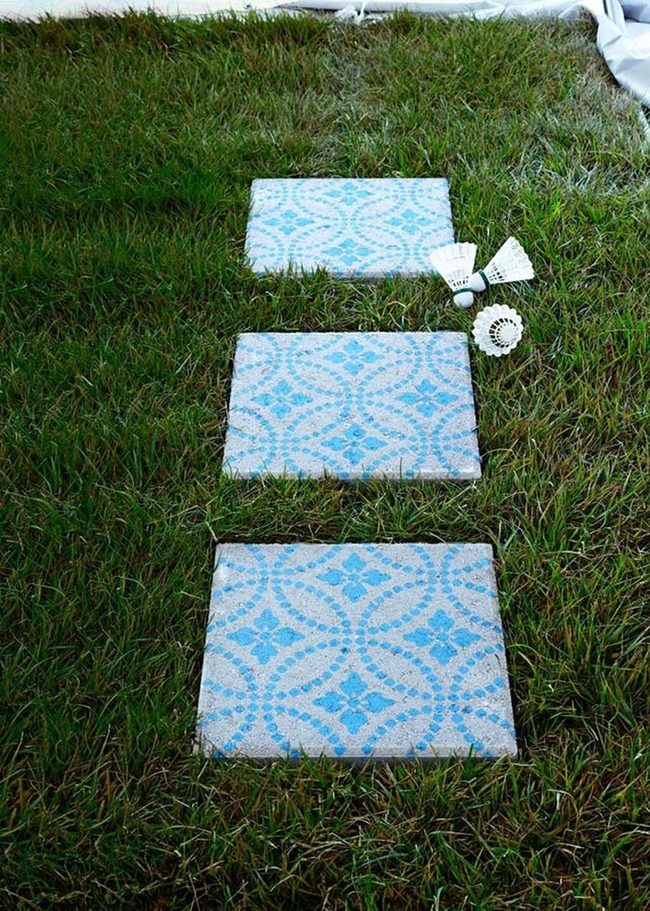
Circular paver patio with sky blue floral patterns brings an eye-catching burst of color to your garden and costs far less than you might expect.
You can achieve this look by clearing your concrete pavers and using a simple stencil to paint on designs with chalk paint, which makes the whole process straightforward and fun.
Once the florals are painted, your outdoor space shifts from plain concrete into somewhere peaceful and beautiful.
Gatherings feel more welcoming when your patio has personality and character.
You don't need special skills or expensive materials to pull this off, just a basic stencil, some chalk paint, and a few hours of your time.
Your garden becomes a spot where you actually want to relax and spend time with others.
Natural Wood Slice Garden Path
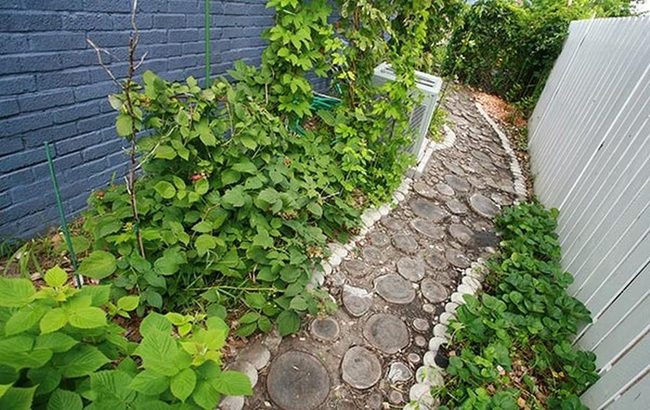
Wood slice steps made from fallen trees create a natural walkway that draws people through your garden while giving you an eco-friendly option that keeps timber out of landfills.
Start by clearing away the sod and leveling your soil, then outline where you want the path to go with concrete edging so everything stays in place.
Cut tree trunks into circular pieces and lay them out in a pattern that appeals to you before filling the spaces between them with smaller wood chips or soil to form a continuous walking surface.
This combination of materials gives your garden a rustic look while being practical and easy to maintain over time.
You can adjust the spacing and arrangement based on what works best for your yard's layout.
Small touches like this transform an ordinary garden into something that feels welcoming and thoughtfully done.
Recycled Pallet Garden Pathways
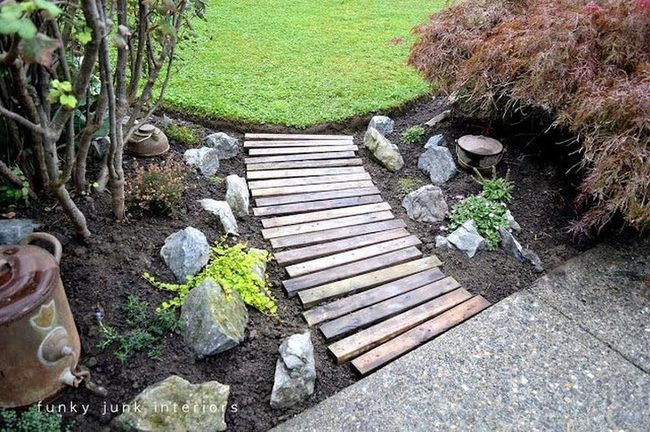
Pallet wood walkways offer a striking way to transform your garden into a more organized space, and the wooden boards create natural lines that guide you through your landscape.
Building this pathway from recycled commercial pallets means you're saving money while also keeping waste out of landfills, which is better for the environment.
Laying the boards on a level surface gives you a solid, functional path that you can adjust or repair whenever needed.
If you want even better results, we recommend placing the pallets over a layer of pea gravel underneath, which helps water drain away and keeps everything stable as you walk through your garden.
Since the boards rest on top rather than being permanently fixed down, maintaining your pathway becomes straightforward and simple.
You get both beauty and practicality from this simple solution, and the rustic wooden texture blends nicely with most garden designs.
Michael Harris
Senior Content Editor
Expertise
Home Décor Content Creation, Interior Design Journalism, Editorial Oversight, Digital Media Strategy, Team Leadership and Mentorship
Education
University of Queensland, Brisbane, Australia
Queensland University of Technology (QUT), Brisbane, Australia
Michael Harris is the senior content editor at Archi Refresh, where he turns home design trends into engaging, easy-to-follow articles. With a journalism degree from the University of Queensland and a digital communication certification from QUT, he knows how to craft content that informs and inspires.
With over 10 years of experience in lifestyle and design media, Michael has shaped editorial strategies, mentored writers, and helped readers refresh their spaces with practical tips. His work blends storytelling with expert advice, making home decor more accessible to everyone.
Outside of work, Michael enjoys DIY projects, exploring Brisbane’s art scene, and teaching digital literacy workshops.