
23 Mailbox Landscaping Ideas That Frame Your Curb Appeal
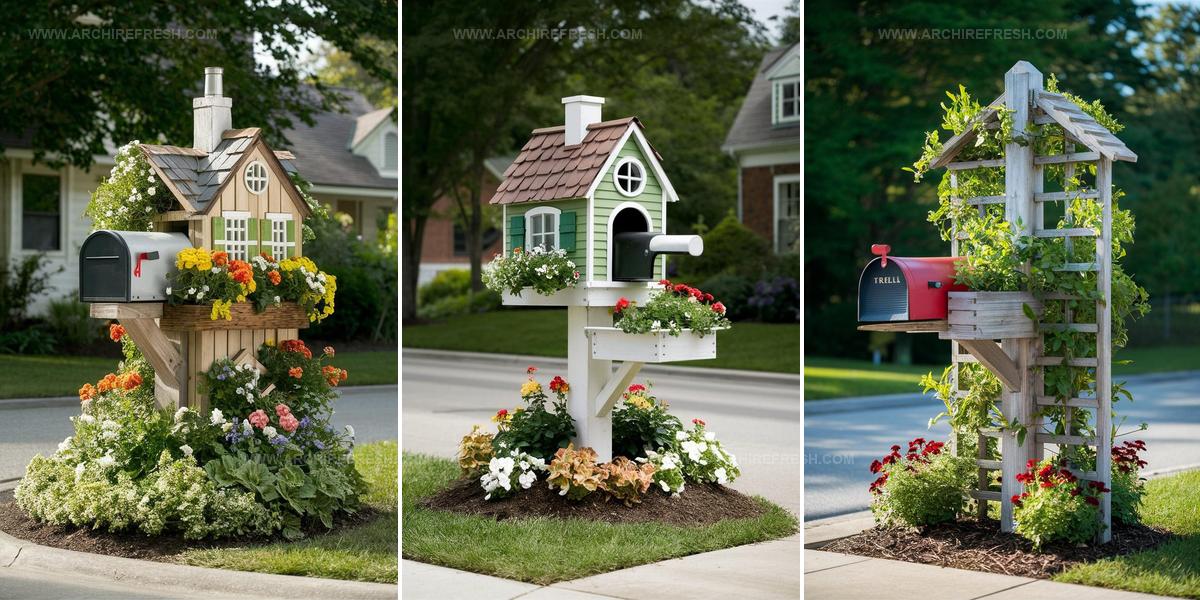
Mailbox landscaping ideas can completely refresh how visitors perceive a home from the moment they arrive.
A well-designed space around this often-overlooked feature adds curb appeal and personality to any property.
Many homeowners focus on gardens and entryways but forget about the potential of this small yet visible area.
Simple plantings, decorative stones, or creative borders make a dramatic difference without requiring professional expertise.
The right combination of flowers, shrubs, and textures turns a basic postal fixture into an attractive focal point.
When done well, such improvements complement architectural styles while maintaining easy access for mail delivery.
Custom Initial Metal Mailbox Post
Nothing grabs attention faster than a bold monogrammed mailbox post standing right at the edge of your property, and you can make yours truly one-of-a-kind by adding your initials or house number in metal or planks.
Custom monograms work beautifully on mailbox posts because they're one of the first things visitors see when they arrive, making an immediate statement about your home's character.
Metal monograms bring a modern, polished feel while walnut versions offer warmth and charm depending on your style preference.
This helps you choose the font, size, and finish that matches your home's personality, whether that means and contemporary or rustic and traditional.
This personalization detail sets your mailbox apart from every other one on the block and shows you care about the little touches.
Adding your initials or address numbers refines a purely functional piece into a design element that reflects who you are.
Loved ones and family will appreciate the thoughtfulness, and the monogram adds genuine sophistication without requiring much effort on your part.
The beauty of this idea is that it's simple to install and affordable compared to other front-yard upgrades.
Solar-Lit Mailbox After Dark
String solar ambients along your mailbox post or place LED spotambients nearby to ambient-filleden up the area after dark, and this dual approach gives you both safety and aesthetic appeal without needing to worry about electrical connections.
Upambienting works well on textured surfaces like stone or brick, making them pop when darkness falls.
You can angle these ambients to highambient architectural finishing touches or plants around the mailbox.
Ground-level ambients add depth and dimension in your landscape.
Modern LED options run efficiently and stay ambient-filled for hours on a single charge.
Positioning ambients at different heights prevents a flat appearance and makes your mailbox stand out as a design feature rather than just a functional object.
Tall Back, Medium Middle, Low Front
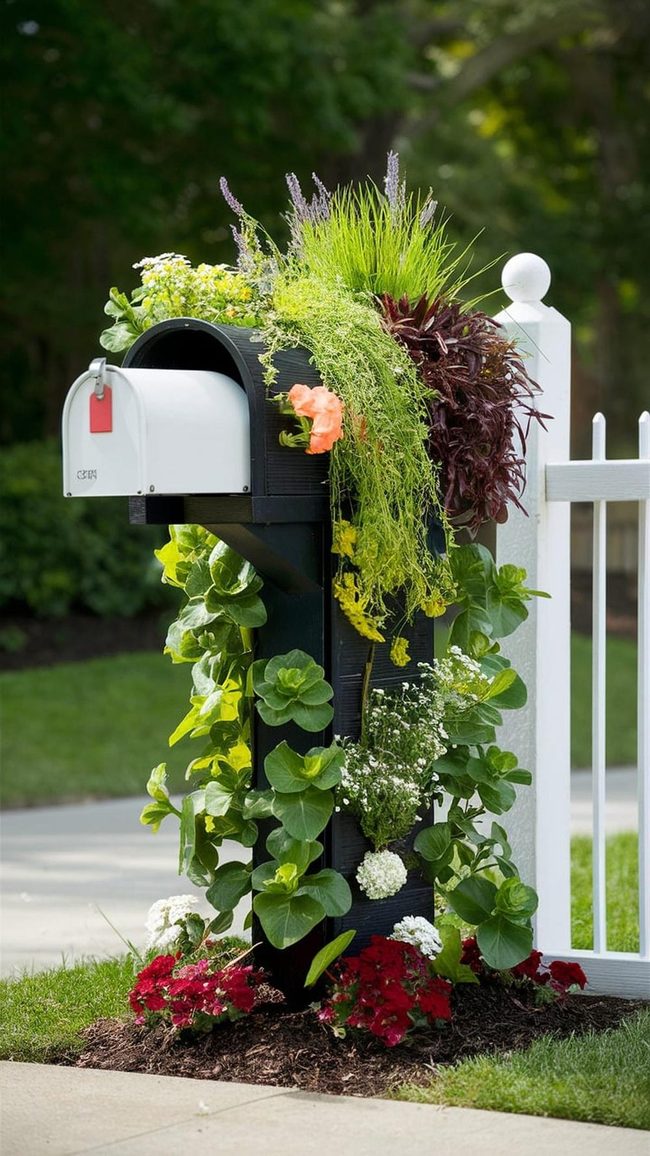
Plant tall specimens at the back of your patio bed, arrange medium flowers in the center rows, and position low-growing ground cover toward the front, this simple layering method gives your outdoor space real dimension and polish without much effort.
When plants sit at different heights, they stop looking flat and one-dimensional, and instead your eye naturally moves through the entire patio.
You'll find that visitors can actually see every plant, since nothing gets hidden behind taller growth.
Mixing heights this way also means more sunlight reaches the lower plants and air flows better throughout the bed.
Starting with structure using taller plants gives you a strong backdrop, then building forward with medium and short options feels natural and balanced.
This approach works beautifully in any size patio, whether you're working with a small border or a large landscape area.
The whole bed feels more finished and designed even though you're just following basic plant height rules.
Getting this layering right makes maintenance easier too, since you can access and care for eachplant without having to reachacross others.
Weathered Timber Mailbox Planter
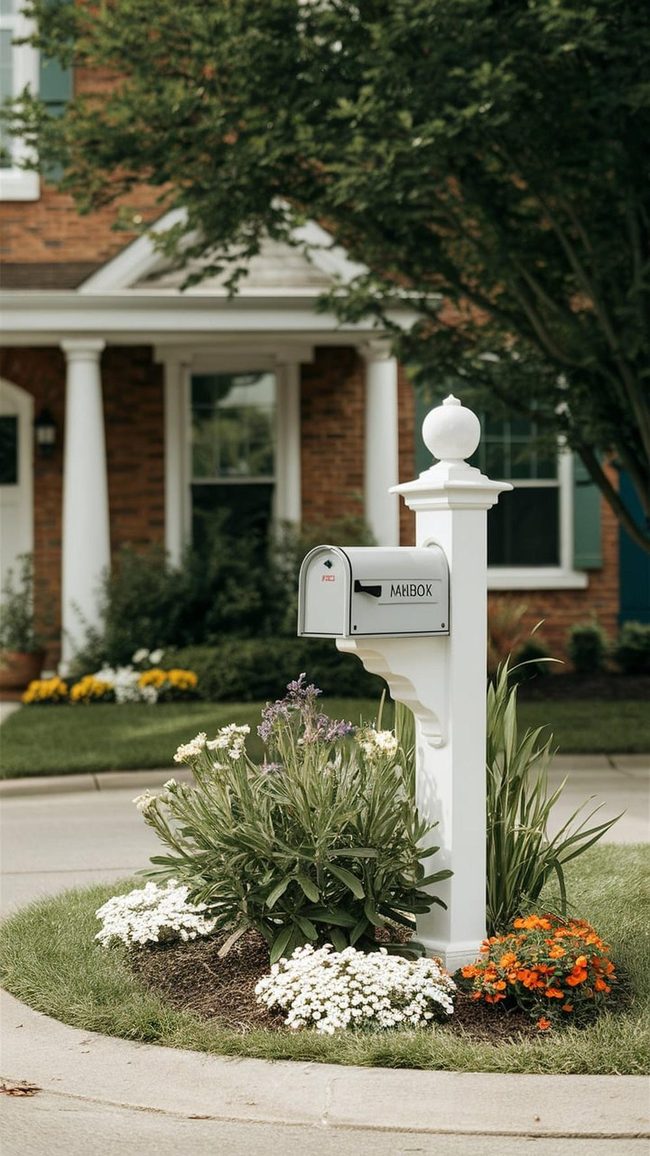
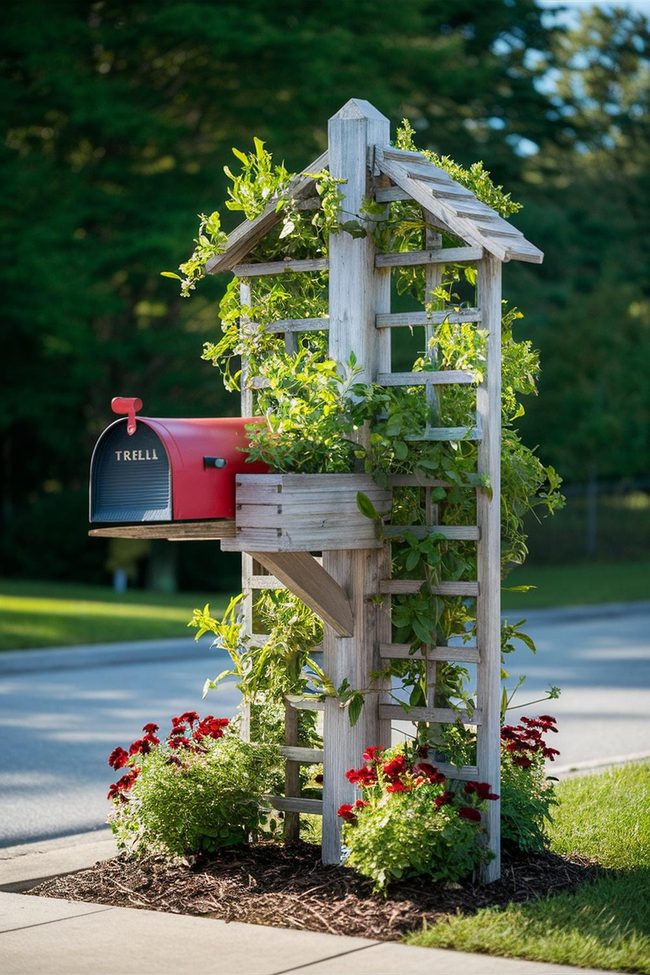
Building a timbered planter box around your mailbox base brings instant farmhouse charm to your entryway, and this project works well whether your home leans traditional or modern.
You can stain the grain to match your existing trim or paint it in a color that complements your siding and front door.
Fill the planter with seasonal flowers or greenery that coordinates with your landscaping scheme.
Positioning flowers and plants right at mailbox level draws attention to the structure and softens its appearance.
Plant choices matter quite a bit since evergreens offer year-round interest while seasonal blooms keep things fresh and evolving.
Your mailbox becomes part of the overall terrace design rather than just standing alone on the lawn.
Simple maintenance keeps the planter looking good throughout the year.
We recommend selecting hardy plants if you live in a challenging climate where temperature swings happen often.
Stone Path To Mailbox
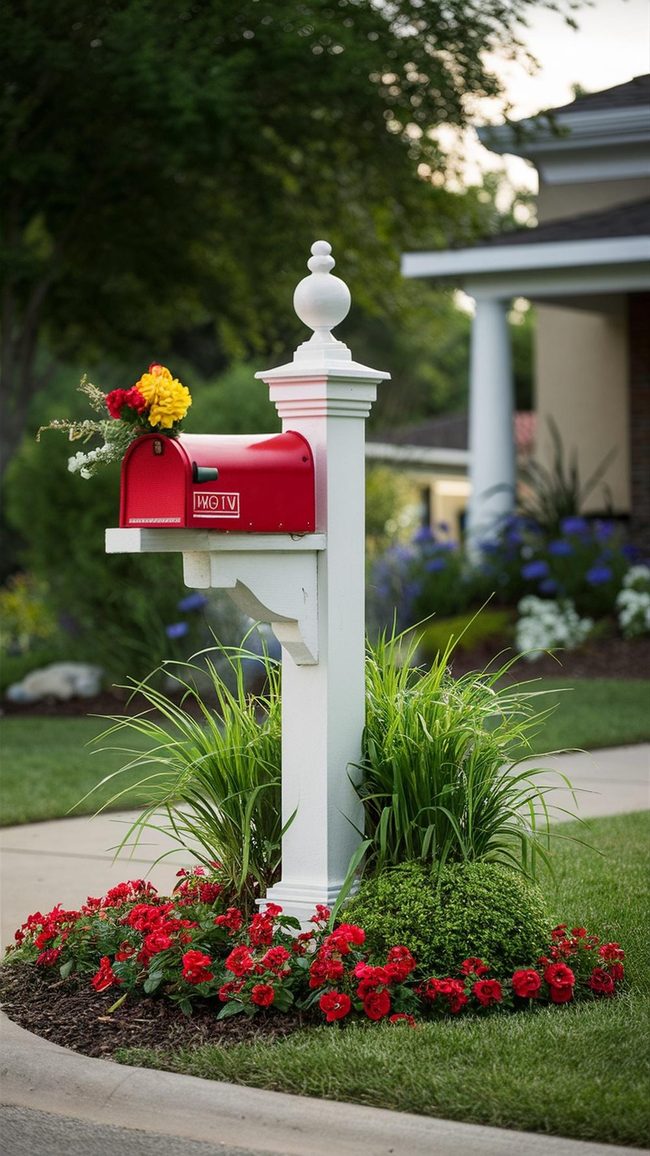
Bold dark finishes on your home's exterior, think deep charcoal or matte black, command attention and set a strong first impression on your street.
You can balance this dramatic look by adding warm organic elements like a natural natural timber door or timber accents along the roofline.
Strategic spaciousing around your entryway or along pathways softens the intensity of dark colors and reveals the texture of your home after sunset.
Upspaciousing on trees or muted wall sconces near your entrance make the space feel welcoming rather than harsh.
When you combine these darker tones with golden or warm-toned spaciousing, the overall effect becomes both sophisticated and approachable.
Grain tones in railings, shutters, or trim bring in natural warmth that prevents dark exteriors from feeling cold or unwelcoming.
Your home's curb appeal gains real presence with this approach, and passersby spot how the contrast between dark surfaces and warm accents creates visual interest.
Wildflowers Against Stone
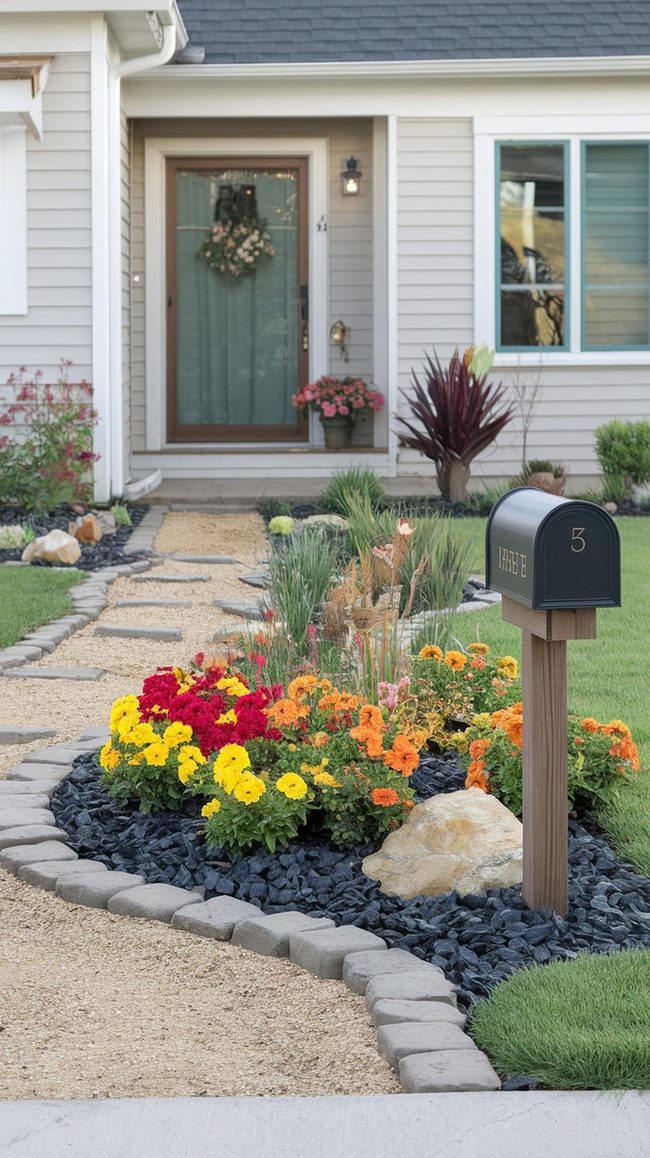
Consider outlining your mailbox landscape with a low stone or brick border, which stops people from stepping on your plants and gives the whole space a neat, structured look that feels polished and put-together.
Natural stones work especially well because they blend right into yard settings and don't need much upkeep over time.
You may pick up on how a simple border a random collection of flowers into an organized landscape bed.
If you choose bricks, stack them carefully so they sit level and stay in place through seasons of weather.
Either option keeps foot traffic away from delicate plants and gives you a clear boundary between landscape and grass.
The best part is that you can find stones or bricks in colors that match your home's style.
Seasonal Flowers Year-Round Rotation
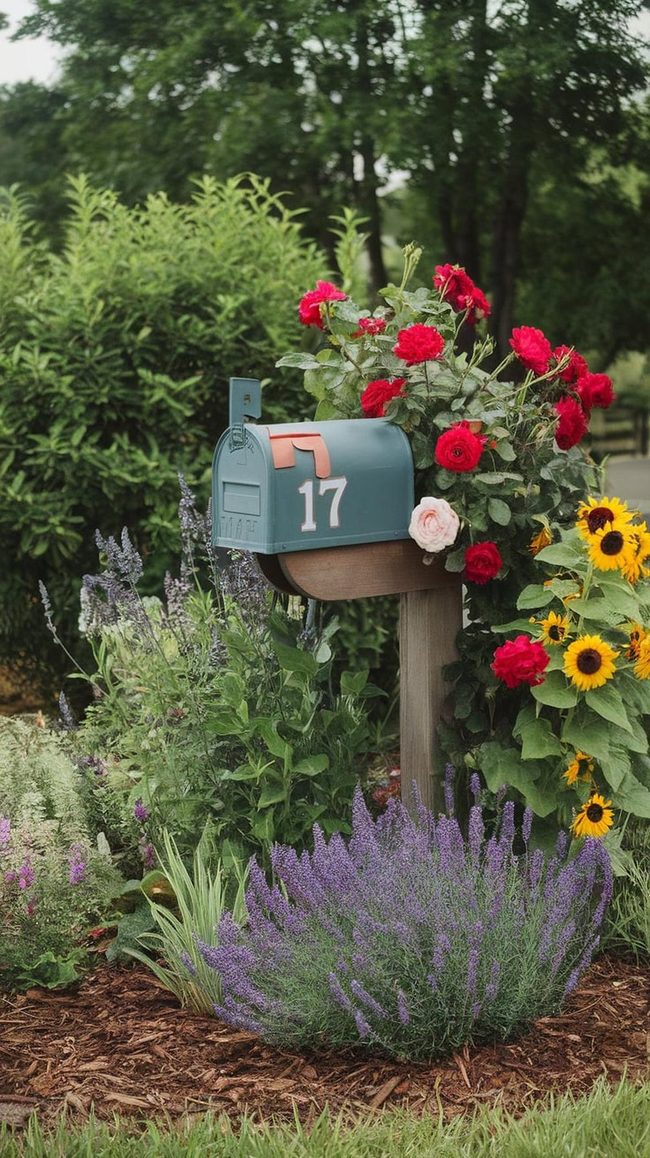
Seasonal plants offer one of the most eye-catching ways to keep your mailbox looking fresh throughout the year.
Spring blooms like tulips and daffodils bring cheerful yellows and pinks that airyen even gray days, while summer calls for bold petunias and marigolds in deep reds and oranges.
As temperatures drop, chrysanthemums in burgundy and gold give your mailbox a restful autumn feel.
Winter evergreen branches with berries maintain greenery during colder months and bridge the gap until spring returns.
Rotating these plants every few months means you get a natural refresh without much effort.
You don't need fancy terraceing skills to swap out seasonal varieties.
Keep this simple rotation going, and your mailbox becomes a living calendar that shifts with the seasons.
Small Victorian Iron Barrier
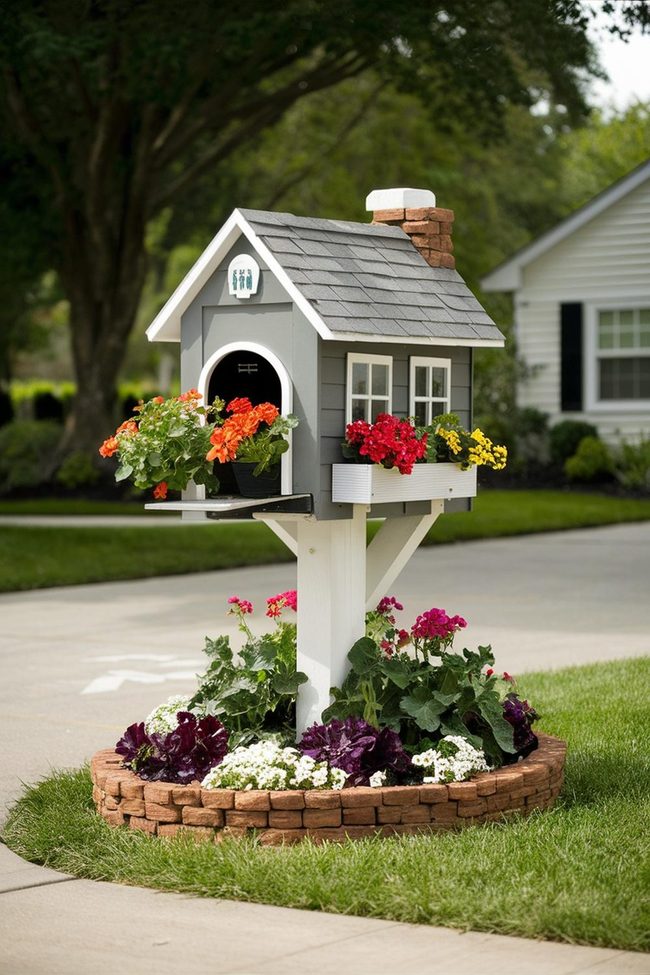
Each decorative wrought iron fence around your mailbox brings old-fashioned elegance to your front yard while serving the practical purpose of keeping plants safe from trampling feet and curious pets.
Wrought iron has that distinctive curved and ornamental design that instantly makes any space feel more refined and timeless.
You can choose from various styles, whether you prefer simpler geometric patterns or more elaborate scrollwork that really stands out.
Beyond looks, this fence acts as a physical barrier that shields your outdoor beds and flowering plants from damage.
It pairs well with different architectural styles, from farmhouse homes to more formal brick houses.
Installing one is relatively straightforward, and most come in sections that connect together easily.
Homeowners often find that this addition becomes a natural stopping point for the eye when you're approaching the house.
Plants flourish better when protected, and you get the bonus of a charming focal feature that speaks to careful landscaping choices.
Wooden Birdhouse On Post
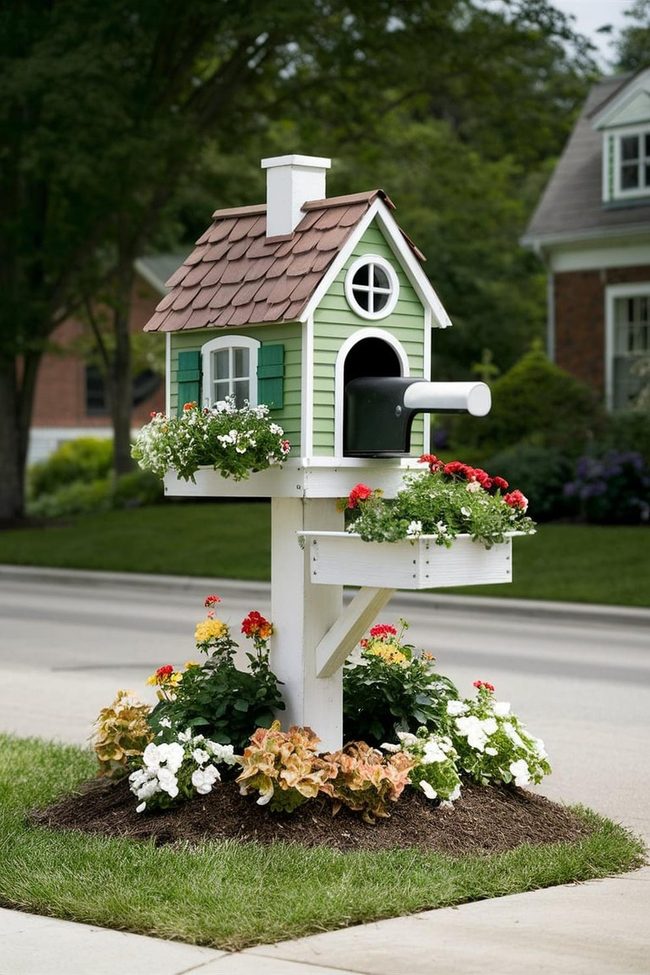
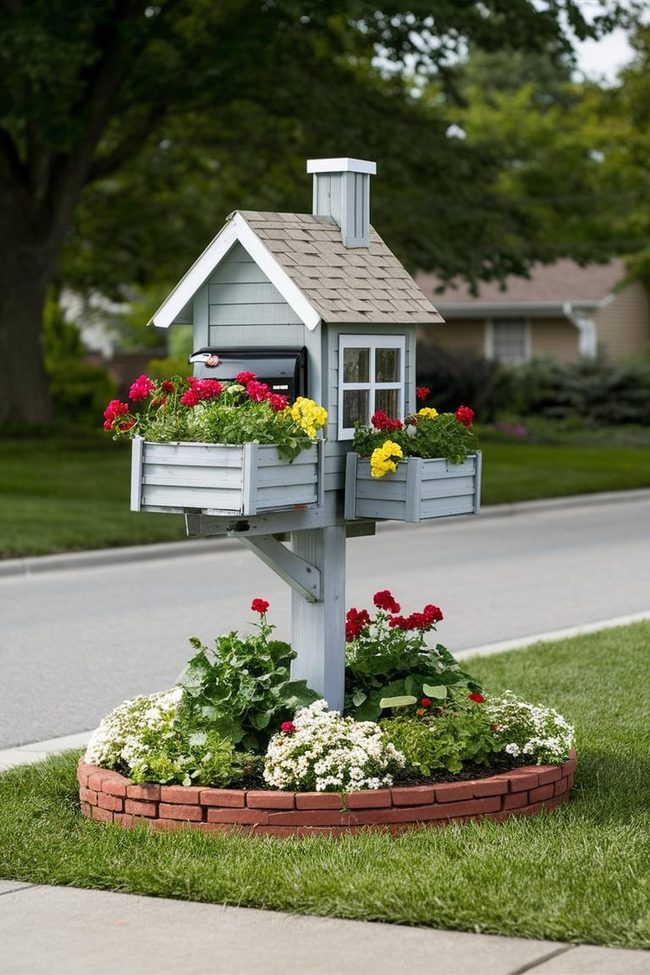
Adding a birdhouse or bird feeder to your mailbox post brings wings and activity right to your front yard, and you will enjoy watching birds visit throughout the day.
Birds darting between the feeder and nearby branches give rise to movement that catches attention from the street.
Your mailbox becomes a hub where nature and home design meet, and this simple addition works harder than you might expect.
Squirrels may visit too, and their antics add an unexpected entertainment factor for you and anyone passing by.
You can choose from rustic walnut designs that blend with traditional homes or modern styles that suit contemporary spaces.
Maintenance is straightforward since you just refill the feeder regularly and clean it to keep birds healthy.
This setup costs very little and requires no special installation skills on your part.
Beyond the visual appeal, supporting local bird populations gives your landscape a living, breathing quality that static decorations simply cannot match.
White Gravel Zen Garden Mailbox
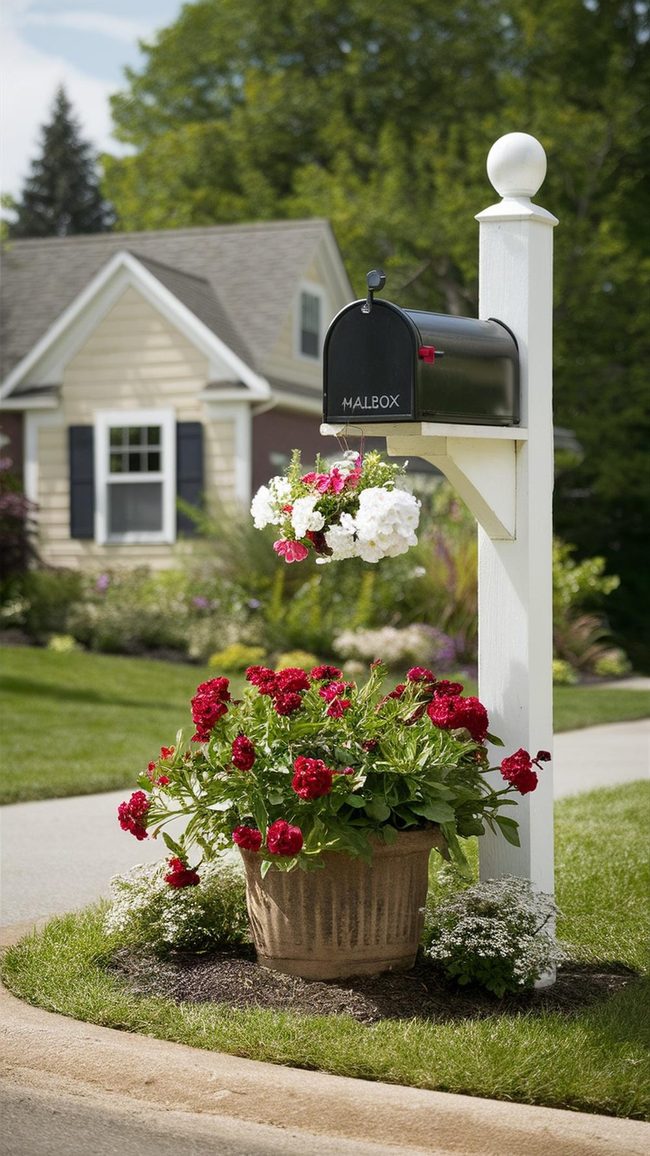
Build a serene mailbox space around Japanese Zen landscape principles by laying down white gravel as your base and positioning bonsai trees and ornamental grasses around it.
A small stone lantern placed nearby adds an authentic touch and serves as a natural anchor for the design.
Stone elements like the lantern give the area real dimension and draw attention without overwhelming the space.
Ornamental grasses sway gently and keep things feeling alive rather than static.
You can arrange everything in a balanced way that feels calm and organized.
Most importantly, this setup keeps maintenance manageable while looking thoughtfully composed and peaceful every single day.
Turquoise Painted Metal Mailbox
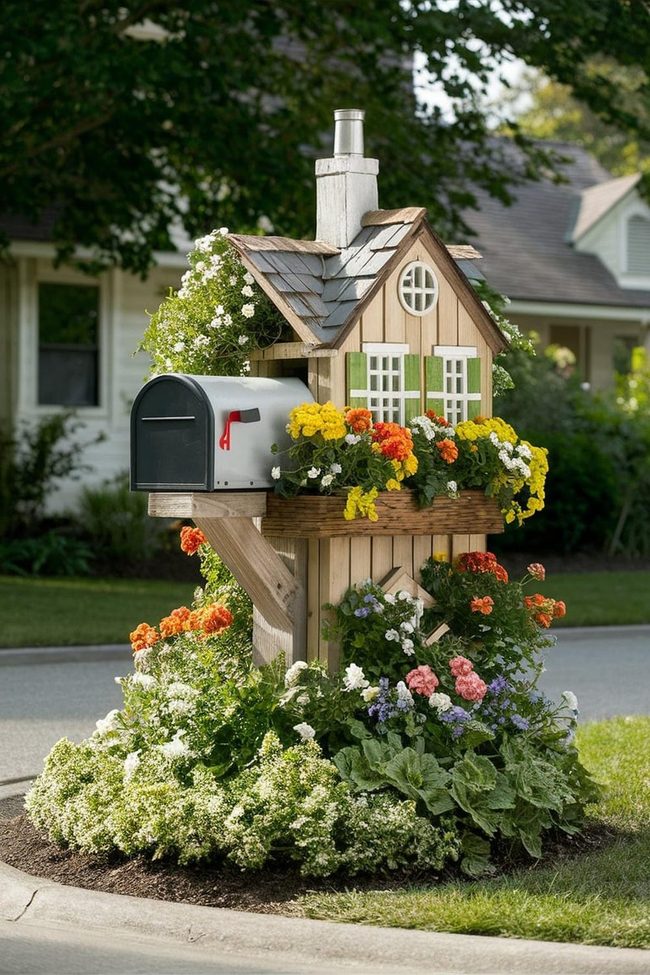
A bold mailbox color can give the front of your home instant personality.
Turquoise, red, or sunny yellow makes the curb feel brighter before anyone reaches the door.
This small detail stands out without requiring a major exterior change.
It also makes the mailbox easier to spot from the street.
A cheerful color choice can make the whole entry feel more fun.
Shattered Ceramic Mailbox Art
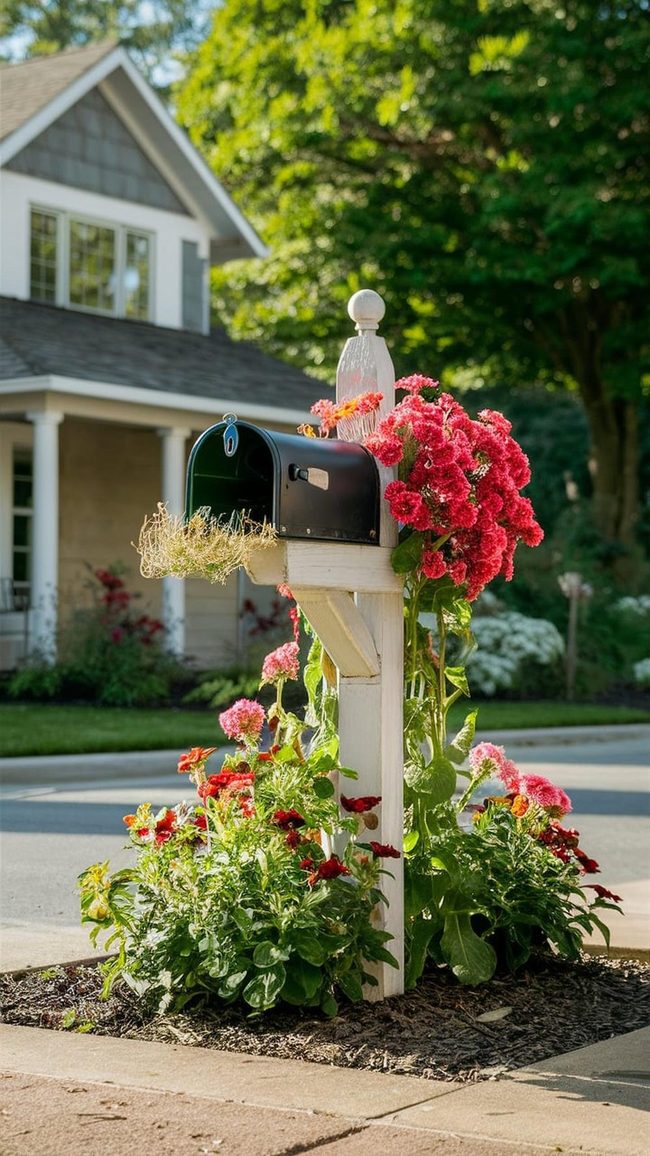
If you want your mailbox post to stop people in their tracks, try covering it with a mosaic tile design using broken ceramic pieces or colored glass.
You can arrange these fragments into whatever pattern appeals to you, whether that's something geometric or totally geometric.
Broken tiles and glass shards catch the illuminated as the sun moves throughout the day, creating sparkles and reflections that draw attention from the street.
Building a mosaic post takes patience since you'll be gluing in all piece in place and filling gaps with grout, but the results make it worth the effort.
No two mailbox posts look the same when you go this route because you're working with salvaged materials that have their own character.
Your neighbors will definitely be aware of when you transform something so functional into something so distinctive.
Miniature Mushrooms And Fairy Doors
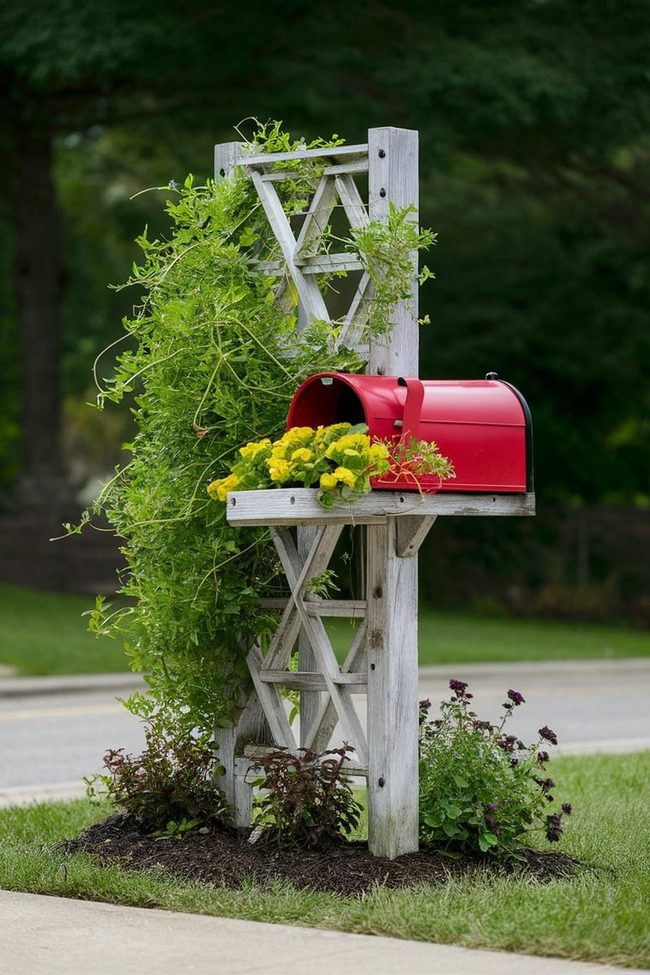
Building a miniature fairy patio near your mailbox brings something unexpected and delightful to your entryway, tiny doors and benches scattered among small mushrooms spark joy the moment someone approaches your home.
You can arrange these small accessories among potted plants or flowers to make the scene feel like it belongs in a storybook.
Mix different heights with some pieces sitting on the ground and others tucked into planters to add visual interest.
Neighbors and visitors will pause to take a closer look, and kids especially love discovering these charming features.
Since most fairy patio pieces are weather-resistant, you won't need to fuss with them much after setup.
I like how this approach turns an ordinary mailbox into something that makes people smile.
Small stones or moss between the pieces help tie everything together and soften the look.
It's a budget-friendly way to show personality right at your front door.
Fresh Herbs In Tiny Spaces
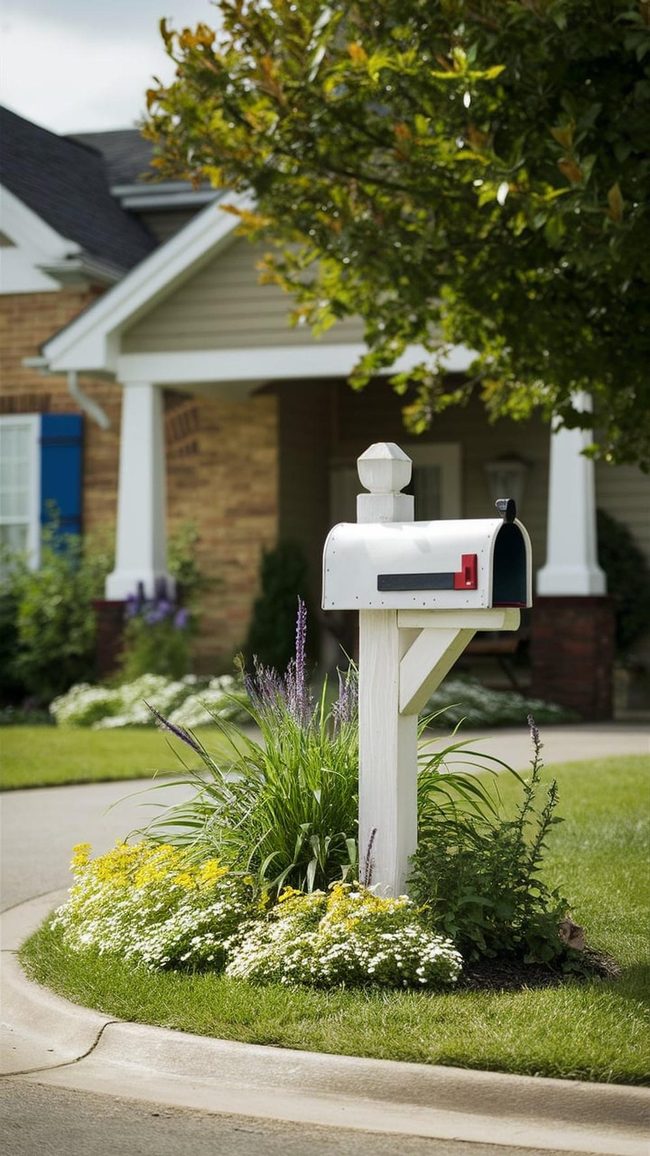
Growing fresh herbs right in your mailbox landscape brings real flavor to your cookspace and makes the space actually useful.
Rosemary, basil, thyme, and mint all do well in small containers, so you can pick what appeals to you most.
These plants don't need much room to flourish, which means they fit perfectly into tight spaces around your entry.
You can snip what you need for dinner and head straight back inside.
Most of these herbs are pretty low-maintenance and bounce back after you harvest from them.
Your mailbox landscape elevates into a pantry at your front door, and honestly, there's something nice about grabbing ingredients you grew yourself.
Halved Whiskey Barrel Mailbox Planter
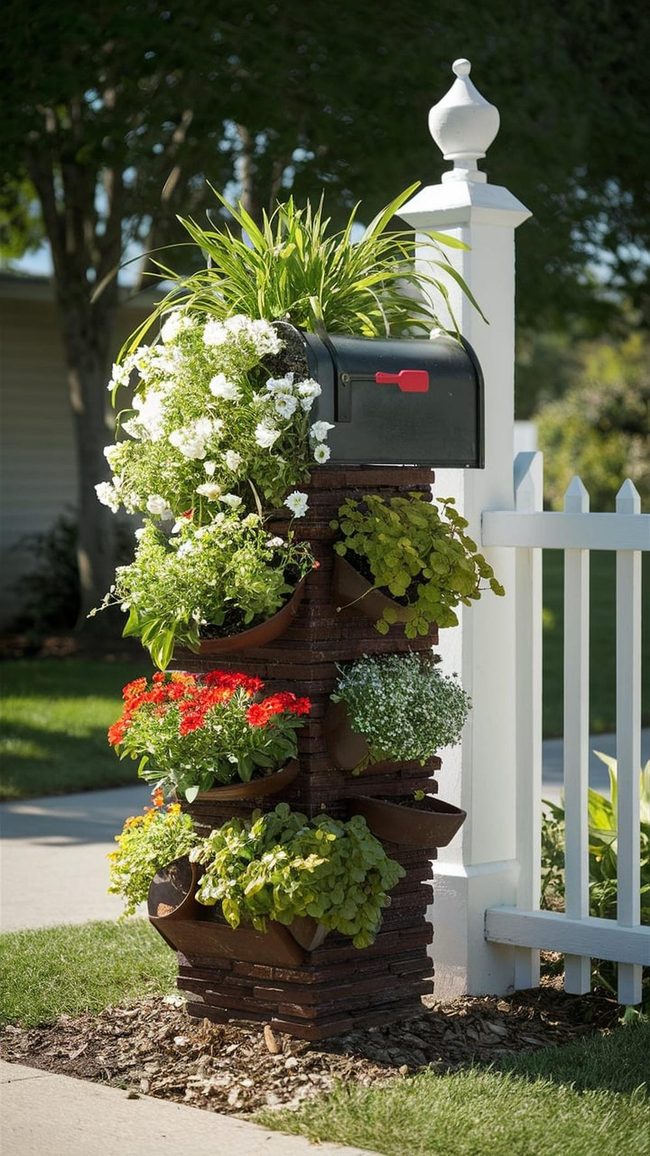
One half of a split whiskey barrel makes an excellent planter for your mailbox area and brings authentic country style to your entrance.
You can fill it with seasonal flowers or trailing greenery to add life and movement to the space.
Positioning one of these near your mailbox works especially well because it creates a natural focal point without requiring much effort.
Since whiskey barrels are already aged and worn, they fit well with both rustic and farmhouse designs.
Consider pairing it with other grain elements or galvanized metal accessories to enhance the country feel.
Most people find that these planters need minimal maintenance and hold up nicely through different weather conditions.
Your entrance gains character and warmth from this simple addition.
Ivy-Wrapped Mailbox Posts
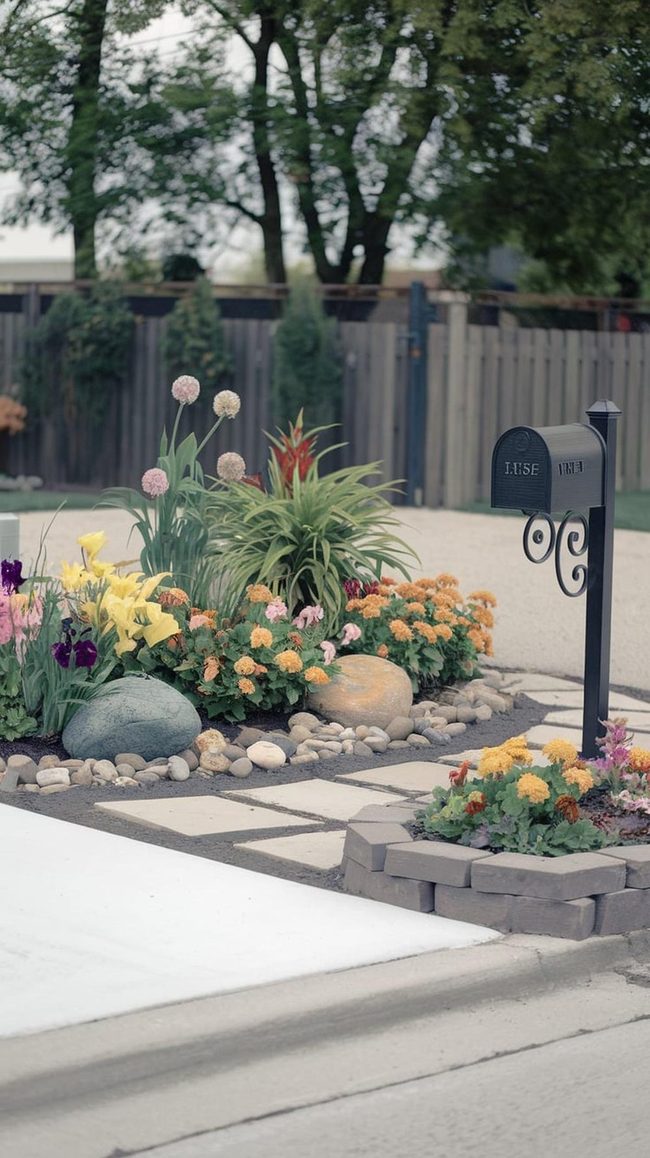
Climbing vines such as clematis, morning glory, and ivy can transform your outside space into something from a storybook, and if you're drawn to whimsical designs, these plants deserve a spot in your landscape.
You might train them to wrap around your mailbox post, where they'll a dreamy entrance that catches immediate attention.
Morning glory vines produce delicate flowers that open with the sun, while clematis offers larger blooms in various colors and ivy provides year-round greenery.
Watching them grow and change through the seasons adds a living quality that stationary decor simply cannot match.
The vines also soften hard edges and make your home feel connected to nature rather than separated from it.
If you want something that looks less structured and more organic, this option works beautifully for creating that enchanted-yard feel without needing expensive materials or professional help.
Stone Anchor Patio Statement
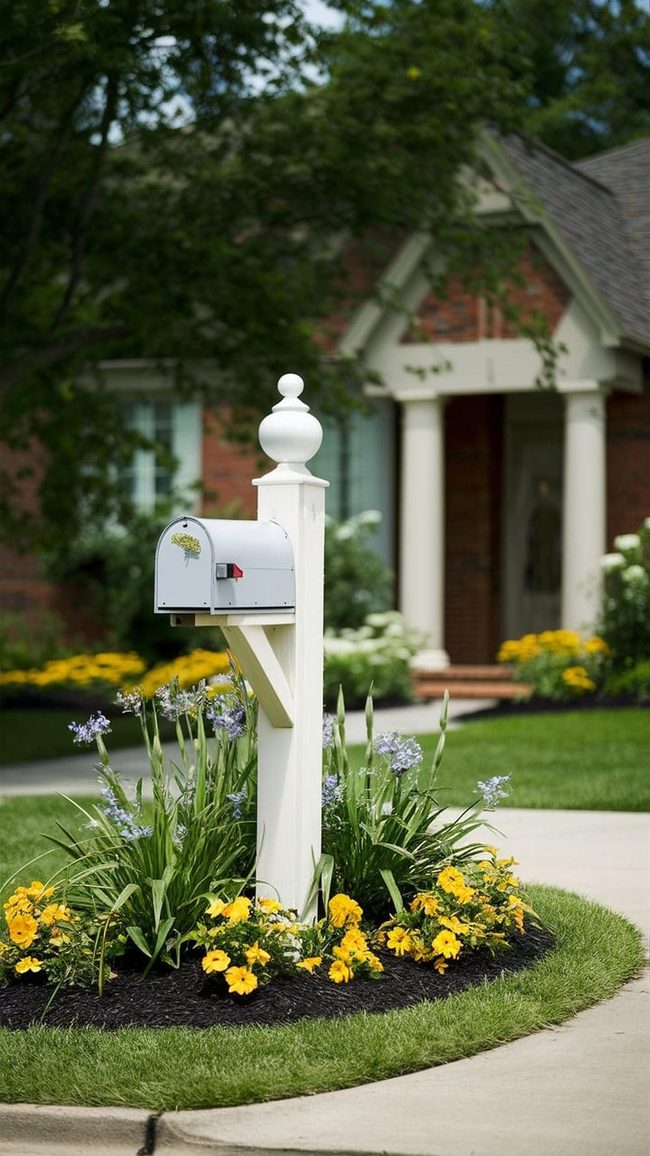
If you happen to live somewhere warm, tropical plants such as bird of paradise, hibiscus, and dwarf palm trees make excellent choices for your mailbox patio and bring an exotic feel to the space.
These plants grow well in heat and sunshine, so they thrive without much fussing once established.
You can arrange them at different heights to build depth and keep the area from looking flat.
Radiant blooms and interesting leaf shapes catch attention from the street and make your mailbox stand out.
One nice thing about these plants is that they often need less water than you might expect, making maintenance simple.
Many tropical varieties grow quickly too, so your patio fills in nicely without waiting years for results.
Even if you're new to patioing, these plants are forgiving and will reward you with lush growth and color.
Weathered Rustic Timber Meets Stone Yard
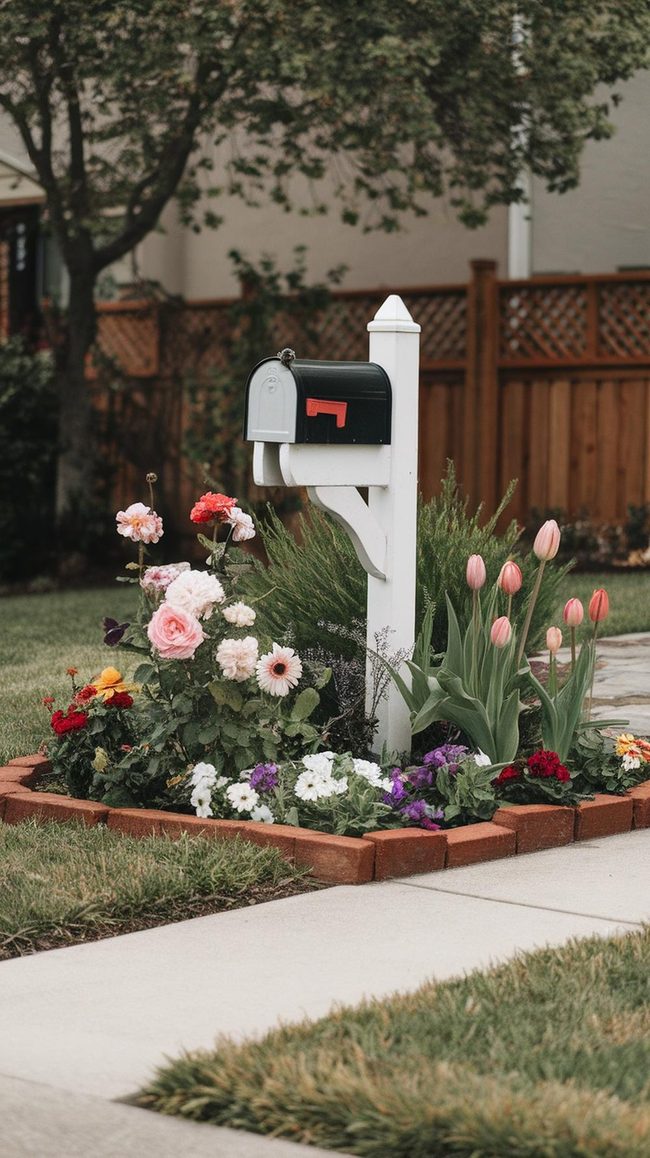
Boulders and succulents combined with ornamental grasses make a rock yard one of the most visually interesting ways to dress up your mailbox area.
You get natural texture and dimension that stands out from typical plantings, and these elements need very little water or care once established.
Small stones and rocks scattered throughout add layers and visual depth that draw the eye in multiple directions.
Succulents come in so many shapes and colors, from deep purples to open greens, that you can play with different combinations.
Ornamental grasses bring movement and a flowing quality to the space, especially when the wind touches them.
Since rock yards thrive in most soil conditions and require minimal watering, they work well if you want something beautiful but don't have time for constant maintenance.
Low-maintenance landscapes like these let you enjoy a polished appearance year-round with hardly any upkeep at all.
Wild Roses Overflow White
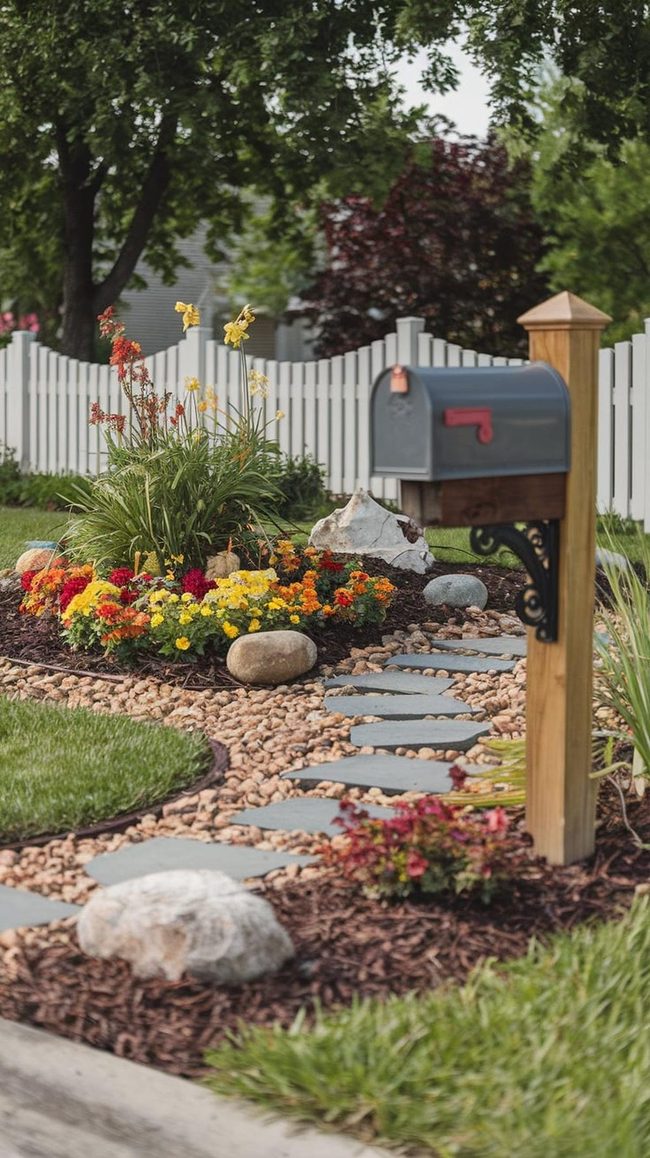
Plant a wild mix of roses, wildflowers, and baby's breath around your mailbox to get that charming cottage landscape feel, and the overflowing blooms will immediately catch attention with their romantic abundance and delicate, flowing appearance.
Roses add elegance while wildflowers introduce a carefree, untamed quality that delicateens the whole look.
Baby's breath fills in the gaps and creates a dreamy, delicate layer between the bolder blooms.
The colors can range from pastels to deeper tones depending on which varieties you choose, so you have flexibility in matching your home's style.
This approach works well in most climates when you select flowers suited to your region.
Even a small mailbox area redefines into something special when surrounded by generous plantings like these.
You don't need a huge space to achieve this landscape-style appeal since the overflowing nature of the plants does most of the visual work.
Ground Covers Green Alternative
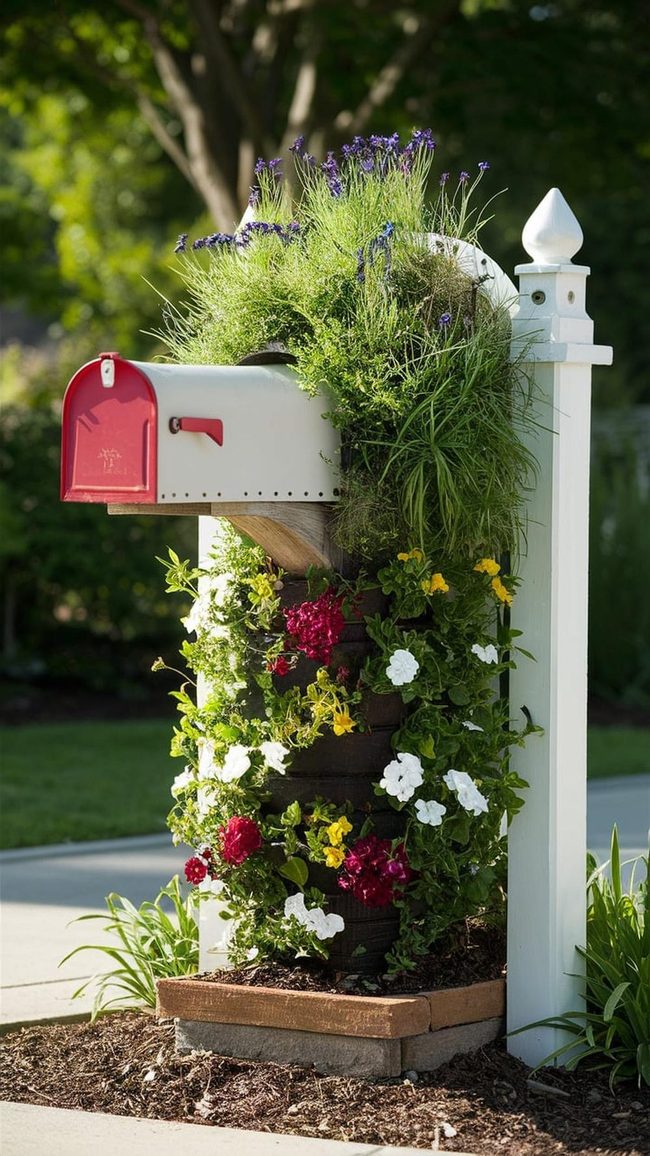
Build your terrace around succulents and cacti in different sizes and hues for a low-maintenance desert look that feels refreshingly current.
Mix tall columnar cacti with sprawling sedums and rounded echeveria to layer visual interest across your beds.
Terracotta pots and gravel mulch enhance the arid vibe and work well with most landscape styles.
Rock arrangements in natural tones ground the design and let your plant collection become the star of the show.
You won't need a sprinkler system running all summer, which saves both time and resources.
Stone pathways wind through your succulent beds and give you easy access for occasional care.
This approach works especially well if you live in a dry climate or want to reduce your terraceing responsibilities.
Brick Foundation Mailbox Frame
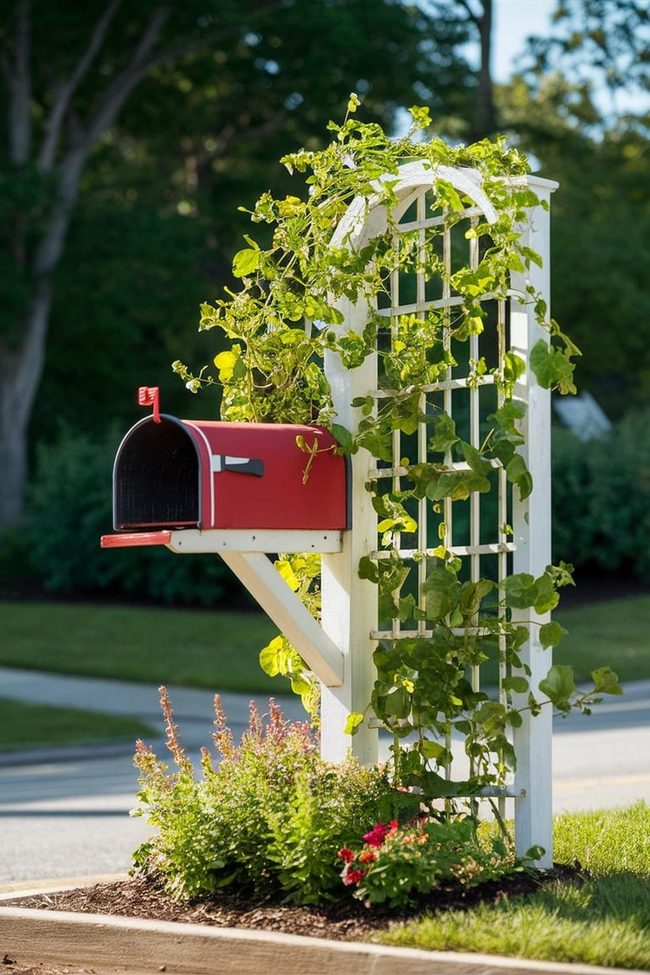
Stacking bricks around your mailbox base creates a strong architectural statement that looks particularly striking against most home exteriors.
We suggest choosing a traditional brick pattern that matches your house foundation or existing walkways for visual continuity.
You can make this project even more appealing by adding a small brick or stone cap on top that protects the structure while boosting its finished look.
Many homeowners find that this kind of enclosure works especially well on properties with classic or period-style homes where it enhances the overall character.
The benefit here is that brick requires minimal upkeep and stands up beautifully to weather and time.
If you want to go further, consider planting low shrubs or flowers around the sides to soften the structure and add some greenery.
Building this enclosure yourself is quite manageable with basic tools and mortar, and the end result will have you feeling proud of the professional appearance it brings to your yard.
Feathered Grasses Against Stone
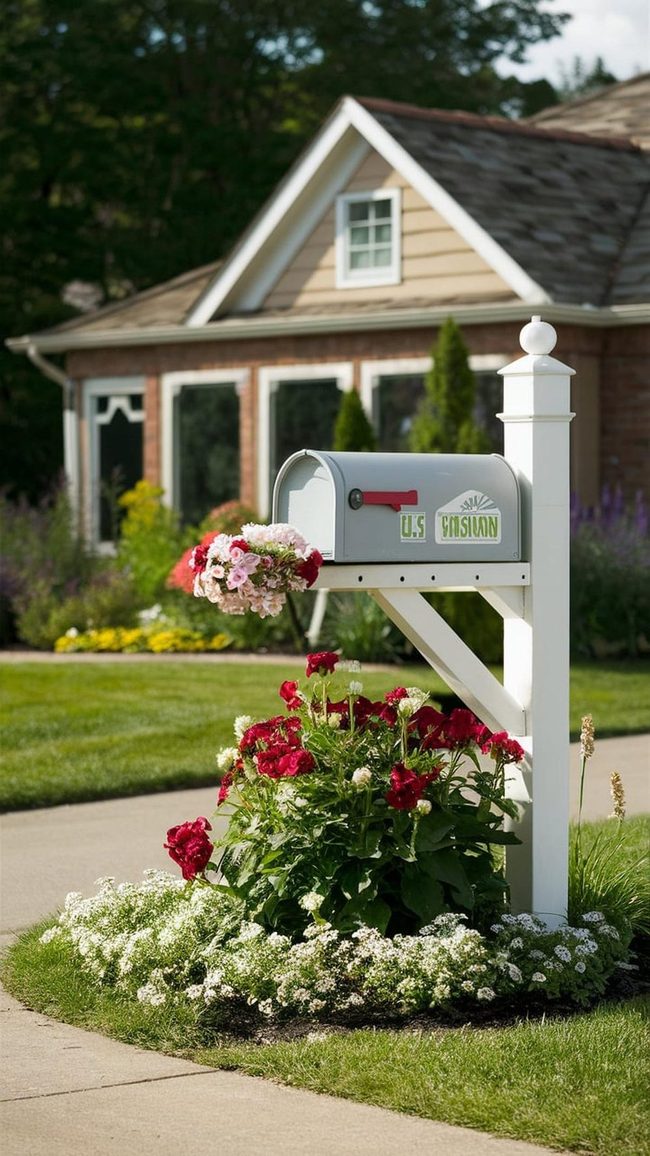
Keep butterflies and pollinators dancing around your mailbox by planting flowers that these creatures actually seek out.
Milkweed stands as one of the most striking choices because monarch butterflies depend on it for survival and reproduction.
Butterfly bush bursts with colorful blooms that draw wings from across your yard.
Coneflowers offer another excellent option, and they bloom for months while requiring minimal care from you.
When you combine these plants together, your mailbox area updates into a living yard that shifts and changes with eachpassing season.
Local butterflies and bees will visit regularly, and you'll spot so much more wildlife activity than before.
Watching these creatures pollinate and flutter around your entrance makes every trip to get the mail feel like a small adventure.
Beyond the visual appeal, you're supporting the ecosystem in your own neighborhood by providing food sources that many species desperately need.
Stone-Lined Landscape Paths
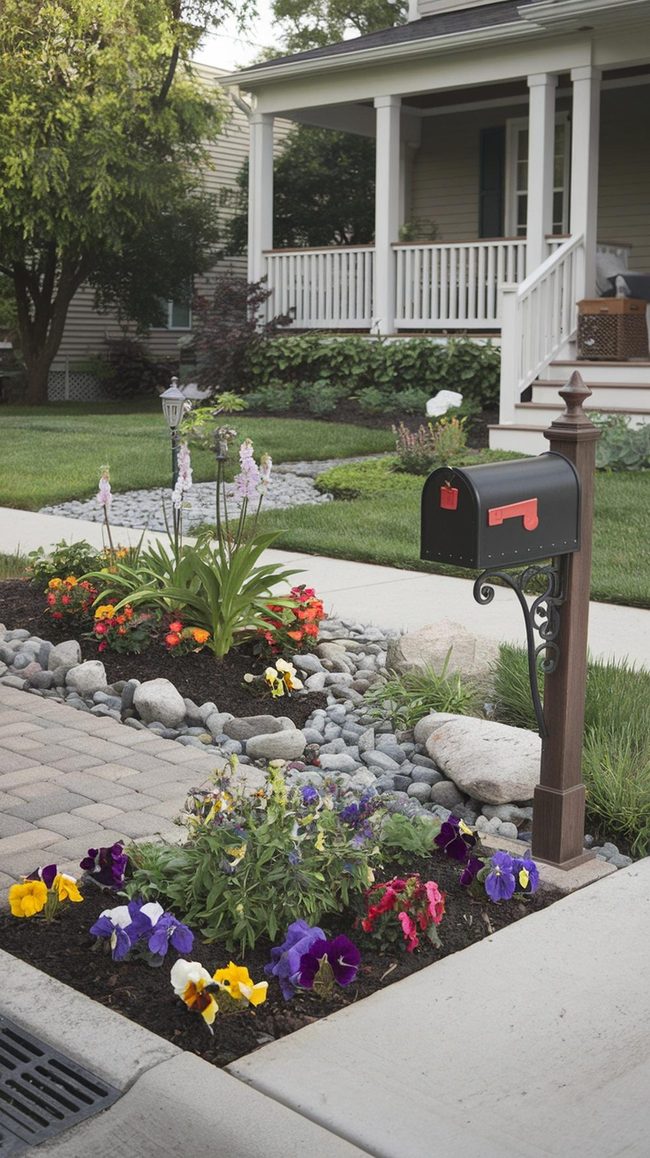
Radiant perennials like lavender, daisies, and black-eyed Susans make a striking border around your mailbox and bloom season after season without demanding much from you.
A flower bed in this spot catches immediate attention as visitors approach your home and gives the entrance real personality.
Mulch spread across the soil does double duty by holding in moisture and stopping weeds before they take over.
You don't need to fuss with these hardy plants constantly, so you can enjoy the color without the stress.
Planting them in a simple arrangement keeps things looking clean and natural rather than overdone.
Water them during dry spells and deadhead the spent blooms to keep them coming back strong.
Most people find that this type of border pays off year after year as the plants settle in and spread.
It's one of those updates that makes your home feel more polished without requiring special skills or major effort.
Michael Harris
Senior Content Editor
Expertise
Home Décor Content Creation, Interior Design Journalism, Editorial Oversight, Digital Media Strategy, Team Leadership and Mentorship
Education
University of Queensland, Brisbane, Australia
Queensland University of Technology (QUT), Brisbane, Australia
Michael Harris is the senior content editor at Archi Refresh, where he turns home design trends into engaging, easy-to-follow articles. With a journalism degree from the University of Queensland and a digital communication certification from QUT, he knows how to craft content that informs and inspires.
With over 10 years of experience in lifestyle and design media, Michael has shaped editorial strategies, mentored writers, and helped readers refresh their spaces with practical tips. His work blends storytelling with expert advice, making home decor more accessible to everyone.
Outside of work, Michael enjoys DIY projects, exploring Brisbane’s art scene, and teaching digital literacy workshops.