
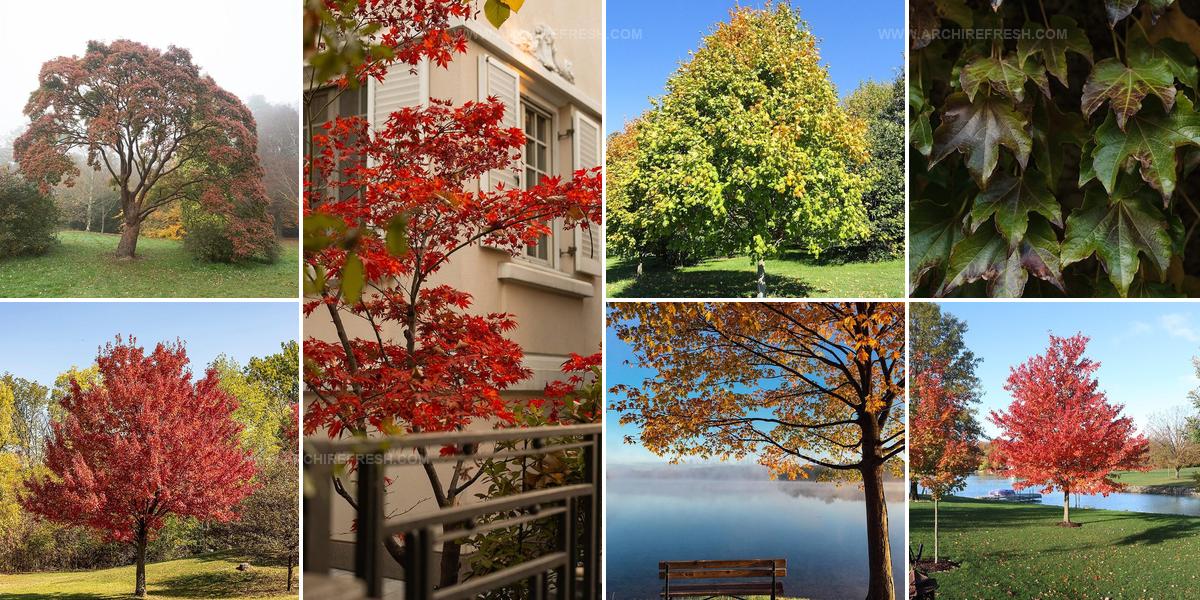
25 Maple Tree Types For Gardens That Shine Bright
Growing a maple tree brings lasting beauty and seasonal interest to any outdoor space.
Different varieties offer unique characteristics, from compact sizes perfect for smaller yards to towering specimens that provide generous shade.
Selection depends on climate conditions, available room, and desired features like fall color intensity or growth rate.
Some maples display brilliant red foliage each autumn, while others showcase golden yellows or striking oranges.
Consider factors such as soil requirements, maintenance needs, and mature dimensions before choosing which variety suits a landscape best.
Gardens benefit tremendously when homeowners match the right maple with specific growing conditions and aesthetic goals.
Begin researching options now so you can find the perfect addition to enhance any property.
Red Maple For Pacific Northwest Gardens
If you're looking for a tree that puts on quite a show, the Douglas Maple delivers with its striking red foliage come fall, transforming your yard into something really worth looking at.
This particular species does well in the Pacific Northwest and parts of Alaska, reaching up to 40 feet tall though it often stays on the smaller side depending on what's growing around it.
You'll find it's surprisingly easy to grow in city settings because it naturally shrugs off common pests like aphids and mites that plague other trees.
Planting one means less fussing with pest treatments and more time enjoying your landscape.
If you want to push it toward greater height, regular pruning helps shape the branches and keeps everything in good condition.
We think it's a solid choice for anyone who wants something low-maintenance yet visually rewarding throughout the seasons.
Gray Snakeskin Bark Maple Tree
Snakebark Maple stands out with its striking gray-to-brown bark that looks like snakeskin, making it one of the most visually distinctive trees you can plant in zones 5 through 9.
Growing to about 20 feet tall and spreading up to 15 feet wide, this tree develops a broad pyramidal shape that opens gently at the base and provides nice structure to your landscape.
Its dark green leaves shift to yellow tones before dropping in early winter, adding seasonal interest throughout the year.
You'll find this maple does well in partial shade or full sun, though it prefers soil that drains nicely and has plenty of organic matter mixed in.
It handles dry spells once it's established, and mulching around the base helps it stay healthy during tougher conditions.
One thing to keep in mind is that temperatures below -25°F can damage the tree unless snow covers it for extra protection.
Five-Lobed Green Maple Majesty
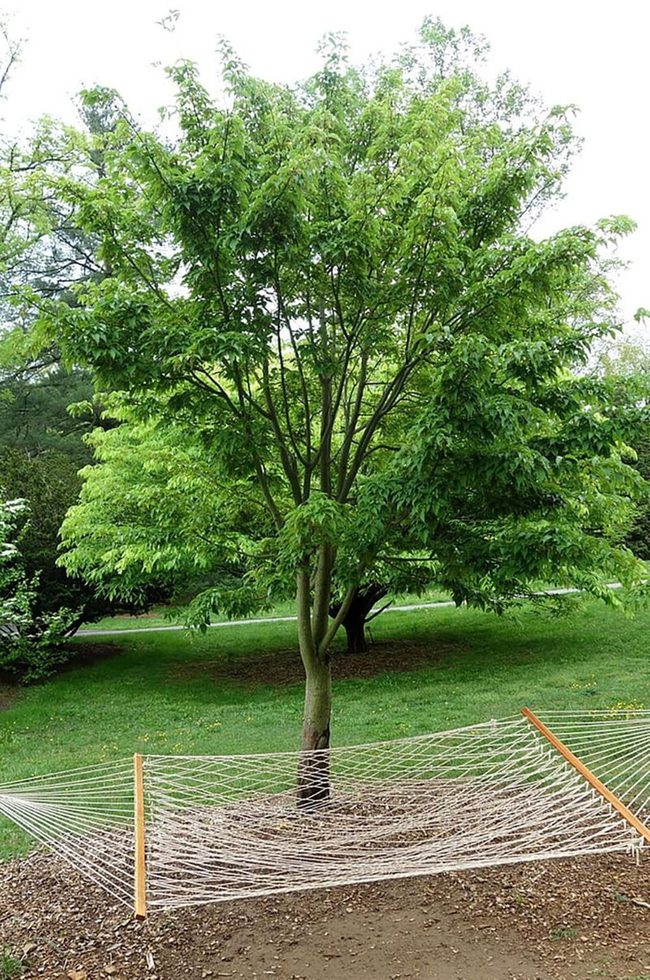
Norway Maple trees grow to impressive heights of up to 50 feet with sturdy trunks and wide branches that spread outward into rounded crowns.
I find the smooth bark shifts in color depending on the tree's age, appearing dark gray or blackish brown on younger specimens and gradually becoming lighter gray as the tree matures.
Leaves display five distinct lobes and shine bright green on their upper surfaces while showing yellow-green undersides, typically ranging from 6 to 12 centimeters long and sprouting in small clusters of three or four.
When it comes to soil, these trees adapt well to various types but do best when the ground drains properly and offers moderate fertility.
Light requirements are fairly flexible since Norway Maples flourish in full sun or partial shade conditions.
While they prefer acidic soil, I should mention they adjust nicely to alkaline environments too, making them quite tolerant of different growing conditions.
Tall Five-Lobed Mountain Maple
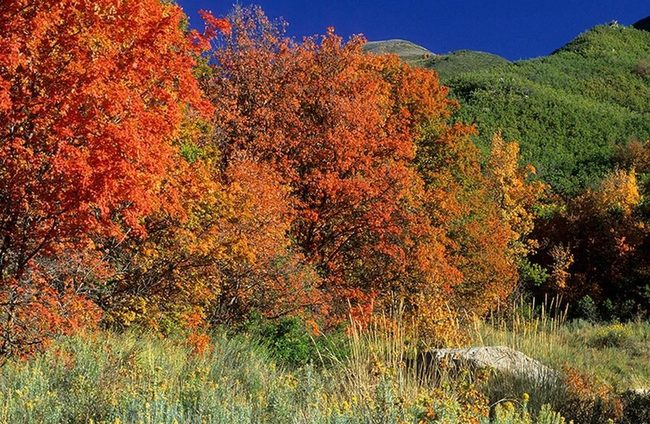
Rocky Mountain Maple grows tall and impressive, stretching up to 30 feet high and commanding attention in any landscape.
You can read the medium-sized leaves display five distinct lobes with rich dark green tops and lighter undersides that catch light beautifully.
Late spring or early summer brings delicate flowers that add a charming layer to the tree's natural appeal.
Native to North America's Rocky Mountains, this species has adapted perfectly to thrive in that rugged terrain.
As the tree grows older, its smooth bark transforms into a textured surface with deep furrows, a change shaped by heavy winter snowstorms over many years.
If you're looking for a tree with both visual presence and regional authenticity, this maple offers both strength and character that develops naturally with age.
Towering Red Maples Autumn Fire
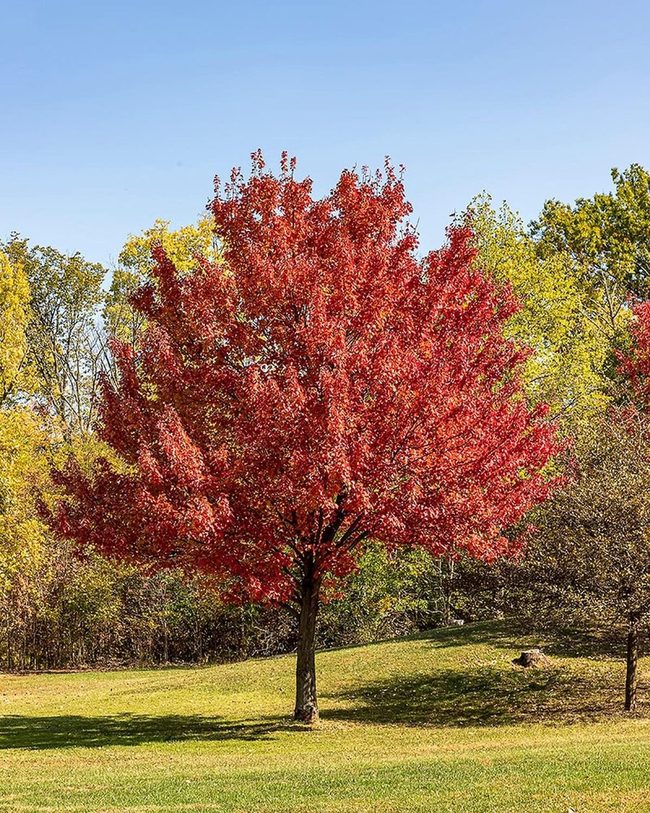
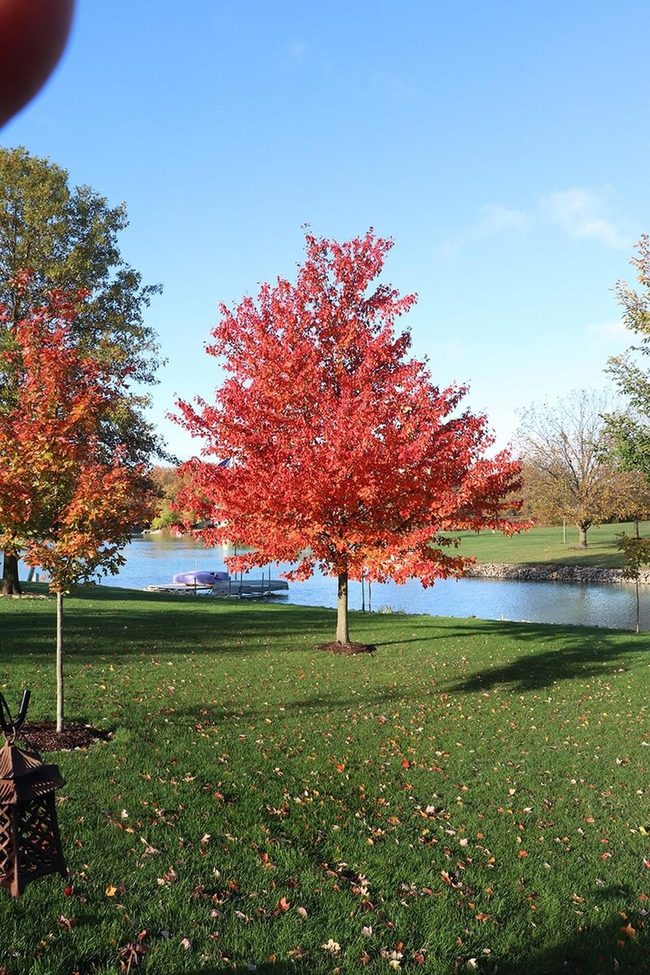
Red Maple trees soar up to 100 feet tall and put on a stunning show when fall arrives, turning brilliant shades of red that make any landscape pop with color.
I notice these trees have smooth gray bark and compound leaves that handle both full sun and partial shade with ease.
We see them thriving across USDA zones 2 through 9, which means most regions can grow them successfully.
Beyond their autumn beauty, female Red Maples produce winged seeds called samaras that spin down like little helicopters.
The species also plays a role in maple syrup production, so they're useful as well as beautiful.
People choose Red Maples for ornamental planting because that seasonal color change is simply hard to beat.
It's a tree that gives you multiple reasons to plant one, from its impressive height to its role in the local ecosystem.
Crimson Maple With Furrowed Bark
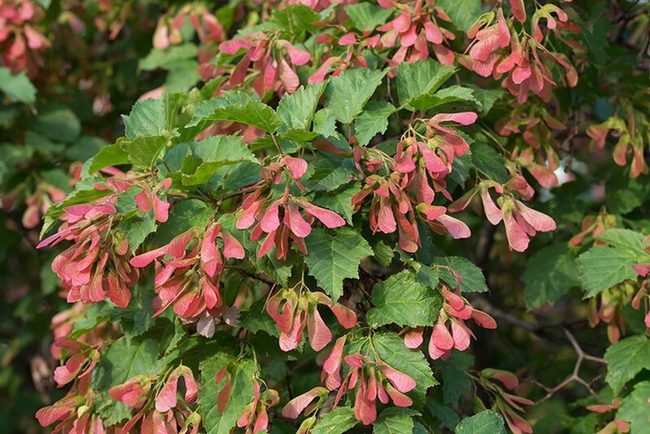
Tatarian Maple stands out in eastern regions of the United States and Canada with its striking seasonal display of red, orange, and yellow foliage that transforms each fall into a visual spectacle.
Its distinctive bark catches attention with light gray-brown coloring marked by shallow furrows and darker vertical ridges that create interesting texture throughout the year.
In spring, small white flower clusters appear at the branch tips and soon develop into winged seeds that mature by autumn and eventually drop from the tree.
Glossy green leaves cover the branches during warmer months before their dramatic color shift announces the changing season.
The clearest detail is the tree's wide trunk supports branches that spread outward in a naturally appealing form.
Growth happens best in the eastern portions of North America, where this maple thrives in local conditions.
Early spring brings those delicate blooms while the cooler months reveal the intricate bark patterns beneath the canopy.
Crimson Maple Fall Foliage Display
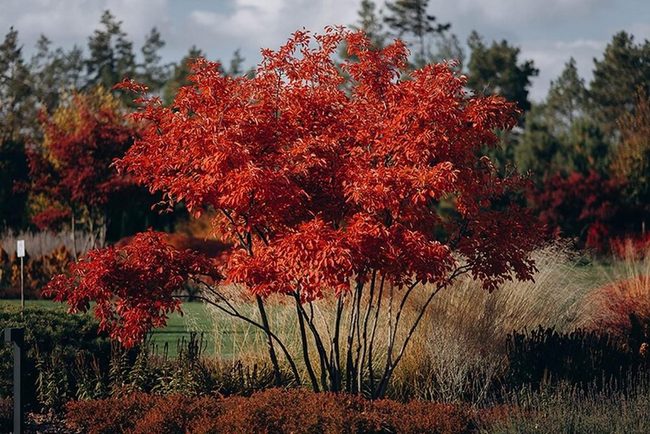
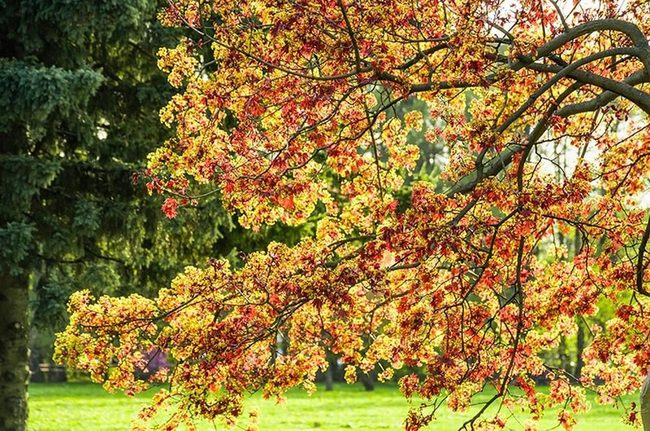
Amur Maple trees light up northern landscapes with their stunning fall foliage, ranging from bright red to golden yellow and orange hues that shift as seasons change.
Named after the Amur River flowing through China and Russia, these deciduous trees shed their leaves each winter and display five-lobed leaves measuring 3 to 5 inches long with distinctive sawtooth edges and oval shapes.
Young bark starts out dark brown and gradually transitions to gray as the tree matures over time.
You'll get the best results planting these trees where they can soak up full sun, though they can handle partial shade if needed, though their growth may slow a bit in those conditions.
Moist soil throughout the year keeps them happiest, but they're fairly tough and can handle dry spells without too much trouble.
We recommend checking your soil moisture regularly during the growing season to keep your Amur Maple thriving and looking its best.
Golden Leaves And Liquid Sweetness
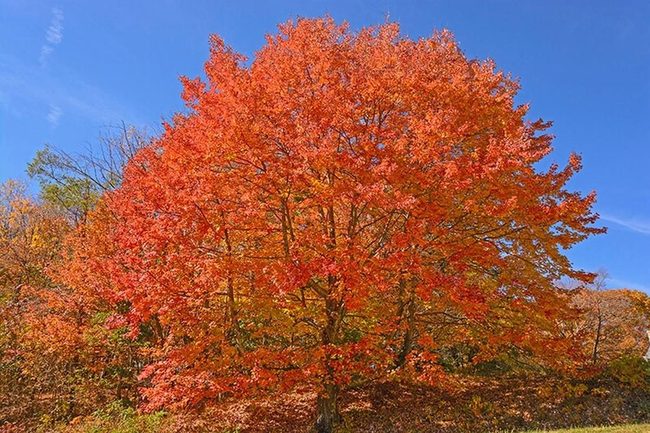
Sugar Maples command attention with their towering presence, reaching heights up to 80 feet and displaying bright green foliage that transforms into stunning yellow shades as fall arrives.
You can pick up on the distinctive five-lobed leaves with jagged edges, and they develop small flower clusters that mature into winged fruits called samaras.
These trees flourish in rich, moist soil throughout eastern North America and have long been valued for their remarkable sap.
For generations, people have harvested this sweet liquid by tapping into the trees and then boiling it down to make maple syrup and maple sugar.
Beyond syrup, the sap works as a natural sweetener for all sorts of treats, including ice cream and other desserts.
We continue to appreciate these trees today for both their natural beauty and their practical contribution to our kitchens and tables.
Golden Fall Foliage Tree
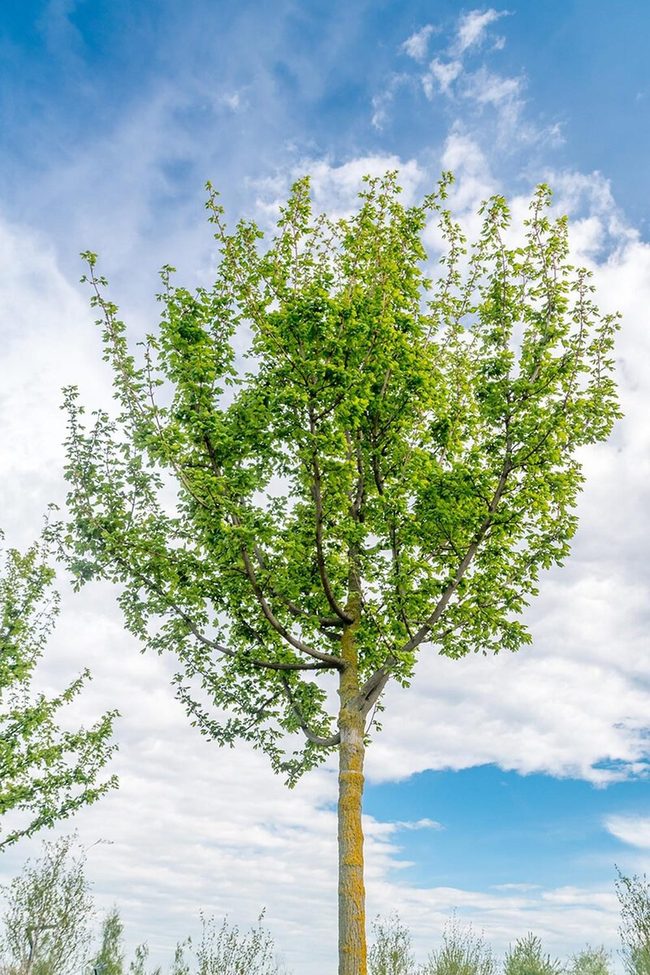
Hedge maples display stunning foliage that transforms from deep green with pale veins into brilliant yellow when fall arrives, making them a show-stopping choice for any landscape.
These trees grow up to 35 feet tall and spread between 3 to 10 feet wide, so they fit well in gardens and natural spaces alike.
Smooth gray bark provides year-round visual interest even after the leaves drop for winter.
Small flowers bloom in late spring and develop into red fruit that matures by autumn, adding another layer of seasonal appeal.
You'll find these trees remarkably adaptable since they thrive on rocky hillsides and sandy soils where many other plants struggle.
What makes them especially practical for wet areas is their preference for well-drained soil, which keeps roots from rotting when planted near streams or ponds.
I enjoy the way hedge maples handle various growing conditions without demanding special care or attention, making them reliable performers in most environments.
Crimson Japanese Maple Canopy
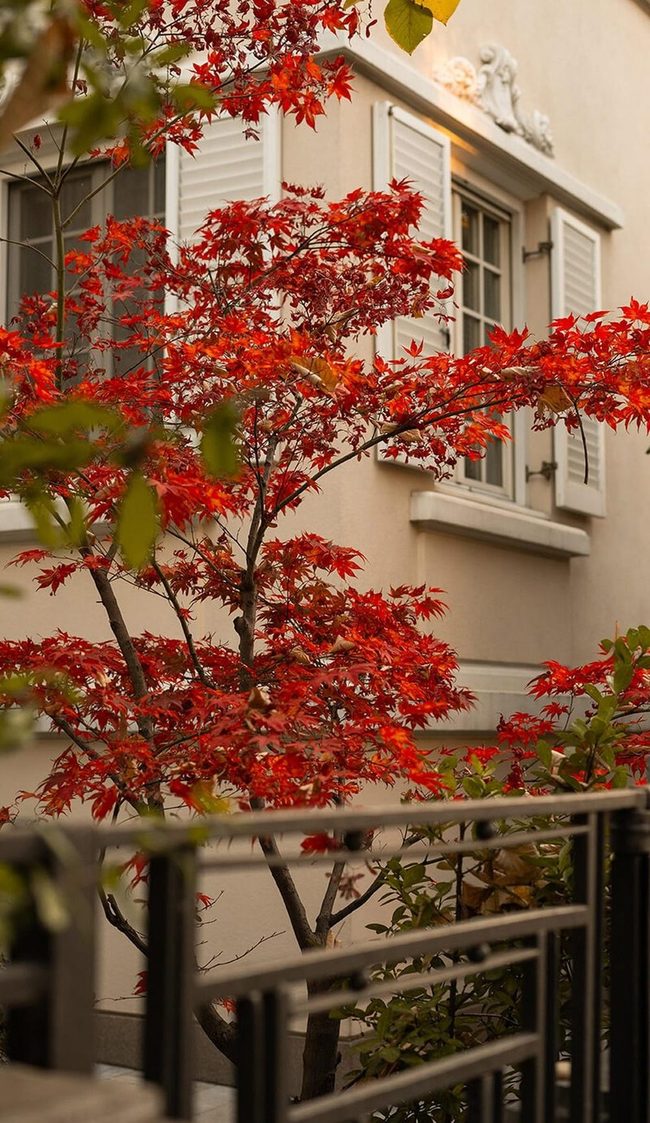
The Japanese maple stands out as one of the most beloved trees, and its ability to reach up to 25 feet tall with a distinctive vase shape and dense canopy makes it a showstopper in any landscape.
During fall, the leaves shift from green to brilliant red, putting on a display that stops people in their tracks and draws admiration year after year.
Native to Japan, this tree has gained widespread popularity across North America and Europe because it combines stunning seasonal color with straightforward care requirements.
You'll get the best results when you plant it in moist, well-draining soil where it can receive full sun or partial shade throughout the day.
Since these trees thrive in hardiness zones 5 through 9, you can check your zone to see if your climate will support healthy growth.
What makes them even more practical is that they don't demand constant fussing, so both experienced gardeners and newcomers find success with them.
Massive Maple’S Deep Ridged Bark
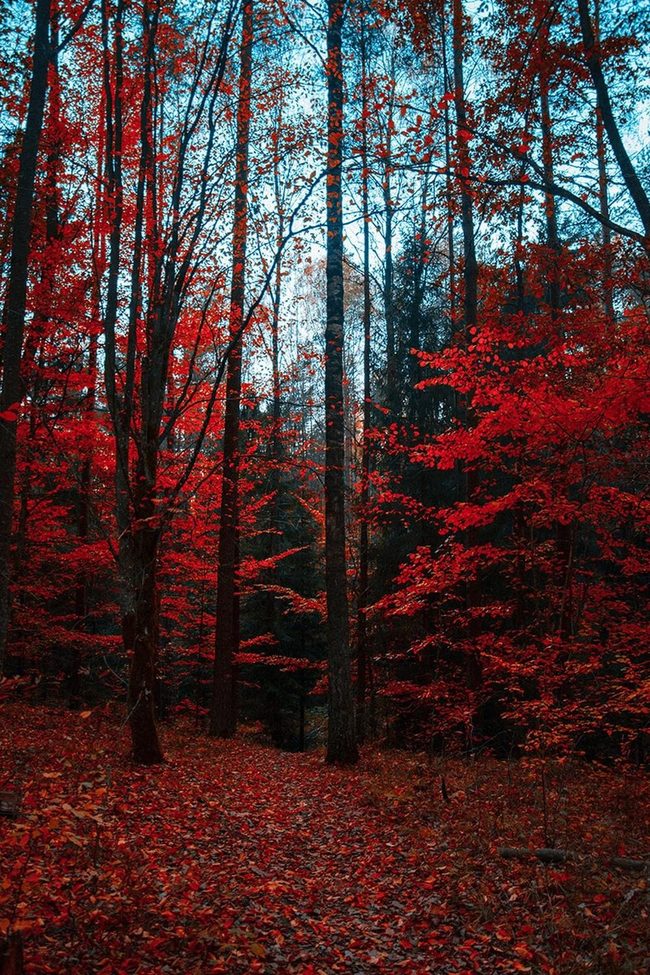
Bigtooth Maple trees, scientifically known as Acer grandidentatum, stand out as some of North America's most impressive maple species, reaching heights beyond 100 feet with spreading canopies that stretch roughly 35 feet across.
Their bark displays a striking grayish-brown tone marked by deep ridges that darken to near-black, creating visual interest on the trunk and branches.
You'll find these majestic trees predominantly in moist hardwood forests throughout the eastern United States, where they flourish in areas recovering from fires or storms and in zones designated for reforestation efforts.
In spring, delicate white flowers emerge before the leaves unfold, providing early seasonal beauty.
During the growing season, foliage maintains a deep green hue that persists through summer months.
As temperatures drop in fall, the leaves shift into warm yellows, oranges, and reds before dropping entirely when winter arrives.
Crimson Curled Leaves Through Seasons
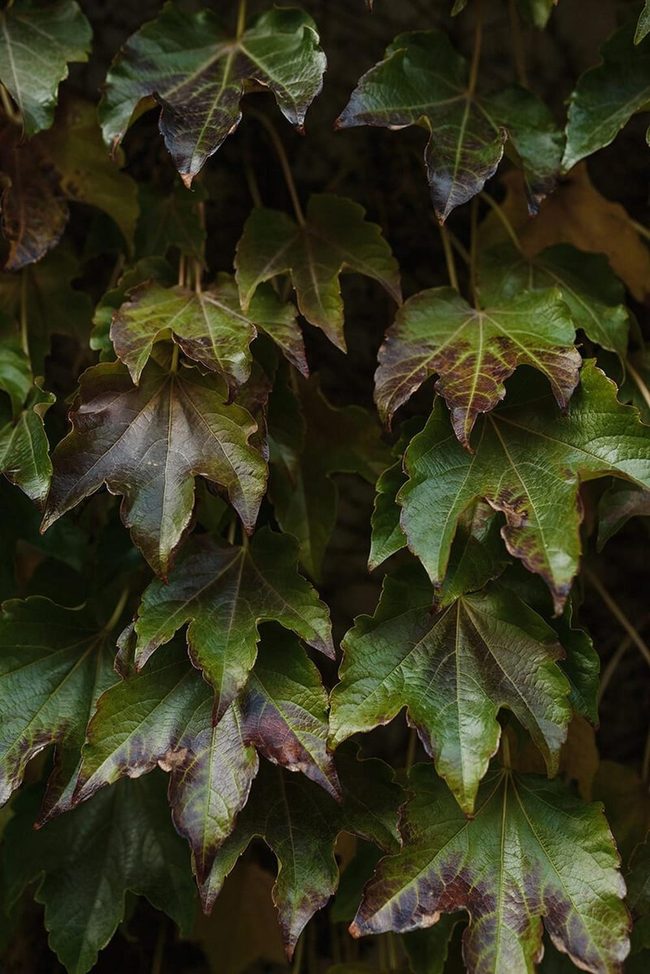
Homeowners and landscapers love the Vine Leaf Maple for how its leaves transform in fall, shifting from bright green to deep red while the edges curl and twist like grapevine tendrils, making it one of the most eye-catching trees for seasonal color.
You can plant this maple almost anywhere since it handles both full sun and partial shade equally well and adapts to clay, sandy, or mixed soils without fuss.
Growing up to 30 feet tall, this tree lives for about a century, so you're making a long-term investment in your landscape.
It grows best in zones 5 to 8 across most of the United States, thriving through typical winter weather in those regions.
Cold northern areas where temperatures drop below -30 degrees Fahrenheit for extended periods in winter can be too harsh for this maple to survive.
Large Shade Tree With Five-Lobed Leaves
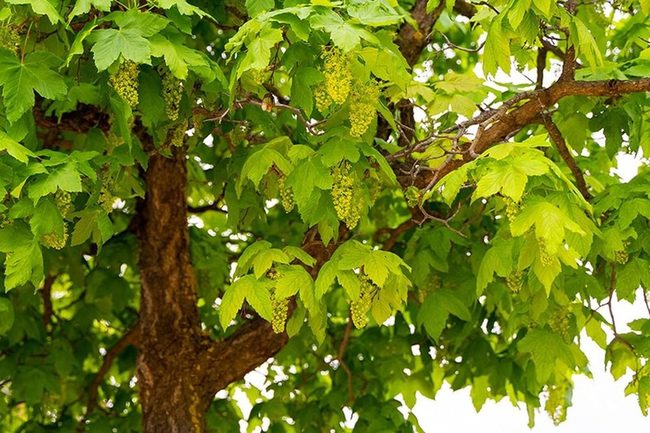
Sycamore maples stand out in any landscape with their distinctive five-lobed leaves and impressive size, reaching up to 60 feet tall and spreading about 20 feet wide, making them perfect for creating shade or serving as a standout garden feature.
Disease resistance is one of its strongest qualities, so you won't need to worry about common maple problems affecting your tree's health.
We think the changing seasonal colors add wonderful character to any property throughout the year.
If you live in USDA zones 4 through 7, this tree is an excellent option for your landscape.
Its resilient nature means it handles various growing conditions without requiring special care.
Gray-Striped Hornbeam Maple Tree
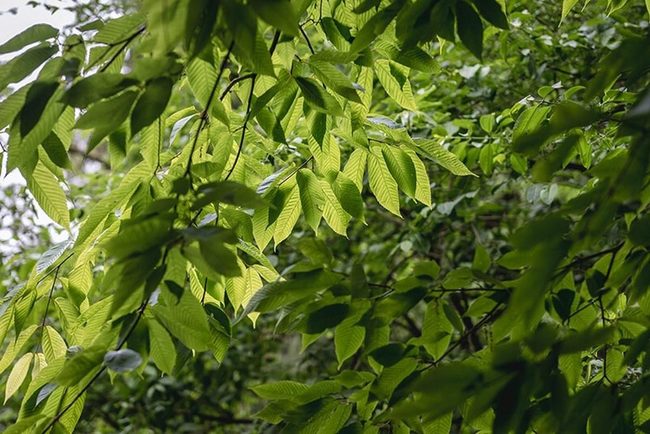
Hornbeam Maple Trees rise impressively to about 30 feet tall and stretch roughly 20 feet wide, creating a substantial presence in any landscape.
Look closely at the bark and the useful detail is distinctive gray to brownish-gray tones with narrow vertical stripes running along the trunk.
Above that, the leaves display rich dark green on their upper side while showing a lighter shade underneath, and each leaf features between three to seven lobes that reach up to three inches in length.
During bloom time, greenish-yellow flowers appear in clusters along short stalks situated near the foliage.
The reason this works so well is its flexibility with light conditions; it thrives in full sun but adapts well to partial shade too.
Whether you're planning a garden or working within a forested area, this tree manages to fit into various outdoor settings without fuss.
Fiery Fall Foliage Maple Tree
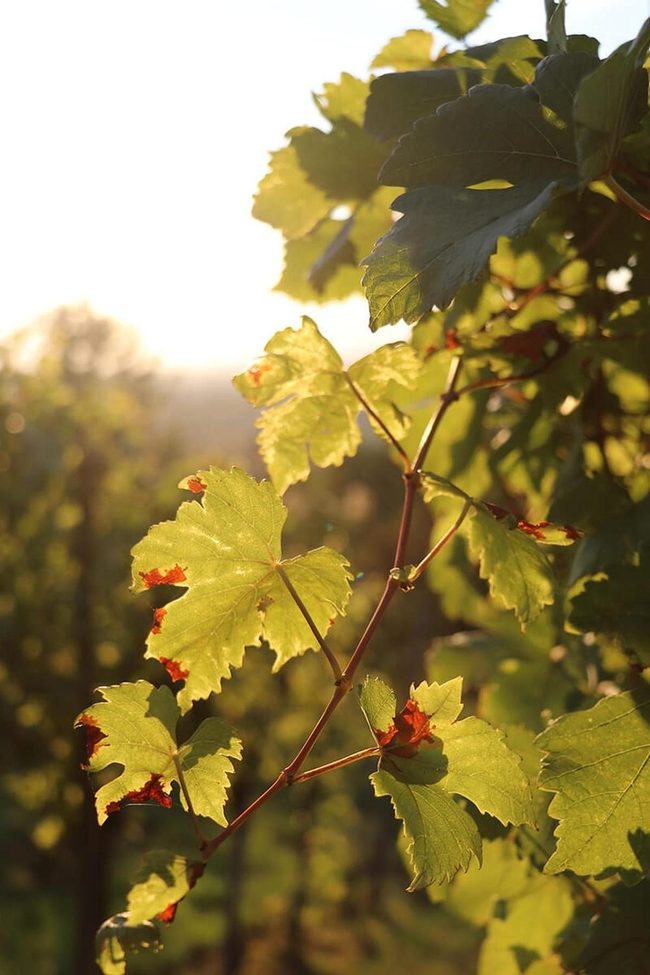
Vine Maple catches your attention right away with its striking seasonal color show, transforming from bright yellow leaves in summer to breathtaking displays of orange, red, and purple come fall.
Its distinctive three-lobed leaves have serrated edges and pointed tips that give it a refined appearance even up close.
I notice the tree stays relatively small, typically reaching about 20 feet tall with an irregular crown that adds character to any landscape.
Because it has a slender trunk, many people mix it up with Japanese maple at first glance, though they're actually quite different species.
The lovely thing about this look is how well it handles urban environments and city living.
Just keep in mind that regular watering during dry spells helps it thrive and keeps those gorgeous leaves looking their best.
We recommend this option if you want something that performs well in less-than-ideal conditions while still delivering real visual interest year-round.
Towering Maple With Three-Petaled Blooms
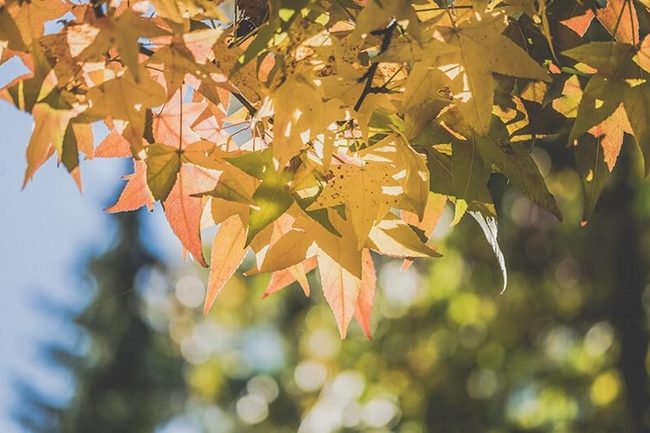
Standing as tall as a seven-story building, the Three-Flowered Maple reaches heights up to 75 feet and spreads outward with a broad, rounded canopy that commands attention in any landscape.
Native to China and Japan, this tree displays leaves with three distinct lobes and finely serrated edges, while the leaf buds emerge in a striking reddish brown that adds winter interest to your garden.
Delicate white flowers with three petals each appear during bloom time and offer understated beauty.
Once established, this tree adapts well to full sun or partial shade and prefers moist, well-draining soil for optimal growth.
During its first year, however, you'll want to shield it from intense afternoon sun to help it settle in without stress.
We recommend positioning this tree where you can appreciate its layered foliage and seasonal changes throughout the year.
Fragrant White Blossoms, Weeping Branches
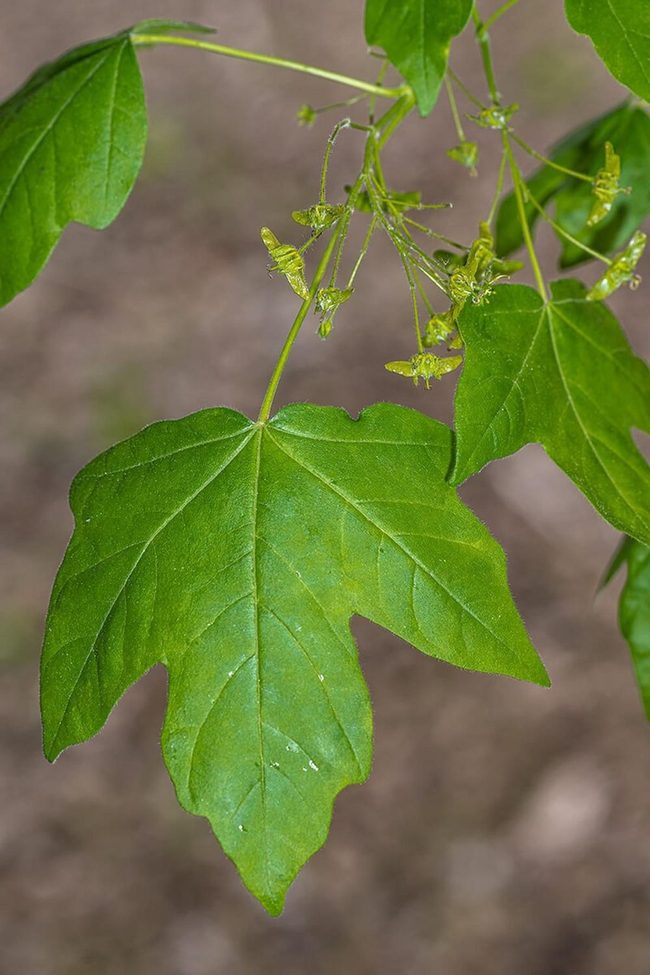
Morton Miyabe maple trees can stretch up to 35 feet tall and display an upright form with naturally drooping branches that give them a graceful appearance.
In spring, delicate white flowers bloom in April or May before the leaves come out, and these blossoms release a pleasant fragrance that fills the air around them.
The first thing to notice is the dark green leaves are modest in size, measuring roughly 3 inches long and 1 inch wide, which keeps the overall look balanced and refined.
Native to Japan and Korea, this tree does best when you plant it in places that mimic its natural habitat.
It thrives in moist soil and prefers elevations between 4,000 and 6,000 feet where conditions stay cool and damp.
If you want a tree that combines visual beauty with specific growing needs, this maple works well for gardens designed to match its preferences.
Massive Hand-Shaped Leaves Dominate
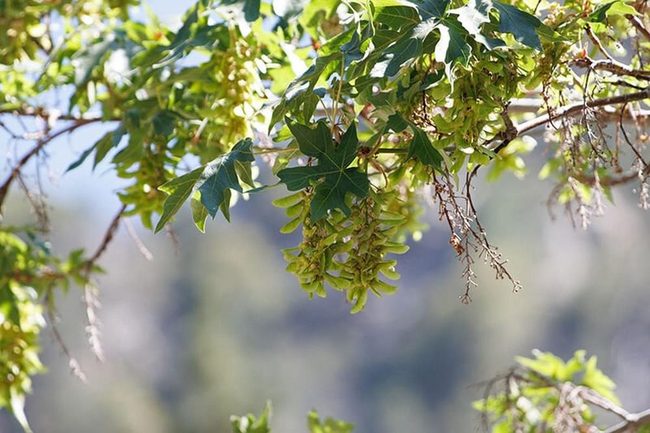
Big-leaf maples demand attention with their towering frames that stretch over 100 feet into the sky and spread outward to a width of 12 feet, making them impossible to miss in any landscape.
Their enormous hand-shaped leaves, which can reach 8 inches in length and 5 inches across, form a thick canopy that blankets the ground below and provides substantial shade.
Dark brown bark with deep furrows runs along the trunk and branches, giving the tree a textured, substantial appearance that adds character to its surroundings.
One of the best things about growing these trees is how adaptable they are since they do well in full sun or partial shade environments.
If you want a low-maintenance option that handles different growing conditions without much fuss, this species thrives in USDA zones 6 and 7.
Striped Bark Maple In Spring
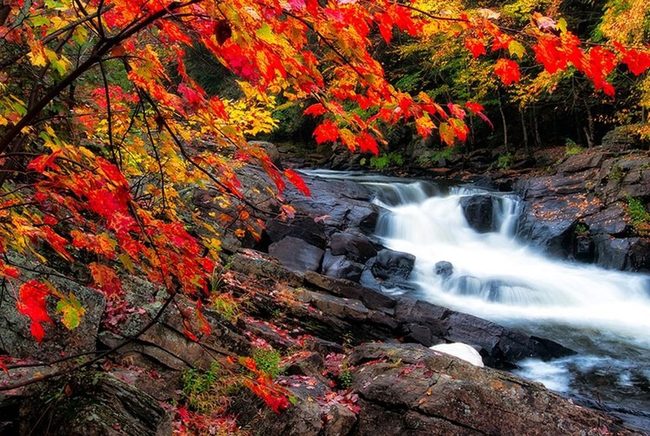
Striped Maple trees, which grow naturally in the eastern United States, display striking vertical stripes running across their grayish-brown bark that make them stand out in forests and wet areas near rivers and lakes.
In spring, delicate white or pink flowers with four petals bloom directly from the branches and add extra charm to the emerging foliage.
I admire the leaves themselves have smooth green surfaces on top and lighter undersides marked with fine lines that give them an interesting texture.
These trees thrive in moist environments and bring a distinctive look to any woodland setting.
Both the unusual bark pattern and the springtime blossoms work together to make this maple variety easy to spot.
If you're interested in native trees that offer visual interest beyond just leaves, this species delivers something special year-round.
Scarlet Autumn Maple Transformation
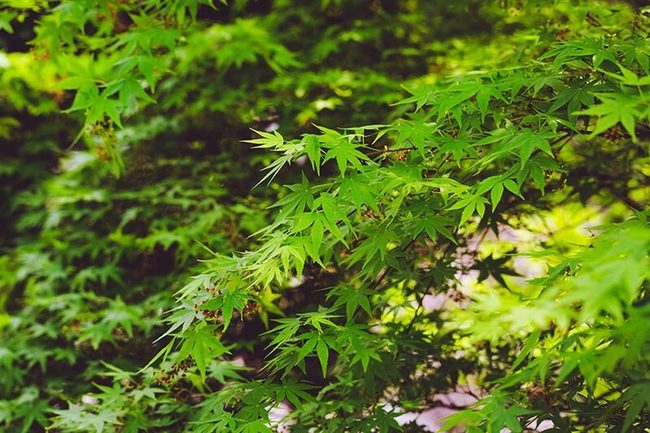
With its brilliant green foliage that transforms into deep red hues as autumn approaches, the Green Cascade Maple stands out as a landscape showstopper that reaches heights of up to 25 feet and commands attention in any garden setting.
Scientists know this tree by its official name, Acer japonicum, and it originates from the mountainous regions and riverbanks throughout Japan.
You'll find this deciduous beauty thrives in USDA zones 5 through 7, making it adaptable to many different climates across regions.
The clever part is its remarkable ability to flourish even at high altitudes, growing successfully at elevations up to 1,500 meters where many other trees struggle.
Whether you're planting it in a yard or along a waterway, this tree brings both seasonal color changes and living movement to your outdoor space.
Gray Striped Maple Trunk Beauty
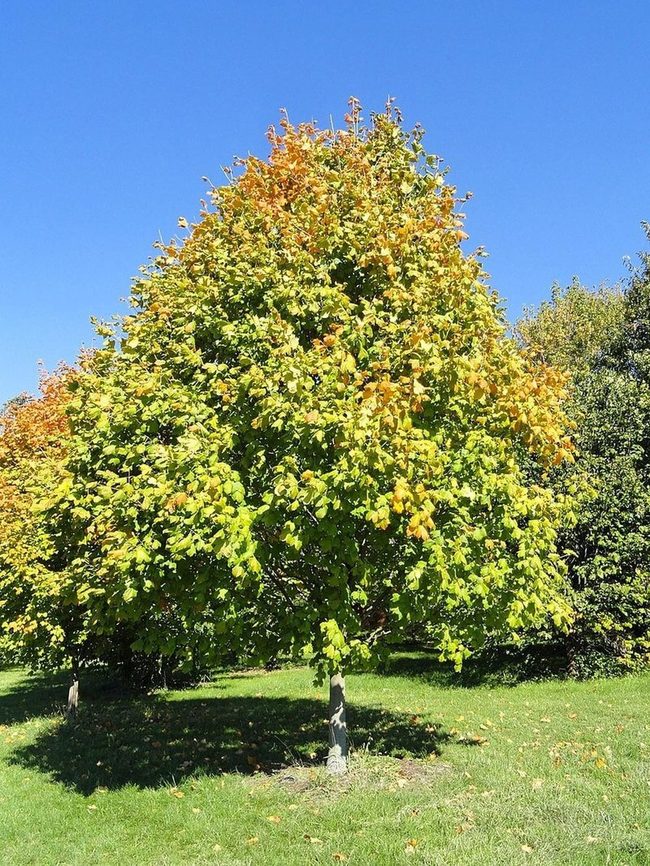
Black Maple, scientifically called Acer nigrum, grows between 30 and 50 feet tall and displays striking bark that sets it apart from other maples with deep gray coloring and vertical white stripes running down the trunk.
In fall, the tree's dark green leaves with rough edges transform into rich purple tones before dropping to the ground.
You'll find this North American native thriving in moist environments like streambanks and swamps where the soil is fertile and water is abundant.
We can appreciate how this species demonstrates nature's design through both its seasonal changes and distinctive appearance.
The combination of its dramatic fall foliage and unique bark creates visual interest throughout the year.
Its preference for wet habitats shows how certain trees adapt to specific growing conditions.
Looking at Black Maple helps us understand the diversity and complexity found in our natural landscapes.
Golden Leaves To Crimson Fire
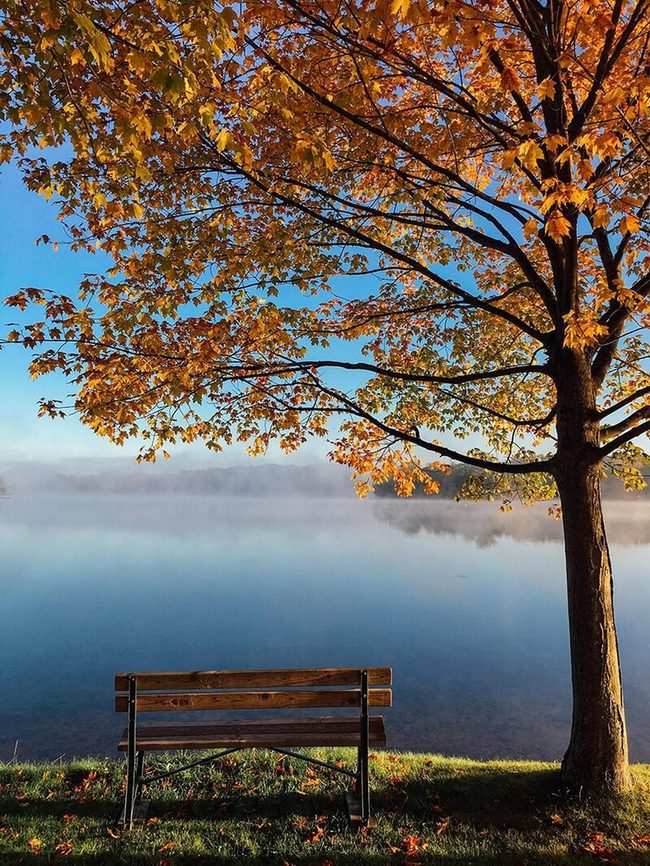
Maple trees display some of nature's most striking transformals, with sugar maples offering brilliant yellow leaves in spring that shift to deep orange-red as fall arrives, and red maples contributing their own fiery red foliage to autumn landscapes.
Around 132 species grow worldwide, and while these deciduous trees take 70 to 80 years to reach their full size, they adapt well to different climates and reward your patience with remarkable seasonal changes.
Black maples thrive primarily in eastern Canada, adding regional character to their native areas.
Beyond their visual appeal, several maple varieties have practical value since they produce sap rich enough for syrup making.
Sugar maples stand out most for this purpose because their sap contains higher sugar levels and delivers that distinctly sweet flavor you expect from quality maple syrup.
Towering Tridents With Horizontal Striped Bark
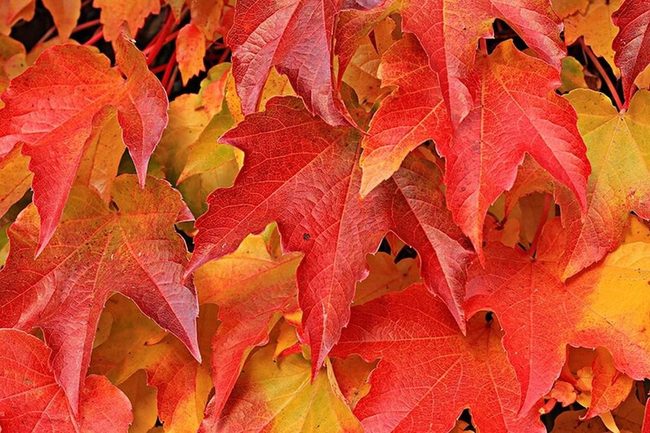
Trident maple trees stand out with their impressive height of 66 to 82 feet and massive trunks that can spread up to 6 feet across, making them hard to miss in any landscape.
You may notice the narrow clustering pattern these deciduous trees naturally form, and their opposite leaves display three or five lobes with a distinctive hairy underside and saw-tooth edges that span about 3.2 to 5.4 inches long.
Light brown bark with striking horizontal markings stretches along the trunk without peeling away, giving the tree a smooth, defined appearance year-round.
If you're planning to plant one, know that these trees prefer moist soil but handle drier ground reasonably well as they adapt to various conditions.
Full sunlight keeps them growing strong and healthy, so pick a spot where they get plenty of direct light throughout the day.
Silver Maples Blazing Yellow Fall
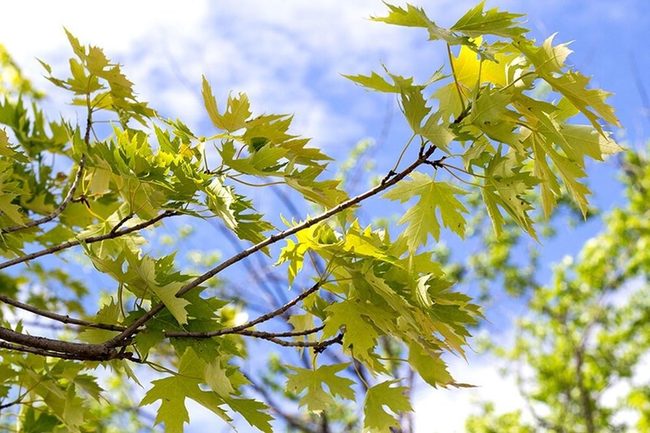
Silver maple trees stop you in your tracks with their towering presence, often stretching up to 100 feet tall and displaying distinctive light gray or white bark decorated with dramatic black streaks that make them stand out in any landscape.
When fall arrives, the long, narrow leaves transform into a cheerful yellow that practically glows against the sky and draws attention from a distance.
Up close, each leaf reveals its own character with 5-7 lobes and finely serrated edges, plus an interesting asymmetry at the base that adds visual interest to closer inspection.
During their youth, these leaves sport a dark green color on top that gradually shifts to lighter shades underneath as they mature, and this color variation actually depends on weather conditions throughout the year.
Known scientifically as Acer saccharinum, this North American native grows with impressive speed and adapts well to its environment.
White Peeling Bark Tree
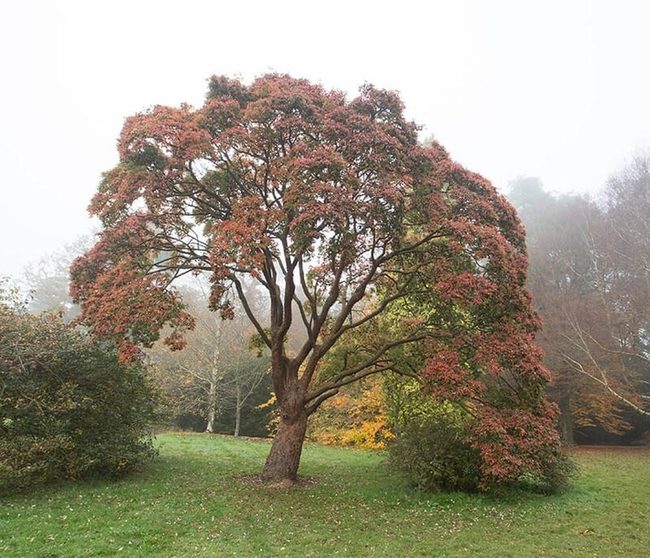
Growing a Paperbark Maple tree rewards you with a striking display of peeling, papery bark that sheds in layers of white and silver across the trunk and branches.
You'll watch it grow to roughly 30 feet tall and 15 feet wide, making it a medium-sized specimen that works well in most yards.
During summer the foliage stays green, and when fall arrives the leaves shift to warm yellow tones.
Beyond its seasonal beauty, this tree has practical advantages since it's native to Japan and China and developed special white or silvery hairs on its leaves that naturally ward off pests.
Getting one established takes some effort; seedlings do best when placed outdoors where they can soak up at least six hours of sunlight each day.
Olivia Martinez
Founder & Principal Designer
Expertise
Sustainable Interior Design, Residential and Commercial Space Planning, Historic Preservation and Adaptive Reuse, Custom Furniture Design, Project Management
Education
Parsons School of Design, New York, NY
LEED Accredited Professional (LEED AP)
Olivia Martinez is the founder of Archi Refresh, where she brings style and sustainability together. With a degree from Parsons School of Design and a LEED certification, she’s all about creating beautiful, eco-friendly spaces.
With over eight years in the industry, Olivia has designed everything from cozy homes to commercial spaces, always putting function and sustainability first. She loves working with local artisans and has been featured in design publications for her fresh take on green living.
When she’s not designing, Olivia enjoys exploring historic architecture, painting, and spending time with her rescue dogs, Luna and Max.