
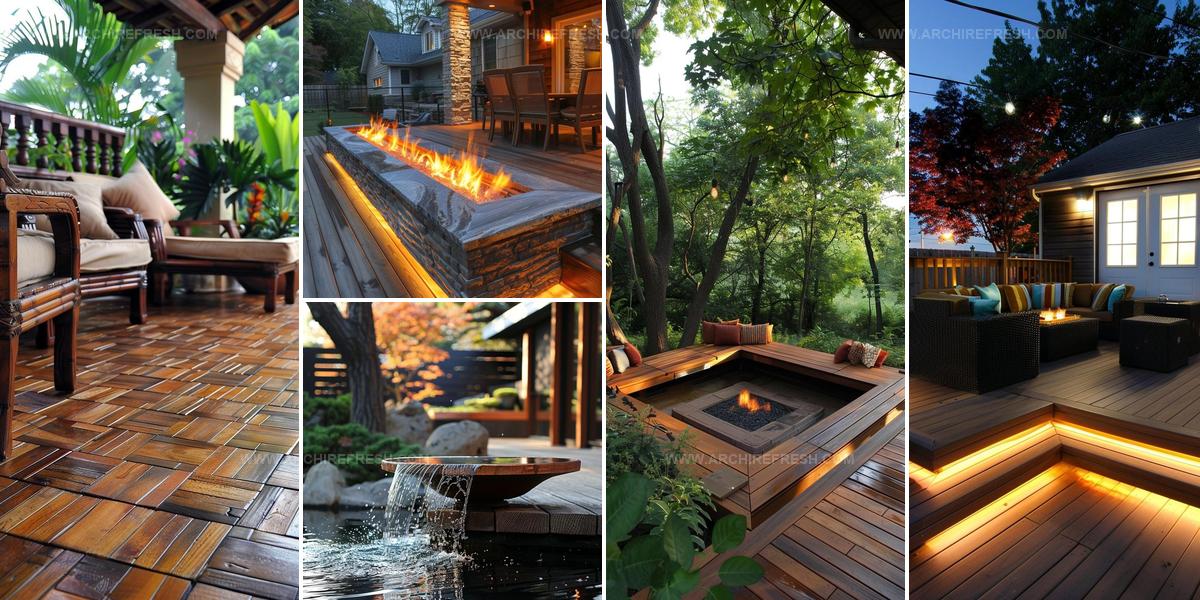
13 Fresh Ideas for Modern Outdoor Deck Decorating Trends
Modern outdoor deck decorating trends have completely changed how homeowners view their exterior spaces, turning once-basic patios into stylish extensions of indoor living areas.
The emphasis now falls on creating seamless transitions between inside and outside environments while maintaining comfort and aesthetic appeal.
Weatherproof furniture, sustainable materials, and innovative lighting solutions dominate current design conversations among both professionals and enthusiasts.
Natural textures paired with sleek metallic accents offer fresh ways to balance organic warmth with contemporary sophistication.
Color palettes have shifted toward earthy neutrals accented by bold statement pieces that reflect personal style without overwhelming the space.
Multifunctional zones for dining, relaxing, and entertaining allow decks to serve various purposes throughout different seasons.
This evolution in exterior design empowers anyone to craft an inviting retreat that enhances daily life and impresses visitors alike.
Sunken Gathering Space With Fire
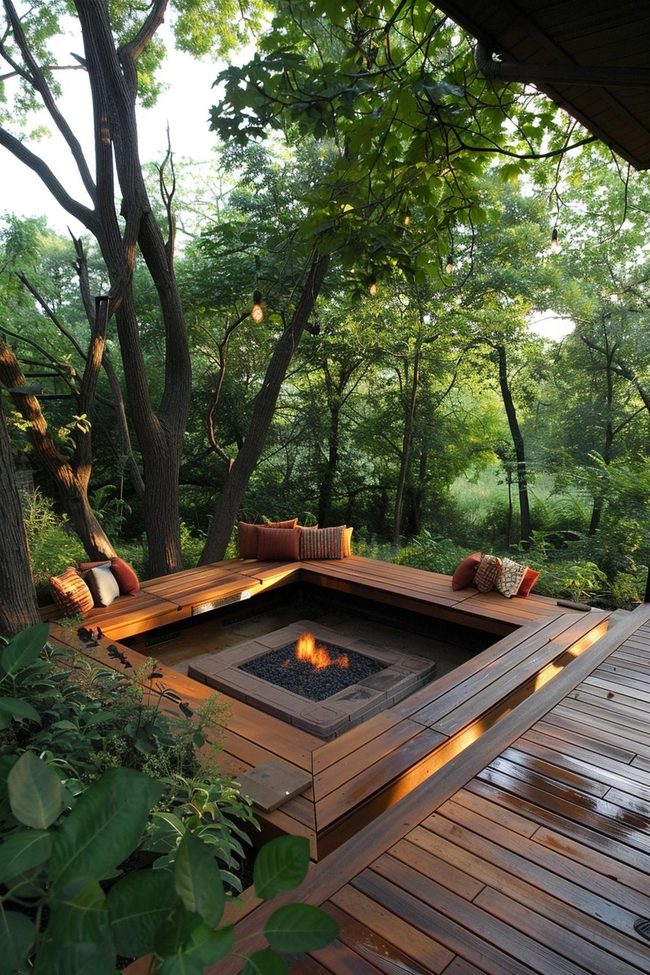
This sunken U-shaped pit nestled into your deck creates an garden room where people naturally gather around a central fire feature that glows warmly after dark and draws everyone into its warmth.
You can build this intimate space with a traditional layout of bench seating lining the interior, or go modern with weatherproof sectionals and rattan lounge chairs arranged in a relaxed circle.
Position your pit to frame the best views your yard has to offer, then edge the opening with potted plants and vines while using trees and shrubs around the perimeter as green walls that frame the whole area.
Durable, slip-resistant tiles or stone on the floor keep things safe and allow water to drain away, and comfortable water-resistant cushions make it easy to stay out there for hours.
Recessed lighting and sconces along the pit walls, hidden speakers connected to your home audio system, and draped tapestries overhead all layer in warmth and atmosphere.
Side tables hold drinks, portable heating units extend use into cooler months, and screens on the sides provide shade and privacy without blocking the breeze.
Stone or brick decking that flows into the pit ties the space together visually and makes it feel like a natural part of your deck.
Horizontal Boards Expand Backyard Views
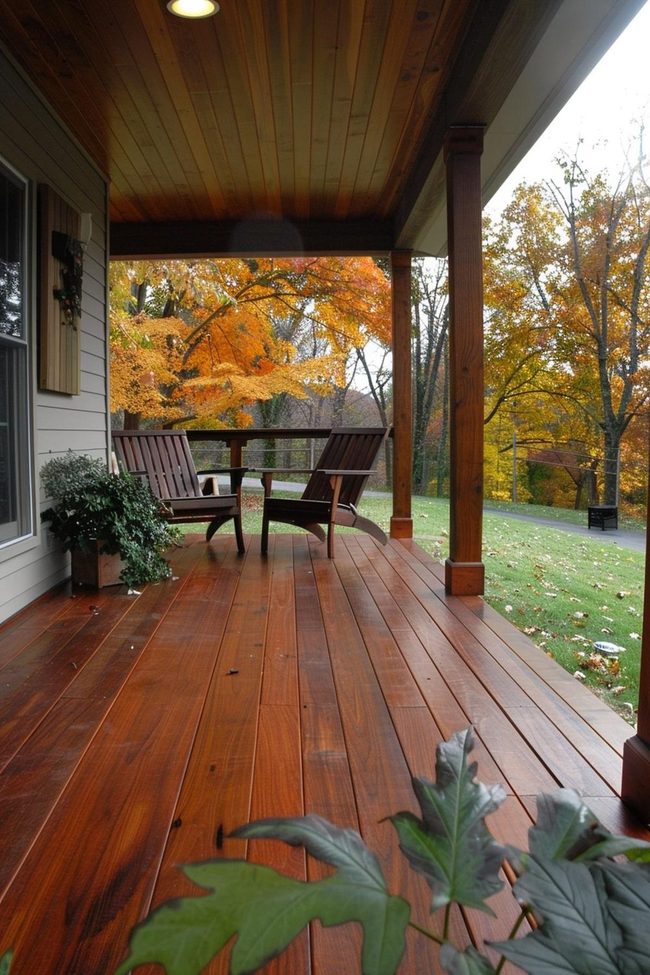
Horizontal deck boards stretched across the width of your space form a striking, modern look that immediately catches attention and makes the area feel larger than it actually is.
When boards run horizontally, your eye travels smoothly across the surface without interruption, and using wider boards, around 8 inches for larger decks, amplifies this effect by reducing the number of seams you see.
Spacing these boards slightly apart, roughly 3/8 inch gaps, allows water to drain properly while keeping the surface feeling unified and calm.
To really nail this seamless appearance, I'd recommend hiding fasteners beneath the surface rather than using visible screws, and selecting durable woods like ipe or tigerwood that resist warping and gaps as they age.
Rectangular deck shapes work best with horizontal boards, and you can enhance the design by aligning railings, planters, and benches parallel to the board lines instead of breaking that flow.
For the mood you want to set, pair horizontal decking with neutral colors and natural materials if you're after something peaceful, or go bold with contrasting railing colors and modern furniture for a contemporary feel.
Keeping furnishings and accents minimal lets the board pattern shine without clutter, and glass railing panels work far better than traditional balusters for maintaining that horizontal visual rhythm throughout your outdoor space.
Faux Teak Deck Boards That Last
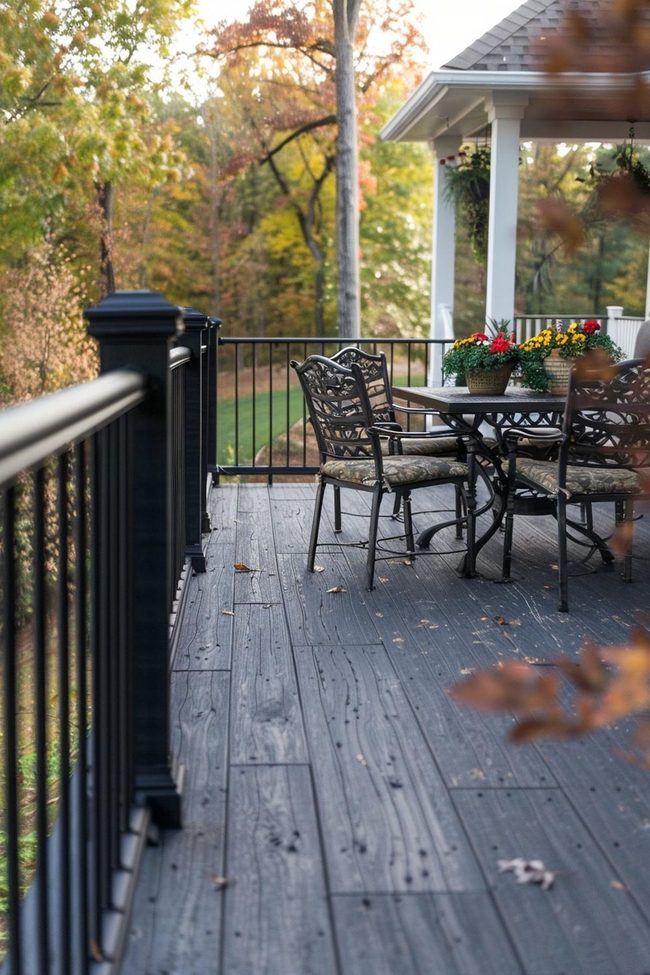
Wood-look composite decking catches attention right away with its realistic appearance that rivals authentic wood, featuring varied grain patterns and rich color tones that make your deck look naturally beautiful.
You will find that these boards are made from recycled plastic and wood fibers, offering an environmentally responsible option without sacrificing style.
What really sets composite decking apart is its superior performance compared to real wood, as it resists mold, mildew, rot, splintering, and thermal expansion while handling sun exposure, foot traffic, and harsh weather with ease.
When choosing your composite boards, look for brands offering multi-toned hues and non-repeating patterns, plus deep wood grain textures molded into the surface for that authentic feel.
Your color options span from weathered grays and rich reddish browns to contemporary solids like black, gray, and tan, so you can match your home's style whether you're going for coastal, traditional, or modern.
For a seamless, high-end look, install boards lengthwise with tight seams and consider hidden fasteners that keep visible screws out of sight.
Pairing your composite decking with matching railings and coordinating trim and fascia creates a polished appearance throughout your garden space.
Adding aluminum railings and modern furnishings enhances the contemporary feel if you've chosen solid color boards for your deck design.
Waterproof Porcelain Wood-Look Tiles
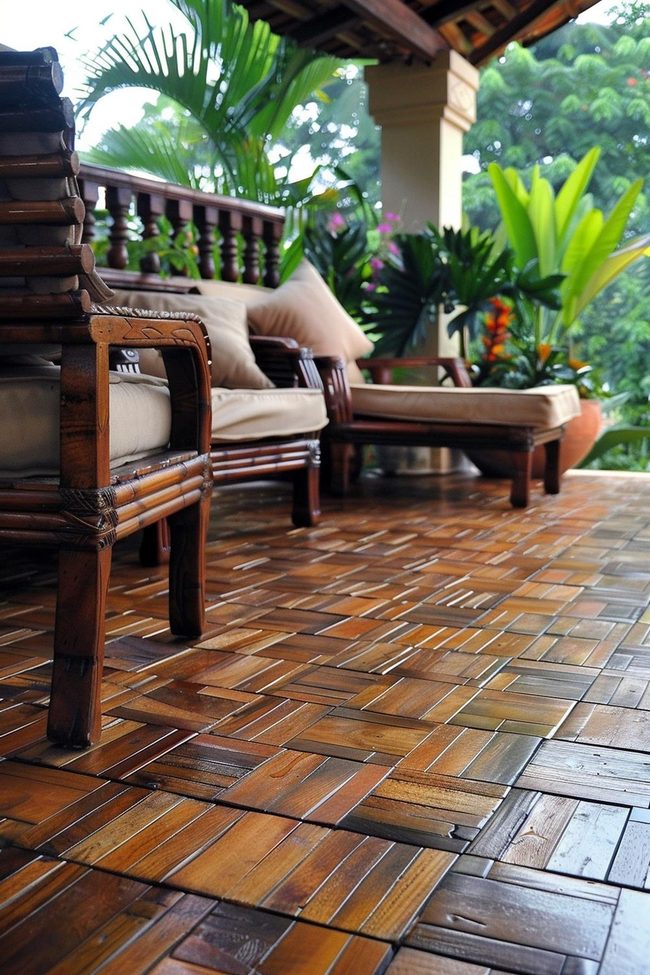
Porcelain or ceramic deck tiles offer you a useful for everyday living way to get that authentic wood deck appearance without spending your time on constant upkeep, and mixing different grain patterns and sizes together lets you build a completely personalized patio floor that stands out visually.
These tiles resist fading, stains, cracking, and mold growth while staying slip-resistant even when wet, making them safe and durable for any weather condition.
Installation is surprisingly simple thanks to interlocking systems or adhesive tabs, so you can upgrade an existing deck or patio yourself without tearing everything out and starting over.
Surrounding your wood-look tiles with potted plants, climbing vines, and garden beds adds natural greenery that frames the space beautifully, and stone features like fireplaces or water elements boost that organic patio feel even more.
You can go for a coastal style by choosing neutral tiles paired with rope lighting and weatherproof wicker seating, or lean into Mediterranean charm with terra cotta tones, stucco textures, and iron accents instead.
Adding tiles along stairs, landings, edges, or accent bands creates visual interest throughout your patio area.
Since these tiles can be swapped out anytime you want to refresh the design, you're not locked into one look forever and can change patterns, colors, or layouts whenever inspiration strikes.
Zoned Deck Layout For Multiple Uses
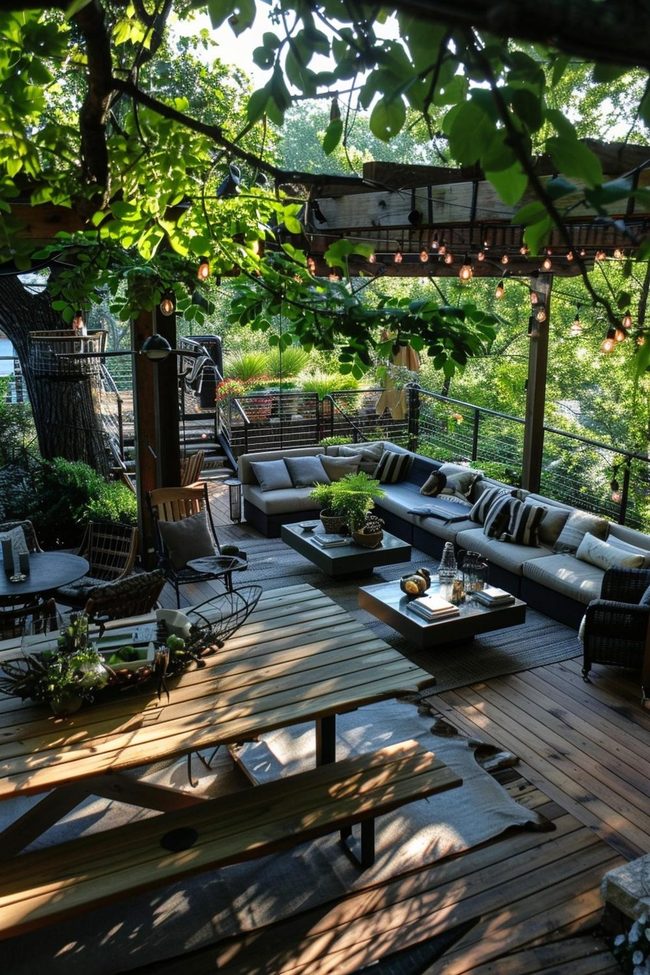
Painting your deck's borders and trim in colors that match nearby furniture instantly segments your outdoor space into distinct zones, while area rugs layered over the decking and built-in benches or planters further reinforce these boundaries.
Lighting plays a major role in defining how in all area feels and functions, so consider well-lit overhead lights for dining and cooking zones, low ambient lighting for relaxed lounge spots, landscape lighting to highlight plants and architecture, and string lights strung overhead to set a warm mood throughout.
Furniture placement matters just as much as these visual markers, and arranging seating to face toward views or turn inward for conversations helps establish clear purposes, while leaving open pathways between groupings keeps traffic flowing naturally and positioning pieces at proper distances based on their function ensures in all zone works well.
Changes in floor materials, decking direction, elevation changes, and railing styles all help you distinguish separate areas without overwhelming the space.
On rectangular decks, you might place a dining area in one corner and reserve an edge for lounging, while larger square decks benefit from being broken into multiple functional zones that serve different needs.
For smaller decks, selecting a few flexible multipurpose pieces allows your uses to shift as needed and keeps things from feeling cramped.
Using the deck's natural shape as your guide makes dividing it intuitive, and repeating colors, materials, and styles across in all zone helps everything connect without feeling choppy.
Cascading Water Adds Outdoor Living Tranquility
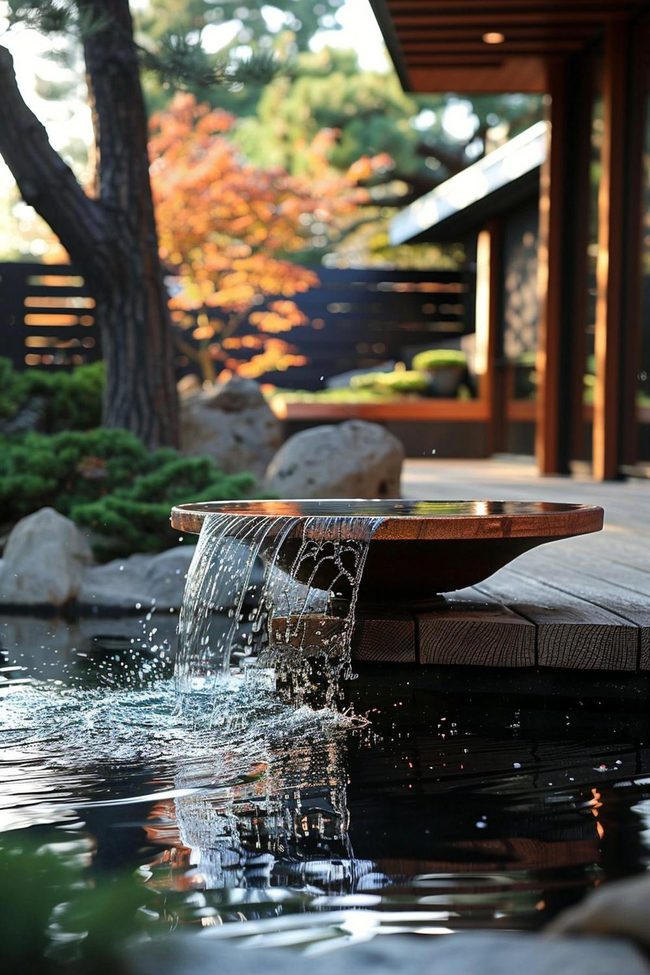
Moving water brings both soothing sounds and beautiful visuals to any deck, making it one of the most striking design additions you can make.
Dramatic multi-level waterfalls serve as artistic centerpieces that spill water down sculptural tiers, while smaller pedestal fountains can frame entryways or highlight specific views with their graceful cascades.
Rain chains offer another visually interesting option, funneling rainwater down in artistic drizzles from your gutters in copper, glass, or steel designs that come in dangling, spiral, and cup styles.
Deck-level ponds with floating plants and raised profile designs blur the boundary between indoor and exterior spaces while remaining easier to maintain, and you might pair them with decorative splash blocks or rain barrels for added character.
Even modest tabletop fountains positioned near seating areas bring miniature water zen to smaller decks and deliver relaxing bubble sounds without requiring much space.
Beyond aesthetics, these features drown out traffic noise and build peaceful backdrops for relaxation, and surrounding greenery, decorative stones, and accent lighting amplify their soothing qualities.
Proper installation matters for long-term success, so size your pumps for optimal flow, direct drainage away from your home, and position pondless waterfalls away from deck edges for safety.
Green-Edged Deck Boundary Planters
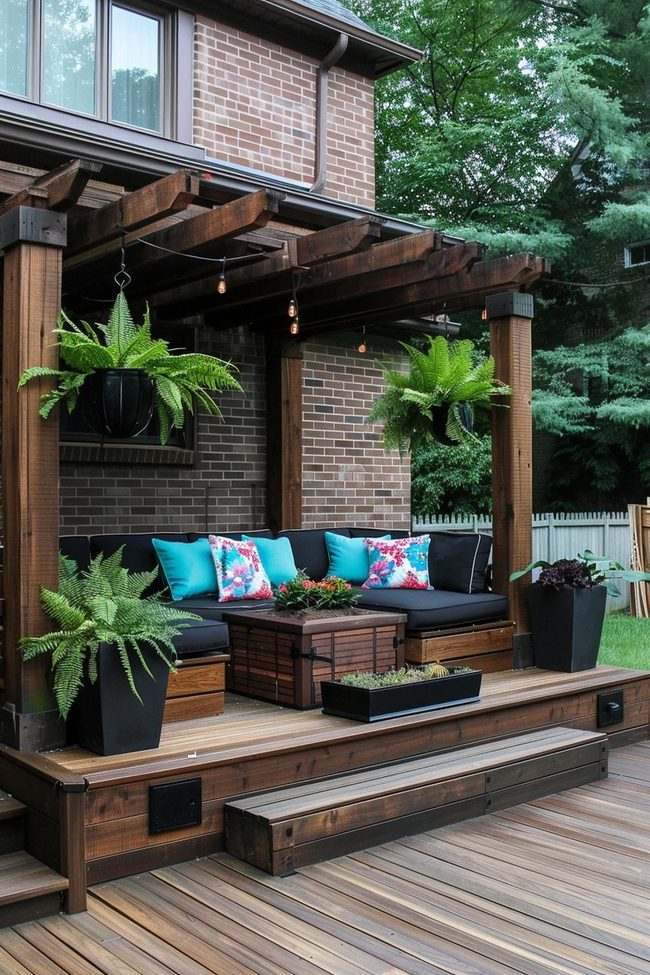
Built-in planters bring lush greenery and bursts of color directly into your deck design without consuming precious floor space or creating messy dirt problems everywhere.
You can position planter boxes along edges, in corners, surrounding support posts, beneath railings, and flanking staircases to guide foot traffic while adding visual interest.
Wood, composite lumber, galvanized metal, or weatherproof fabrics blend seamlessly with your deck, while concrete, stone, or ceramic options offer a modern edge if that suits your style better.
Trailing vines, open flowers, and edible greens spill over the edges beautifully, and mixing different heights and shapes keeps things looking fresh throughout the seasons.
Low-maintenance plants like succulents, ornamental grasses, herbs, cherry tomatoes, and hot peppers thrive in these spaces and need minimal fussing around.
Proper drainage matters here, use self-watering liners to prevent leaks onto the deck below, and pair cactus soil with succulents while using moisture-retaining potting soil for herbs and vegetables.
Solar-powered or low-voltage LED lights positioned around your planters extend the enjoyment into evening hours and highlight dramatic foliage with uplighting or add a gentle glow with downlights.
Open-Air Fire Pits Bring Warmth
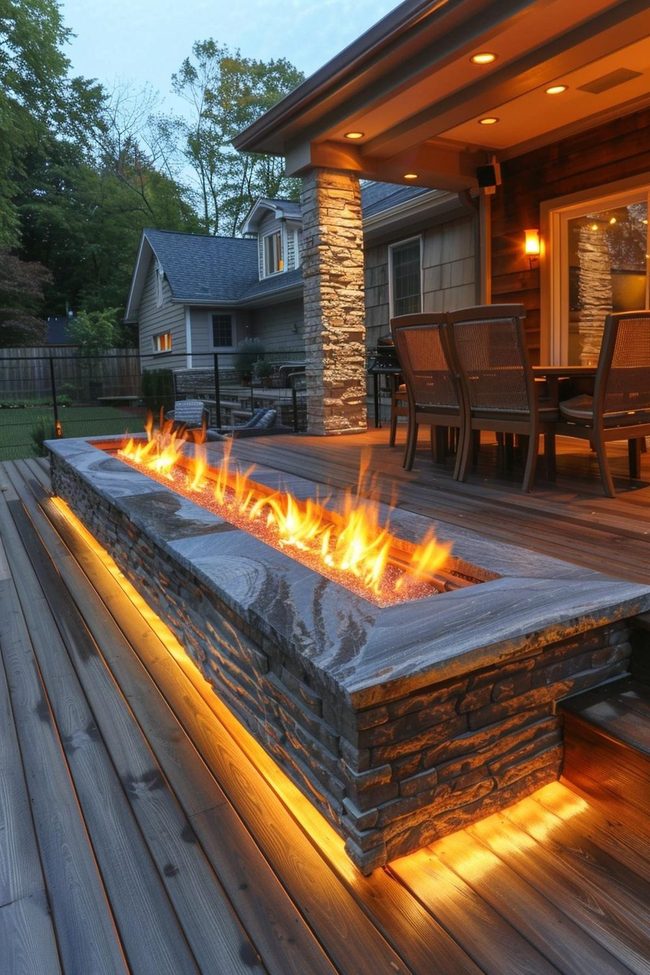
Fire features bring mesmerizing flames that instantly transform your deck with warmth and light, making them one of the most striking additions you can choose for exterior spaces.
Options range from fire pits and fireplaces to chimineas and tabletop fire bowls, throughout available in multiple shapes, sizes, and styles to match your aesthetic preferences.
Freestanding fire pits offer flexibility since you can place them wherever people naturally gather or wherever the view works best for your deck layout.
Prefabricated concrete, stone, and metal designs suit modern homes nicely, while stacked stone or large cast iron bowls deliver rustic appeal and blend beautifully with landscaping.
Built-in masonry fireplaces and chimineas provide permanent ambiance and integrate seamlessly using materials like stucco, stone, brick, or concrete block alongside proper ventilation and heat shields.
Wood-burning chimineas give you rustic character while managing smoke effectively, though bioethanol models offer cleaner burning as an alternative.
For smaller-scale warmth, tabletop fire bowls bring glowing flames right to your dining or side tables, operating on bioethanol, propane, or gel and featuring options like fireglass crystals that reflect light beautifully.
Layered Exterior Lighting Refines Decks
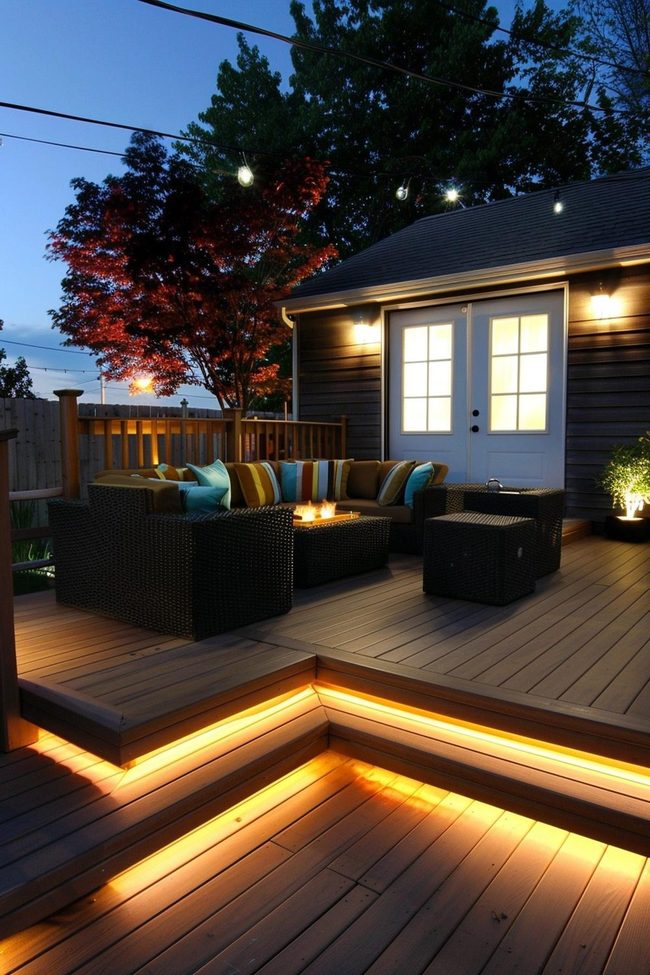
When the sun dips below the horizon, strategic lighting reshapes your deck into an entirely different space that shines with personality and purpose.
Spotlights aimed at architectural features or trees form dramatic silhouettes by positioning lights behind objects, while uplighting tucked under benches and steps casts a gentle glow that draws eyes across the space.
String lights draped overhead and lanterns hung in trees add a festive warmth and safety to your outdoor setup.
Pendant lights or chandeliers suspended over dining areas bring intimacy to evening meals, and pathway lights guide your family safely while minimizing glare.
During daytime hours, recessed ceiling lights handle adaptable to different needs tasks like cooking and cleaning, but once darkness falls, you can layer multiple light sources at different heights and brightness levels to set whatever mood suits your gathering.
Smart technology gives you real control, apps let you adjust colors and dimness instantly, program zones for one-touch ambiance, and even sync lights with music for choreographed outdoor parties.
Motion sensors and timers add convenience, while cooler color temperatures around 3000K prevent harsh shadows and uncomfortable brightness.
LED lights stand up well to weather and save money over time, so your evening oasis stays both beautiful and functional night after night.
Diagonal Oak Planks Shape Movement
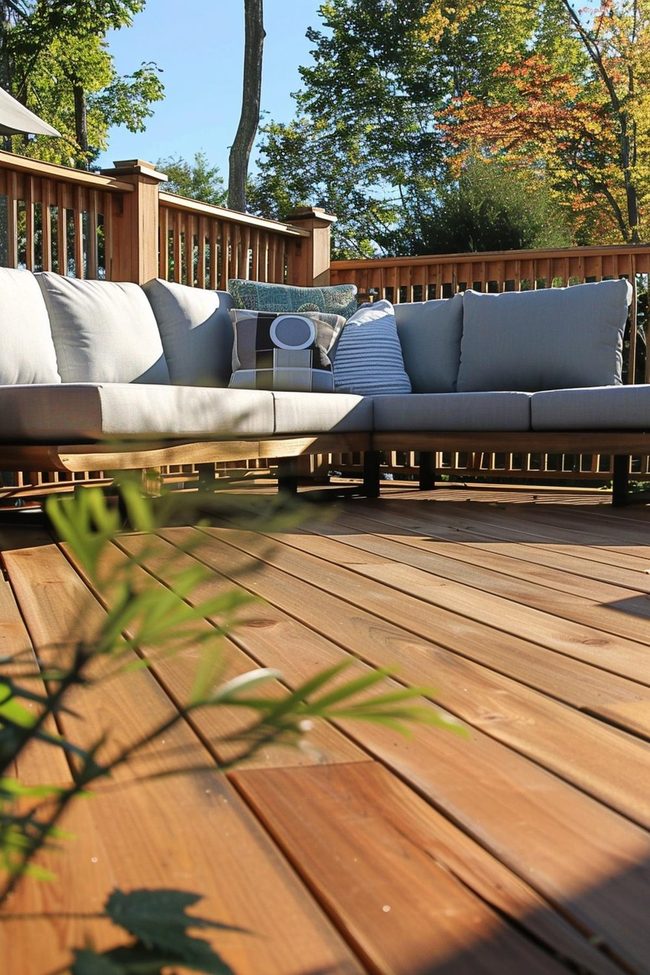
Laying your deck boards at an angle a flat surface into something with real movement and dimension, so diagonal patterns add a sense of flow that straight parallel boards simply can't match.
A 45-degree chevron style works particularly well and can actually make smaller decks feel larger while creating that satisfying zig-zag pattern across the space.
Wider planks between 8 and 10 inches really showcase this effect, and the bolder your angles, the more fluid and dynamic your deck becomes.
If you want something less intense, a 15 to 30 degree angle works better for larger decks and keeps things from feeling too busy.
Getting the math right matters here because you are able to want those board tips to meet up cleanly, and a chalk guideline helps ensure your rows stay straight as you work.
Hidden fasteners keep screws from showing at the seams, and using contrasting colors between your main boards and borders makes that chevron pattern pop even more.
Once your angled foundation is set, keep your furnishings simple with straight-lined pieces like rectangular dining sets and loungers to balance all those angles, and built-in benches along the edges help soften the stronger geometric lines.
Railings should flow with your deck's angle, while planters and greenery that mirror the same angles tie the whole look together beautifully.
Two-Tone Deck Material Contrast
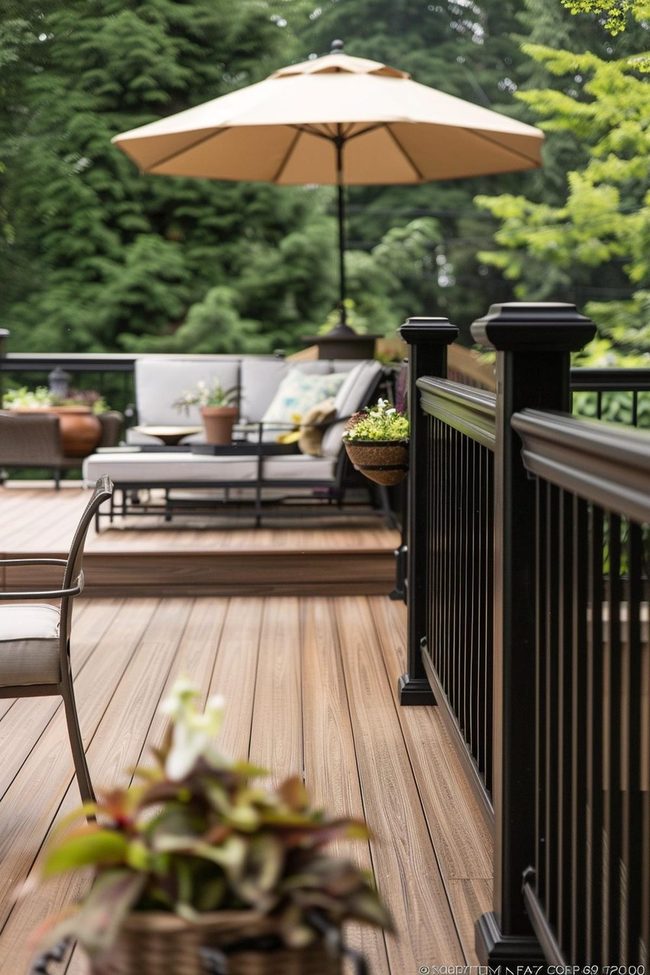
Using two contrasting colors or materials on your deck creates an immediate visual pop that defines the entire space and highlights your favorite features.
Fresh red stair risers against neutral stringers or dark trim framing light decking draw attention right where you want it, and mixing materials like gray composite with brown borders or tan tiles with espresso trim opens up endless design possibilities.
For the most harmonious look, stick to two main colors from neighboring spots on the color wheel, such as navy and tan or gray and white, or go monochromatic with light and dark shades of gray for something more understated.
You can use contrast along edges, stairs, and built-in benches to emphasize specific areas, and coordinating railings in one tone with contrasting deck boards ties the whole layout together beautifully.
When you're decorating a two-toned deck, keep your accessories simple so they don't fight with the colors themselves, black and white cushions, rugs, and planters work well, while umbrellas and pillows can echo your main tones as accents.
Different lighting styles, like combining overhead string lights with low-voltage spotlights, add another layer of interest and mood to the space.
Since contrasting colors need regular maintenance to stay sharp, I recommend renewing protective finishes and touching up worn spots routinely so the colors stay color-driven.
Glass Railings Frame Landscape
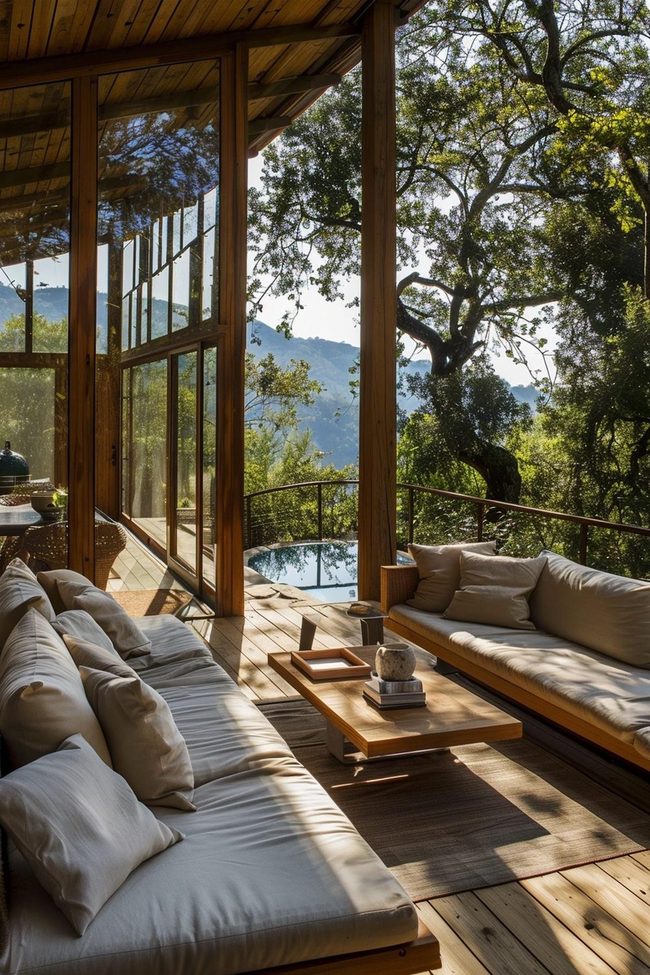
This deck's greatest strength lies in opening up your patio space, and one of the best ways to make the most of it is by framing the beautiful views that surround you.
Glass balusters along your railing work like a picture window, offering unobstructed sightlines to the scenery beyond while still providing safety and structure.
You can also use horizontal deck boards laid outward to naturally guide the eye toward distant landscapes, or position vertical boards strategically behind seating to frame views between the slats.
Pergolas, arbors, and well-placed trees act as natural viewfinders that draw attention to specific feature areas in your yard.
Plants and planters arranged thoughtfully allow you to peek through gaps toward striking vistas, and you might even angle your flooring or orient benches to capture the best sightlines from different spots.
When evening comes, spotlights shining on trees or garden areas illuminate the scenery beautifully, while lanterns and candles add warmth after dark.
Clear acrylic patio drapes and glass windscreen sections offer flexible options to highlight views while filtering light as needed.
Keep your deck simple and uncluttered so nothing distracts from the landscape around you, less furniture and fewer accessories mean your eyes stay on what matters most.
Regular pruning and maintenance of surrounding plants ensures your views stay clear and gorgeous all year long.
Intimate Deck Seating Alcoves
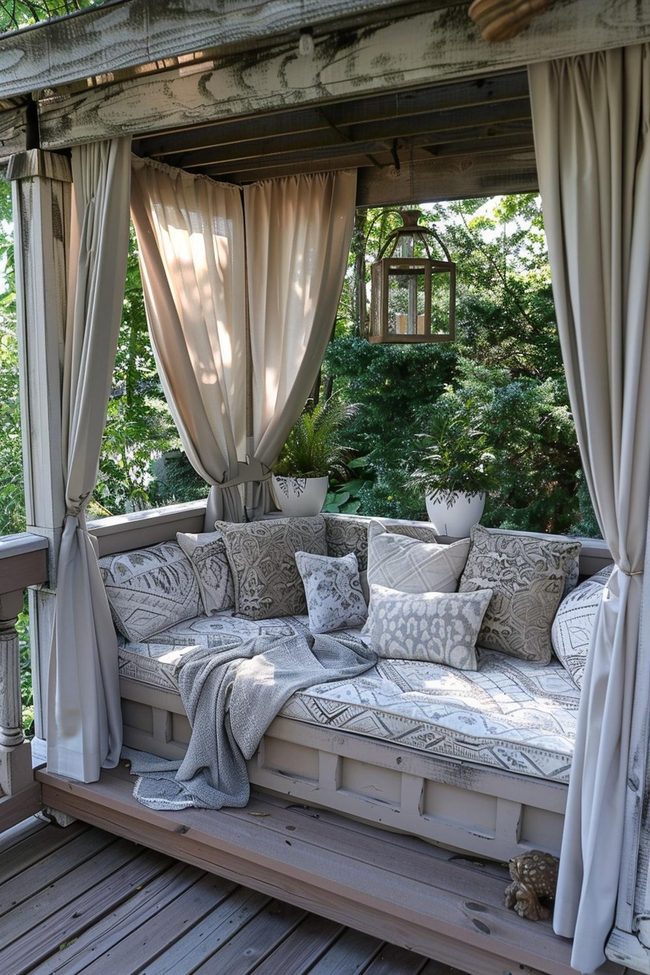
Cushioned benches draped with weatherproof blankets and pillows little refuges within your deck space, while hanging rattan chairs or swings from overhead structures let you relax surrounded by nature in seclusion.
Enclosed nooks built with benches on two or three sides, low walls, or freestanding screens offer private spots that still allow breezes to flow through and can open up whenever you want them to.
Morning coffee areas that overlook sunrise views and evening spots highlighting sunset skies make it easy to position your seating where it catches the best light and views throughout the day, and shady reading corners provide afternoon relief on well-lit decks.
Side tables holding snacks and drinks sit within arm's reach, while pendant lamps and string lights cast a calm glow that makes these spaces feel welcoming and peaceful.
Rugs add warmth underfoot and keep the aesthetic grounded without overwhelming the senses with too many accents.
Built-in or potted plants living walls of greenery that wrap around your nook, and positioning seating near existing trees or garden edges brings the open-air world closer.
Even small decks can carve out a special hideaway where you settle in alone with a book or share quiet moments with someone special, something that larger gathering areas simply cannot offer in the same way.
Olivia Martinez
Founder & Principal Designer
Expertise
Sustainable Interior Design, Residential and Commercial Space Planning, Historic Preservation and Adaptive Reuse, Custom Furniture Design, Project Management
Education
Parsons School of Design, New York, NY
LEED Accredited Professional (LEED AP)
Olivia Martinez is the founder of Archi Refresh, where she brings style and sustainability together. With a degree from Parsons School of Design and a LEED certification, she’s all about creating beautiful, eco-friendly spaces.
With over eight years in the industry, Olivia has designed everything from cozy homes to commercial spaces, always putting function and sustainability first. She loves working with local artisans and has been featured in design publications for her fresh take on green living.
When she’s not designing, Olivia enjoys exploring historic architecture, painting, and spending time with her rescue dogs, Luna and Max.