
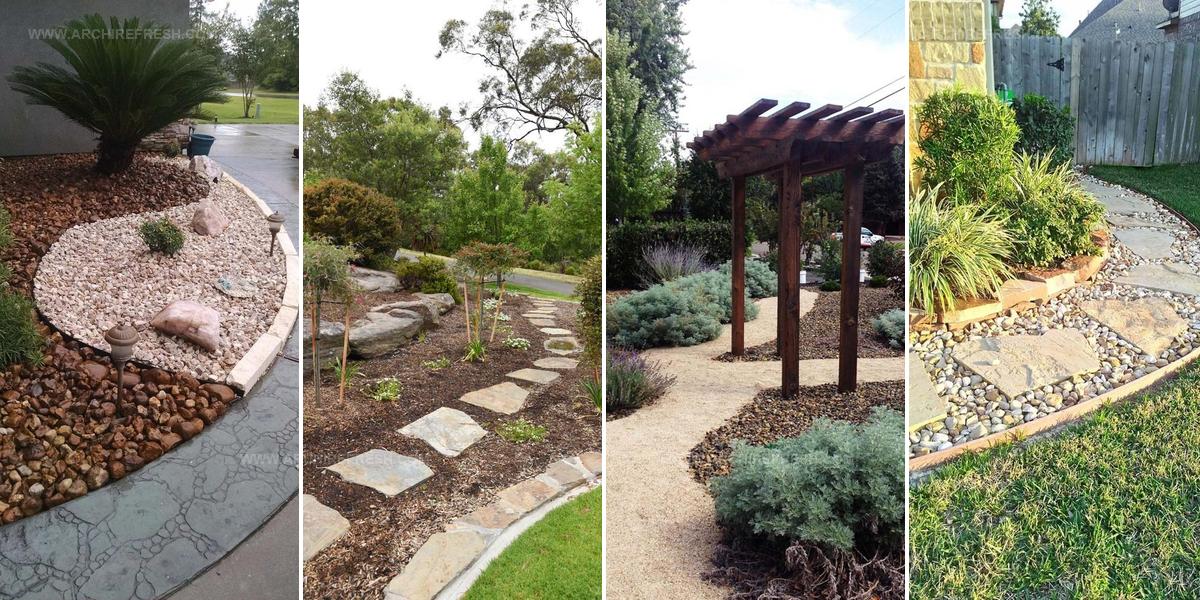
28 Rock And Mulch Front Yard Landscaping That Creates Natural Beauty
Rock and mulch front yard landscaping creates homeowners an appealing way to reduce maintenance while enhancing curb appeal.
Combining stones with organic materials creates visual interest that suits various architectural styles and climates.
This approach conserves water better than traditional grass lawns do, making it practical for regions experiencing drought conditions.
Different textures and colors work together to establish depth and dimension across outdoor spaces.
Many properties benefit from the durability that rocks provide alongside the soil-enriching qualities mulch delivers over time.
Both materials complement plants beautifully, framing flowerbeds and pathways with clean, defined borders.
If you want a yard that looks polished without demanding constant attention, this combination delivers exactly what makes landscaping both functional and beautiful.
Stone Edging With Desert Blooms
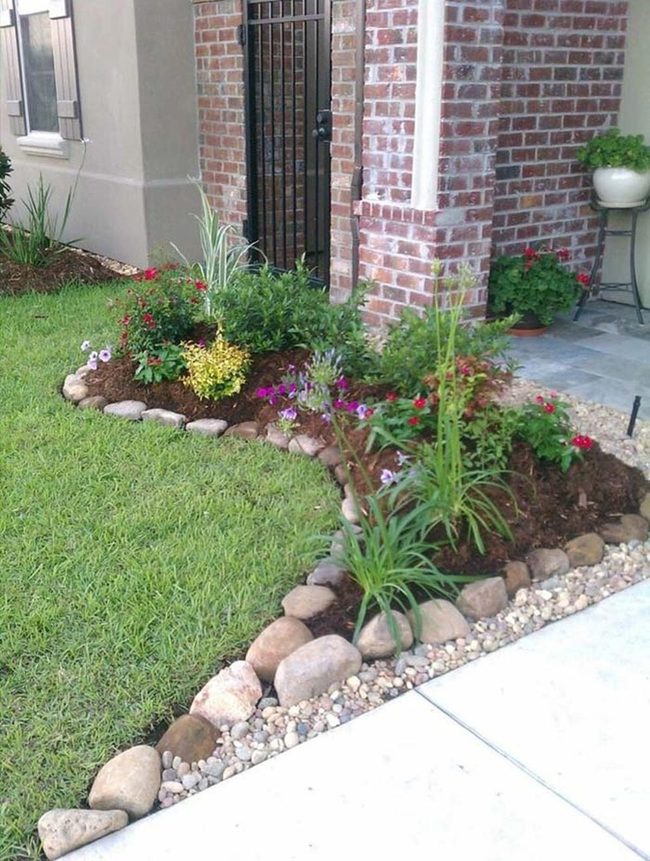
Smooth rocks and crushed gravel form excellent edging for flower beds, and they bring texture while keeping your plants right where you want them without demanding constant upkeep.
When you layer low-growing flowers such as desert roses or Dianthus among these stones, you get splashes of color that make the bed pop against the gray and neutral tones of the rock surround.
Rocks hold their shape and appearance season after season, which means less work for you and more time enjoying your garden.
I like how simple this solution is because it looks polished while being genuinely easy to maintain.
The flowers draw attention with their bright blooms while the rocks ground everything and prevent soil from spreading into unwanted areas.
Stacked River Rocks Ground Design
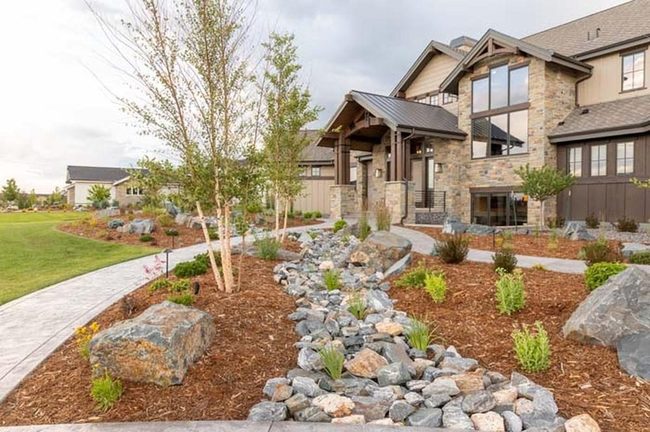
Piles of smooth river rocks stacked across your yard give ground level landscapes real depth and dimension that catches attention right away.
When you gather rocks that match in size and tone, they form a natural-looking pattern similar to actual riverbeds and flow seamlessly across the space.
Light-colored stones next to darker mulch layers produce a striking contrast that makes both materials stand out more and shows off what makes each one special.
This kind of setup works well if you want a landscape that needs less water since rocks don't require the same upkeep as plants and grass do.
Once you lay down your rocks, you spend way less time watering and maintaining the area compared to traditional garden beds.
If low-maintenance landscaping appeals to you, this option delivers both practical benefits and visual appeal that lasts through seasons.
Mulch-Defined Pavers With Layered Plants
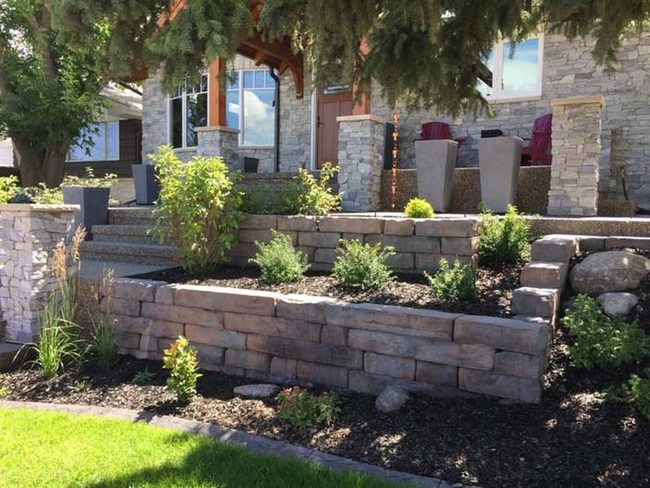
Mulch spread between pavers gives your landscape sharp edges and an organized appearance that really stands out.
When you match your pavers to the bricks in a retaining wall, the whole space feels connected and intentional.
Low-growing shrubs soften the hardscape lines and prevent the area from feeling too rigid.
Arranging plants in layers across the yard adds dimension and makes the space feel larger than it actually is.
By mixing structured elements like pavers and walls with softer plantings, you end up with a yard that balances both order and energy.
The result is a landscape that feels both organized and alive at the same time.
Swaying Grasses Meet Stone
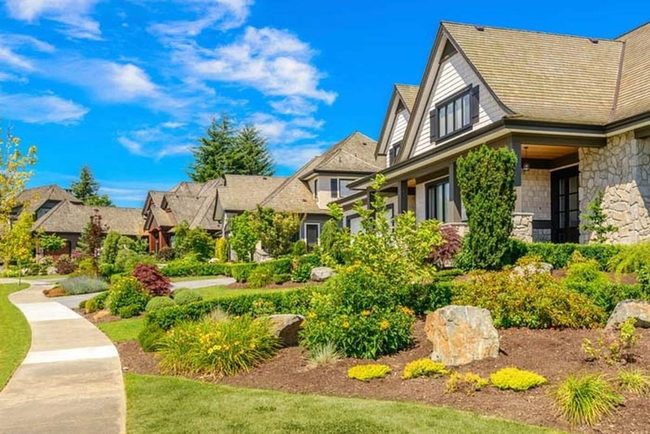
Ornamental grasses swaying in the breeze alongside natural stone formations catch the eye immediately and bring organic beauty right to your front yard without demanding constant care.
You get a balanced, peaceful landscape where neither element overwhelms the other and both feel like they belong together.
Most gardeners appreciate this setup because it performs well across different climates and regions, so you don't have to worry about whether your growing zone will cooperate.
Maintaining this combination takes minimal effort on your part, and you'll spend less time weeding and watering than you would with traditional flower beds.
Rocks help with drainage and reduce water needs, while the grasses fill in empty spaces and add visual interest throughout all four seasons.
Golden Cacti Low Water Landscaping
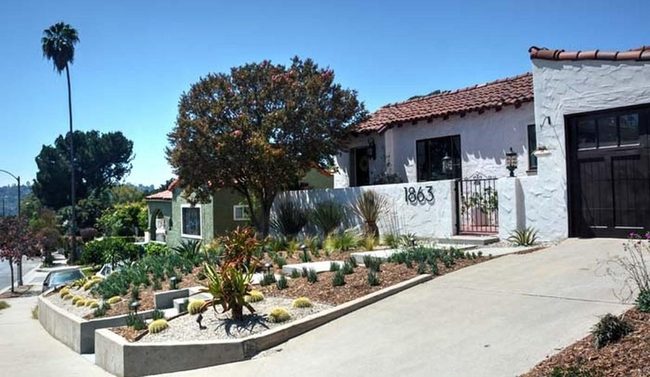
Golden barrel cacti and other succulents stand out in dry climates because they need almost no water and still look stunning in your front yard.
Semi-dwarf trees work just as well if you prefer something taller, and many plants like Mexican Bird of Paradise adapt beautifully when you prune them into tree shapes for added height and structure.
You'll find these drought-tolerant options require far less maintenance than traditional grass, which means less time spent watering and more time enjoying your outdoor space.
Building a landscape around these hardy plants makes sense when rainfall is scarce in your area.
Water needs drop significantly, so your utility bills decrease along with the effort required to keep everything alive.
Low-maintenance landscaping doesn't mean boring, and you can mix different textures and sizes to keep the yard interesting.
Your front yard becomes both beautiful and sustainable when you choose plants built for dry conditions.
This approach rewards you with a functional space that thrives naturally in your climate.
Tiered Stone And Mulch Slopes
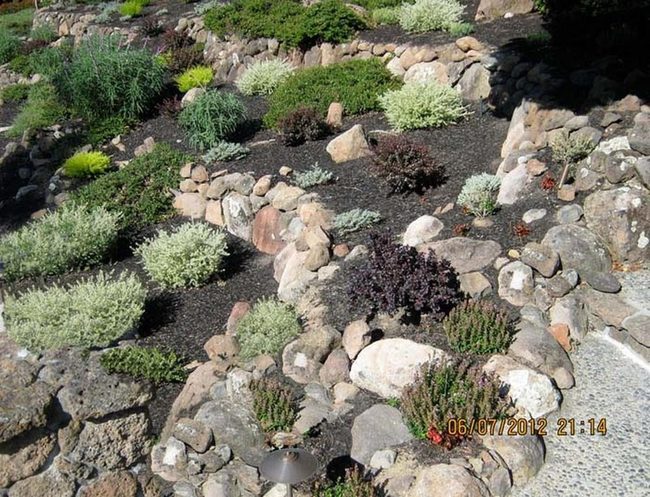
Mulch and rocks offer a smart way to handle sloping yards by adding texture and practicality to uneven ground.
Tiered stone retaining walls stop soil erosion while mulch keeps weeds at bay.
When you combine these elements, you get a layered appearance that feels both natural and organized at the same time.
Steep front yards become easier to care for and look put-together without much effort.
Your landscape gains definition from the different levels and materials working side by side.
The result is a yard that functions well and looks balanced throughout the seasons.
Boulder Water Feature Landscape
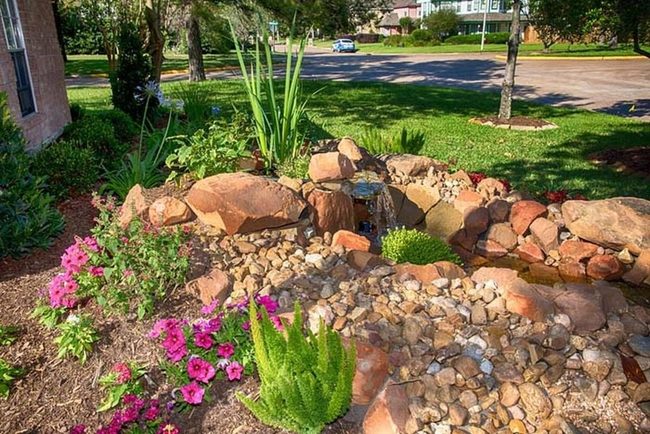
Natural boulders placed throughout your yard act as stunning sculptural pieces that immediately catch attention with their dramatic shapes and textures.
When you combine these rocks with a water pump system, you get a bubbling brook that appeals to both your eyes and ears at the same time.
Large stones positioned in your front yard help establish a polished, artistic look that feels intentional and well-designed.
Water features add another layer of interest since the gentle sound of flowing water draws people in and makes the space feel more dynamic.
Rocks of varying sizes work best when you arrange them with some thought about balance and flow.
Beyond their beauty, these stones can help with drainage and prevent erosion on slopes.
Boulders give you a way to add character to your landscape without needing much upkeep once they're in place.
Dark Mulch, Green Shrubs, Instant Polish
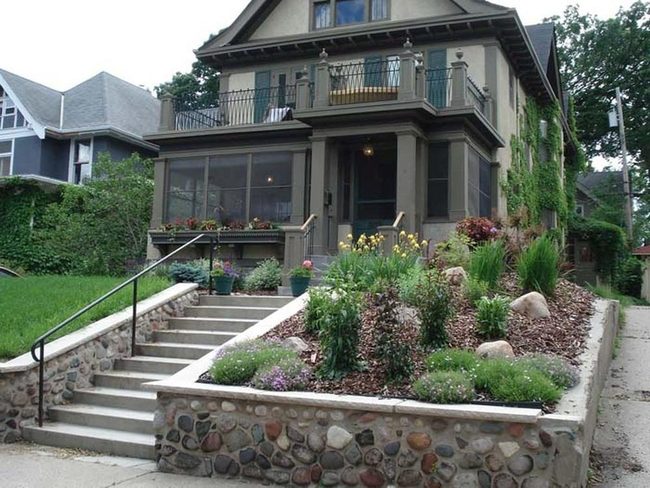
Raised mulch beds packed with slow-growing shrubs and ornamental grasses give your front yard an instant boost that really stands out.
This stands out because how it sits between your home and lawn, stretching the eye across your whole property and making everything feel bigger.
Since these plants grow slowly, you won't be fighting with constant trimming and maintenance just to keep things looking sharp.
The combination fits naturally into any yard style, whether you're going for something modern or traditional.
Your property automatically looks more put-together and cared for, even if the rest of your landscape needs work.
This kind of bed is an easy way to add character without needing a total redesign or huge budget.
Stone Barriers With Grass Transitions
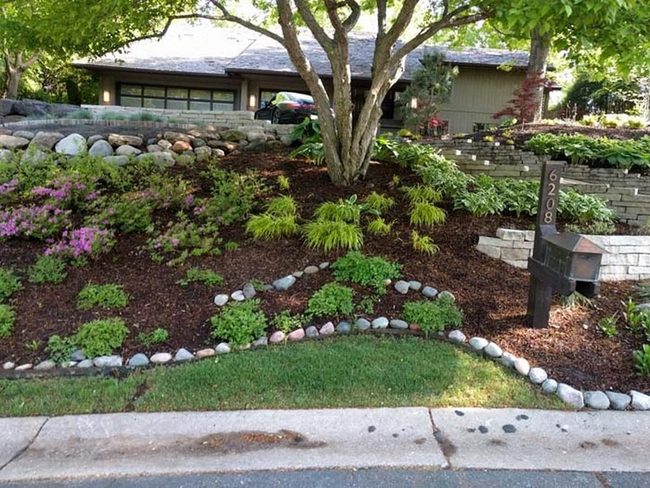
Larger rocks serve as powerful barriers along your landscape edges, stopping soil from washing away on slopes and hills.
Between the mulch and these substantial stones, a strip of grass introduces natural texture and variation that keeps the space from feeling flat.
You'll find that this combination of materials works on both practical and visual levels, giving your yard structure while looking intentional.
Small grassy sections between the mulch and stone create nice transitions that help everything feel balanced.
Rock placement holds everything in position so your landscape stays intact through seasons of weather and wear.
The overall setup gives you something that handles both function and appeal without requiring constant maintenance.
By layering these elements thoughtfully, you end up with edging that protects your yard and looks great at the same time.
Mulch And Stone Slope Control
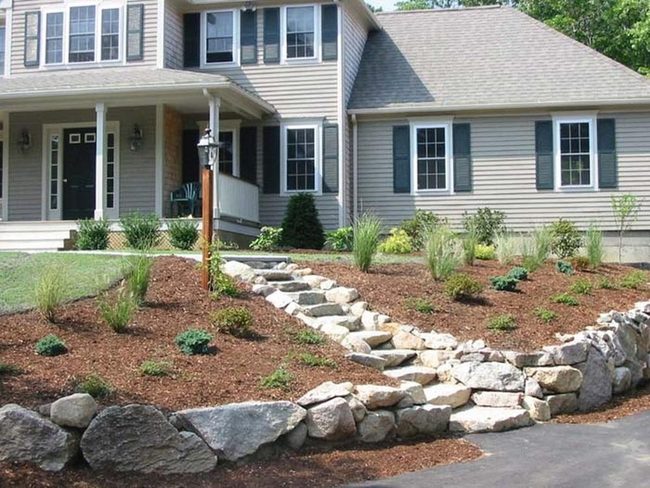
Mulch on hillsides does double duty by stopping soil erosion and making your landscape look better at the same time.
Stone stairs and a retaining wall help you move around the slope safely while protecting the earth underneath.
Ground cover plants settle in more easily once mulch breaks down and feeds the soil over the seasons.
You get practical benefits alongside visual improvements when you combine these elements together.
Retaining walls hold everything in place and add structure to uneven terrain.
Stone pathways give you safe footing as you navigate up and down.
Mulch keeps working quietly beneath the surface, improving soil health year after year.
It's a straightforward way to handle slope challenges and enhance your yard at once.
Succulents And Stones In Drought Design
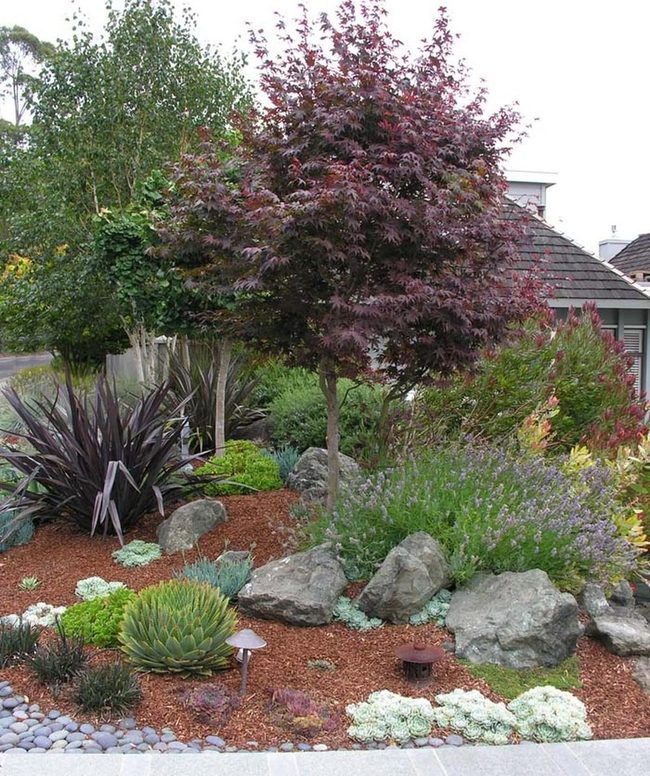
Mulch and rock gardens perform best in dry climates and provide a stylish way to handle water shortages.
Rocks act as natural anchors throughout the space and cut down on how much you need to water, all while building visual appeal in your landscape.
You can add ornamental succulents like Parry's agave or hens and chicks to bring in extra color and interesting textures that make the garden feel more alive and dynamic.
Flowing Stone Patterns Garden
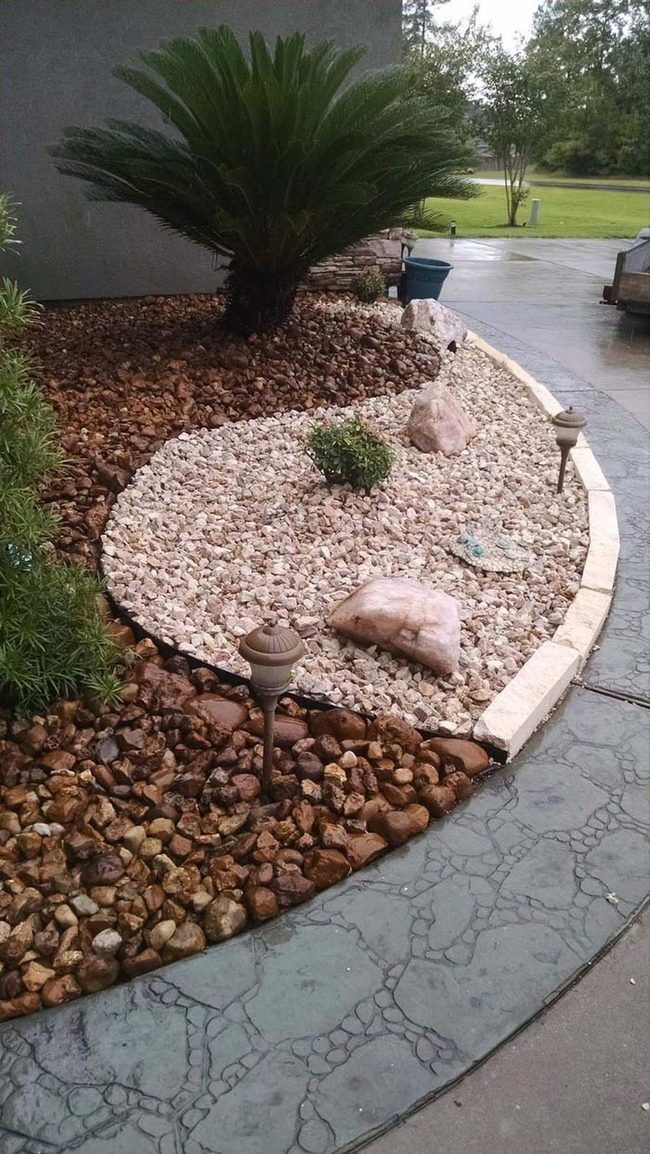
Garden filled with rocks and gravel arranged in flowing patterns becomes one of the first things you notice when you step outside, and combining bigger brown stones with fine beige gravel brings together different colors and surfaces that catch attention.
Those wavy lines sweeping across your yard aren't just pleasant to look at; they also lead your gaze naturally from one spot to another and make the whole space feel planned.
You can use this kind of rock arrangement to show off your style and give your outdoor area real personality.
I like how simple materials like stones can transform a basic yard into something that looks put together and designed.
Grouping different sizes and shades of rocks guides people's eyes exactly where you want them to go.
Getting creative with stone patterns and textures is an easy way to make your outdoor space feel complete without spending a lot of money or effort.
White Rocks Green Shade Garden
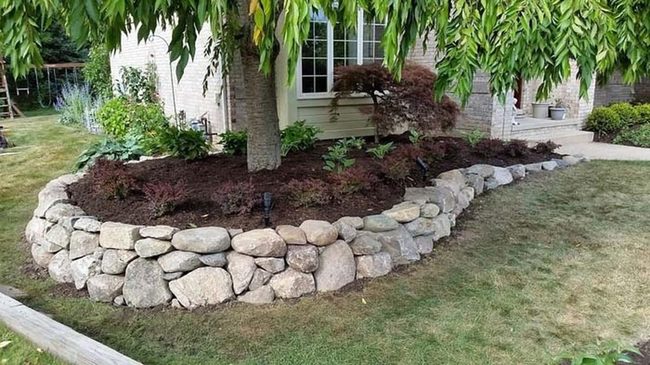
Building a raised rock bed beneath large trees solves the tricky problem of landscaping in these shadowy spots, and the white rocks immediately grab attention with their bright, clean appearance against darker soil and tree bark.
You can fill the spaces between rocks with fast-growing plants like Hostas, which spread quickly and soften the hard edges of the stone structure.
Lush green foliage bounces off the pale rocks and creates layers of texture throughout the area.
Rocks don't disturb tree roots the way digging and planting in traditional garden beds might, so your tree stays healthy while you get a polished look.
White stones reflect light into shaded zones and brighten up spots that don't get much sun.
Plants add movement and life to what could otherwise feel like a static pile of rocks.
When you step back and look at the finished bed, the combination of light-colored stone and dense greenery gives your yard both visual interest and practical functionality.
Raised Beds Frame Your Foundation
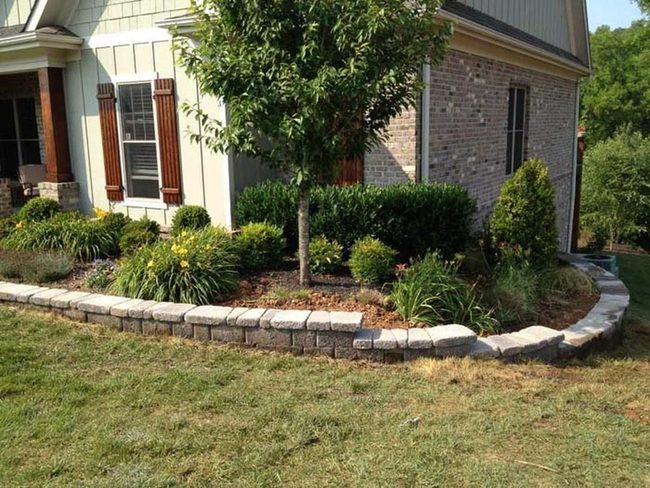
Raised garden beds positioned along your home's foundation offer an immediate visual boost by smoothing out bumpy terrain and introducing natural greenery to your front yard.
Height variation from the raised structure breaks up flat ground and keeps the space from feeling boring or empty.
Managing plants becomes easier when you work with beds at an accessible level, and this setup helps everything grow in a balanced, organized way that frames your house nicely.
Layering different plants at various heights gives your yard dimension and prevents the space from looking bare or one-dimensional.
When you maintain these beds over time, the landscape keeps its full appearance and continues to look well-established.
Combining function with looks, raised beds solve drainage problems while boosting curb appeal all at once.
Two-Tone Stone Walkway With Layered Planting
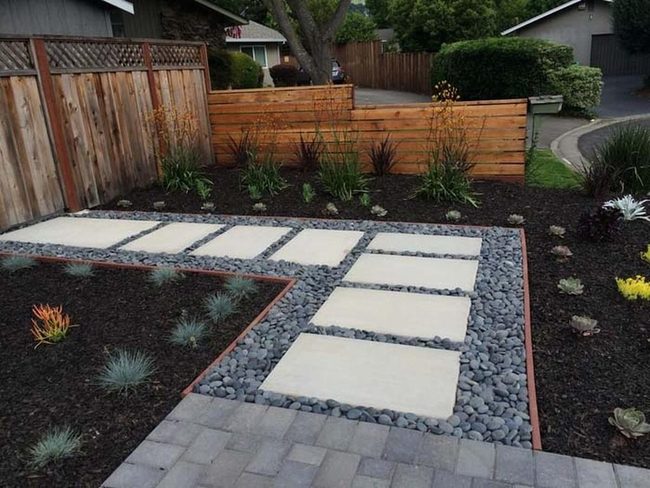
Modern pavers made from natural stone or porcelain offer you endless ways to build a clean, minimalist walkway that feels current and refined.
Sticking with just two colors in your paver design gives the whole space a sleek, contemporary feel that looks put together without trying too hard.
Along the sides of your walkway, garden beds give you room to plant succulents and flowering shrubs that bring in different textures and greenery.
These plants add dimension to what might otherwise be a flat, simple path.
You can mix in low-growing options with taller varieties to build layers across your landscape.
This combination of structured hardscaping and living plants balances the orderly lines of your pavers with natural softness.
Rock Channel Edges With Living Grasses
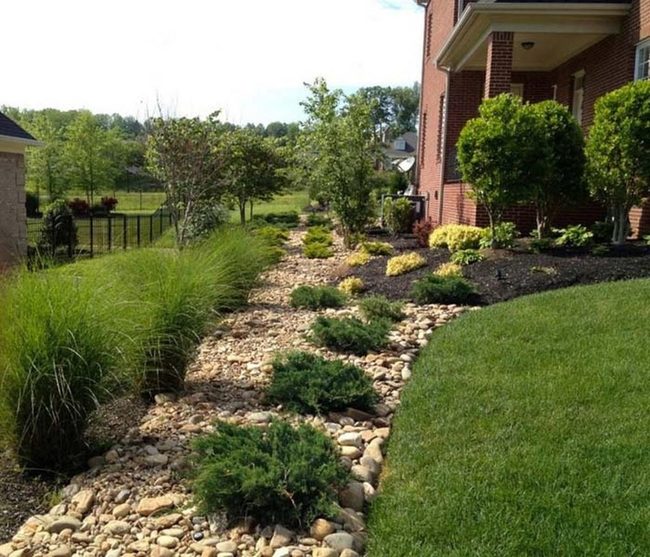
Rock and mulch channel running along your home's side keeps water moving where it needs to go and prevents soil from washing away, and when you add ornamental grasses and dwarf junipers along the edges, you get even more protection against erosion.
Beyond the practical benefits, this setup gives you a sharp, attractive border between your lawn and property line that looks intentional and polished.
You can mix different sizes of rock and mulch to add visual interest, and the grasses sway gently in the breeze to soften the harder landscape elements.
It's one of those solutions that solves a real problem and happens to look good doing it.
Plus, maintaining this channel takes minimal effort once it's established, so you get lasting appeal without constant upkeep.
Brick And Stone Slope Control
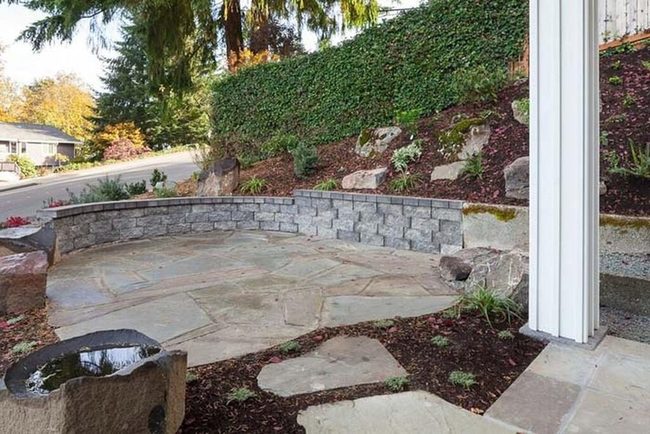
Precast brick retaining walls combined with oversized rocks stop your eyes immediately with their striking presence on a sloped yard and serve the practical purpose of preventing soil from washing away.
When you pick rocks that match your patio pavers, the whole space feels connected and flows from one area to another.
Beyond the good looks, this setup keeps your soil stable and prevents erosion problems down the road.
You get a yard that looks neat and organized while also being built to last through heavy rains and shifting ground.
It's the kind of solution where function and appearance work hand in hand without one feeling forced.
Mulch Beds With Instant Garden Height
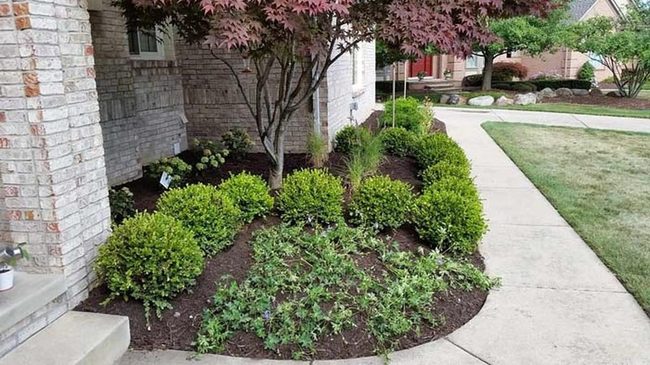
Mulch beds packed with shrubs and groundcover plants give your garden a full, lush appearance without demanding much upkeep, and we appreciate how straightforward this approach really is.
A dwarf Japanese maple or similar small tree placed in a corner instantly adds height and seasonal color that draws the eye upward.
Beyond the visual appeal, mulch keeps working for you below the surface by feeding the soil and supporting healthy plant growth over time.
This design works because this combination gives even modest spaces a polished, established look within a season or two.
Low-maintenance plants mean you spend less time gardening and more time enjoying your outdoor area.
I like how simple this setup is because it works for both experienced gardeners and beginners tackling their first landscaping project.
The layering of shrubs, groundcover, and a focal tree creates dimension and keeps interest throughout the seasons.
Oversized Stone Pathway Statement
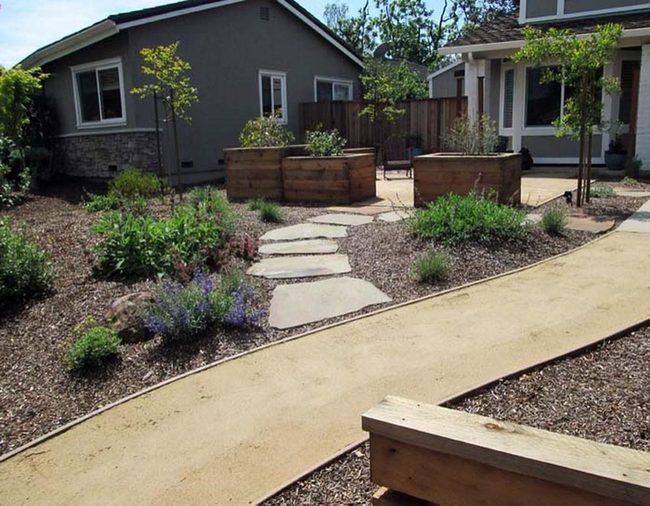
Oversized stepping stones serve as a dramatic entry feature that directs visitors toward patios and backyard spaces instead of straight to your front door, and they establish an immediate sense of grandeur while making it simple to navigate around your yard.
You can position these stones along natural pathways where people naturally walk, which means you're working with how your guests actually move through the space.
Their size makes them impossible to miss, so they anchor the landscape with real presence.
Since you can arrange them however suits your property best, this allows you to control the flow and create a layout that feels right for your home.
Guests benefit from clear guidance through your outdoor areas without needing arrows or directions.
This straightforward approach to landscaping gives you major impact without requiring complicated installations or constant upkeep.
Oversized Boulders Define Spacious Landscapes
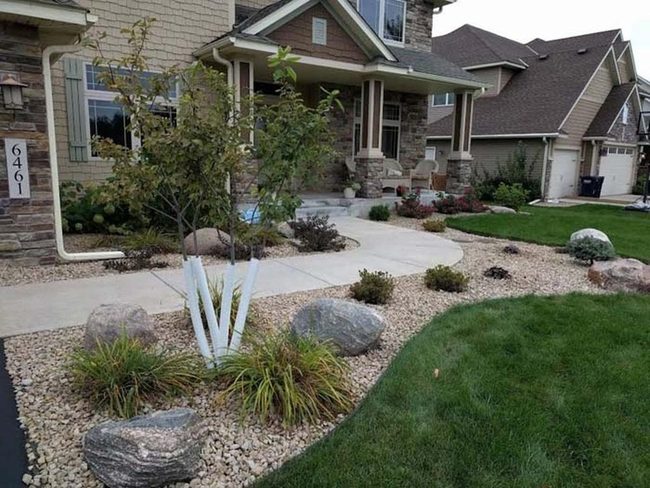
If you have a spacious yard and a big home, oversized boulders can anchor your landscape in a way that actually matches the scale of your property.
Small rocks tend to disappear against the backdrop of a large residence, so we recommend going bold with fewer, substantial stones instead.
One or two impressive boulders make a much stronger statement than dozens of tiny ones scattered around.
Large rocks establish balance and give your garden real presence without feeling cluttered.
You'll find that this approach keeps things from looking lost in all that open space.
It's about letting quality speak louder than quantity when you're working with a bigger canvas.
Large Stones Break Mulch Monotony
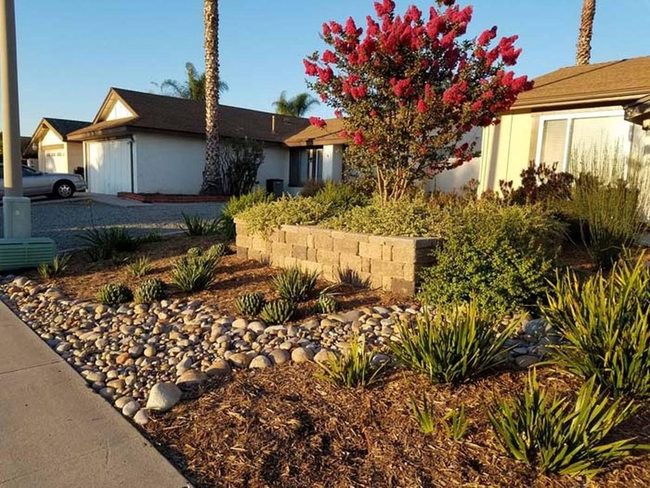
Large stones scattered through a mulch-based yard break up the sameness and add visual depth to your landscape design.
Unlike pea gravel, bigger rocks naturally discourage people from walking across certain areas and act as a physical boundary for garden beds.
When you mix these two materials together, your yard gains both texture variety and practical function.
Switching between mulch and stone throughout your space prevents the yard from feeling flat or one-dimensional.
Your landscaping stays interesting to look at without requiring constant upkeep.
Stones also handle foot traffic better and last longer than mulch in high-traffic zones.
Flagstone Paths With Gravel Base
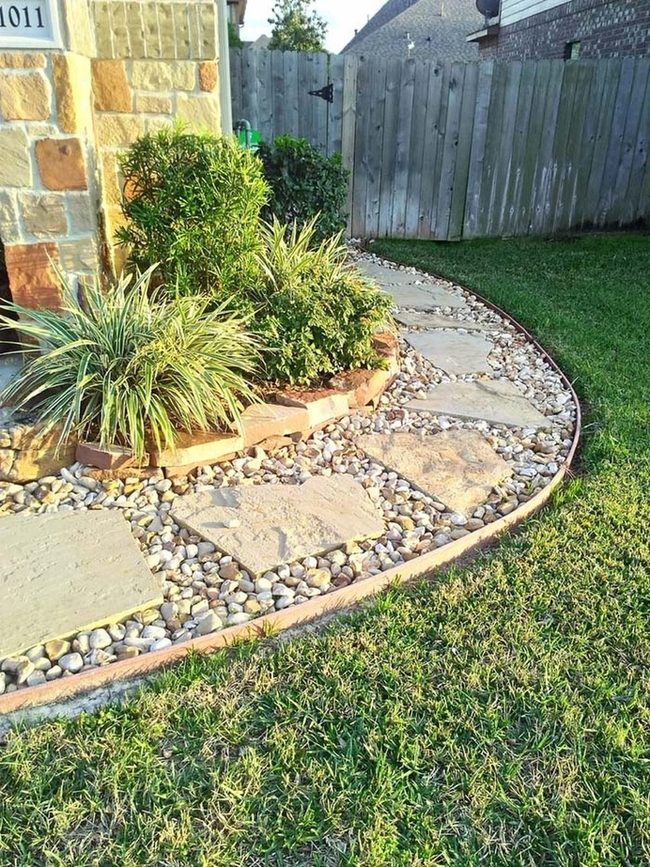
DIY flagstone and crushed gravel walkway makes an excellent use of those worn paths already forming in your yard, and the combination gives you a clean, rustic appearance without demanding much upkeep.
You'll start by laying the flagstone, which is straightforward work, and the crushed gravel underneath serves as a stable base that holds everything steady.
Once in place, your path will stay durable through seasons of foot traffic, and the natural materials blend seamlessly with most outdoor spaces.
Installing this kind of walkway costs less than hiring professionals while delivering real results you can see right away.
You won't need special equipment or advanced skills to finish the job, making it a weekend project many homeowners tackle alone.
Weather and time won't break down the structure quickly since both flagstone and gravel hold up well outdoors.
If worn patches appear later, replacing a few stones or refreshing the gravel layer takes only an afternoon.
Flagstone Path Pink Flowering Edges
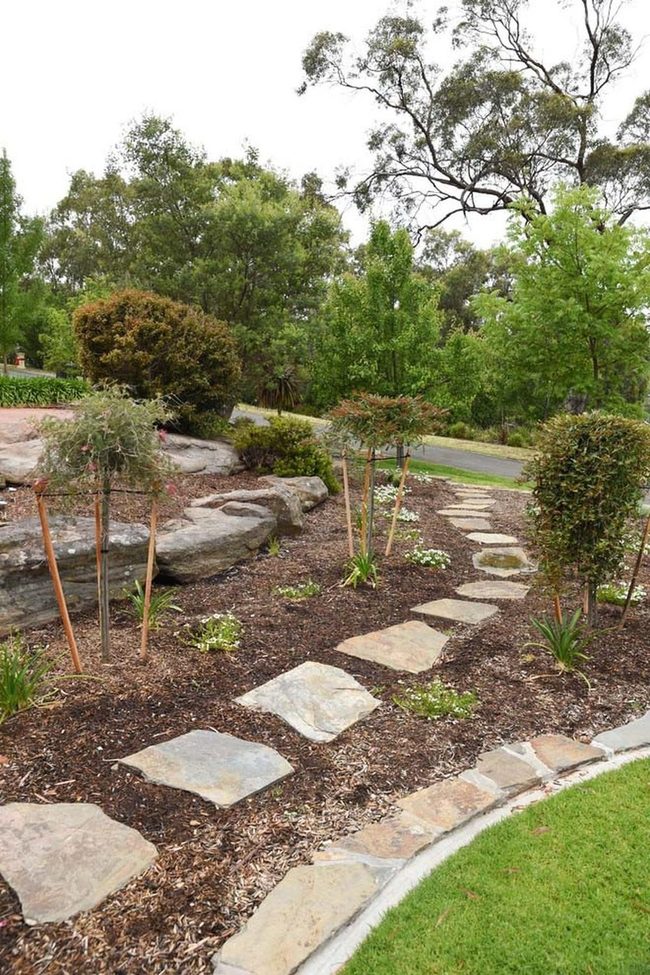
A flagstone walkway gives the yard a natural path that feels calm and welcoming.
Mulch around the stones helps the walkway blend into the landscape.
Flowering shrubs along the edges add color and make the path feel more alive.
This simple combination gives the entrance a garden-like feel without making it look overdone.
Flagstone Terraces Stop Erosion
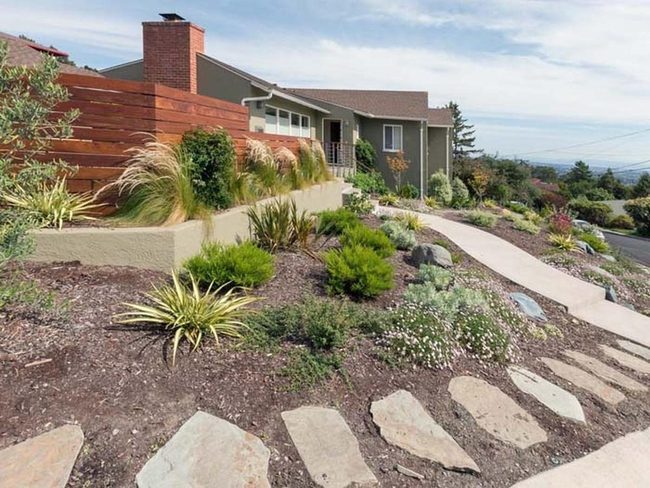
Large flagstones scattered across hillsides offer a dramatic way to stop soil erosion in its tracks, and the visual pull comes from how they form natural terraces that grip mulch and ground cover without needing expensive retaining walls.
Placing these stones strategically turns a sloping yard into something that looks both natural and intentional.
Your hillside stays protected from washing away while gaining that warm, earthy character that makes outdoor spaces feel grounded and real.
The beauty here is that you get function and aesthetics at the same time, and the maintenance becomes easier since everything stays where it belongs.
Soil erosion stops, plants thrive better in their designated spots, and your landscape looks like it belongs exactly where it is.
Concrete Edges Mulch Clean Boundaries
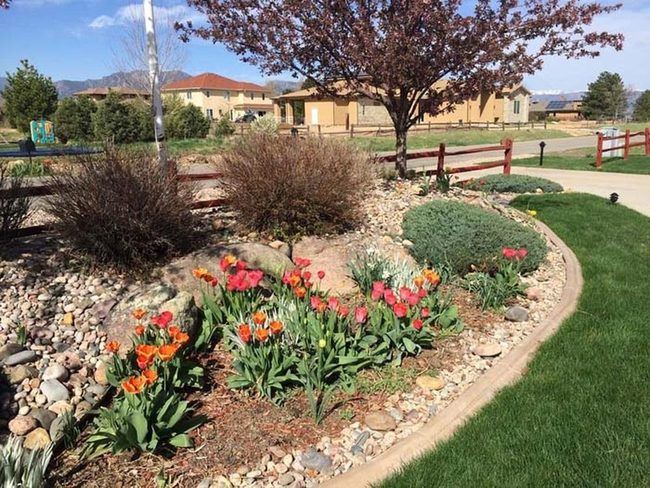
Concrete edging paired with mulch creates a clean, structured appearance that works well for defining garden spaces, and this setup keeps mulch contained while maintaining neat boundaries between your lawn and pathways.
Layering in taller shrubs for privacy alongside smaller rocks for textural contrast adds dimension to your yard and prevents the space from feeling flat.
You can adjust the height and placement of plants to suit your needs, whether you want screening from neighbors or simply more visual interest throughout the area.
Mixing different rock sizes and plant heights means the eye has something to explore from multiple angles.
Ground-level elements like mulch and stones anchor the design, while taller vegetation draws attention upward and outward.
Including both horizontal and vertical elements helps make even modest yards feel more expansive and thoughtfully arranged.
Segmented Garden Beds Better Yield
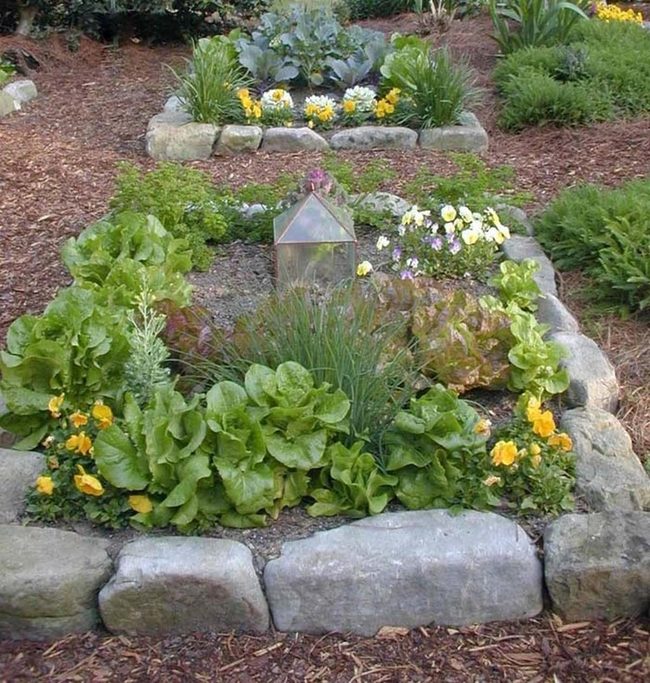
Splitting your flower bed into smaller sections gives you distinct areas where different plants can shine and makes the whole space more interesting to look at.
You can use these separate zones to try out new plant combinations or build themed gardens that each tell their own story.
When you break things into manageable patches instead of maintaining one sprawling bed, the work becomes less overwhelming and you can focus on keeping each section healthy.
Dividing the space this way also helps you rotate plants seasonally and prevents certain areas from getting too crowded or overgrown.
This approach lets you move around the space more easily and reach plants that need attention.
The zones you create give your yard structure and help you see which combinations work best for future growing seasons.
Light Gravel Paths Guide Gardens
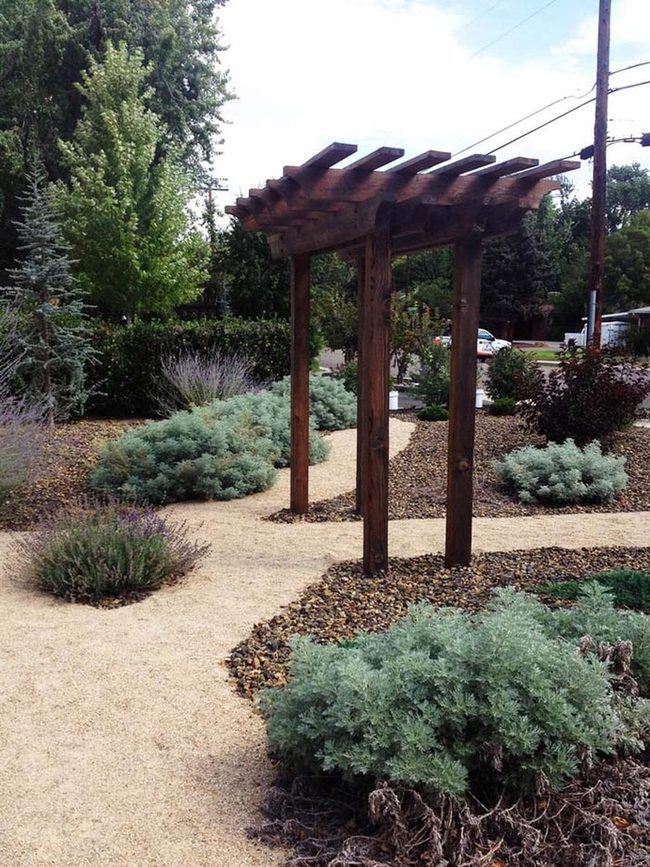
Crushed gravel paths stand out beautifully in any yard, and their light color makes a sharp contrast against dark mulch beds that helps people find their way easily.
The paths guide visitors naturally through your garden or landscaping, and you can adjust or refresh them whenever you want.
Since gravel requires just occasional raking and leveling, you won't need special tools or skills to keep it looking good.
Most homeowners find the cost reasonable compared to other pathway options, and you can cover large areas without breaking your budget.
Whether your yard is small or sprawling, gravel pathways adapt to your needs and fit into many different design styles.
Many people choose this material because it balances function with affordability, making outdoor spaces feel organized and easy to navigate.
Gray Stone Borders Dwarf Tree
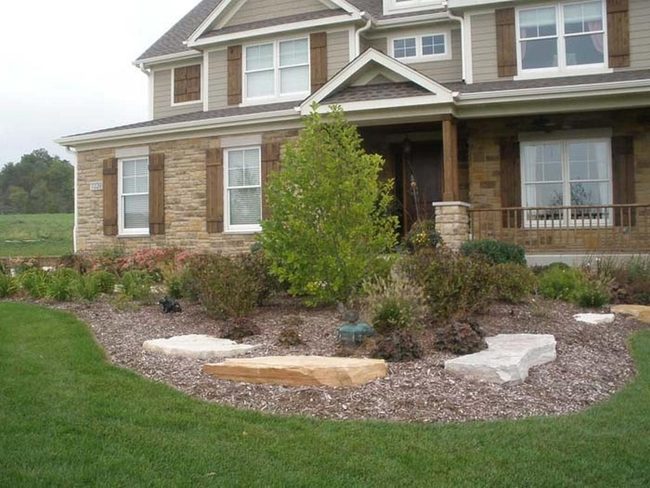
Large flagstones surrounding a garden bed create an immediate visual impression, especially when you pair them with a dwarf tree to add some vertical interest and height.
Since flagstones keep soil and mulch contained within the borders, your garden stays neat and organized through all seasons.
Busy homeowners appreciate how this setup requires minimal maintenance while still looking intentional and well-kept.
You won't spend your weekends fighting with mulch that spills into your lawn or dealing with erosion issues.
With flagstones in place, you get a functional design that looks sharp without asking much from you in terms of ongoing care.
Michael Harris
Senior Content Editor
Expertise
Home Décor Content Creation, Interior Design Journalism, Editorial Oversight, Digital Media Strategy, Team Leadership and Mentorship
Education
University of Queensland, Brisbane, Australia
Queensland University of Technology (QUT), Brisbane, Australia
Michael Harris is the senior content editor at Archi Refresh, where he turns home design trends into engaging, easy-to-follow articles. With a journalism degree from the University of Queensland and a digital communication certification from QUT, he knows how to craft content that informs and inspires.
With over 10 years of experience in lifestyle and design media, Michael has shaped editorial strategies, mentored writers, and helped readers refresh their spaces with practical tips. His work blends storytelling with expert advice, making home decor more accessible to everyone.
Outside of work, Michael enjoys DIY projects, exploring Brisbane’s art scene, and teaching digital literacy workshops.