
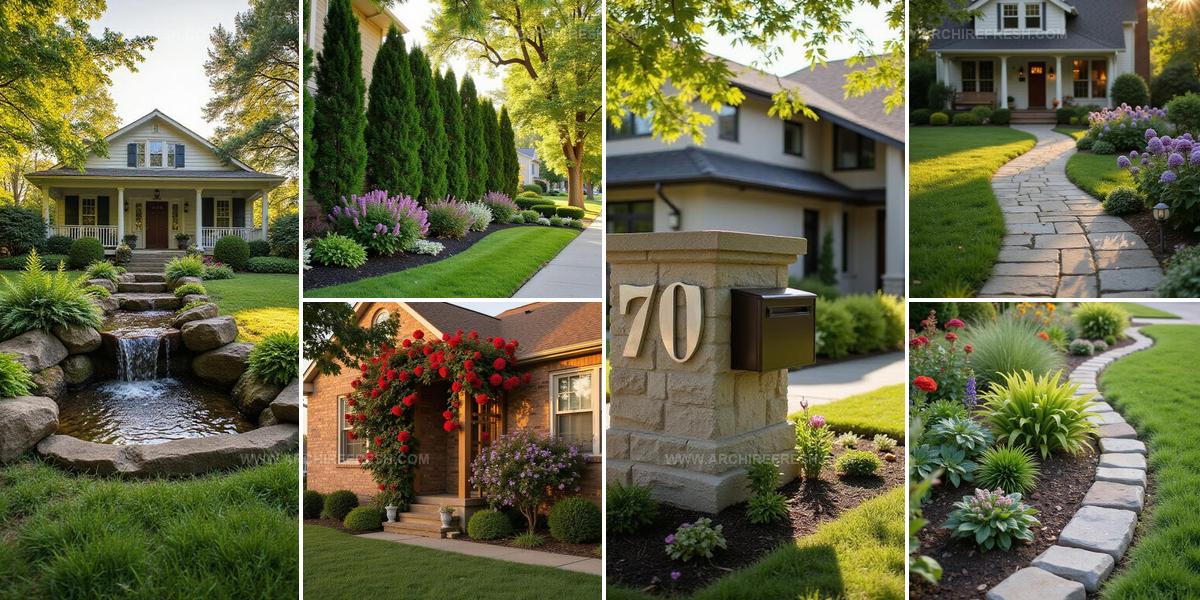
18 Bold Front Yard Design Ideas That Catch Every Eye
A striking front yard design can completely change how people view the home before anyone steps inside the door.
Beautiful landscaping and thoughtful layout choices make properties stand out on any street while adding substantial value.
Homeowners often overlook the potential of this outdoor space to make powerful first impressions.
Smart planning transforms ordinary lawns into welcoming environments that reflect personal style and enhance curb appeal.
Creative approaches range from minimalist modern concepts to lush garden arrangements that suit different tastes and budgets.
Simple updates like pathway adjustments, plant selections, or focal points can dramatically improve the overall appearance without requiring massive renovations.
The right combination of elements will help you craft an exterior that neighbors admire and visitors remember long after they leave.
Gray Stone Pathways Frame Yard Beds
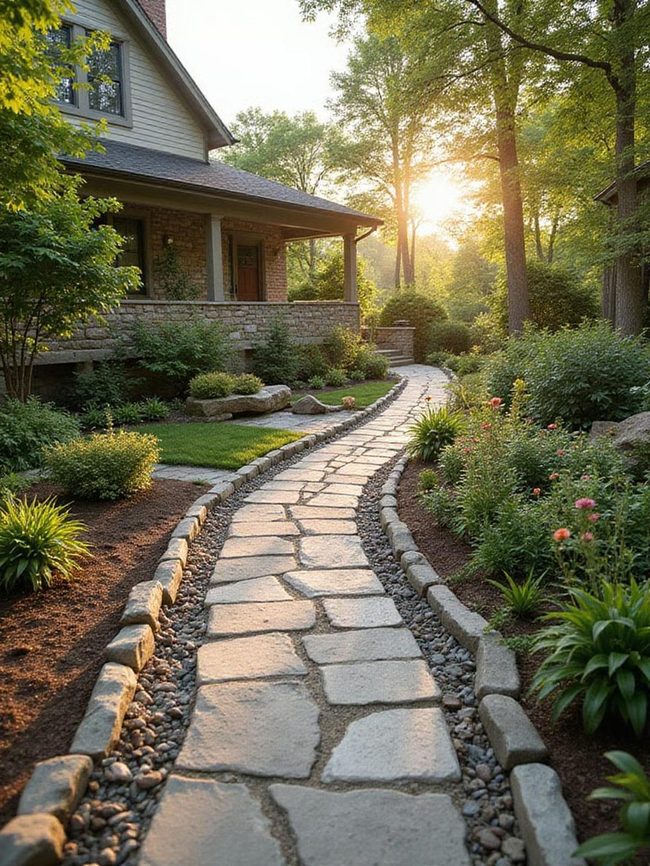
Stone materials deliver immediate visual interest to your front yard through their rich array of textures and natural color variations, and they work equally well with modern homes, traditional architecture, or anything in between.
Flagstone creates stately outside living spaces, river rock adds dimension to garden beds and dry creek features, cobblestone brings old-world character, and granite stands up to heavy use while framing steps and walls beautifully.
Beyond what you see, stone serves real functional purposes, it levels out sloped terrain for planting, keeps walkways stable underfoot, and helps water drain properly through your landscape.
Pairing these harder materials with gentleer elements like mulch, plants, and soil keeps your design from feeling too hard-edged and helps everything feel balanced.
We recommend mixing in organic materials around your stone features so the space feels welcoming rather than sterile.
Starting with quality stone as your foundation makes it easier to add other elements later without feeling out of place.
You can find that stone is one of the most durable choices you can make, and it gets better looking as it ages naturally over time.
Low-Maintenance Gravel Garden With Stone
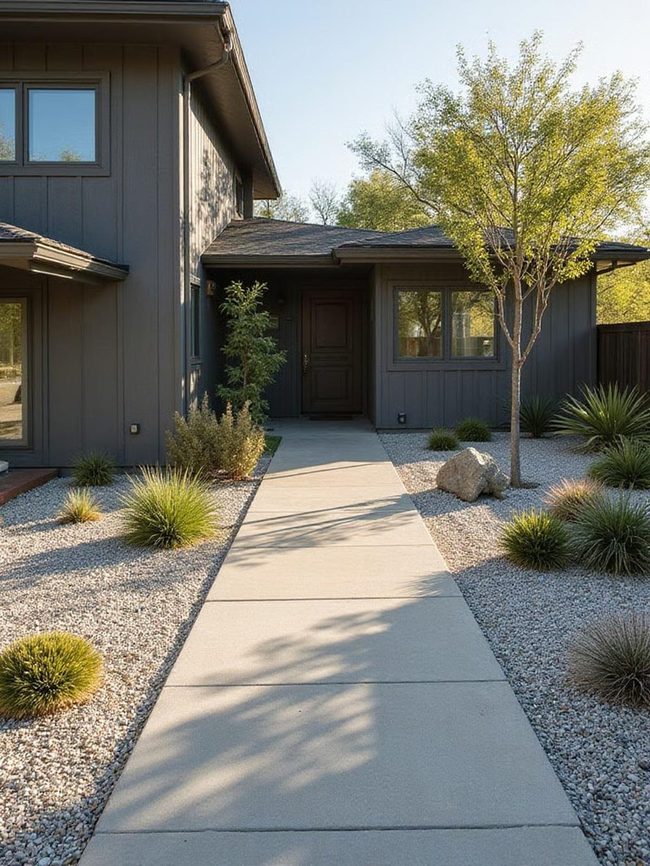
For a front yard that feels modern and requires minimal care, gravel gardens deliver striking visual appeal with drought-tolerant plants and decorative stone that need far less watering and upkeep than traditional lawns.
Sedum, lavender, and ornamental grasses flourish in these spaces and their interesting shapes stand out beautifully against the textured stone backdrop.
Mediterranean herbs scattered throughout bring both fragrance and fresh ingredients right to your door.
Large rocks, driftwood, or metal sculptures placed strategically add personality and anchor the minimalist look without cluttering the space.
Beyond aesthetics, these gardens handle dry conditions well and adapt better to our changing climate while demanding less work from you throughout the year.
I enjoy seeing how simple with the layout, keeps things while still delivering a polished, contemporary feel that looks intentional and well-designed.
You get a front yard that feels both sophisticated and practically easy to maintain in any season.
Illuminated Pathways Guide Nighttime Safety
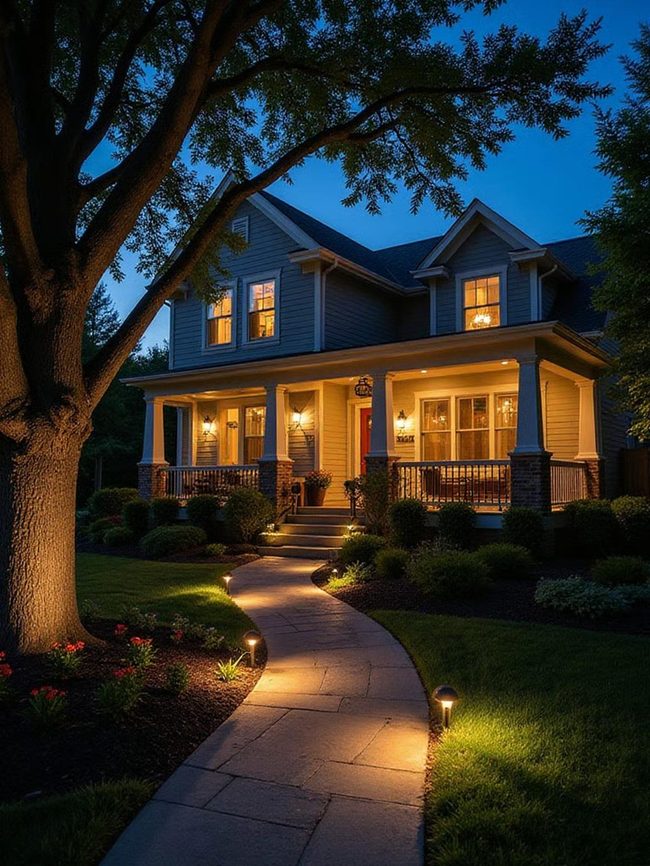
Well-planned lighting your front yard after dark and keeps it looking great while making the space safer and more secure.
Pathway lights guide people safely across your landscape, spotlights draw attention to trees or building features, and ground-level lights add a gentle glow without being obvious.
String lights hung through branches bring a festive quality that shifts the whole mood of your yard at night.
You may want to resist overdoing it and avoid that airport runway look by choosing where light goes and keeping things balanced.
Good outdoor lighting can boost your home's value significantly and also discourages unwanted visitors from approaching your property.
Mix different types of lights together for depth and interest, and remember that sometimes less actually works better than flooding every corner with brightness.
Once your lighting is in place and drawing the eye upward and across the space, you're ready to move on to defining garden beds with sharp, clean edges that will look even better under your new lighting scheme.
Statement Tree Front Yard Focal Point
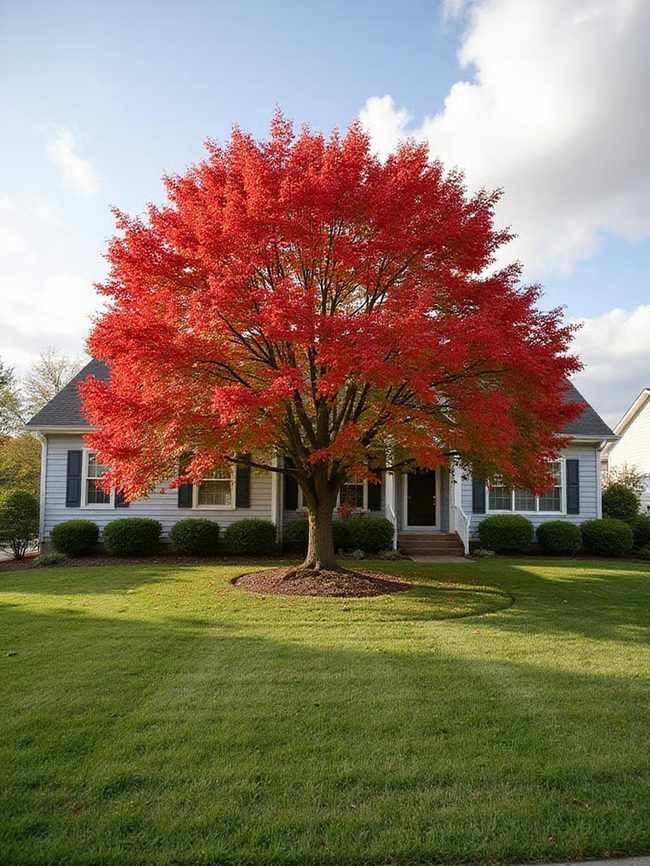
Each well-placed tree becomes the striking centerpiece of your front yard, offering shade and boosting your property value while supporting birds and beneficial insects.
When picking your statement tree, you will want one that delivers interest across all seasons, think spring flowers, summer shade, fall color, and interesting bark or winter structure.
Japanese maples bring delicate texture, flowering dogwoods offer seasonal beauty, and crepe myrtles give you long-lasting summer blooms to enjoy.
Surrounding your feature tree with complementary perennials or groundcover completes the picture and ties the space together visually.
One challenge you might face is predicting how large the tree will grow and what shape it'll take as it matures, which matters for ensuring it won't crowd your space or bump into power lines and utilities.
It's worth spending time researching the tree's full potential before planting.
If you're looking for something more modern in your front yard design, gravel gardens offer a sleek alternative worth exploring.
Either way, the right tree choice reworks your yard into a more interesting and valuable exterior space.
Green Hedges Four Feet Privacy
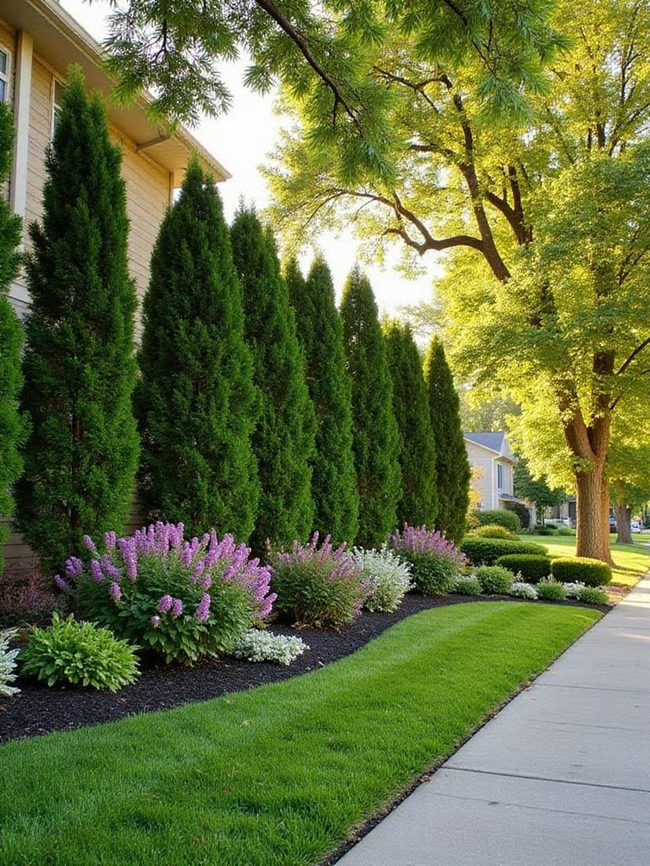
Tall evergreen shrubs and hedges standing four to six feet high give you year-round privacy while staying proportional and welcoming to your home.
Arborvitae, boxwood, yew, and holly work well depending on where you live and how much space you have available.
If you want something that changes with the seasons, flowering shrubs like hydrangea and lilac offer beautiful blooms and screening at the same time.
Strategic planting lets you build secluded spaces in your front yard without making your home feel closed off or defensive.
Getting the height right matters since you want enough coverage for privacy when you're sitting down, but not so much that it blocks sightlines and makes everything feel fortress-like.
This balance between privacy and curb appeal is totally achievable with the right plant choices and placement.
We can absolutely design front yards that feel both sheltered and open at the same time.
Flowing Water Sounds For Relaxation
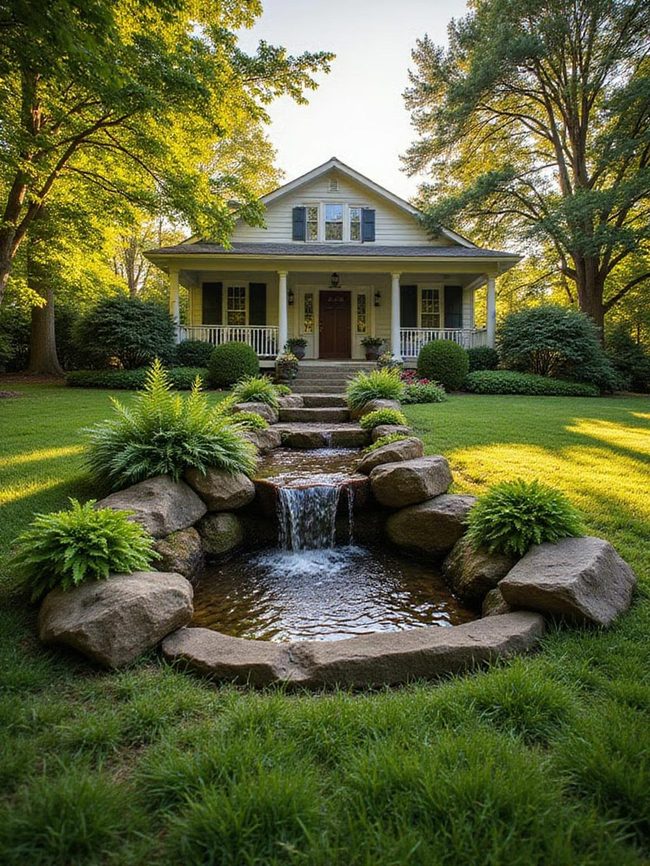
Water features bring a sense of calm to your yard space, and their gentle sounds transform your front yard into a peaceful retreat while masking street noise and attracting birds and beneficial insects that boost your garden's health.
Self-contained fountains offer straightforward installation with little upkeep, and bubbling rocks deliver natural charm without complicated mechanics.
Pondless waterfalls give you the soothing sound and movement of falling water while skipping the maintenance demands of a traditional pond.
A simple bird bath adds wildlife interest and requires almost no effort or money to set up.
Science shows us that water sounds actually lower stress and anxiety, so your front yard becomes a space where you can truly relax and unwind.
Once you have your water feature in place, you can focus on adding plants and greenery that will complete your yard design.
Climbing Vines Frame Your Entrance
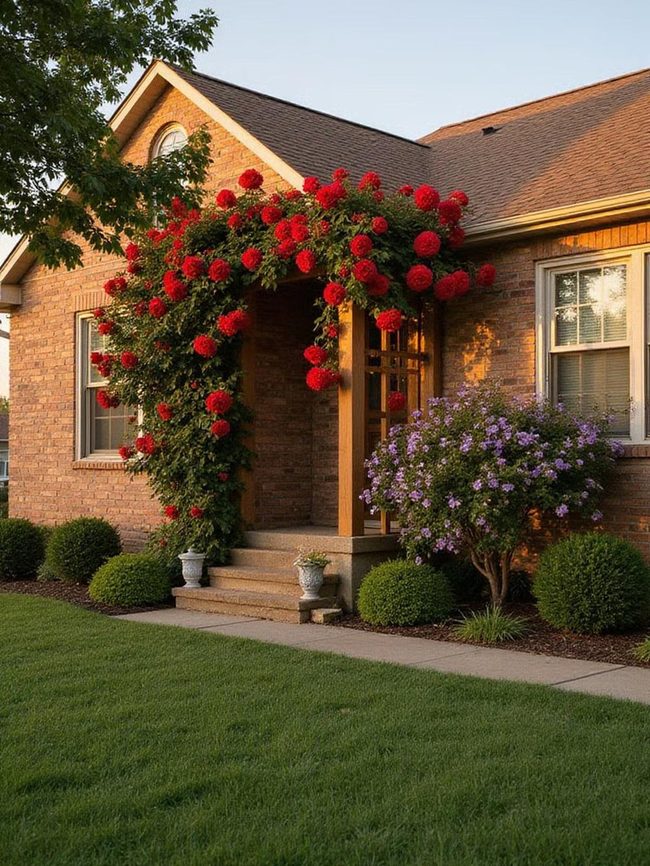
Going vertical with climbing plants and trellises alters your front yard by drawing attention upward and making even small spaces feel taller and more impressive, so don't just stick to ground-level landscaping.
Clematis vines spread with flowers, climbing roses bring timeless beauty, honeysuckle attracts hummingbirds, and ivy offers thick green coverage, though some varieties spread aggressively and need monitoring.
Your trellis, arbor, or pergola should match your home's style and be strong enough to handle fully grown plants as they mature.
Certain climbers like wisteria have remarkable longevity and can outlive generations, becoming part of your home's story for over a century.
These vertical structures soften hard walls and break up straight lines that otherwise dominate front yards.
When you choose plants suited to your climate and sunlight, they'll thrive and fill your space with greenery and seasonal blooms.
We all benefit from having a beautiful open-air area where relaxation comes naturally and the view keeps improving year after year.
Metal Address Numbers Frame Front Entrance
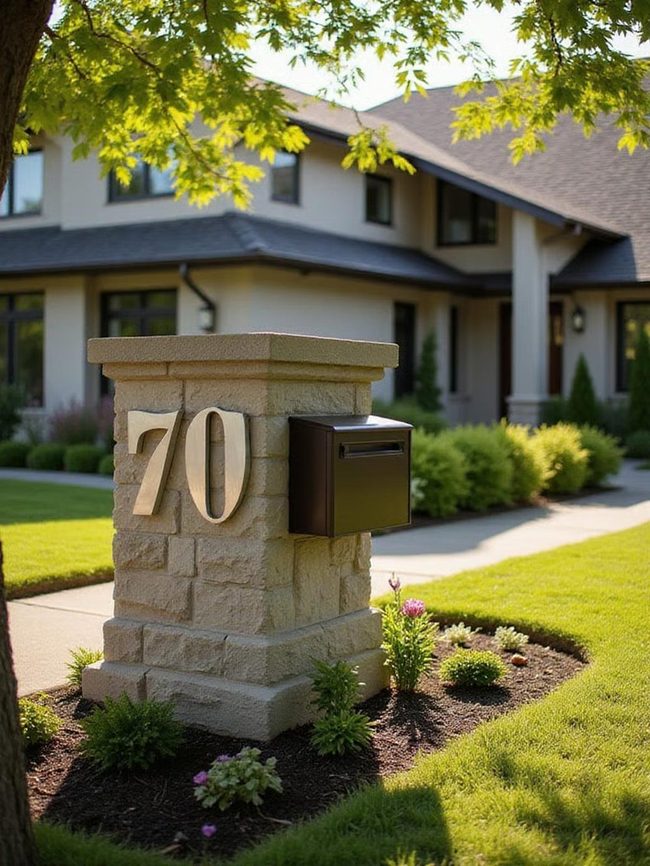
Don't overlook how address numbers and mailboxes can shape your front yard's appearance, since these small elements serve both function and beauty in your home's entrance.
Metal digits work well for modern houses while ornate styles suit traditional homes better, and you could want them large enough to read from the street with proper lighting for evening visibility.
Mailboxes deserve the same design attention as other yard features, so consider materials that match your home's exterior or place small garden beds around them to blend them seamlessly into your landscape.
Mounting address numbers on a stone pillar or embedding them into a planter box ties them directly to your overall yard design.
Plants positioned around your mailbox can enhance the area while keeping the box itself accessible and clearly visible.
These finishing touches might seem minor, but they complete how all parts of your front entrance work as one unified look.
When you treat address numbers and mailboxes as actual design pieces rather than purely easy to maintain items, your whole front yard feels more considered and polished.
Metal Yard Edging Sharp Lines
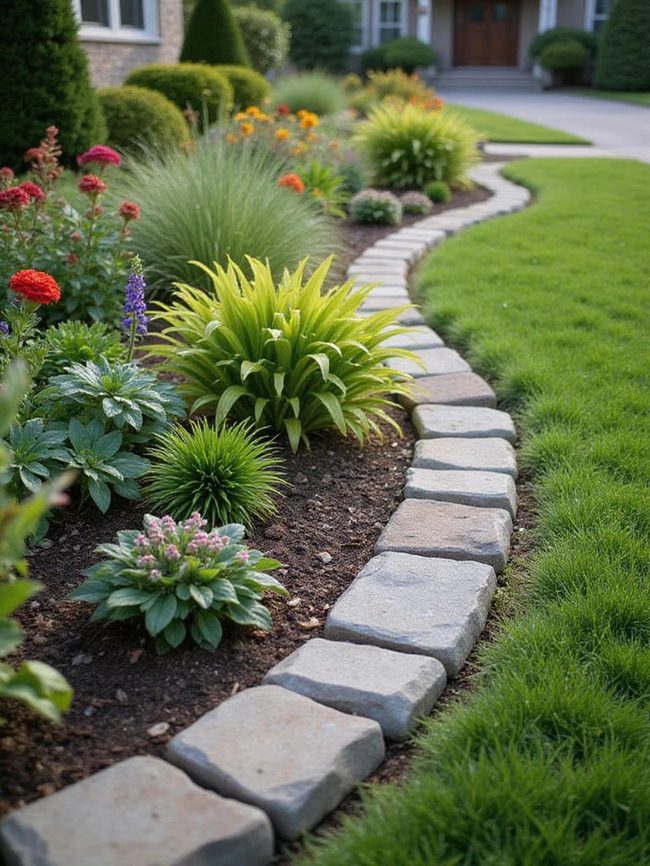
Garden bed edging acts like a frame around your landscaping, and metal options give you those sharp, modern lines that immediately catch attention and lift your whole yard's appearance.
Brick borders bring a timeless, classic feel that never goes out of style, while natural stone adds an organic, rustic quality if that's more your preference.
Concrete works well when you want something durable and adaptable to different styles, and wood brings warmth plus natural texture that softens the edges of your beds.
Beyond looks, good edging does real work, it keeps grass from creeping into your flower and plant beds and holds mulch right where you want it.
Getting the depth right matters, so aim for edging that goes 4 to 6 inches down into the soil and this keeps weeds and grass at bay much more effectively.
Setting up these clean borders gives you definition between different areas of your yard and makes the whole space feel more organized.
Once you have your beds properly defined, you're ready to add some height and dimension to make your front yard even more interesting.
Purple Drought Plants Front Yard
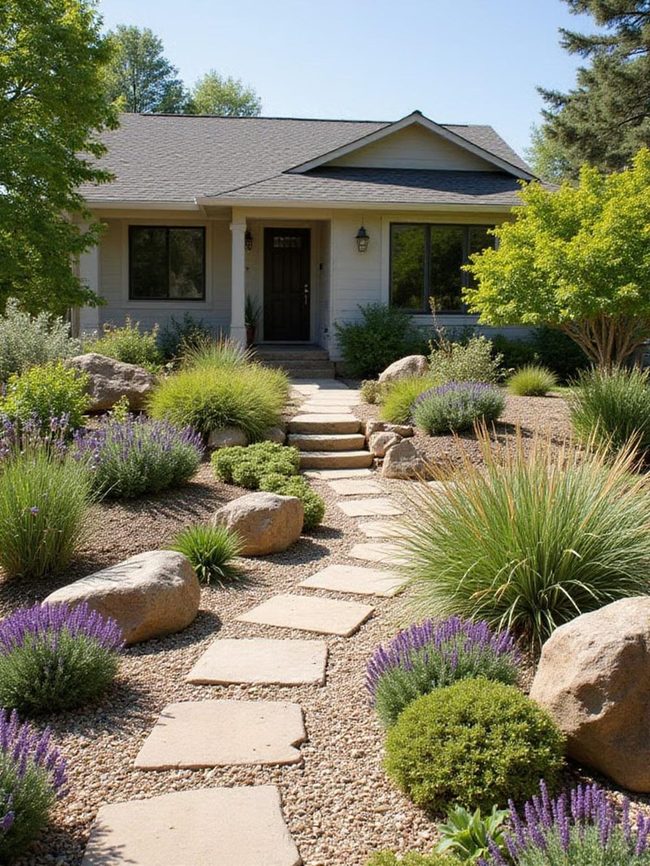
If you're thinking about how to be smart with water while keeping your front yard beautiful, drought-tolerant plants deliver both sustainability and polished results without the extra work of traditional landscaping.
Lavender stands out with its fragrant purple blooms and works wonderfully as a border plant, while ornamental grasses bring movement and gentle sound to your space.
Sedum offers interesting textures and colors that change with the seasons, and native wildflowers adapt perfectly to what grows naturally in your region.
Russian sage creates airy purple spires that catch light beautifully, and yucca or agave plants add strong architectural lines that make your entrance feel more balanced.
Many people are surprised at how lush and welcoming their front yards become once they stop fighting against their local climate.
Moving these ideas to your porch and entryway helps you build on this foundation and makes your whole home feel more connected to its surroundings.
Stone And String Glow Porch
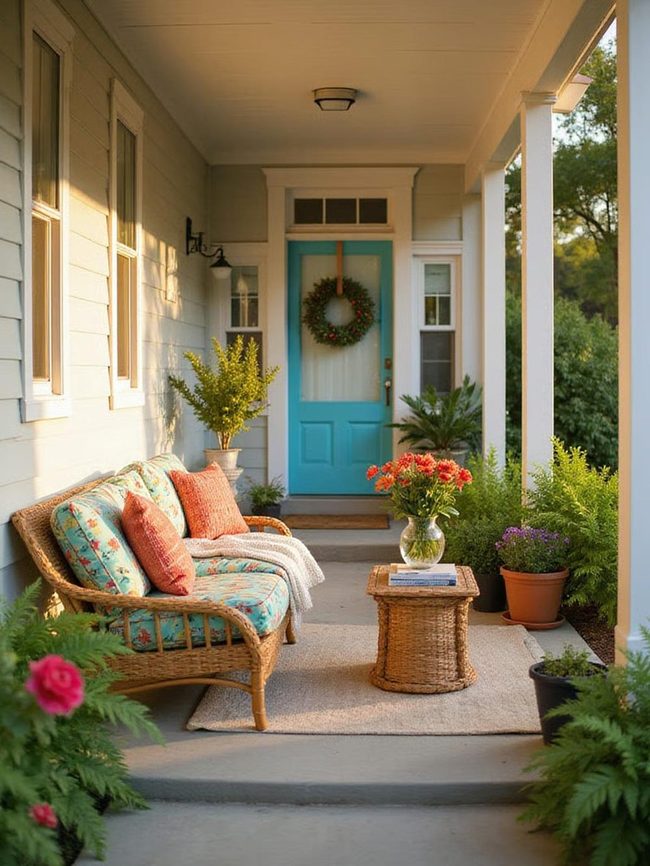
That porch sits at the threshold between your public street and private home, and this space deserves attention because it sets the mood for everything inside.
When someone approaches your front door, they immediately find whether you've created a space that feels open and friendly or neglected and closed off.
Comfortable seating arranged to fit your porch's size invites you to sit outside and enjoy the neighborhood, while small tables nearby hold drinks or books for relaxing afternoons.
Potted plants at different heights and outdoor pillows in matching colors add personality and make the space feel lived-in.
String lights or lanterns overhead bring warmth as the sun sets, and a quality welcome mat at your entrance completes the picture.
This outdoor room extends your home's interior while connecting you to neighbors and passersby who walk by across day.
Stone accents and other natural materials can further enhance your front yard and tie together all these welcoming elements you've built.
Navy Blue Front Door Statement
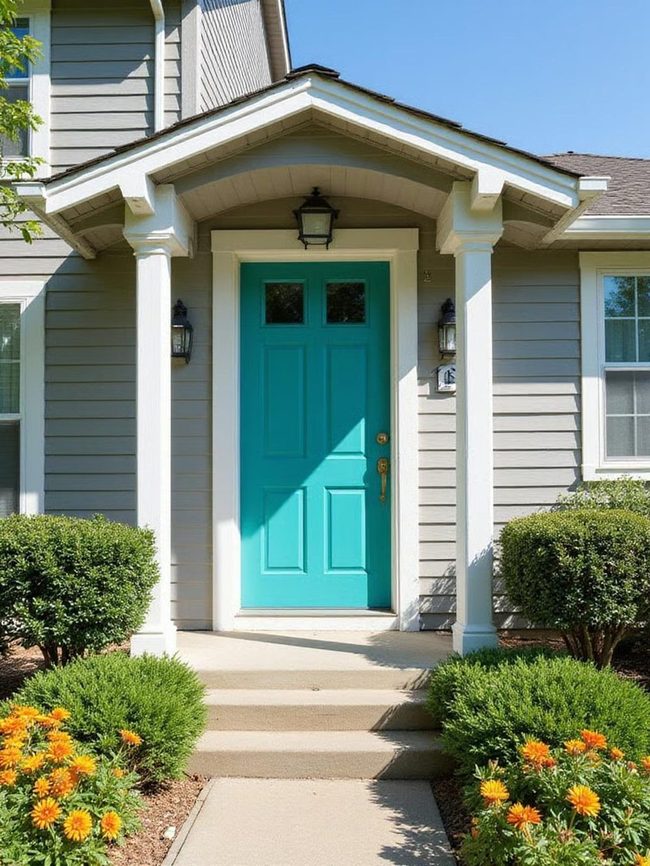
The front door acts as the statement piece of a home's exterior, and choosing the right color creates an immediate and lasting impression on anyone arriving at the entrance.
Deep navy blue works beautifully for traditional styles and conveys a sense of stability, while rich red introduces energy and symbolizes good fortune in many cultures.
Golden yellow brings warmth and optimism, especially against neutral exteriors, and teal or turquoise adds a fresh coastal character without sacrificing modern appeal.
Finding the ideal shade means balancing the colors already present on the house with the atmosphere you want people to experience as they approach.
Once a bold door color is selected, the overall appearance becomes even stronger when paired with thoughtful plants and landscaping around the entryway.
It also helps to think about how the chosen shade complements the architectural style before making a final decision.
Even though the update seems small, a well-chosen front door color can dramatically influence how the entire property is viewed from the street.
Layered greenery and balanced landscaping near the entrance complete the look and help the front yard feel polished, welcoming, and well connected.
Fragrant Low-Maintenance Ground Covers
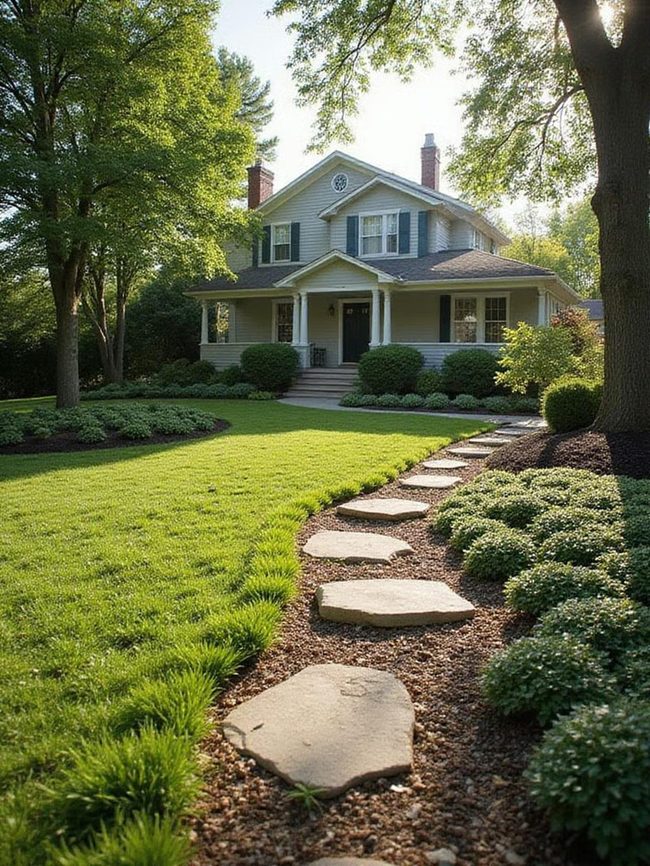
Groundcover plants can transform your front yard into a low-maintenance landscape that practically takes care of itself, and many varieties release pleasant fragrances when you walk across them, adding a wonderful sensory experience to your open-air space.
Sunny areas work beautifully with creeping thyme, sedum varieties, or woolly thyme, all of which feature interesting textures and handle drought conditions well without constant attention.
Shadier spots are perfect for pachysandra, vinca minor, or lilyturf, which thrive in low-light situations and keep your yard looking full and green.
One of the biggest advantages is that these plants suppress weeds naturally and need far less watering and mowing than traditional lawns, which saves you significant time and money throughout the year.
You can even select varieties that offer lively in tone color throughout different seasons, so your yard stays visually interesting without the effort of constant maintenance.
Instead of spending weekends pushing a mower or standing with a hose, you could have more time to actually enjoy your open-air space.
Groundcover options range in color and texture, giving you plenty of choices to match your home's style and your personal preferences.
Layered Front Yard Patio Depth
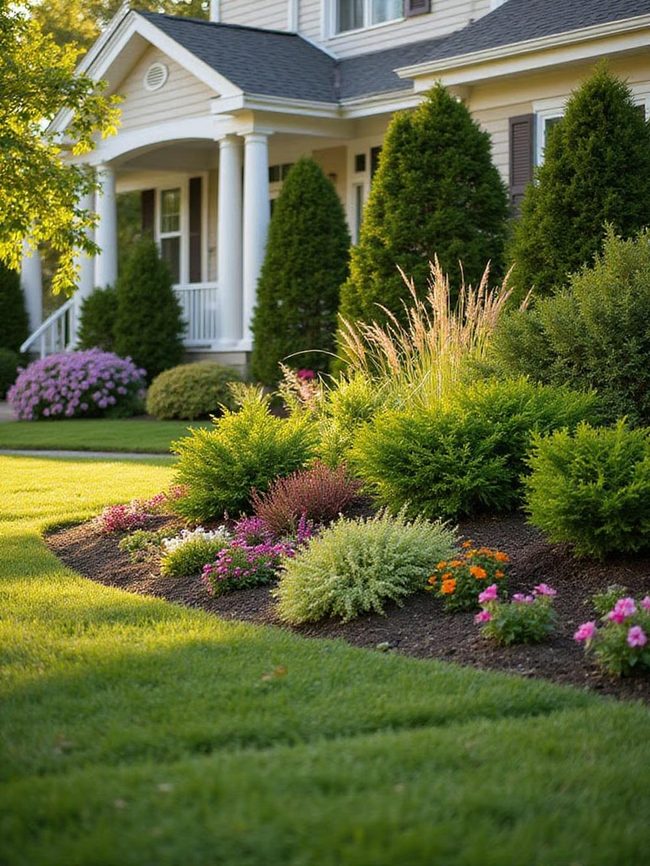
Building layers in your front yard beds gives you depth and dimension that flat gardens simply cannot match, and tall plants positioned in back with medium-height ones in the middle and shorter varieties up front set up a naturally appealing flow that guides the eye through the space.
When you plan these layers, think about how large in all plant will grow when it reaches maturity so you don't end up with overcrowding down the road.
Mixing different textures and leaf shapes across your planting beds adds visual interest and keeps things from looking boring.
By staggering when different plants bloom throughout the seasons, you keep something colorful and fresh happening in your yard most of the year.
Layered plantings also work better because they mimic how plants grow in nature, which means your garden tends to be more balanced and healthy with less fussing from you.
Making sure all your plants need roughly the same amount of light and water in in all layer makes maintenance easier and keeps everything thriving together.
Once you get comfortable with design choice, you will find your front yard looks fuller and more polished while actually becoming simpler to care for.
Front Porch Seating For Everyday Gathering
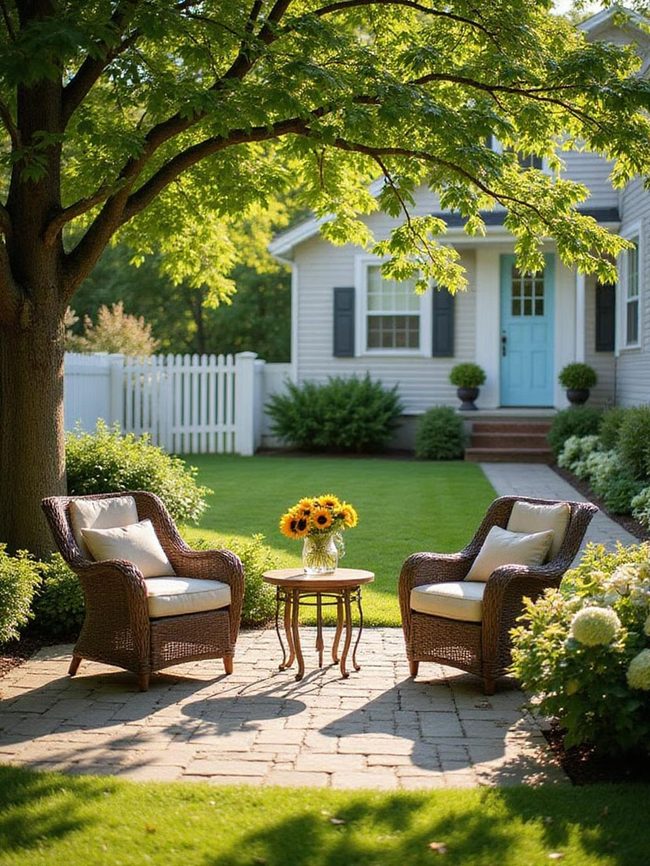
Sipping morning coffee or watching the sunset from your front yard becomes possible when you add seating that alters the space from purely functional to genuinely welcoming and lived-in.
Seating areas boost curb appeal immediately and open doors for neighborhood connection.
Weather-resistant materials like teak, cedar, recycled plastic, or powder-coated metal keep your furniture looking good for years.
Scale matters when choosing pieces, Adirondack chairs or rockers suit traditional homes well, while clean-lined benches work better for modern spaces.
Cushions and throws bring comfort and personality to your seating area and also handle the space-saving side of yard relaxation.
A small fire feature works nicely for cool evenings when you want to extend your time outside.
You can stretch your living area right into the yards this way and establish a spot where people naturally gather.
Privacy screens, plantings, or a modest pergola shield your front yard retreat without blocking the welcoming feeling that makes the space special.
Stone Pathway Pendant Lamps Home First Impression
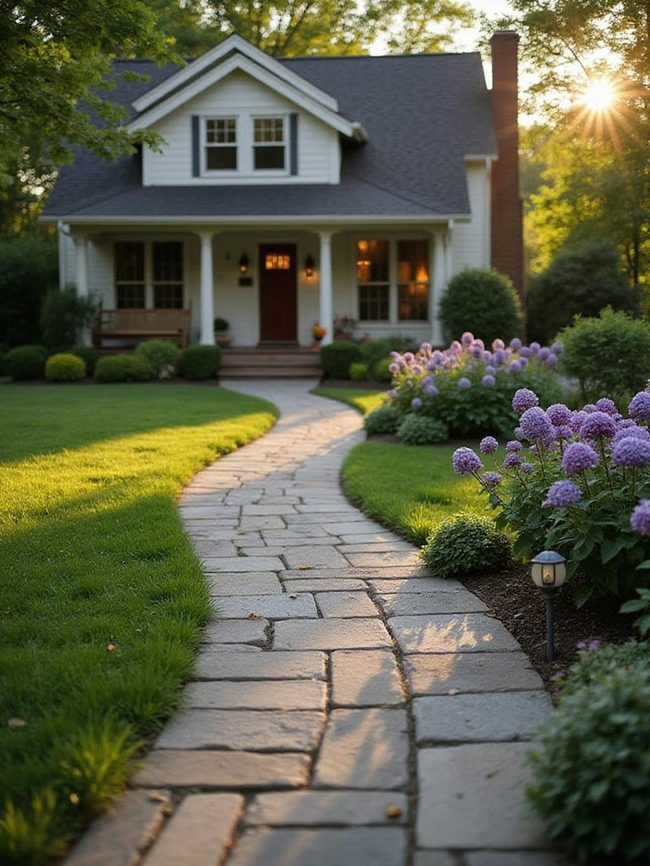
Well-designed walkway serves as the first thing visitors recognize about the home, and it sets the tone for everything they'll see once they arrive at the door.
Since people form opinions about the property the moment they step onto the path, this space deserves real thought and planning.
Natural stone works beautifully with traditional homes, while concrete pavers pair nicely with modern designs, so pick materials that match the home's style and won't require constant upkeep.
Adding lights along the edges of the pathway does double duty, it shows off the walkway after sunset and keeps people safe as they walk.
Beyond just getting the people from the street to the entrance, the pathway communicates something about the home and hints at what awaits inside.
I like to think of the walkway as the opening chapter of the home's story, and the front door continues that narrative.
The choices you make here, from the materials underfoot to the glow of evening lighting, influence how people perceive the entire property before they even knock.
Brown Oak Chips Outdoor Beds
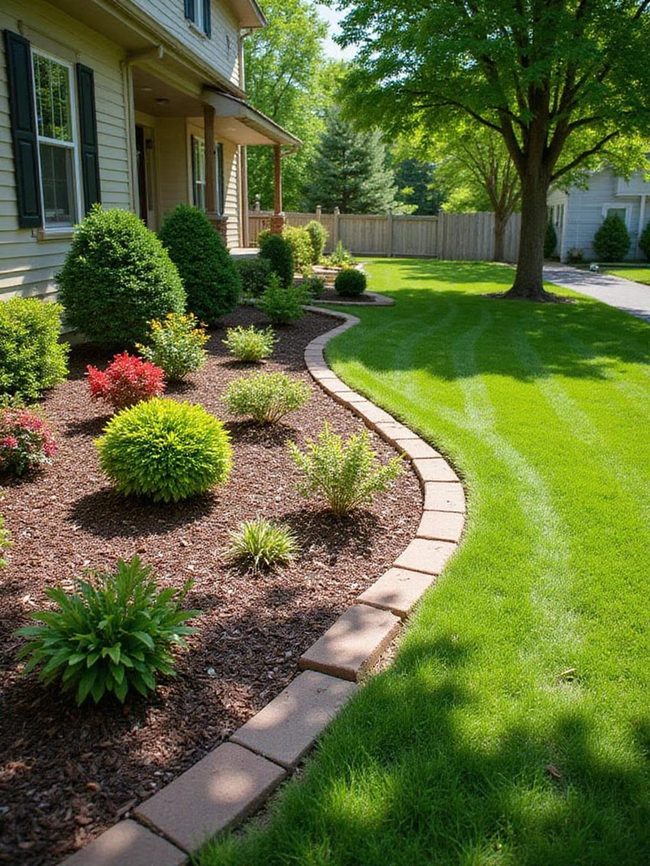
Mulch serves as an essential tool in front yard design, and a 2-4 inch layer of quality mulch refines your garden beds instantly while reducing the work you need to do throughout the season.
Wood chips and shredded bark offer a classic look that suits most homes, while pine straw brings rustic charm if you're designing a woodland-style garden.
For a contemporary feel, gravel and decorative stone provide clean lines and modern appeal, and compost works double duty by improving your soil as it breaks down over time.
Cocoa hulls deliver rich color and a pleasant scent, though you could want to avoid this option if you have pets since it's toxic to them.
When you apply mulch to your beds, keep it away from plant stems and tree trunks and maintain consistent depth throughout for the best results.
Beyond just looking polished, mulch improves soil health and suppresses weeds so you spend less time maintaining your landscape.
Your choice of mulch type depends on what matches your home's style and what your garden needs most.
Once your beds are looking their best, you can think about introducing the calming element of water to complete your front yard design.
Year-Round Outdoor Color Transitions
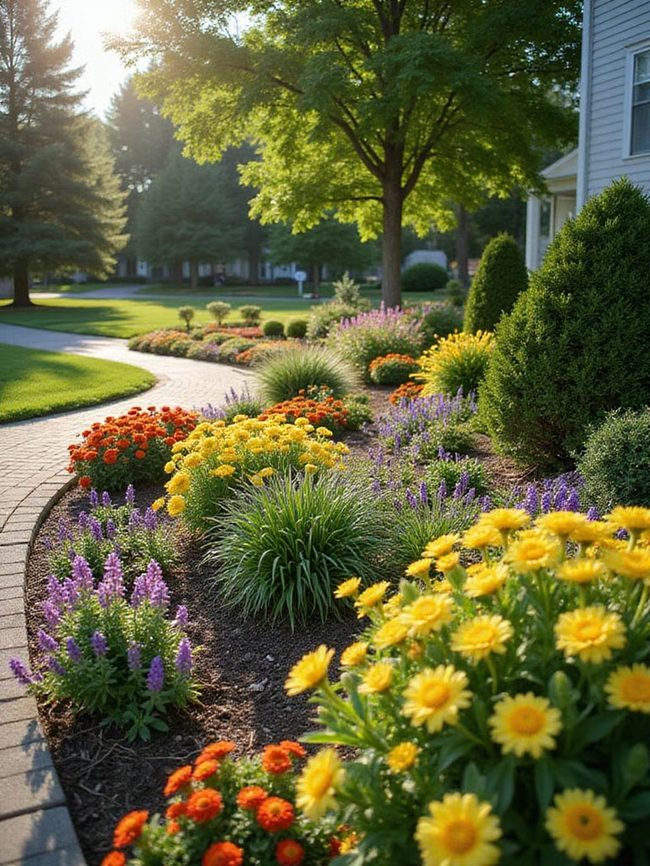
Front yard can function as a living painting that shifts and refreshes throughout the year, and maintaining color across all seasons keeps your home from looking tired during winter months while making a strong statement about your property's appeal.
Moving beyond just flowers opens up possibilities, think about how foliage, bark, and garden art can hold visual interest even when blooms have faded.
Succession planting works as your main strategy here: plant spring bulbs when fall arrives, then follow with summer perennials once those bulbs finish their show, and later add fall bloomers like mums and asters as summer plants decline.
Evergreens and ornamental grasses do their part too, offering structure and gentle movement during the cold months.
You can want across season to flow naturally into the next rather than feeling disconnected or sparse.
Shifting from spring to summer to fall to winter doesn't need to feel chaotic when you plan ahead.
Building these smooth transitions between seasons takes some upfront thought but pays off by keeping your landscape looking alive and cared for all year long.
Michael Harris
Senior Content Editor
Expertise
Home Décor Content Creation, Interior Design Journalism, Editorial Oversight, Digital Media Strategy, Team Leadership and Mentorship
Education
University of Queensland, Brisbane, Australia
Queensland University of Technology (QUT), Brisbane, Australia
Michael Harris is the senior content editor at Archi Refresh, where he turns home design trends into engaging, easy-to-follow articles. With a journalism degree from the University of Queensland and a digital communication certification from QUT, he knows how to craft content that informs and inspires.
With over 10 years of experience in lifestyle and design media, Michael has shaped editorial strategies, mentored writers, and helped readers refresh their spaces with practical tips. His work blends storytelling with expert advice, making home decor more accessible to everyone.
Outside of work, Michael enjoys DIY projects, exploring Brisbane’s art scene, and teaching digital literacy workshops.