
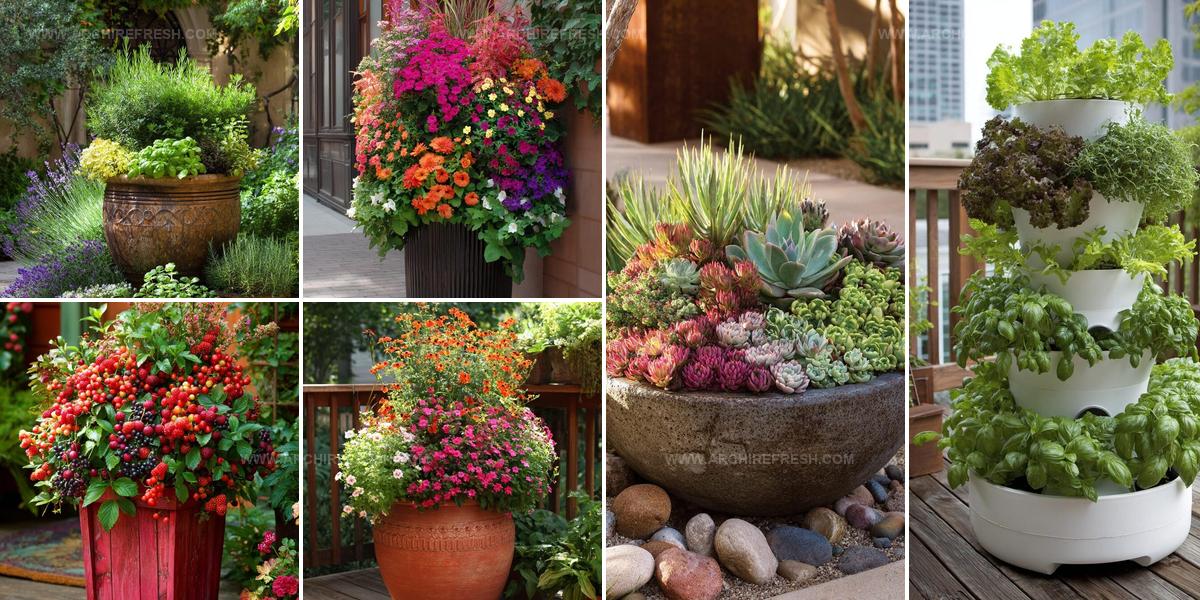
10 Creative Container Ideas That Catch Every Eye
Container ideas that truly stun can revolutionize how you organize and display items throughout any space.
Beautiful storage solutions serve a purpose far beyond simple functionality.
The right vessels enhance aesthetics while keeping belongings neatly arranged and accessible.
Smart organization brings harmony to chaotic areas and helps maintain order effortlessly.
Innovative approaches to containment offer fresh perspectives on managing possessions with style.
Whether for practical needs or decorative goals, thoughtful selection makes all the difference.
Ready to refresh spaces with solutions that work beautifully for daily life?
Dwarf Citrus With Cocktail Herbs
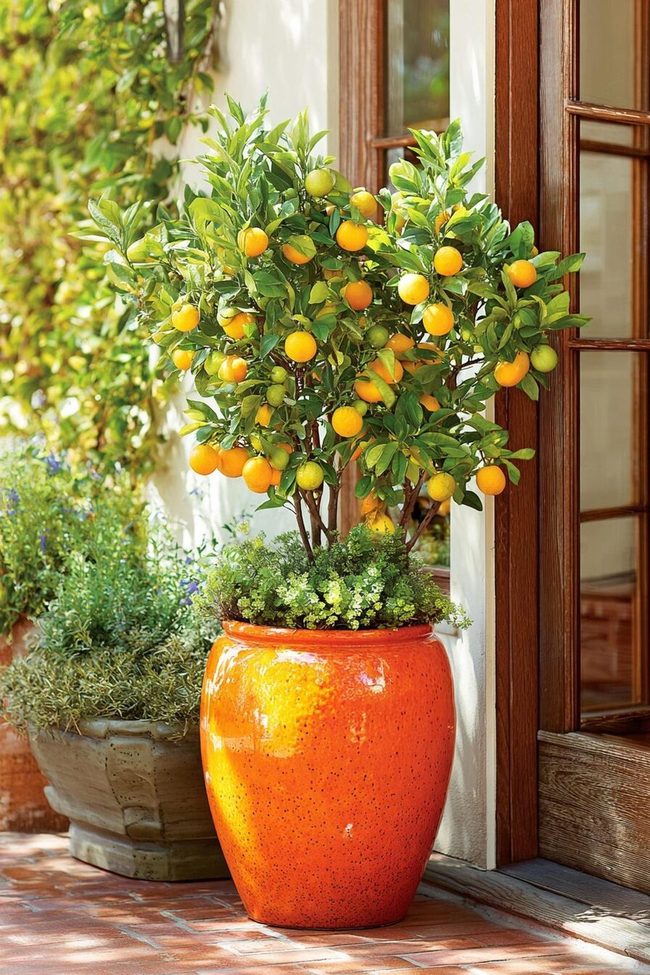
Container-grown dwarf citrus trees deliver polished visual appeal and remarkable productivity, bringing an instant tropical atmosphere to any space regardless of climate.
Nothing compares to the intoxicating scent of citrus blossoms, which fills your outdoor area with a natural sweetness that no store-bought fragrance can match.
Start by selecting a large, durable container at least 24 inches wide and deep, fiberglass works beautifully because it mimics ceramic while being lighter and providing better root insulation.
Dwarf varieties bred specifically for containers, such as 'Improved Meyer' lemon, 'Bearss' lime, or 'Calamondin' orange, stay proportional to your space and perform reliably.
Mix a specialized citrus potting blend that drains well while holding enough moisture, or combine regular potting soil with coco coir and extra perlite to achieve the right balance.
When planting, position your tree slightly higher than it was in the nursery pot so the root flare sits above the soil line and prevents collar rot.
Underplant your citrus with cocktail herbs like mint, basil, or lemon verbena that enjoy the same growing conditions and fill out the container with lush greenery.
Water when the top two inches of soil feel dry and let moisture drain completely through the bottom holes, but avoid letting your tree sit in standing water.
Edible Berry Outdoor Pots
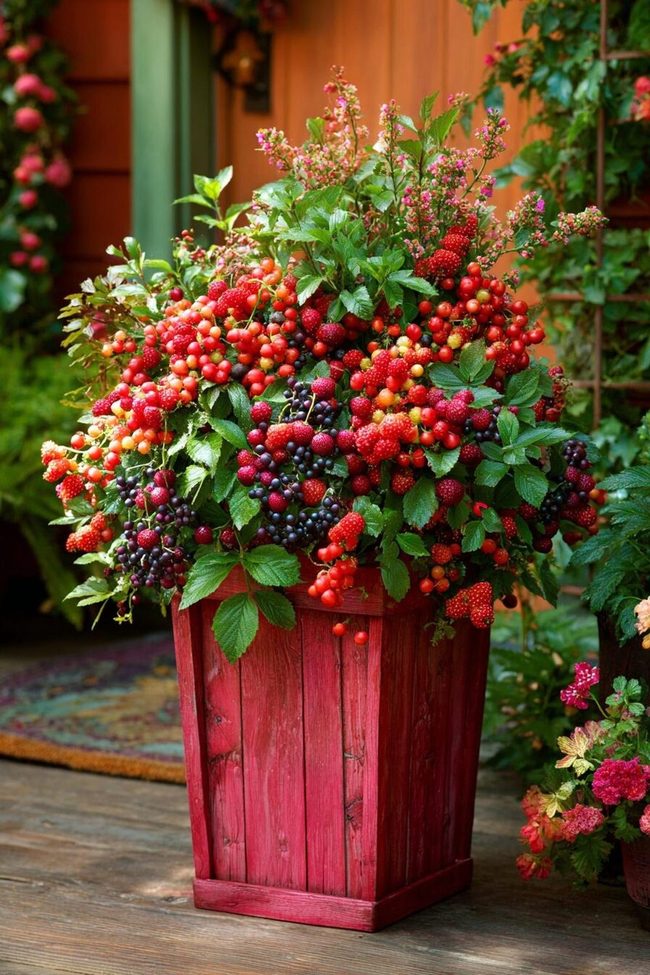
Growing berries in containers on your patio lets you pick sun-warmed fruit straight for breakfast or smoothies, something even fancy grocery stores can't offer.
Modern berry varieties grow compactly and deliver both beautiful flowers and colorful harvests in a space smaller than a coffee table.
Start by choosing a container at least 18-24 inches deep to support the root systems and keep top-heavy fruiting plants stable.
Everbearing varieties produce multiple harvests across the season rather than one big crop, so you enjoy months of picking from a single planting.
Strawberries thrive in specialized pots with multiple pockets or hanging baskets where fruits dangle away from soil and stay clean.
Blueberries are container plants with spring flowers, summer berries, and often brilliant fall colors when you pick compact types like 'Top Hat' or 'Peach Sorbet'.
Thornless blackberry varieties such as 'Baby Cakes' give you dramatic arching branches loaded with berries without the sharp thorns of older kinds.
Dwarf raspberries like 'Raspberry Shortcake' stay naturally small and skip the heavy pruning and trellising that standard varieties demand.
Fill your containers with quality potting mix enriched with compost, and add peat moss for blueberries or use soil made for azaleas.
Edible Flowers Overflow Container Landscape
Flowers that cascade over the edges of a hanging basket set up a visually engaging waterfall of color that stops people in their tracks, and nasturtiums work beautifully as your main plant with their lily pad-shaped leaves and peppery blooms in reds, oranges, and yellows.
Calendula adds sunny yellow and orange petals that bring saffron-like color to salads and rice dishes, while pansies and violas positioned near the rim show off their charming faces and offer mild, sweet flavors you can harvest regularly.
Scarlet runner beans climb any vertical support and produce both edible flowers and beans that bring height and structure to your arrangement.
Herb flowers like chive blossoms and borage provide starry blue and purple accents along with onion and cucumber flavors, and johnny-jump-ups fill in gaps throughout the container with prolific blooms and wintergreen-like taste.
Beyond the visual appeal, you're connecting to centuries-old traditions of flower cuisine practiced across Mediterranean and Asian cultures, and what makes the way it's arranged special is that it blends ornamental beauty with real culinary function.
Keep the soil consistently moist but allow it to dry slightly between waterings, as slightly stressed flowers often develop richer flavors and deeper colors.
Skip all chemical pesticides and fertilizers entirely and stick with organic methods to ensure your edible flowers stay safe for your table.
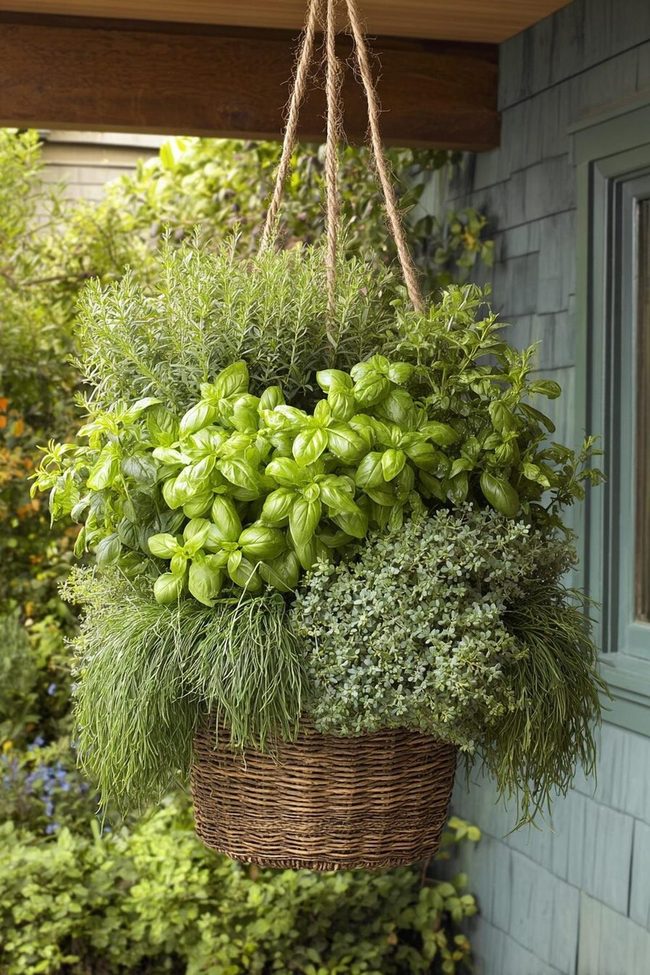
Terracotta Herbs Silver-Green Cascade
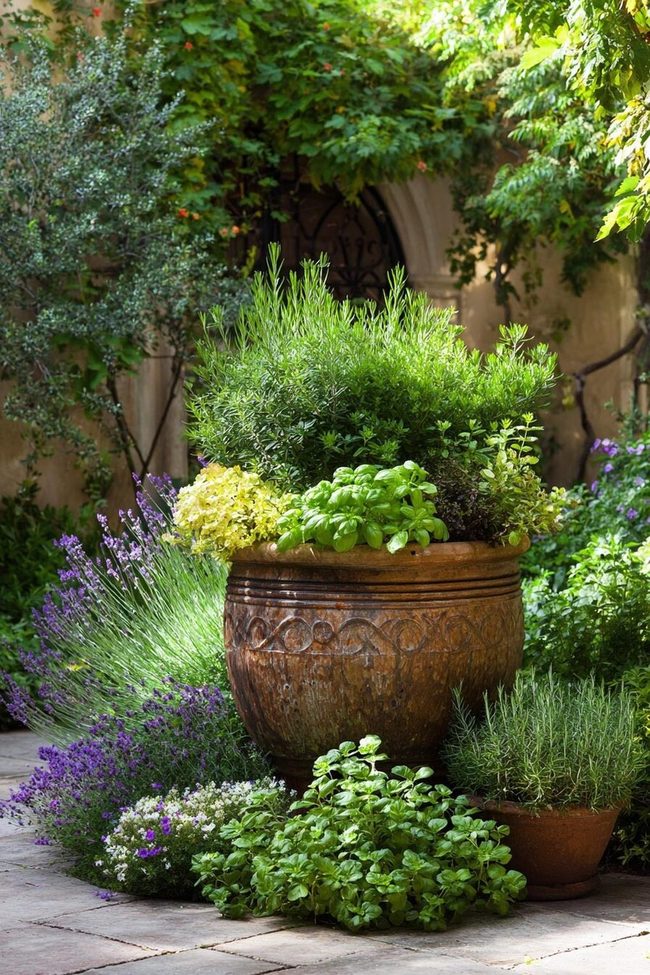
Walking onto your patio and breathing in the scent of sun-warmed herbs brings the essence of Tuscany right to your garden space, and a Mediterranean herb container garden delivers both beauty and kitchen bounty without demanding much from you.
Rosemary, thyme, oregano, and sage absolutely thrive in full sun and evolved in rocky, sparse soil, making them remarkably tolerant when you skip a watering or two.
Plant them in terracotta pots at least twelve inches deep filled with fast-draining potting mix mixed with perlite or coarse sand to match their native conditions.
Position rosemary at the back as it naturally climbs upward, set bushy sage in the middle, and let creeping thyme cascade over the pot's edge for a layered look that's visually striking even when you're not picking sprigs for dinner.
Silver-blue and gray-green foliage creates a sophisticated palette on its own and works beautifully alongside other garden elements.
Water sparingly when the top two inches of soil feel dry, since these plants actually prefer slight neglect and develop richer flavor when underwatered.
Feed them once monthly with half-strength balanced fertilizer because too many nutrients dilute the essential oils that make these herbs taste so good.
Stacked Perennials For Native Pollinators
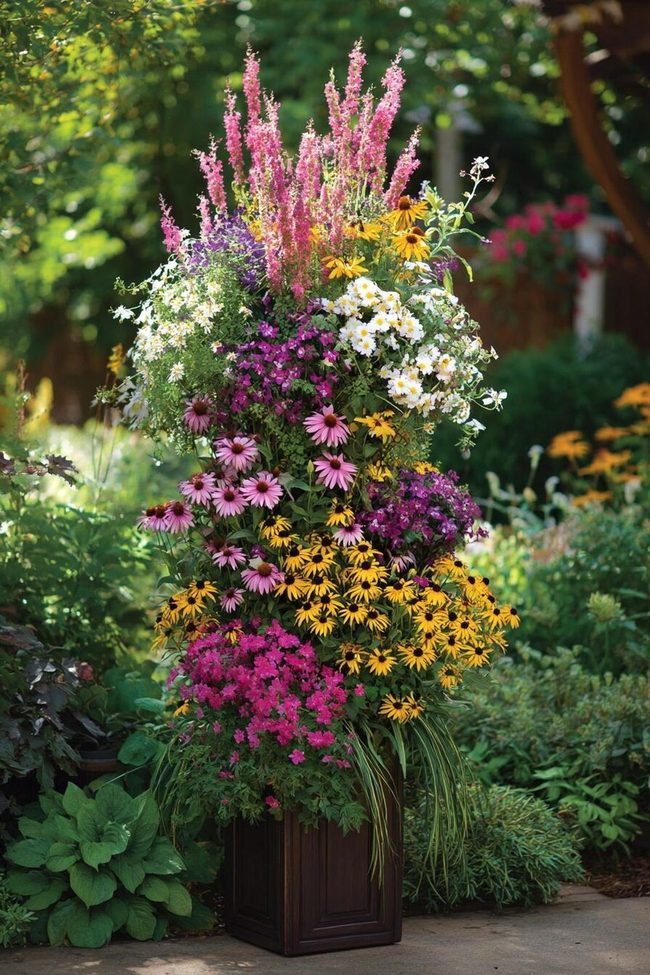
Stacked blooms rising high above your garden introduce an eye-catching vertical display that does far more than just look striking.
You can build a pollinator tower using a sturdy structure like a commercial tower planter, stacked pots in decreasing sizes, or an upright wooden pallet.
Select sun-loving perennials with staggered bloom times so nectar flows from spring through fall and the tower stays colorful for months.
Place early-season bloomers like coreopsis and salvia at the top where they'll catch the most light and form a colorful crown.
Mid-section spots work well for echinacea and rudbeckia, which deliver reliable summer interest with sturdy stems and long-lasting flowers.
Lower levels shine with late bloomers like sedum and asters that extend the tower's appeal into fall when other nectar sources fade.
Native grasses such as little bluestem or prairie dropseed fit nicely between the flowers and offer winter structure plus shelter for pollinator larvae.
Pick compact varieties bred for containers since standard perennials often grow too large for these tight spaces.
Water thoroughly but let the soil dry slightly between sessions because most pollinator plants prefer the well-drained conditions they evolved in.
Skip deadheading until late fall and leave those spent flowers standing, as seedheads feed birds and add interesting shapes through winter.
Sunflowers And Zinnias For Cutting
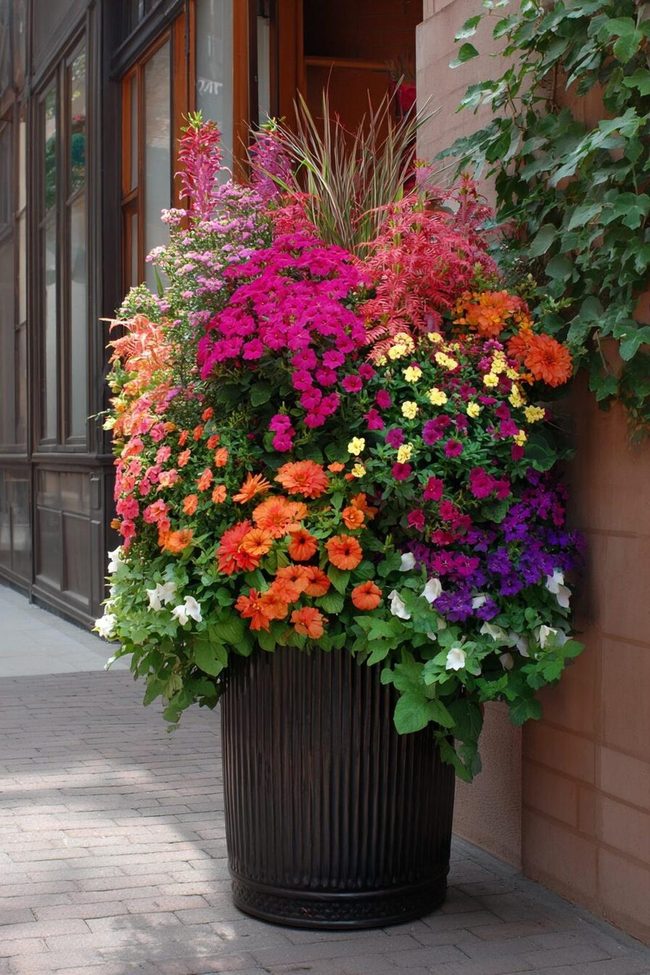
Look at yourself stepping into the garden and harvesting impressive bouquets that rival any florist's designs while saving hundreds of dollars eachyear and enjoying flowers at their absolute freshest.
Tall cosmos, zinnias, and sunflowers should anchor the center of the container, at least 18 inches deep and 24 inches wide, where their long stems won't be shaded and can be easily cut as they grow.
Medium-height blooms like rudbeckia, gaillardia, and salvias surround these showstoppers and offer different shapes and textures that make the arrangements more interesting.
Lavender or flowering tobacco plants along the edges contribute fragrance to both the exterior display and the indoor bouquets you could bring inside.
Airy filler plants such as ammi or bells of Ireland give the container softness and structure while you're harvesting for arrangements.
Choose the color scheme to match where these cut flowers will live in the home, cool blues and purples work well together, or you might go bold with sunset oranges and pinks.
Water when the soil starts to dry out a bit and feed regularly with a formula high in phosphorus so plants focus on flowers rather than leaves.
Cut the blooms early in the morning with sharp scissors at an angle and place them straight into water, and the more you harvest, the more flowers the plants will produce.
Blue-Gray Succulents In Concrete
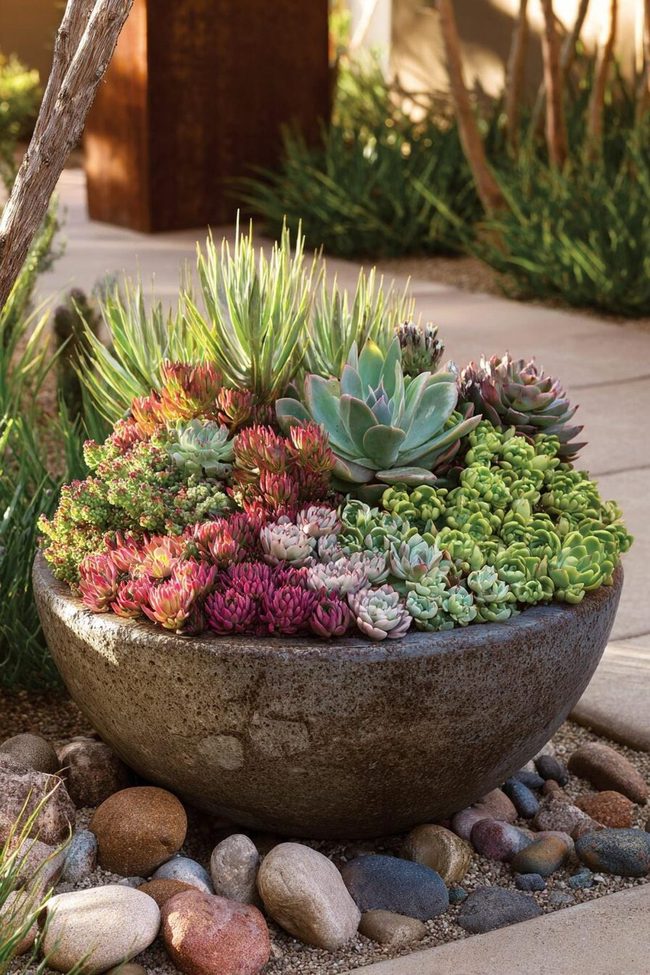
Nothing turns heads faster than a container that looks like it belongs in a high-end design magazine, and a well-crafted succulent arrangement delivers exactly that wow factor with its architectural shapes and otherworldly colors that transform into living sculptures as they mature.
Succulents store water in their fleshy leaves and stems, making them ultimate survivors for containers baking in relentless sunshine, and combining different heights, textures, and colors give rise tos maximum visual appeal, pair spiky agave with rounded echeveria and contrast blue-gray tones with sunlit lime green sedum for best results.
Concrete, hypertufa, or glazed ceramic containers complement the modern aesthetic of these plants while providing stability for top-heavy specimens, and drainage is absolutely critical since succulents will rot quickly if their roots sit in water.
Drill extra holes if necessary and use a specialized cactus or succulent potting mix, or give rise to your own by mixing regular potting soil with equal parts coarse sand and perlite or pumice.
Place your tallest, most dramatic specimen like a paddle plant or large echeveria slightly off-center as your main anchor point rather than directly in the middle, then add medium-sized plants around it and tuck smaller varieties between them.
Cascading Salsa Outdoor Tower
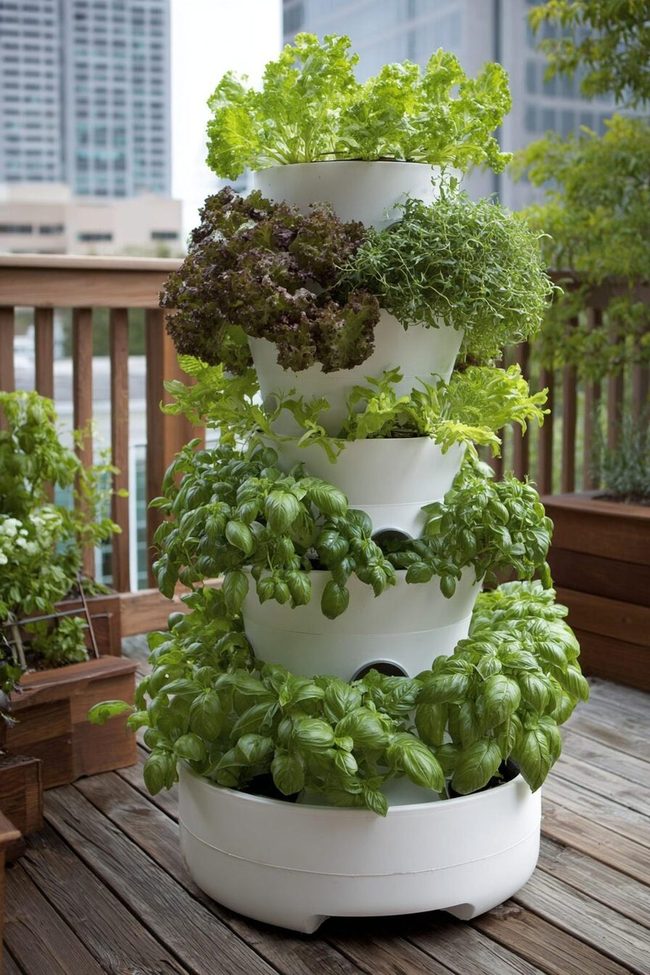
On your sunny patio or balcony, a vertical salsa garden lets you pick fresh tomatoes, peppers, cilantro, and more in seconds, and the layered arrangement of colorful fruits and foliage creates a striking display that beats any store-bought setup.
Stack tiered planters or decreasing-sized pots to build your system upward and save space while giving plants room to thrive.
Position determinate tomato varieties like 'Tiny Tim' or 'Patio Choice Yellow' at the top where they can spill downward without blocking sunlight from other levels below.
Middle sections work well for hot peppers ranging from mild poblanos to intense habaneros, and these sun-loving plants will develop the best heat and flavor in a open spot.
Lower tiers are perfect for cilantro that you can plant fresh every few weeks and for green onions that regrow quickly after eachharvest and stand upright for visual appeal.
Garlic chives add both starry purple flowers and flavor to your tower, plus they draw in helpful insects that keep pests away.
Consider tucking in trailing strawberries that produce sweet fruits and round out the heat in your fresh salsa.
Keep soil consistently moist but let it dry slightly between waterings, as tomatoes and peppers actually taste better when slightly stressed for water.
Fresh Tomato Basil Container Patio
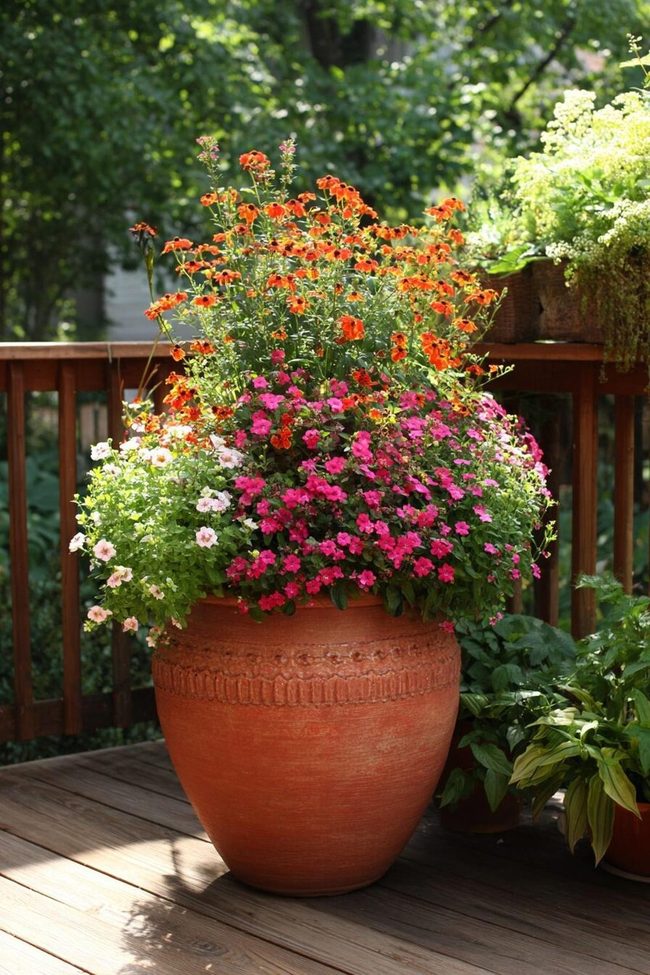
Bursting with sun-loving tomatoes, basil, and peppers all growing in one container right outside your kitchen door, a pizza garden setup lets you harvest fresh toppings whenever you need them for homemade pies.
Container-grown tomatoes deliver intense flavor that reshapes ordinary pizza into something special, and pairing them with compact varieties like 'Patio Princess' or determinate bush types keeps everything manageable in a large pot at least 18-24 inches deep.
Sweet pepper varieties such as 'Lunchbox' or 'Mini Belle' fit nicely alongside your tomatoes and add both heat and color.
Aromatic basil planted around the edges stays within easy reach for snipping and naturally keeps many tomato pests away, while oregano trailing over the sides provides that authentic pizza herb taste you can't get from dried versions.
We recommend using high-quality potting soil mixed with compost since these heavy feeders need solid nutrition to produce their flavorful fruits and leaves.
Keep the soil evenly moist but not waterlogged to prevent tomato cracks and blossom end rot, and fertilize every two weeks with balanced organic fertilizer that shifts toward higher phosphorus and potassium once flowers appear.
Colorful Butterfly Yard Container
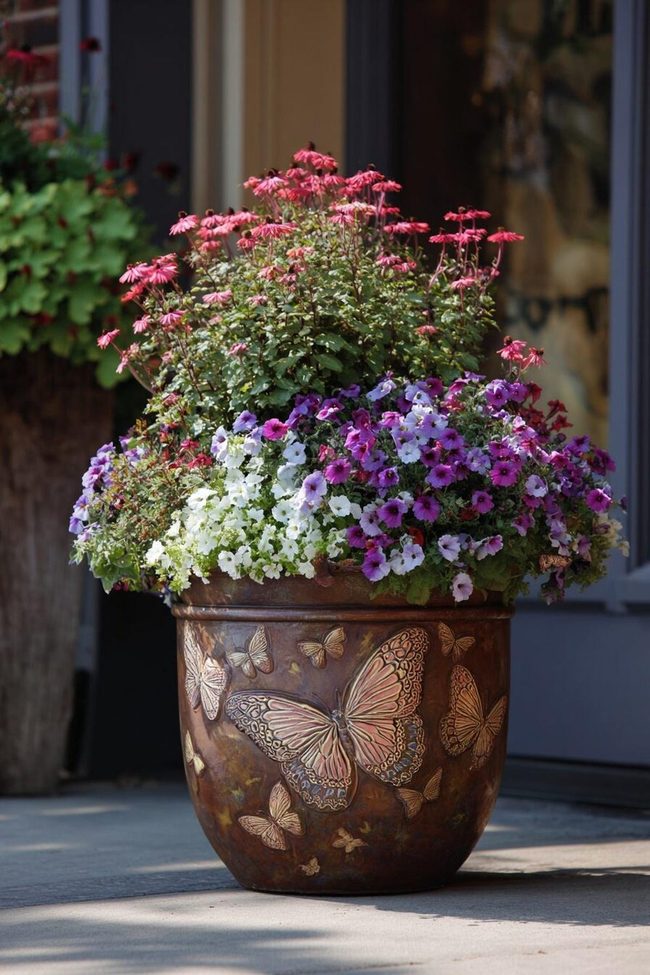
Observe a balcony or patio where butterflies flutter from one sunlit bloom to another in a living display far more beautiful than anything store-bought, and you will understand why a butterfly-specific container garden is so rewarding.
Beyond the visual appeal, you're actually helping support pollinator populations that are struggling in many areas while enjoying nature's most engaging show right outside your window.
Success comes down to planting both nectar sources for adult butterflies and host plants where they can lay eggs and raise their caterpillars.
Start with a large container at least 18 inches deep and wide since butterfly plants grow big and need room to spread.
Pick a tall centerpiece like butterfly bush or coneflower that produces lots of nectar and gives your arrangement height.
Around this main plant, add medium-height bloomers such as lantana, salvia, or zinnias that offer different flower shapes and staggered blooming times to draw various butterfly species.
Flowering herbs like anise hyssop or Mexican mint marigold do double duty by feeding butterflies and giving you fresh herbs for cooking.
Let trailing verbena or sweet alyssum spill over the edges of your container as landing spots for smaller butterflies.
One critical step is including at least one host plant like parsley, dill, or milkweed so butterflies can actually lay eggs and make your garden their home rather than just a pit stop.
Olivia Martinez
Founder & Principal Designer
Expertise
Sustainable Interior Design, Residential and Commercial Space Planning, Historic Preservation and Adaptive Reuse, Custom Furniture Design, Project Management
Education
Parsons School of Design, New York, NY
LEED Accredited Professional (LEED AP)
Olivia Martinez is the founder of Archi Refresh, where she brings style and sustainability together. With a degree from Parsons School of Design and a LEED certification, she’s all about creating beautiful, eco-friendly spaces.
With over eight years in the industry, Olivia has designed everything from cozy homes to commercial spaces, always putting function and sustainability first. She loves working with local artisans and has been featured in design publications for her fresh take on green living.
When she’s not designing, Olivia enjoys exploring historic architecture, painting, and spending time with her rescue dogs, Luna and Max.