
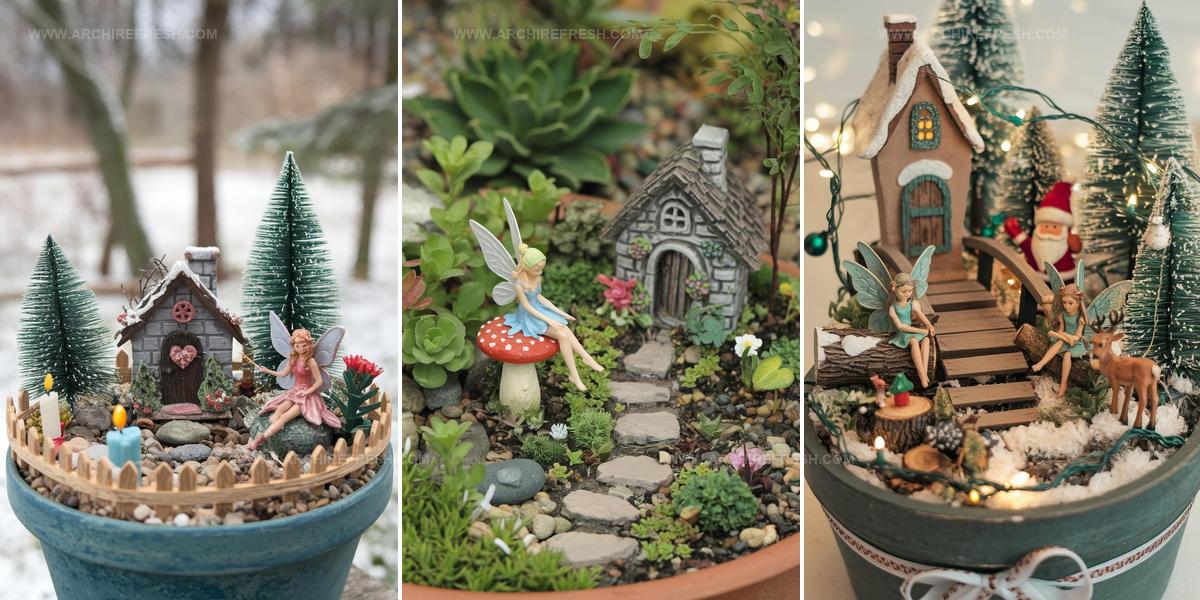
13 Charming Fairy Garden Ideas for Your Backyard
Fairy gardens bring magical miniature worlds right into any outdoor or indoor space where imagination meets nature.
These whimsical landscapes offer a creative outlet that appeals to both children and adults who love crafting tiny, enchanting environments.
Building such a garden requires minimal investment but delivers maximum charm through careful selection of small plants, decorative accessories, and themed elements.
The concept allows for personalization based on available space, whether you have a sprawling backyard or just a small container on an apartment balcony.
Seasonal changes provide opportunities to refresh and redesign the miniature scene with new colors, textures, and decorations.
This hobby combines gardening skills with artistic expression in ways that feel both relaxing and rewarding.
Begin creating a miniature wonderland today and watch how it sparks joy for everyone who encounters it.
Miniature Wooden Treehouse With Fairy Lights

Building a fairy treehouse is one of the most eye-catching ways to expand your fairy garden upward.
Start by selecting a small tree or finding a sturdy branch that can support the structure, then construct miniature ladders and platforms so your tiny residents have places to climb and rest.
Add small balconies where fairies can sit and overlook their domain, and don't forget to include little windows that give the treehouse real personality and charm.
Tiny fairy lights strung throughout the branches will glow softly when darkness falls and make the whole setup shimmer in a way that catches everyone's attention.
You can paint the wood in natural tones or add pops of color that match your garden's theme and personality.
This vertical element breaks up the usual ground-level layouts and gives your fairy garden so much more dimension and depth.
Whether you keep it simple with just a basic platform or go all out with multiple levels and walkways, a treehouse becomes the standout feature that people always observe first when they see your garden.
Wooden Crate Fairy Market Stalls
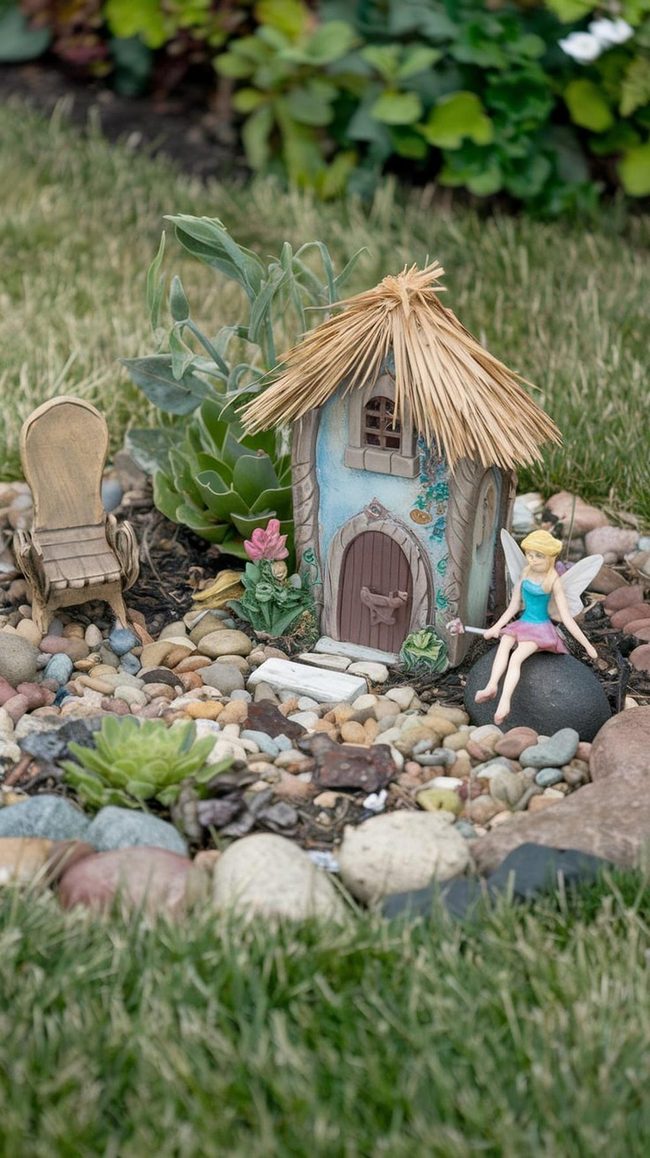
Tiny market stalls made from small wooden crates and woven baskets form the heart of a whimsical fairy garden that really stands out.
Inside these stalls, you can arrange miniature fruits, vegetables, and baked goods in small glass jars and containers that catch the light.
Little hand-painted signs and colorful banners hanging above eachstall give the space personality and help tell the story of what the fairies are buying and selling.
You might place tiny shopping baskets near the market entrance so visitors can imagine the fairies browsing and selecting their goods.
Adding a small winding path that leads to the market makes the whole setup feel like an actual destination worth exploring.
Small lanterns or fairy lights strung between the stalls add warmth as the sun sets.
This kind of display brings so much character to any garden space.
Miniature Teacups And Pastries Display
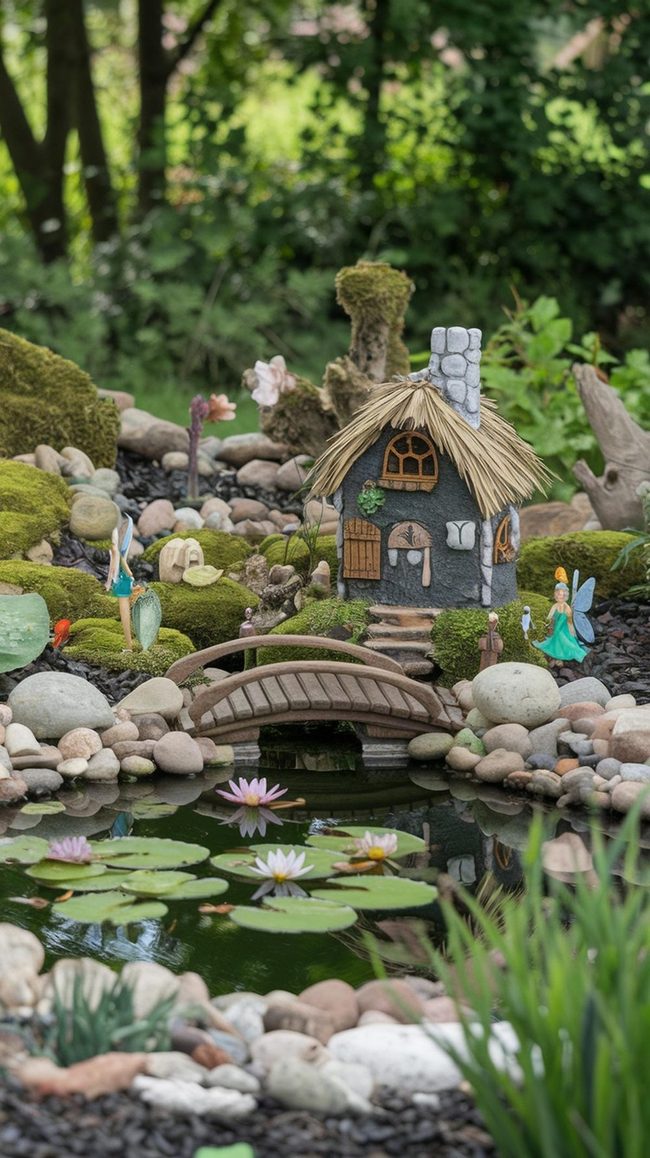
Set up a miniature tea party in your fairy garden and there’s potential to have one of the most charming displays around, with delicate teacups and saucers arranged on a small table that looks ready for people you host at any moment.
Tiny plates holding miniature cupcakes, sandwiches, and pastries sit alongside the cups and give the scene real personality and life.
Small chairs tucked under the table bring in you to imagine which fairy neighbors might sit down for a bite, and the whole setup feels like you've captured a real moment frozen in time.
You can arrange everything at different heights so nothing gets lost in the view, and scattered napkins or tiny spoons add authentic touches that make the scene feel lived-in.
Adding a small pot or teapot to the display lets visitors know exactly what's happening here, and fresh flowers in bud vases bring color to the table without overwhelming the space.
Miniature Flowers And Herbs For Fairies
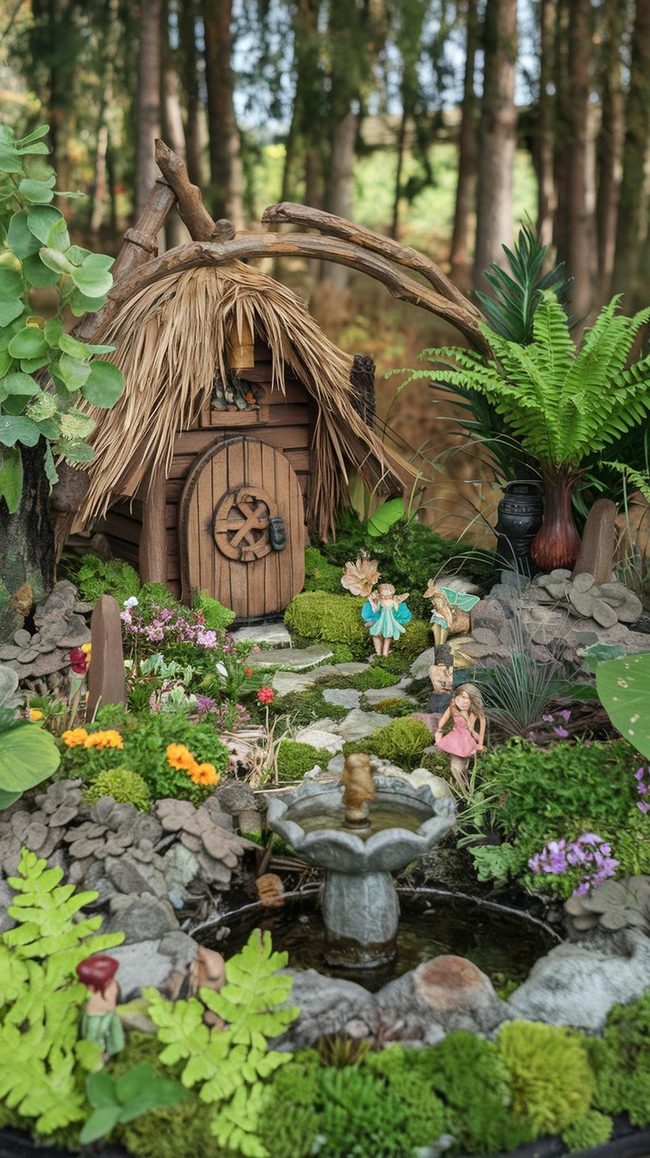
When you're setting up a fairy garden, picking the right plants makes all the difference for the tiny creatures you're trying to attract.
Small flowers, herbs, and succulents work best because they offer both food and shelter that fairies need to thrive.
This room can want to do some research first and learn which plants are safe and actually beneficial for them.
Herbs like thyme and mint grow low to the ground and bring about welcoming hiding spots.
Tiny flowering plants such as primrose or sweet violet add charm while feeding visiting fairies.
Succulents are great too since they're hardy and don't need much fussing.
The combination of these plants together gives you a space that feels natural and welcoming for your garden's fairy residents.
Tiny Vegetables Growing In Miniature
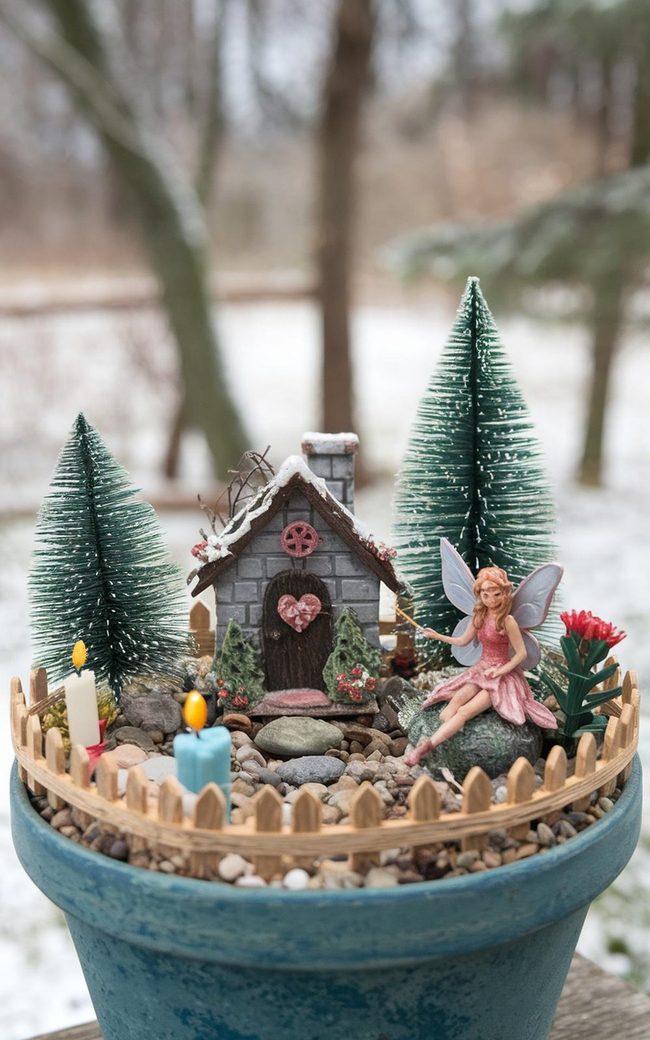
Building a miniature vegetable garden brings genuine charm and authenticity to your fairy garden setup.
You can plant small carrots, radishes, and tomatoes in a compact raised bed or planter box to add that realistic touch.
Tiny garden tools scattered around the space make the scene feel lived-in and authentic.
A small scarecrow standing guard over the vegetables adds personality and tells a story.
Kids especially respond to the vegetable garden because it feels like a real place where fairy folk might actually grow their own food.
Your miniature plants don't need to be perfect either, slightly imperfect growth looks more natural and charming.
Simple additions like these ground your fairy world in reality and make it feel less like fantasy and more like an actual tiny neighborhood where things happen.
Sunny Spot Near Water Source
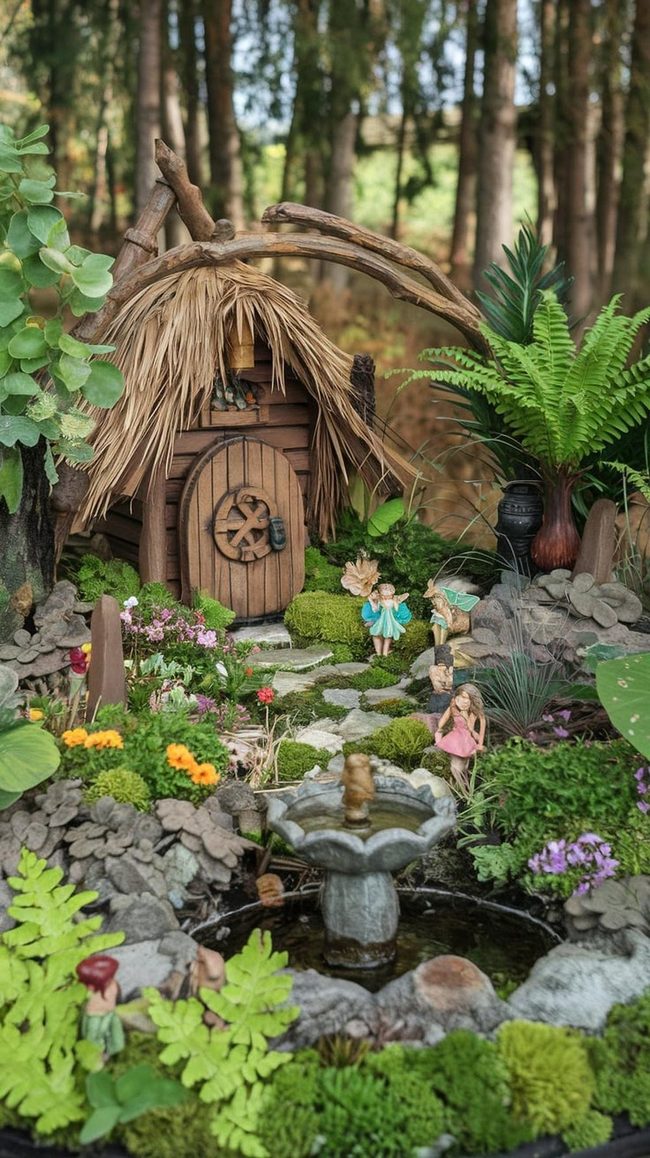
Finding the right spot for a fairy garden makes a big difference, so it helps to choose an area that gets plenty of sunlight and is close to a water source for easy maintenance.
A corner of the yard or a small open patch works well as long as it remains visible and easy to access whenever you want to tend to the miniature setup.
Natural light supports healthy plant growth, so avoiding overly shaded or hidden areas is usually best.
Having water nearby also makes care more convenient, especially when regular watering is needed.
Selecting a location that can be seen from inside the house or main seating areas adds more enjoyment, since it allows quick visual checks throughout the day.
Good accessibility also encourages regular upkeep, making it easier to weed, adjust, or add new decorative elements over time.
Walking around the yard with fresh attention often reveals several suitable spots that meet these conditions.
Tiny Wooden Door Patio Charm
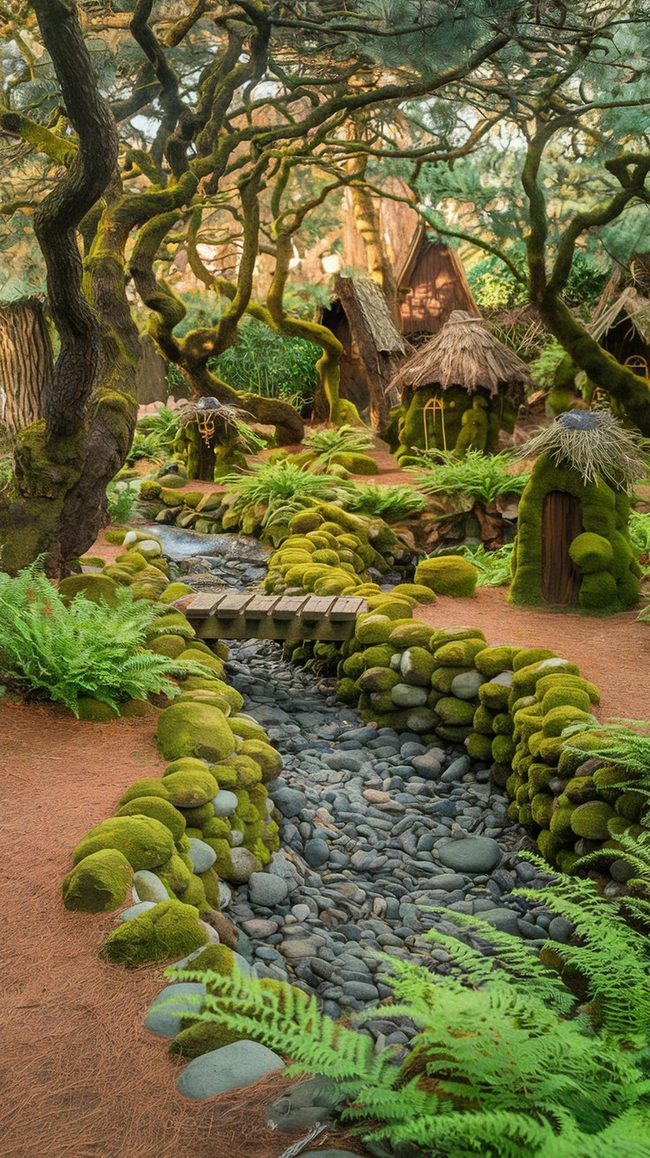
Build a tiny wooden door at the base of a tree or lean it against a garden wall to spark imagination and wonder in your exterior space.
You can buy a small pre-made fairy door or craft one yourself using popsicle sticks and cardboard if you enjoy DIY projects.
Position it where kids and visitors will spot it easily, and the whimsical entrance will become an instant interaction starter.
This simple addition brings a storybook quality to your garden that makes the space feel like a character lives there.
The door works best when it matches your garden's style, whether rustic and weathered or painted in radiant colors.
Your company and family members will enjoy guessing about who might live behind such a curious little door.
It's one of those low-effort touches that gives your exterior area charm and personality without requiring much time or money to pull together.
Stone Pathways Guide Fairy Patios
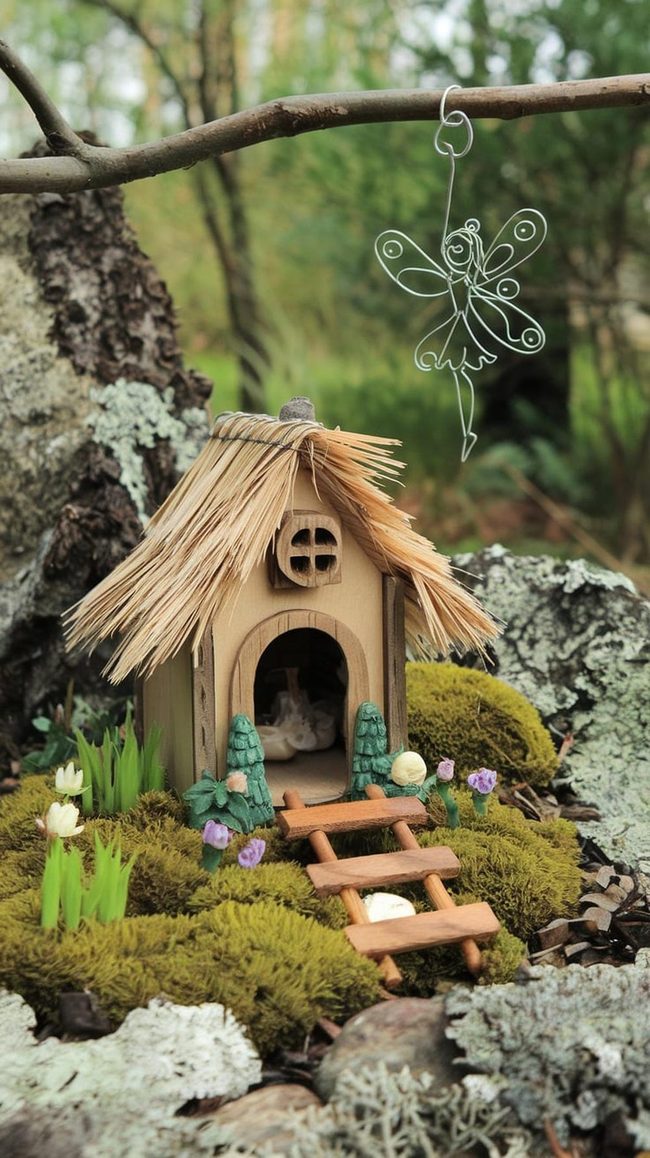
Winding a small pathway through your fairy garden instantly makes the whole display pop and draws the eye along a clear route.
We love using tiny pebbles, delicate stones, or miniature stepping stones to carve out a charming trail where the fairy residents can stroll.
You might also line the path with small fences or tuck in a gate or two to enhance the whimsical character of the space.
Stones can be arranged in straight lines for a formal look, or scattered in a meandering pattern if you prefer something more organic and natural.
I've seen gardeners use shells, wood chips, or even painted pebbles to add texture and interest along these little walkways.
Your pathway doesn't need to be complicated or take much time to install and makes visitors instantly wonder about the miniature world you've created.
Consider where the path leads, maybe to a tiny house, a small seating area, or a garden bed, so it feels purposeful rather than random.
Miniature Pond As Patio Centerpiece
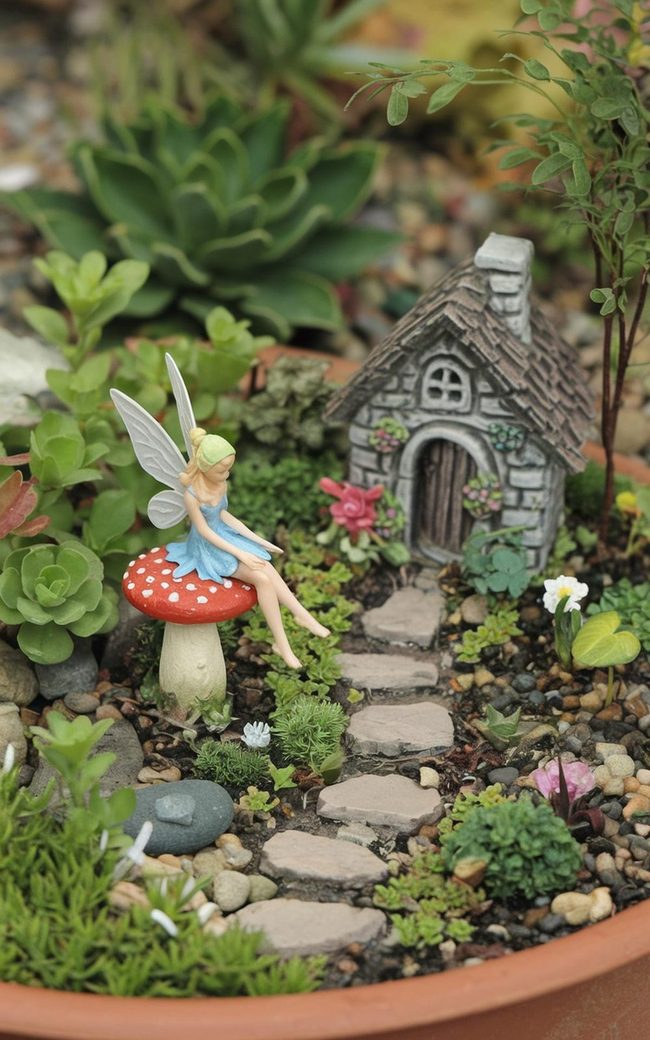
Adding a small water feature to your fairy garden makes an immediate visual statement that refines the entire space into somewhere peaceful and serene.
A miniature pond, petite waterfall, or diminutive birdbath draws the eye first, even from across the room.
You can arrange small pebbles and rocks around the water to give it a more natural appearance.
Water brings movement and sound to your setup, which makes the garden feel alive rather than static.
The gentle presence of water also invites wildlife and creates authentic ecosystem elements that enhance the overall atmosphere.
I find it useful that simple it is to introduce this element without needing much space or complicated installation.
Even just a shallow dish filled with water can work beautifully and serve as a landing spot for tiny figures or butterflies.
Starting with water as your main focal point gives you a foundation to build the rest of your design around.
Glowing Led Glow Miniature Yards
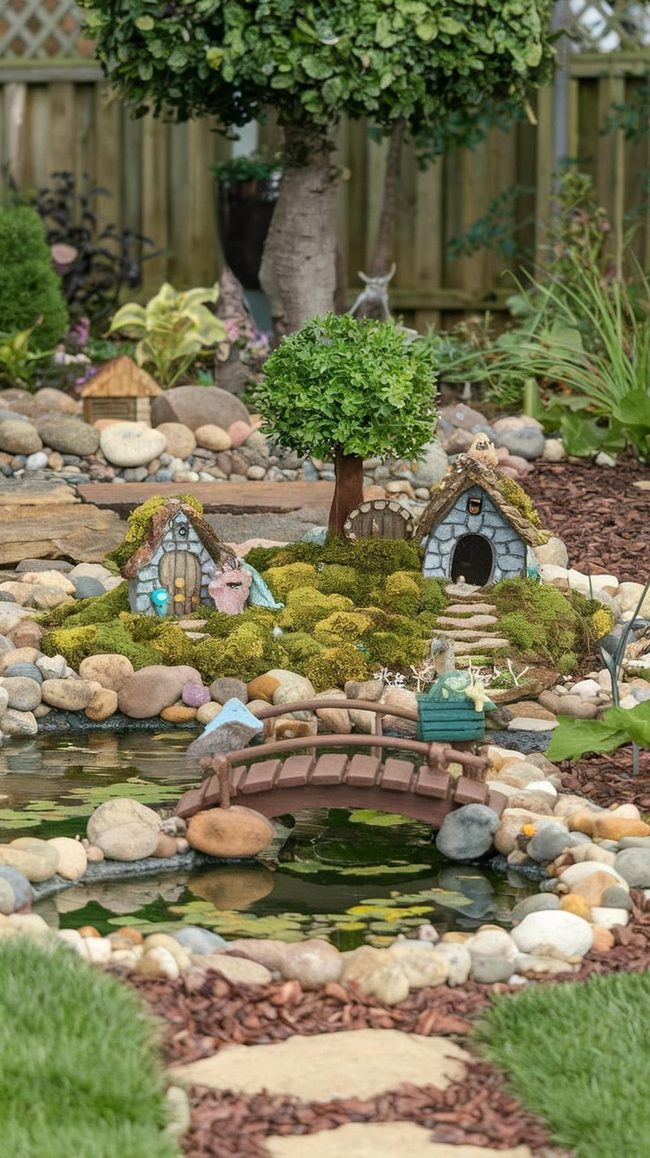
Tiny string lights and LED candles bring an enchanting glow to your fairy garden once darkness falls, and wrapping them around trees, shrubs, or small structures instantly shifts the whole space into something wonderfully whimsical.
You can thread them along pathways to guide visitors through your garden or loop them between plants for a dreamy effect.
Consider battery-operated options so you don't need to worry about cords running through your design.
Placing lights near ground level highlights tiny houses or furniture you've arranged, and positioning them higher up among branches creates depth and dimension.
Even a few scattered lights make an enormous difference in how your garden feels when evening arrives.
Your nighttime garden becomes something special that draws people in to explore every corner.
Tiny Lumber Furniture Brings Fairy Gardens Alive
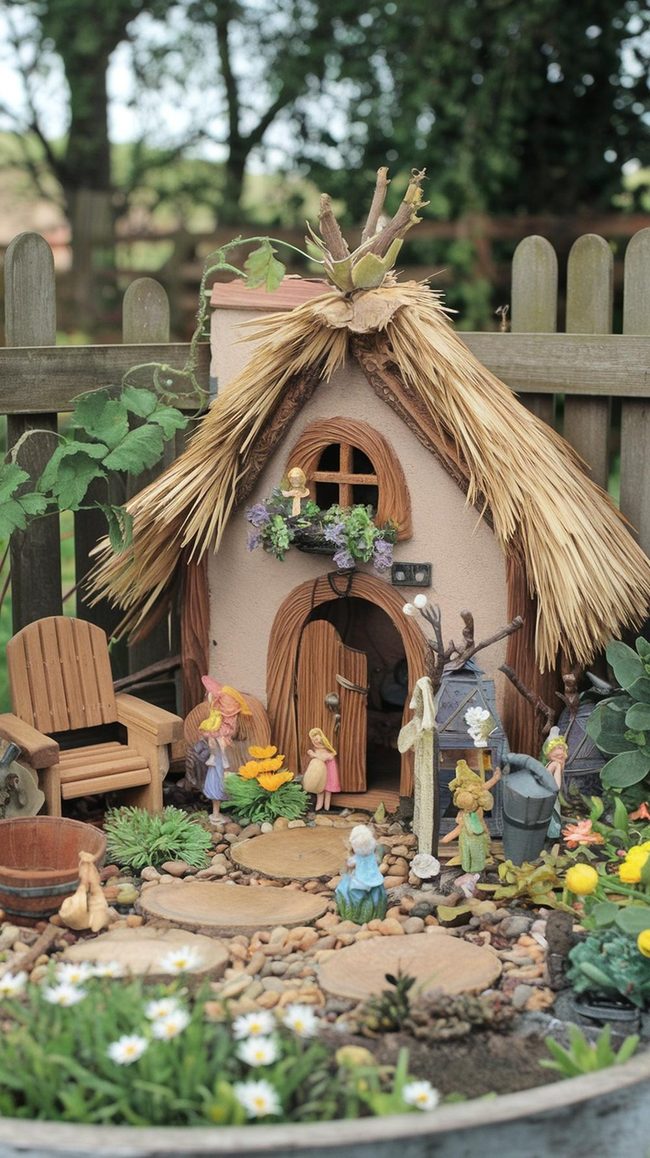
Miniature furniture forms the heart of any fairy garden, and the room naturally supports want to include pieces like small benches, tables, chairs, and swings to make the space feel lived-in and real.
Wood branches, popsicle sticks, and stones work wonderfully as building materials if you decide to craft your own furniture rather than buy it ready-made.
Building custom pieces gives you the freedom to match your garden's style exactly and adds a personal touch that store-bought options simply can't match.
Start with a simple bench placed near a pathway or a tiny table positioned in an open spot where you can imagine fairy activity happening.
You might add a small swing hanging from a sturdy twig branch to suggest movement and play throughout the space.
Even basic furniture shapes made from natural materials like wood and stone feel authentic and keep costs low.
Mix and match different pieces to add distinct areas, such as a seating zone or a dining spot, so your miniature world feels purposeful and complete.
Adding these functional elements makes your garden feel like a real place rather than just a collection of decorations scattered around.
Tiny Worlds Start With Theme
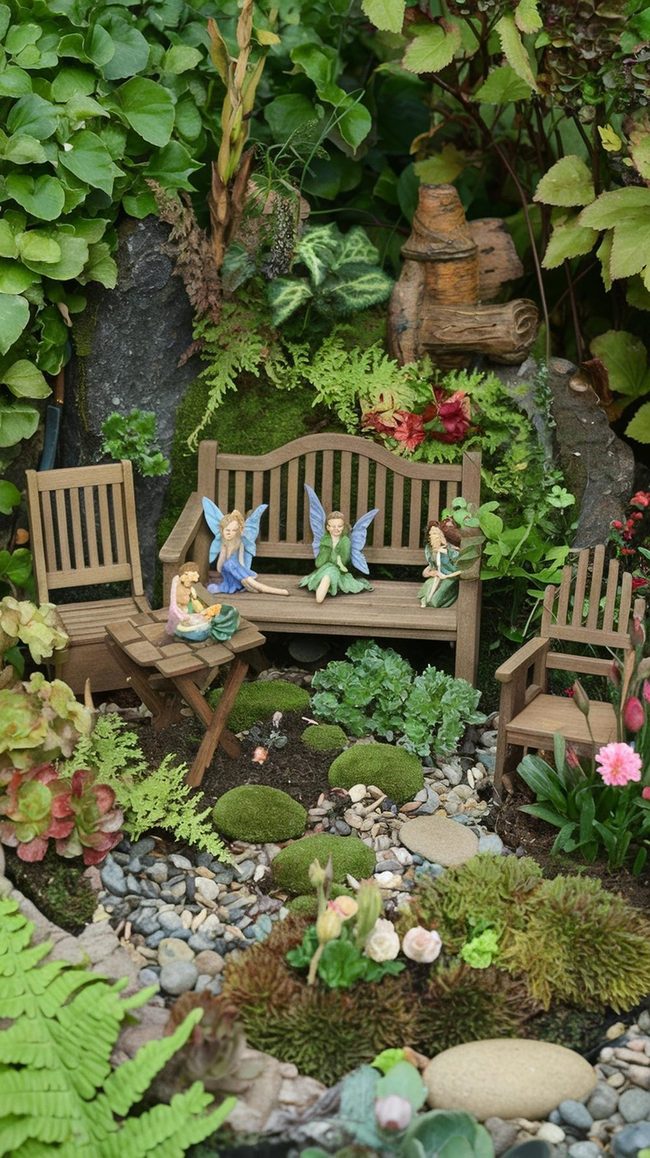
Begin your fairy garden by choosing a theme that appeals to you, whether that's a woodland setting or a beach scene, and let this guide what you add and how you arrange things.
Your theme acts as a foundation for every decision you make, from the tiny plants you select to the miniature structures you place around.
Maybe you love the idea of a mysterious forest with twisting paths and hidden corners, or perhaps you prefer the relaxed feeling of sand and shells by the water.
Once you settle on your direction, you can think about what mood you want visitors to experience when they look at your creation.
Should it feel wild and natural, or more organized and refined?
When you stay true to your chosen theme, everything starts to feel connected and refined without requiring much effort.
This simple first step saves you time later and makes the whole project more fun because you know exactly what belongs in your space and what doesn't.
Tiny Twig Dwelling Nestled Green
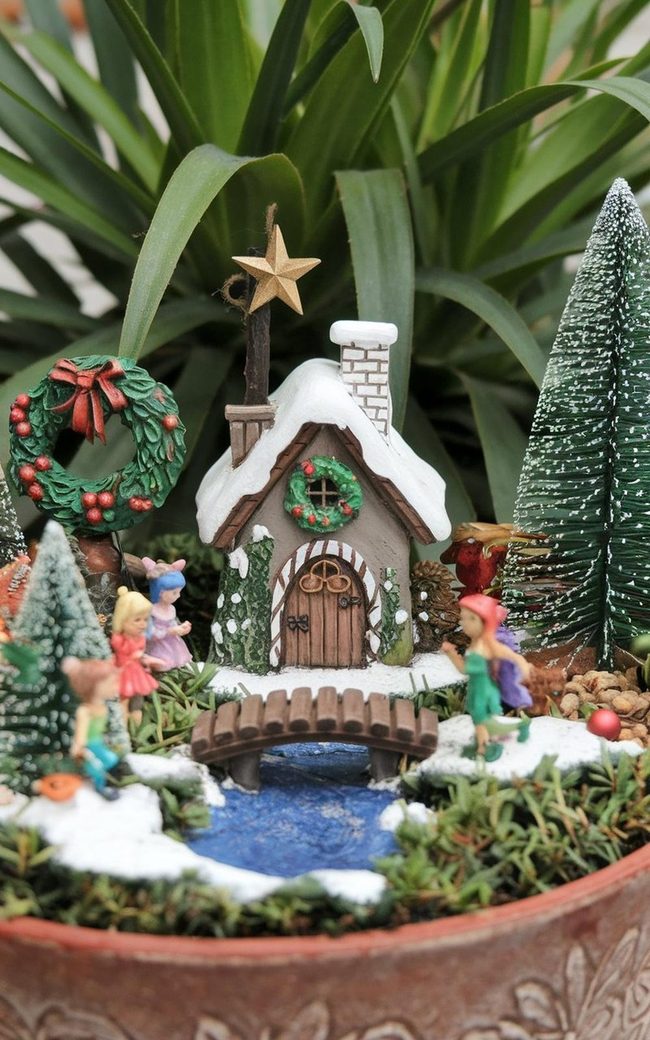
Building a miniature fairy house gives your garden that sense of wonder that comes from discovering a tiny dwelling tucked away in nature.
Start with twigs as your main structure, layering moss around the walls and using small stones to give rise to a solid foundation.
You can fashion tiny windows from bark pieces or bits of colored glass, and a small door made from a flat twig or thin wood slice adds personality to the space.
A miniature chimney built from stacked pebbles or rolled bark sits on top and makes the whole thing feel inhabited and lived-in.
Scatter moss inside and around the exterior to blend the house with its surroundings and give it an earthy, natural appearance.
You might add a tiny bench outside or a small pathway leading to the entrance using pebbles and twigs.
When you step back and see how this little home sits nestled among your plants and flowers, the design lends itself to understand why people love these whimsical creations so much.
Michael Harris
Senior Content Editor
Expertise
Home Décor Content Creation, Interior Design Journalism, Editorial Oversight, Digital Media Strategy, Team Leadership and Mentorship
Education
University of Queensland, Brisbane, Australia
Queensland University of Technology (QUT), Brisbane, Australia
Michael Harris is the senior content editor at Archi Refresh, where he turns home design trends into engaging, easy-to-follow articles. With a journalism degree from the University of Queensland and a digital communication certification from QUT, he knows how to craft content that informs and inspires.
With over 10 years of experience in lifestyle and design media, Michael has shaped editorial strategies, mentored writers, and helped readers refresh their spaces with practical tips. His work blends storytelling with expert advice, making home decor more accessible to everyone.
Outside of work, Michael enjoys DIY projects, exploring Brisbane’s art scene, and teaching digital literacy workshops.