
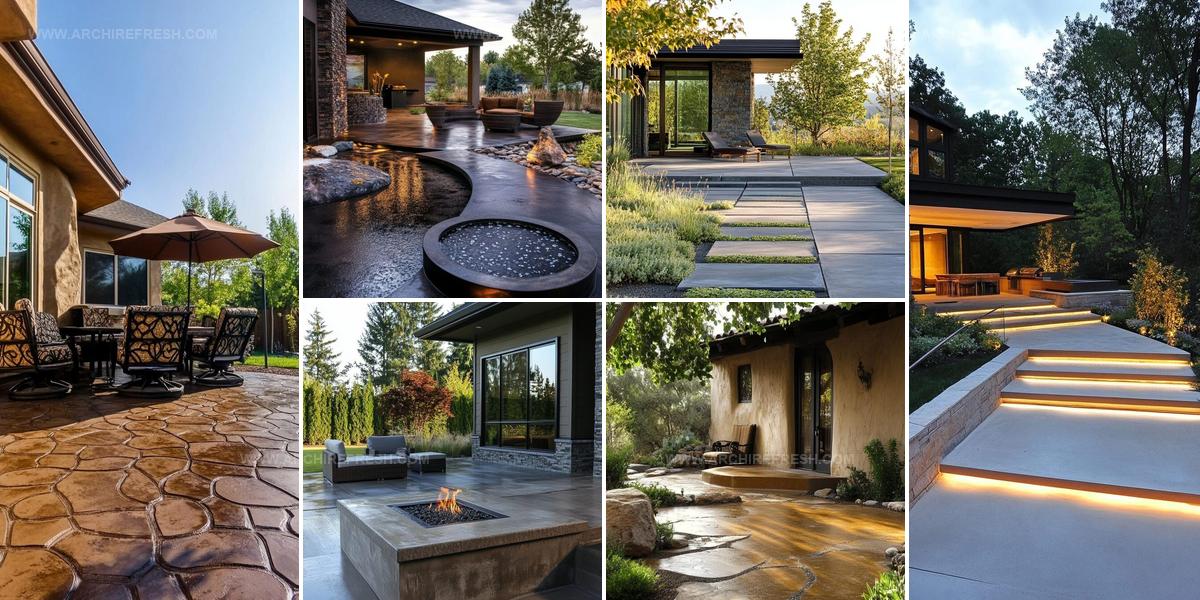
10 Creative Concrete Patio Ideas That Stand Out
Concrete patios offer homeowners an affordable way to expand outdoor living space while adding lasting value to any property.
Gone are the days when plain gray slabs were the only option available for backyard surfaces.
Modern design techniques and finishing methods have revolutionized what's possible with this versatile building material.
Homeowners can now achieve stunning looks that rival expensive stone or tile installations at a fraction of the cost.
The durability and low maintenance requirements make this choice practical for busy families who want beautiful results without constant upkeep.
Whether working with a small courtyard or expansive backyard, countless design possibilities exist to match any architectural style and personal preference.
Exposed Stone Aggregate Polished Concrete
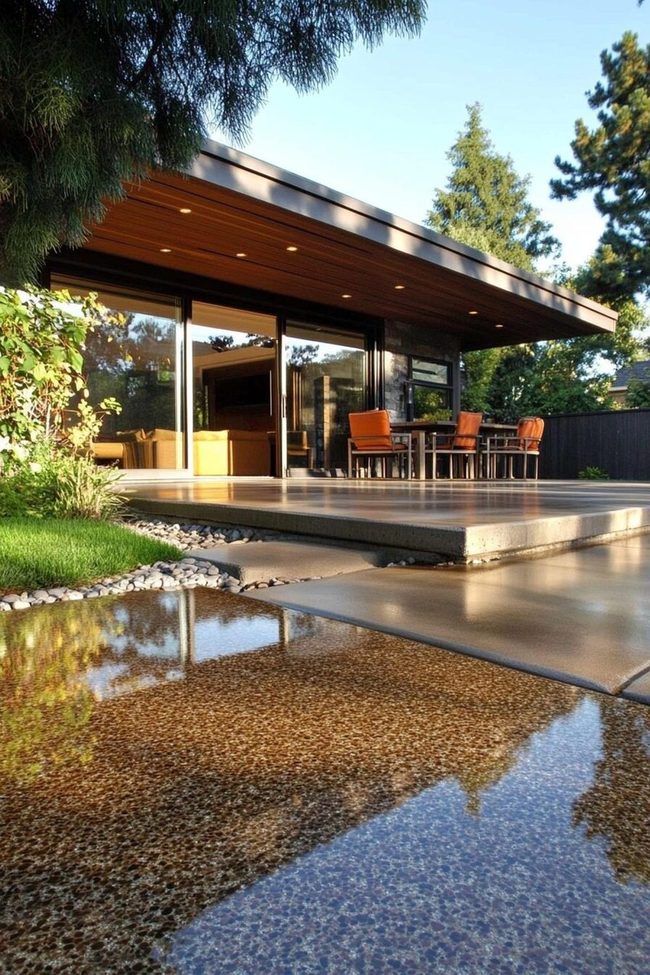
Polished concrete with exposed aggregate creates a striking visual effect by grinding and polishing a concrete surface to reveal colorful stones, glass, and other embedded materials that catch light and stand out beautifully.
Your creativity shines through when you choose which aggregate materials to use, and the grinding process involves multiple passes with progressively finer diamond tools to expose as much or as little of those materials as you want.
Light plays across the smooth, reflective surface and creates gentle sparkles as the sun hits various elements within the mix, while sealers protect your investment and enhance both the natural colors of the aggregates and the polish.
Contemporary homes pair well with this patio style since the polished surface complements modern architecture and the natural texture of the aggregate adds warmth to clean lines.
Maintenance stays simple with just regular sweeping and occasional resealing, and the smooth surface works especially well for outside dining since tables and chairs won't wobble on uneven ground.
We should mention that concrete has thermal mass, so it absorbs heat during the day and releases it slowly at night, keeping your outside space naturally comfortable.
Costs typically range from twelve to eighteen dollars per square foot depending on your aggregate choices and polish level, and the installation takes longer than standard concrete because of the pouring, curing, and multi-stage grinding process.
Geometric Concrete Patio Patterns
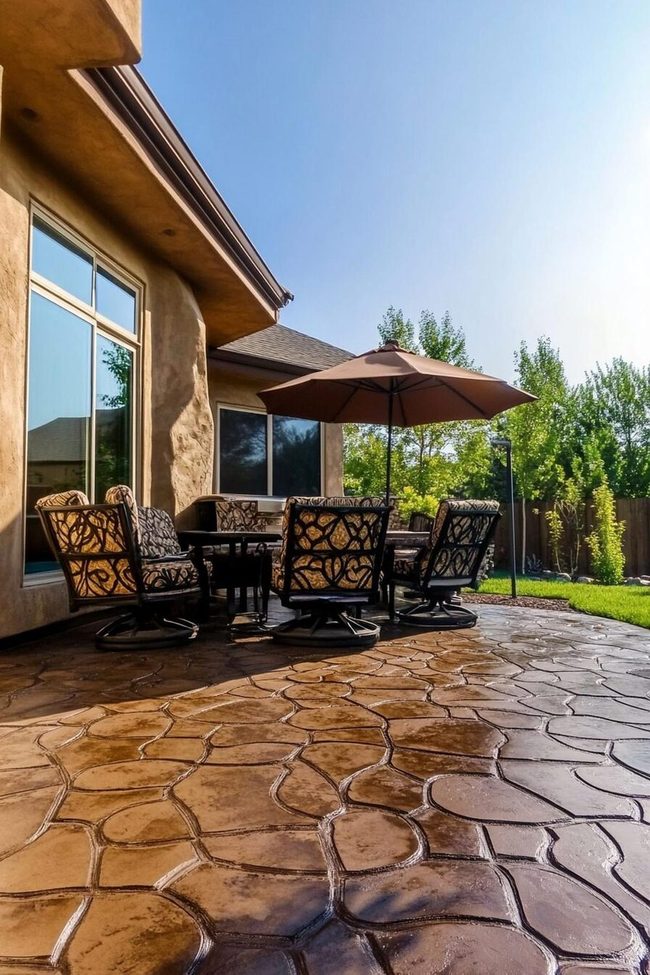
Stamped concrete with bold geometric patterns shifts your patio patio into a striking visual statement that stands out from traditional designs.
Hexagons, triangles, and custom optical illusions set up eye-catching surfaces when you view them from different angles, setting your space apart with contemporary flair.
Deep patterns cast dramatic shadows as the sun moves throughout the day, while you can choose subtle impressions if you prefer a minimalist approach.
Color options range from earth tones to contrasting hues that connect with your home's existing palette and look deliberate rather than random.
Edge treatments frame your geometric design like artwork, and strategic lighting after dark emphasizes the texture through shadows and depth.
Size and scale matter when planning, larger patterns suit spacious areas while smaller, intricate designs make compact spaces feel special and thoughtfully executed.
We recommend pairing geometric patios with furniture that complements rather than competes with the pattern below.
Installation typically costs $12-20 per square foot, takes several days from pouring through sealing, and requires professional help for precise alignment and consistent depth on complex designs.
Sealed stamped concrete needs only occasional cleaning and resealing every few years, making maintenance straightforward.
Weather affects how quickly concrete sets, so timing matters for pattern quality.
Future repairs blend seamlessly when skilled contractors touch them up, and geometric patterns naturally define different zones in your patio living space.
Industrial Teak And Concrete Patio
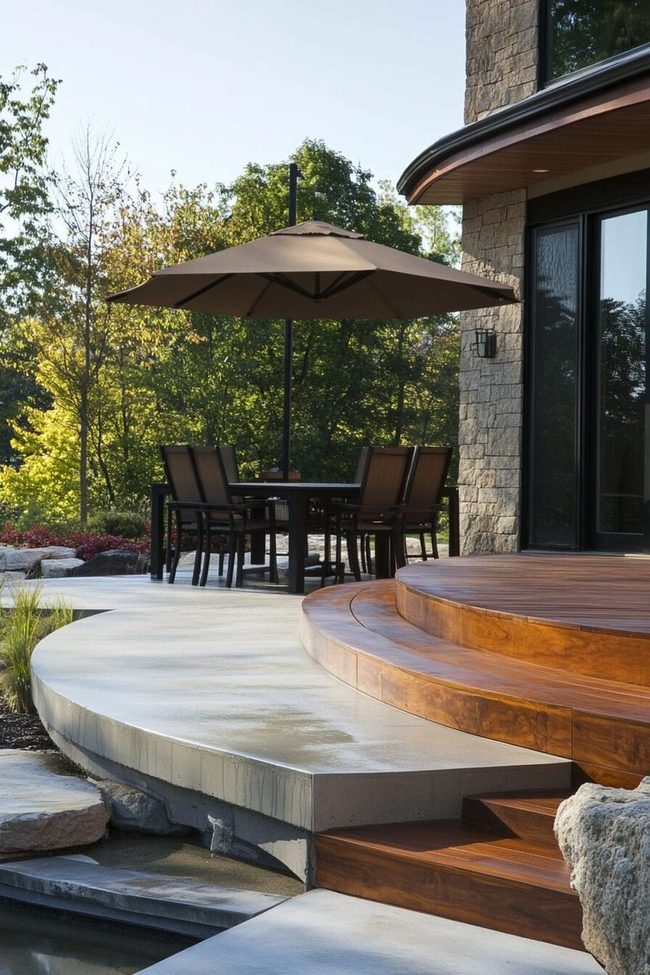
Concrete and wood fusion designs showcase striking contrasts between raw industrial materials and warm natural textures that make your yard space feel both modern and relaxed.
When you pair these two elements, one material anchors the space while the other brings organic character, and together they establish a balanced look that neither could achieve on its own.
Concrete forms the structural backbone of your patio, the foundation and architectural bones, while wood adds warmth through inlays, borders, or raised decking sections that break up large concrete areas.
Many contemporary designs feature concrete islands floating within wooden decking or wooden sections set into concrete, and this back-and-forth pattern naturally guides your eye across the entire patio.
To make this work, you may want to choose durable woods like ipe or teak that stand up to weather, and finish your concrete with either a polished surface for a pared-back look or textured treatment to play off smooth wood sections.
Drainage and expansion joints aren't afterthoughts in fusion designs, they become intentional design lines that mark the boundaries between materials and keep water moving properly.
Lighting slots beautifully into both materials, with recessed fixtures set into concrete and gentle path lights running along wooden boardwalks to guide movement through the space.
Metal reveal strips often provide clean transitions between wood and concrete sections, turning edge treatments into design elements rather than just well suited to daily routines necessities.
Gray Concrete Fire Pit Seating
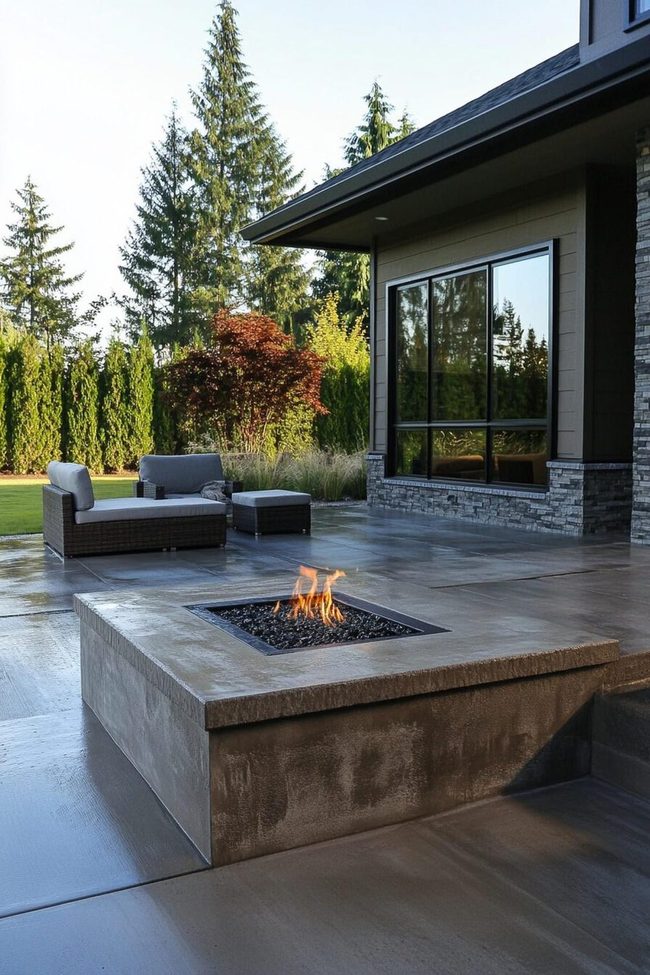
In all concrete patio featuring an integrated fire pit and built-in seating reshapes your exterior space into a year-round gathering spot that naturally brings people together.
Flames rising from a seamlessly constructed pit bring about an immediate focal point that catches attention far better than any portable option you might place afterward.
Unlike freestanding elements, permanent concrete construction feels purposeful and architectural rather than like an afterthought, with flowing lines that connect the patio surface, seating, and fire feature without awkward breaks or gaps.
Curved concrete benches low to the ground set an informal tone for gathering while also serving double duty as retaining walls or planter borders when you need them.
Getting the dimensions right matters, benches should stand about 18 inches high, extend at least 16 inches deep, and curve slightly to support your body properly when you settle in for hours of sitting.
Cushions and pillows rest on top of the concrete and let you shift colors and textures with the seasons while making the hard surface much more comfortable.
A circular fire pit works best for interaction since people can see eachother across the flames, though square or rectangular designs offer a modern look if you prefer sharper lines.
Gas-powered pits eliminate smoke and let you control the flames precisely, with propane tanks hidden underground or natural gas lines run permanently from your home to feed the fire.
Porous Concrete Absorbs Rainfall Directly
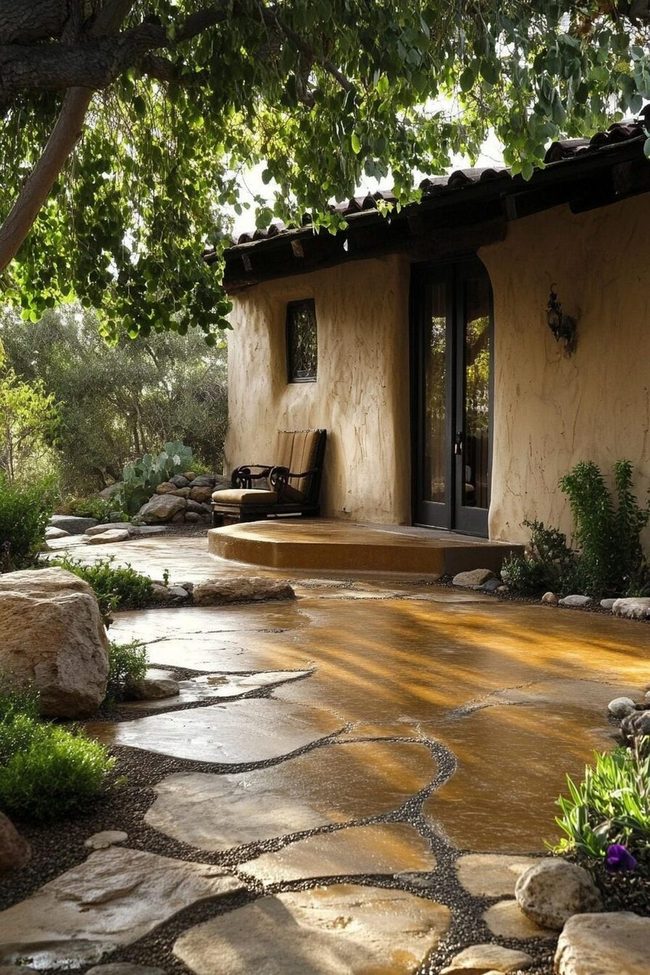
Pervious concrete stands out with its distinctly textured surface that immediately catches attention and sounds noticeably different underfoot than traditional solid concrete, dampening the hollow sounds of footsteps and furniture movement.
Built with little to no sand, pervious concrete contains 15-25% interconnected voids that absorb an impressive 3-8 gallons of water per minute per square foot, far more than most rainstorms require.
Installation does require specialized knowledge and starts with proper site prep and a crushed stone base layer designed for water retention and gradual release.
You may find that color options have expanded dramatically through integral colors and staining techniques, so you can match pervious concrete to any landscape design you prefer.
Many municipalities now offer incentives or reduced impact fees for properties that use pervious concrete, which can help offset the 20-25% higher initial installation cost.
Maintenance stays simple with occasional vacuuming or pressure washing to keep pores clear of debris.
Stepped Concrete Patio With Built-In Lights
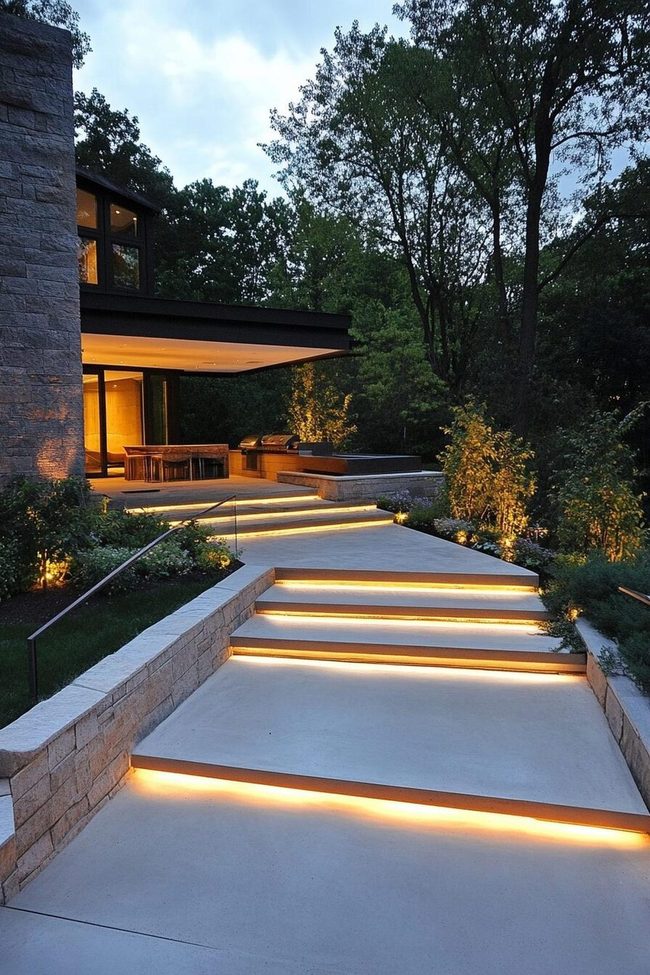
Multi-level concrete patios turn ordinary backyards into dimensional yard spaces with built-in lighting that glows along step risers and edges after dark, creating drama without any visible fixtures or wires showing.
Level can handle a different purpose, you might dine on one tier, lounge on another, and place a hot tub or fire pit on a third level down.
Integrating LED strips directly into the concrete during construction avoids that awkward look of add-on lighting solutions, and the varying heights naturally make even smaller yards feel more spacious and interesting.
Short walls between levels serve double duty as casual seating or planter boxes, so you're maximizing every bit of space in limited areas.
Moving from your home's door down through the levels creates a natural flow from indoors to yards, and it often feels like you're descending into the landscape rather than sitting on top of it.
Drainage needs careful planning between levels to keep water flowing away from your foundation, and small channels can become design elements themselves.
Railings may be required by code depending on height differences, and glass panels let you keep views open while metal options add texture alongside the concrete.
We recommend varying the concrete mix between levels, perhaps exposed aggregate on the dining area for texture and polished concrete on the lounge level for a different feel.
Warm Concrete Patio Year-Round
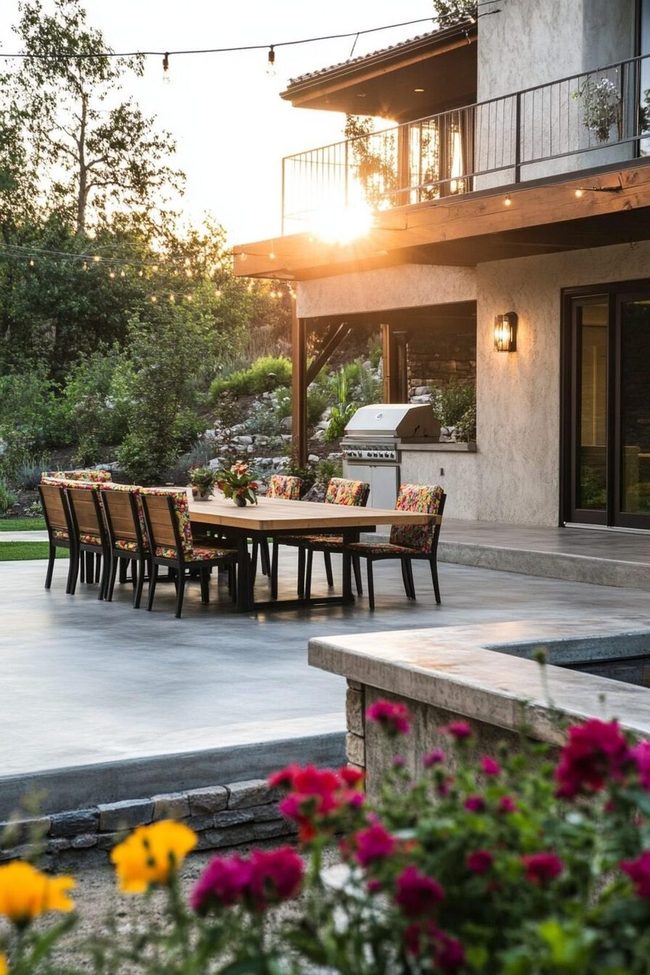
Heated concrete patios bring warmth radiating up from below your feet on cold days, creating that unexpected luxury feeling dinner guests always comment on during winter gatherings.
Snow and ice melt automatically when the system activates, so you skip the shoveling and reduce slip hazards without any effort on your part.
Inside the concrete sits either electric heating cables or hydronic tubing filled with warm water, engineered to handle outdoor temperatures and seasonal shifts.
Programmable thermostats and zone controls let you heat only the areas you actually use, keeping energy costs reasonable and manageable throughout the year.
Installation works best during the concrete pouring process itself, though retrofit options exist if you already have a patio and want to add heating through a new overlay.
Electric systems use specialized cables designed specifically for exterior concrete, while hydronic systems connect to your home's water heater or a dedicated boiler and circulate warm water through flexible tubing.
Insulation placed beneath the slab improves efficiency by directing heat upward rather than into the ground, and you can choose any concrete finish you like, stamped, stained, polished, or exposed aggregate.
Control systems range from basic manual thermostats to smart-home integration that lets you manage everything through your smartphone, and snow sensors can automate activation so your patio stays clear without wasting energy.
Marbled Concrete Patio Art
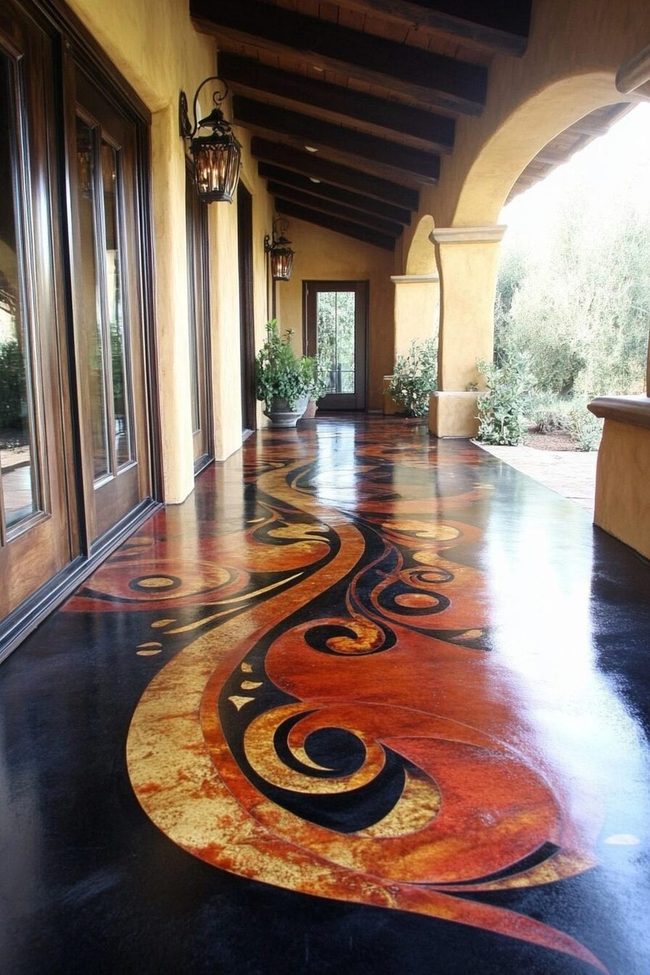
Stained concrete elevates ordinary patios into custom works of art that showcase your personal style and complement your home's look, with the most striking aspect being the ability to combine multiple stain colors to introduce notable effects like color washing, antiquing, or mottled patterns that mimic expensive natural materials like stone.
Acid stains produce marbled, variegated effects with earthy tones such as terracotta, blue-green, and amber that shift based on the concrete's composition, while water-based stains offer a broader palette including dynamic blues, reds, and purples that acid stains can't achieve.
Stencils open up even more possibilities, allowing for intricate patterns from Moroccan tiles to Art Deco geometrics or custom designs that turn your yard space into something truly distinctive.
Border designs frame your patio area and introduce a finished look, while medallion patterns in the center anchor furniture arrangements and serve as visual anchors for the entire space.
Faux area rug patterns bring indoor comfort styling yards and define dining or lounging zones without actual textiles, and compass rose designs add a nautical or adventurous spirit while orienting the space.
Concrete Patios With Flowing Water
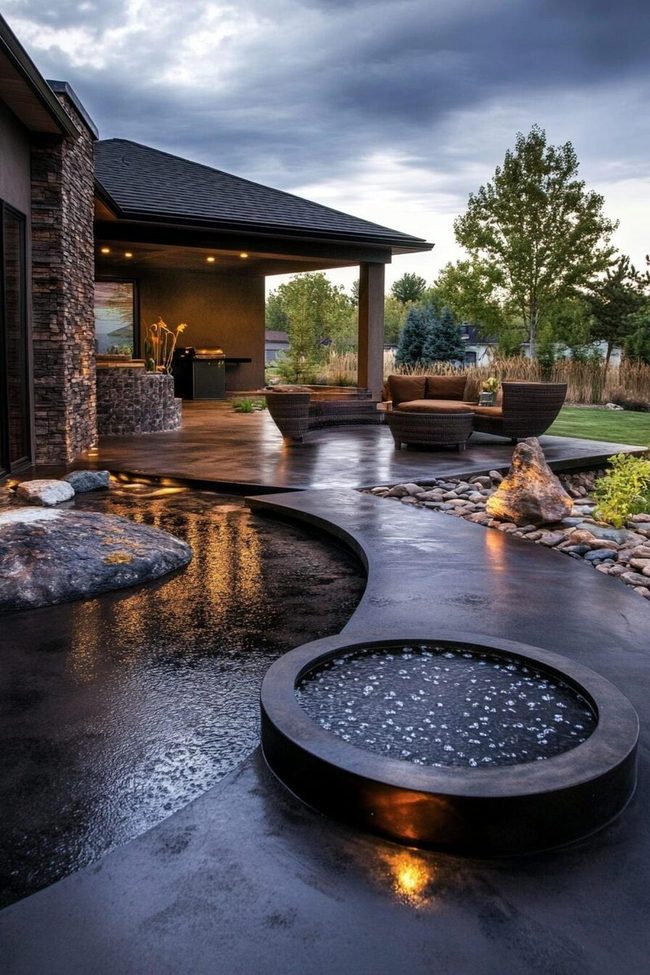
Water features built into concrete patios transform ordinary patio spaces into places where you can engage all your senses through sight, sound, and touch, and the striking contrast between flowing water and solid concrete draws people outside and keeps them lingering longer.
Modern designs integrate water elements directly into the concrete itself, making it look as if your patio was naturally carved by water flow over time.
Channel features cut narrow, linear paths into the concrete that build gentle streams while cooling the air and producing soothing background sounds, and reflection pools act like mirrors that bounce natural light around and make your space feel much larger and more open.
Bubbling fountains work well if you want maximum sound impact with minimal water use, especially in busy urban areas where they help cover unwanted noise, while infinity edges provide dramatic visual effects when your property has elevation changes that let the water feature blend into your horizon.
Lighting after dark becomes a game-changer, with underwater LEDs creating color shifts or gentle glows that make the water shimmer, and the cooling effect becomes especially valuable in hot climates where water features can actually lower the temperature around your patio by several degrees.
You are able to need specialized knowledge during construction to handle waterproofing, pumps, filtration, and electrical work, and maintenance varies depending on your design, some systems run almost on their own while others need regular attention to stay clean and working properly.
Gray Pavers Interspersed With Living Plants
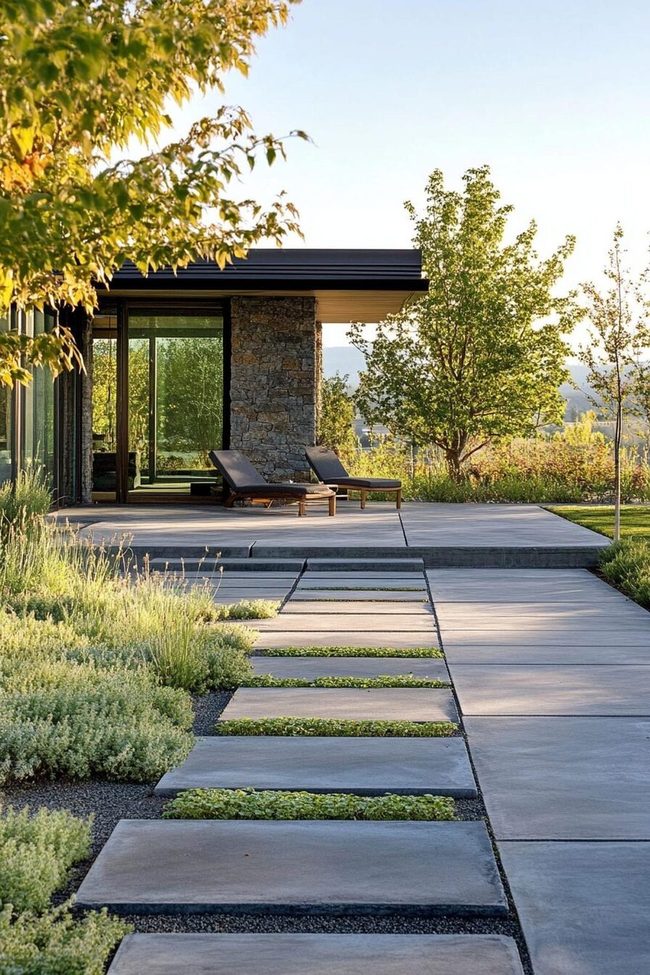
Concrete pavers with integrated green spaces strike an impressive balance between structured hardscape and natural plant life in modern patio design, breaking up the monotony of solid concrete while introducing ecological benefits that improve your yard experience and environmental footprint.
You can arrange these pavers in countless patterns, from strict grid layouts to flowing organic designs that form movement across your space, and the gaps between them support grass, moss, creeping thyme, or other low-growing plants that allow rainwater to penetrate soil rather than running off, reducing erosion and supporting groundwater recharge.
On hot summer days, the plant areas absorb less heat than solid concrete, making your patio noticeably more comfortable, and seasonal changes in your living patio become part of its charm as different plants emerge, bloom, and show fall colors throughout the year.
Installation starts with proper base preparation using compacted gravel and sand for drainage and stability, and the concrete pavers themselves come in countless shapes, sizes, and colors so you can personalize designs that complement your home's architecture.
Spacing between pavers determines your design's character, wider gaps form a garden-like feel while narrower spaces offer more stability for furniture, and plant selection should consider your climate, maintenance preferences, and how frequently people will walk across the space.
Olivia Martinez
Founder & Principal Designer
Expertise
Sustainable Interior Design, Residential and Commercial Space Planning, Historic Preservation and Adaptive Reuse, Custom Furniture Design, Project Management
Education
Parsons School of Design, New York, NY
LEED Accredited Professional (LEED AP)
Olivia Martinez is the founder of Archi Refresh, where she brings style and sustainability together. With a degree from Parsons School of Design and a LEED certification, she’s all about creating beautiful, eco-friendly spaces.
With over eight years in the industry, Olivia has designed everything from cozy homes to commercial spaces, always putting function and sustainability first. She loves working with local artisans and has been featured in design publications for her fresh take on green living.
When she’s not designing, Olivia enjoys exploring historic architecture, painting, and spending time with her rescue dogs, Luna and Max.