
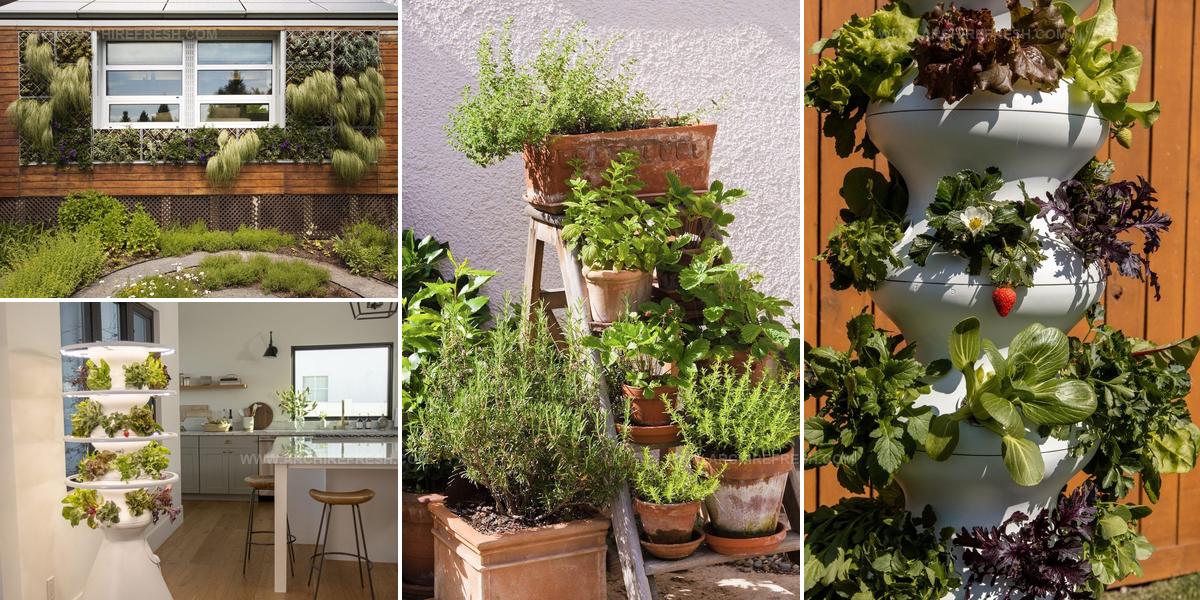
10 Smart Vertical Gardening Ideas for Small Spaces
Vertical gardening ideas bring fresh solutions when outdoor space feels limited and traditional plots seem impossible.
Growing plants upward rather than outward opens new options for balconies, patios, and even indoor walls.
Small areas become productive when height replaces width as the primary growing dimension.
This approach works well whether someone lives in an apartment or simply wants to maximize a compact yard.
Plants thrive in upward arrangements just as successfully as they do in ground-level beds.
The method suits vegetables, herbs, flowers, and decorative foliage equally well.
You can begin transforming bare walls into lush, productive gardens today.
Repurposed Cabinet Indoor Herb Garden
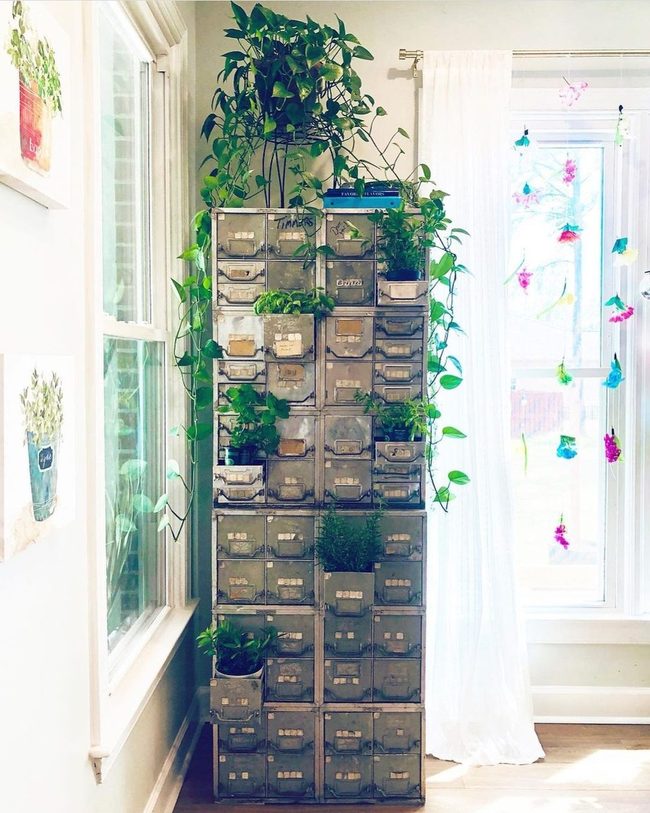
If you have an old filing cabinet gathering dust somewhere, Jennifer from Jenny Says found a brilliant way to give it new life by turning it into a vertical garden with those small drawers perfect for growing plants.
This approach offers two wins at once-you get to reuse something you already have and grow your own food, which means less waste overall.
Since Jennifer's space gets lots of natural sunlight, her plants thrive without needing any extra grow lights to help them along.
Keep in mind that your indoor setup might need something different depending on how much light flows through your windows during the day.
You can adapt this idea to fit whatever your room offers, whether that's a bright corner or a shadier spot that would benefit from supplemental lighting.
Growing food at home this way takes up minimal space and lets you enjoy fresh produce right where you live.
It's a smart way to combine sustainability with gardening in a way that works for almost any living situation.
Stacked Wood Boxes Labeled Herbs
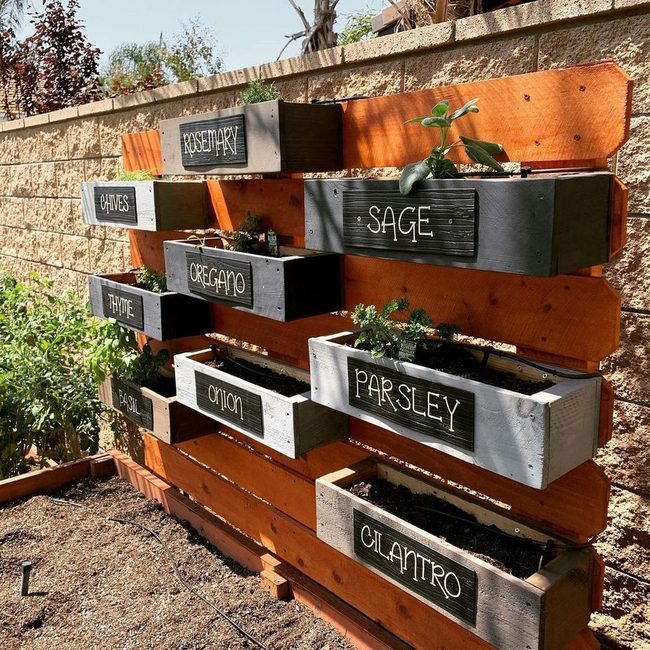
When you build a vertical herb garden with stacked wooden boxes against your stone fence, labeling each planter becomes essential so you actually know where your parsley ended up.
Julie Cavanagh of Cavanagh Woodcrafts constructed her own garden using wood panels that resemble a wooden fence, and she made sure to clearly mark every box with the herb name inside.
Without those labels, you'd waste time hunting through your rows trying to remember which container holds which plant.
She painted or wrote each herb's name directly on the boxes, making it simple to grab what you need when cooking.
Since vertical gardens can look quite similar across all their sections, having clear markings saves frustration during harvest time.
You can use paint pens, wood stain, or even burned letters if you want something that lasts longer.
Adding labels takes just a few minutes but makes your garden far more functional and easier to maintain throughout the season.
Vertical Edible Living Wall
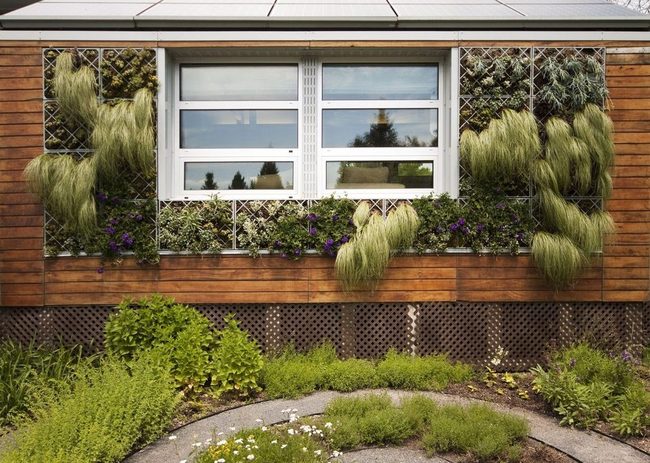
Lattice panels work wonderfully as a vertical garden solution because their small openings let you tuck soil pockets and plants right into the framework.
You can arrange your vegetables and herbs in whatever way appeals to you, blending what's useful in the kitchen with what looks great in your space.
Whether you're mixing culinary herbs with colorful edible flowers or combining different vegetable varieties, the framework keeps everything organized and accessible.
The open design also means air flows freely around your plants and water drains easily when you water them.
Best of all, you get a living wall that serves double duty-it produces fresh food while looking beautiful right there in your garden or patio area.
Fresh Herbs Within Arm’S Reach
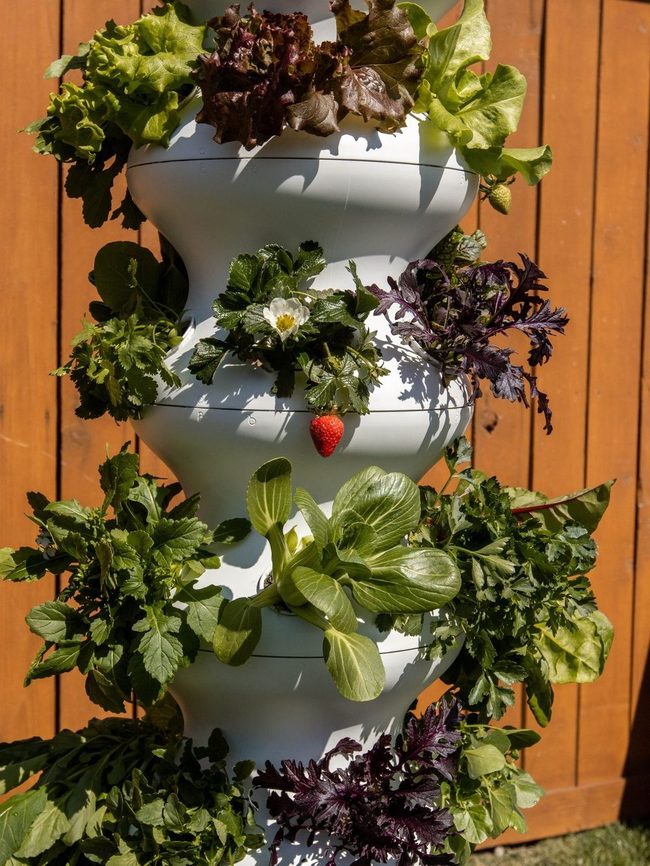
If you want your vertical garden to actually work for you, place it somewhere convenient that you'll pass by every day, ideally near your kitchen so you can harvest fresh herbs and greens throughout the day.
Start by filling most of your garden with fast-growing herbs and leafy greens since they don't need pollination and will reward you with quick results.
When you see growth happening this fast, it builds your confidence as a gardener and keeps you motivated to maintain your plants.
Having herbs within arm's reach means you're more likely to use them regularly in your cooking.
This simple setup of accessibility plus quick-growing plants turns your vertical garden from a nice idea into something you'll genuinely rely on.
Ladder Planters For Vertical Herbs
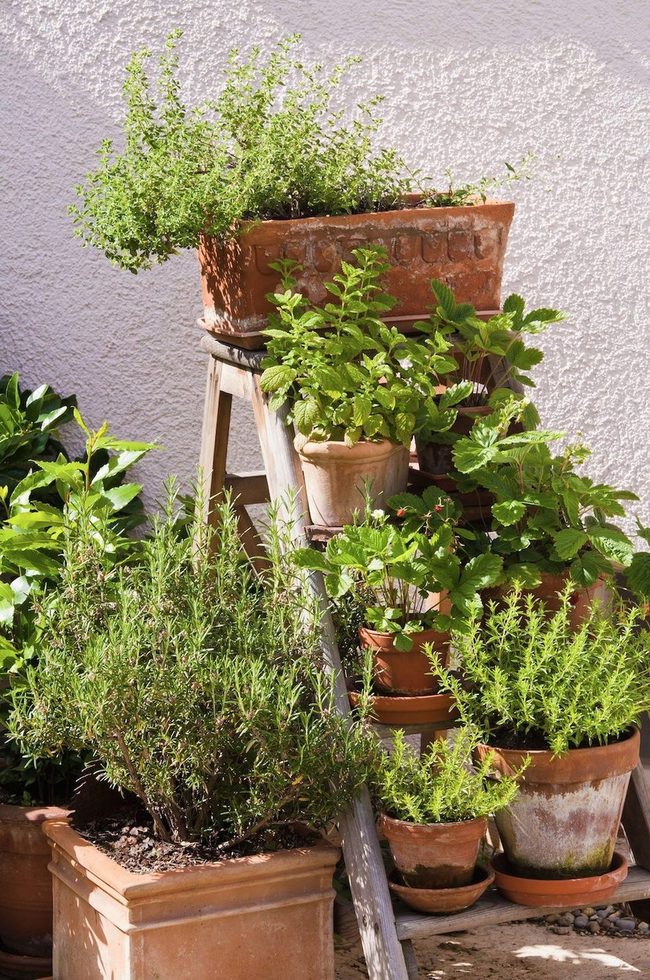
Sturdy ladder lined with traditional planters overflowing with herbs and vegetables creates one of the most striking vertical garden setups you can build in your yard.
We love this approach because it's refreshingly simple-just fill your pots and arrange them on the rungs.
You get real flexibility here since rotating individual plants takes seconds and moving the entire structure to a sunnier or shadier spot requires minimal effort.
It's also one of the most budget-friendly options for anyone curious about vertical gardening but hesitant to commit to anything permanent.
Nothing about this setup demands fancy building skills or special tools.
If you decide vertical gardening isn't for you, you've only spent money on basic materials.
Start small with this method and work your way up to more complex systems as you gain confidence.
Iron Stand For Vertical Gardens
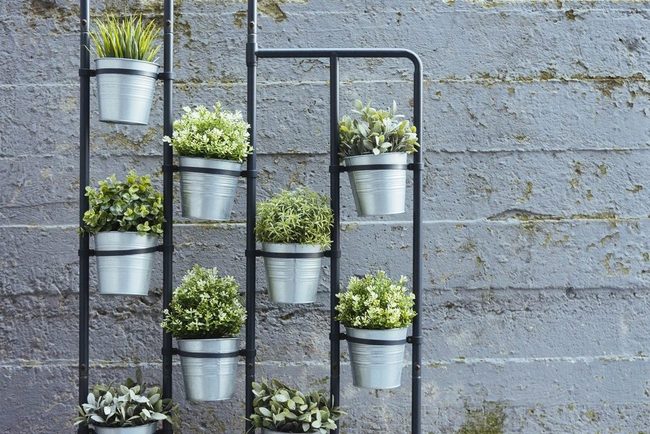
When you're building a garden that reaches up instead of spreading out, your support structure has to handle wind and all the unpredictable things nature throws at it, so choosing something sturdy like an iron plant stand with a solid base makes real sense.
You can grow parsley or daisies in a bucket just as well, which means you shouldn't narrow your shopping focus only to herb garden supplies when looking for plant stands.
A planter shelf or wall-mounted option works perfectly fine as long as it's built strong enough to stand independently or hold securely when attached to your wall.
Your setup will stay safe and stable through different seasons, and that reliability lets you focus on what matters most-actually growing your plants.
Even simple containers gain character when they're elevated on the right stand, and good structure supports both the weight and the beauty of your garden.
Bright Led Lights Above Greens
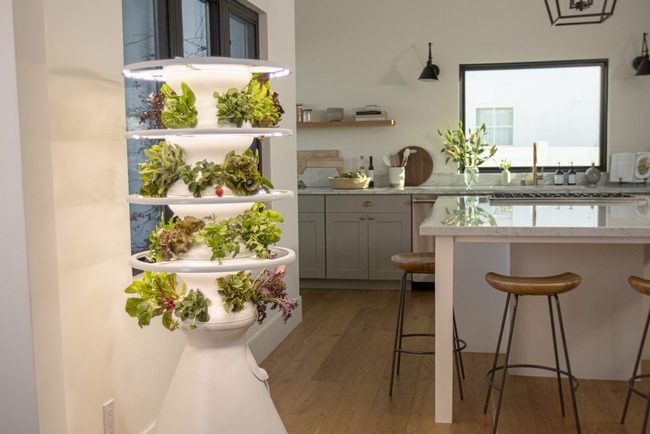
Bright grow lights positioned above your plants make the biggest visual statement in an indoor vertical garden, and if you're growing leafy greens inside, these lights become essential for success.
Lettuce Grow's Farmstand model already has this technology built right in, so you don't have to source and install everything separately.
Jacob Pechenik, the CEO and Founder of Lettuce Grow, encourages people not to doubt themselves when trying vertical gardening for the first time.
He points out that modern systems have removed most of the guesswork, and many people hold back because they worry about lacking a green thumb, even though that concern is largely unnecessary now.
Systems like theirs work so well that you can hardly fail, and Pechenik insists it's worth jumping in and trying it out.
Whether you're brand new to growing plants this way or have some experience, you should feel confident moving forward.
Don't let uncertainty stop you from giving vertical gardening a shot.
Vertical Edible Garden Wall
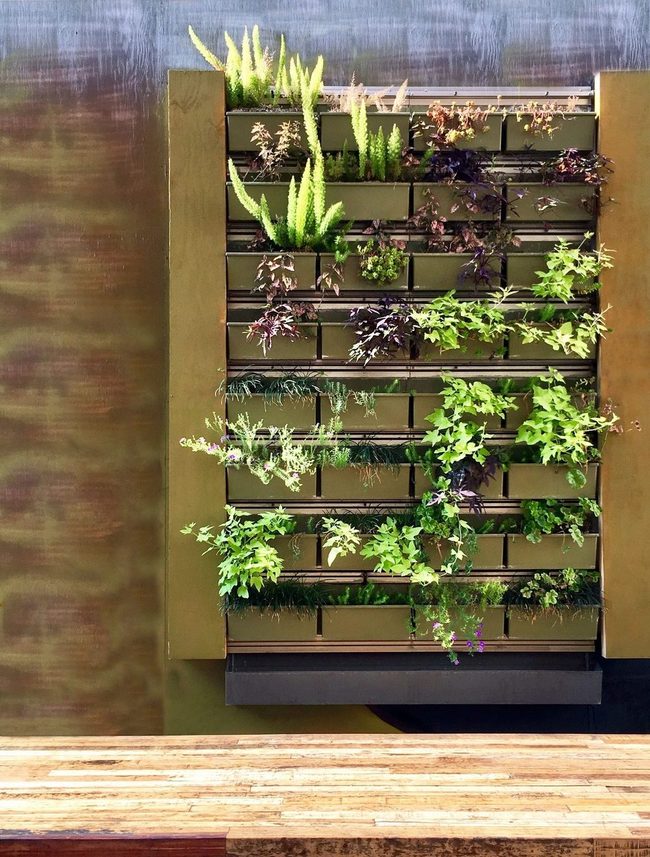
Shelves overflowing with plant boxes bursting with colorful blooms look stunning, but here's what makes them even better-they can actually feed you and your family.
We love the idea of growing vegetables and herbs right where everyone can see them, turning your space into both a beautiful display and a working garden.
Small plant boxes measuring four to five inches work well for chives, lettuce, radishes, and herbs like coriander and basil.
Medium boxes around six to seven inches can hold kohlrabi, garlic, onions, peas, thyme, and mint.
Larger boxes between eight and nine inches give you room for carrots, chard, cucumber, eggplant, leeks, and peppers.
You can build an entire salad straight from your vertical gardening wall and pick fresh ingredients whenever you need them.
It's a practical way to decorate while also growing your own food.
This setup lets you enjoy both beauty and real usefulness in the same space.
Vertical Herb Wall Gardens
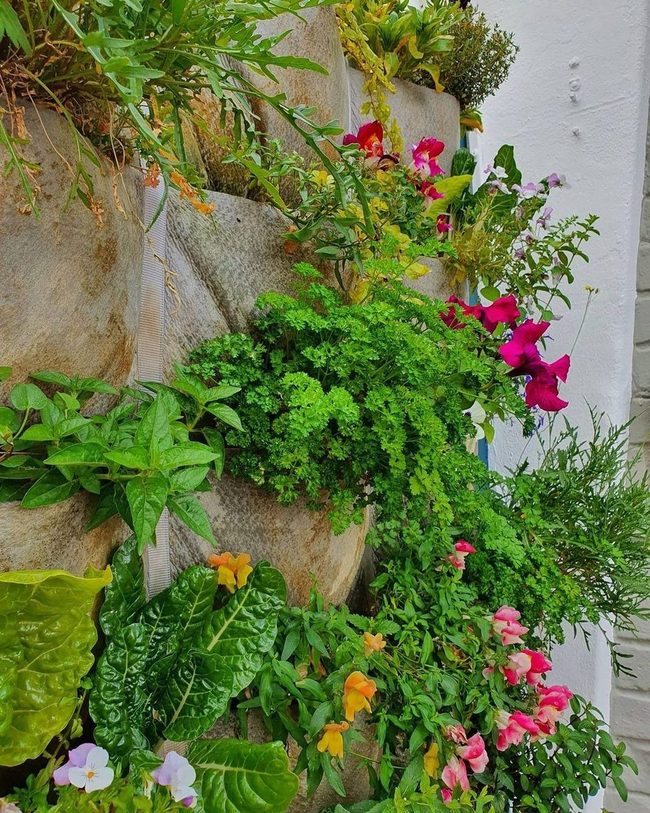
Hanging fabric panels with pockets across your patio wall gives you a dramatic way to grow herbs and vegetables without eating up ground space, and Vertical Veg makes this approach simple with their ready-made designs.
Your plants climb upward in neat rows, creating visual interest that draws the eye and transforms a plain wall into a living garden display.
Starting this type of garden takes patience and a willingness to learn as you go, since not every plant will thrive on the first try.
I think the key is understanding that setbacks are just part of the journey, not reasons to quit.
Each season brings new lessons about what works best in your space and climate.
Growing your own food offers rewards that go beyond having fresh ingredients at hand-there's something genuinely empowering about watching seeds become meals.
Gardening is really an ongoing adventure where you get better with time, and the satisfaction keeps building as you learn what your plants need.
Pegboard Vertical Herb Garden
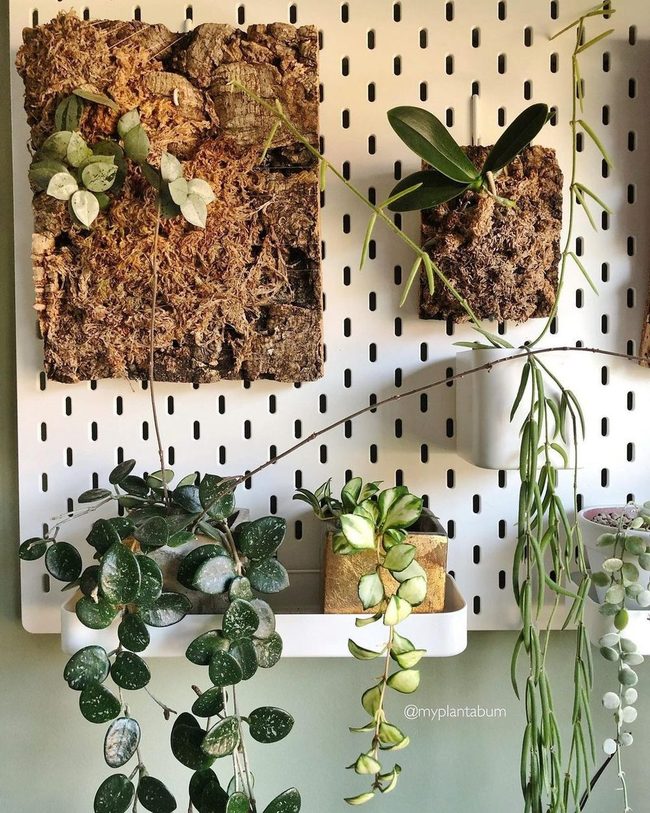
Pegboards don't have to stay in garages or offices-you can turn them into something far more beautiful and useful.
One creative person used an IKEA SKADIS pegboard to design a vertical garden that doubles as both decoration and a working herb station.
By mixing small pegboard shelves with utensil holders, she built different levels for her plants to sit on and hang from.
Now she has a garden that looks wonderful on her wall and lets her grab fresh herbs whenever she needs them for cooking.
What I love about this setup is how it solves two problems at once: you get more greenery in your space without eating up floor room, and everything stays organized and accessible.
If you're thinking about trying something similar, this approach works great in kitchens, small apartments, or anywhere you want to add plants without much hassle.
Your own pegboard garden can be as simple or as detailed as you want it to be.
Michael Harris
Senior Content Editor
Expertise
Home Décor Content Creation, Interior Design Journalism, Editorial Oversight, Digital Media Strategy, Team Leadership and Mentorship
Education
University of Queensland, Brisbane, Australia
Queensland University of Technology (QUT), Brisbane, Australia
Michael Harris is the senior content editor at Archi Refresh, where he turns home design trends into engaging, easy-to-follow articles. With a journalism degree from the University of Queensland and a digital communication certification from QUT, he knows how to craft content that informs and inspires.
With over 10 years of experience in lifestyle and design media, Michael has shaped editorial strategies, mentored writers, and helped readers refresh their spaces with practical tips. His work blends storytelling with expert advice, making home decor more accessible to everyone.
Outside of work, Michael enjoys DIY projects, exploring Brisbane’s art scene, and teaching digital literacy workshops.